Sun Safety
The best sunscreens
One pick for each situation people actually buy for, chosen on the label rather than the packaging.
Disclosure: Spf & Shore earns commission from qualifying purchases made through links on this page, at no extra cost to you. It does not change which products we recommend. Read the full disclosure.
Our overall pick is Thinksport SPF 50+: 20% non-nano zinc oxide, the maximum 80 minutes of water resistance a US label may claim, and large tubes that make applying the full amount realistic. If you buy one bottle for a household, buy that one.
But one bottle rarely covers a household properly, because a body sunscreen on a face is unpleasant and a face sunscreen on a body is expensive. Below is one pick per situation, with the trade-off named on each — because every sunscreen has one.
Quick picks
Tap any row to read the full write-up below.
| # | Product | Best for | Price |
|---|---|---|---|
| 1 | 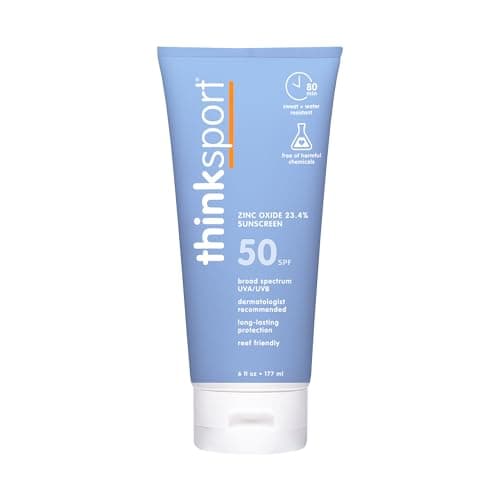 Thinksport Sunscreen SPF 50+Best overall · SPF 50+ | One bottle for a household, and long days outdoors | $14.99 · View on Amazon #ad We earn from qualifying purchases · Price as of November 23, 2026 |
| 2 | 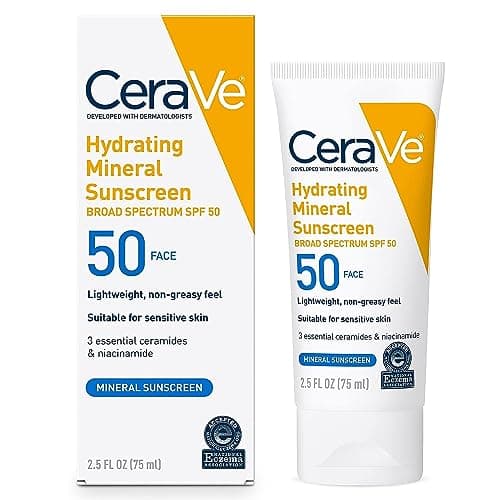 CeraVe Hydrating Mineral Sunscreen SPF 50 FaceBest for face · SPF 50 | Daily facial wear, especially on dry skin | $13.97 · View on Amazon #ad We earn from qualifying purchases · Price as of November 23, 2026 |
| 3 | 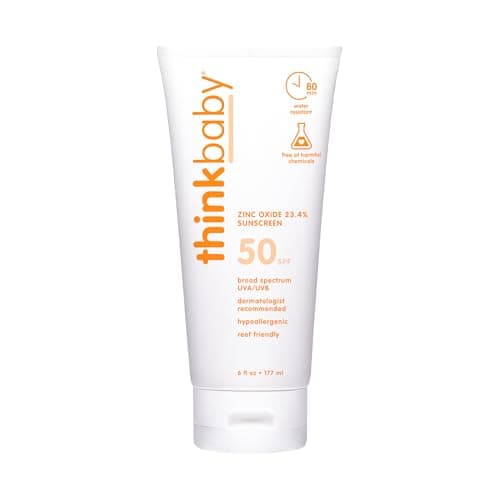 Thinkbaby Safe Sunscreen SPF 50+Best for children · SPF 50+ | Kids at a pool or a beach | $15.99 · View on Amazon #ad We earn from qualifying purchases · Price as of November 23, 2026 |
| 4 | 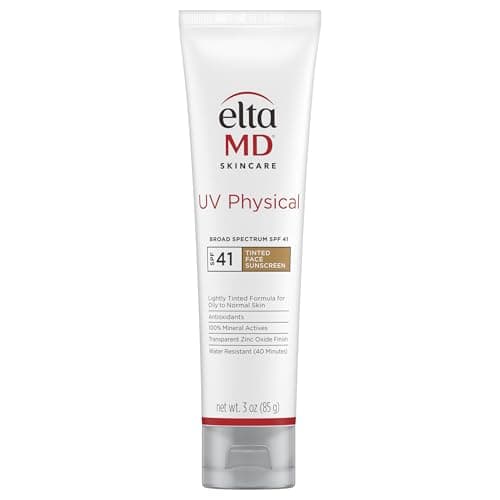 EltaMD UV Physical Tinted Broad-Spectrum SPF 41Best tinted · SPF 41 | Anyone who stopped wearing mineral SPF because of the cast | $34.40 · View on Amazon #ad We earn from qualifying purchases · Price as of November 23, 2026 |
| 5 |  Vanicream Mineral Sunscreen SPF 50+ for Sensitive SkinBest for sensitive skin · SPF 50+ | Skin that has reacted to a sunscreen before | |
| 6 |  Australian Gold Botanical Mineral Sunscreen SPF 50Best value · SPF 50 | Covering several people without rationing the bottle |
How we chose these
Broad spectrum and SPF 30 or higher as the floor, matching the American Academy of Dermatology's guidance. Then water resistance where it is relevant, then the base — fragrance-free preferred, short ingredient lists preferred. Then texture, because the formula you keep using beats the formula you admire.
We read published label data for every product. We do not run a lab, we do not wear-test, and there are no scores on this page for that reason. Where independent organizations have tested — Consumer Reports lab-verifies label SPF — we cite them by name. Our methodology.
Our picks in detail
01 · Best overall
Thinksport Sunscreen SPF 50+
Thinksport · Read our Thinksport review
20% non-nano zinc with the maximum 80 minutes of water resistance, in tubes large enough that using the correct amount does not feel wasteful. The most useful single bottle in this list.
- Actives:
- 20% non-nano zinc oxide
- SPF:
- SPF 50+
- Water resistance:
- 80 minutes
- Reef status:
- Zinc only — no oxybenzone, octinoxate or octocrylene
- Best for:
- One bottle for a household, and long days outdoors
What works
- Maximum labeled water resistance
- Zinc-only, so unrestricted everywhere
- Large sizes make generous application realistic
The trade-off
- Visible white cast
- Too heavy for daily face use
#ad We earn from qualifying purchases · Price as of November 23, 2026
02 · Best for face
CeraVe Hydrating Mineral Sunscreen SPF 50 Face
CeraVe · Read our CeraVe review
Mineral actives in a ceramide base that supports the skin rather than sitting on it, fragrance-free and at drugstore prices — the face SPF that suits the widest range of people.
- Actives:
- Zinc oxide and titanium dioxide, with ceramides and hyaluronic acid
- SPF:
- SPF 50
- Water resistance:
- 40 minutes
- Reef status:
- Mineral filters only
- Best for:
- Daily facial wear, especially on dry skin
What works
- Ceramides do real work in the base
- Fragrance-free and widely available
- Affordable enough for the full dose daily
The trade-off
- Cast on medium and deep tones
- 40 minutes of water resistance
#ad We earn from qualifying purchases · Price as of November 23, 2026
03 · Best for children
Thinkbaby Safe Sunscreen SPF 50+
Thinkbaby · Read our Thinkbaby review
Zinc-only with 80 minutes of water resistance and nothing in it to sting eyes — which is what decides whether a child cooperates with the second application.
- Actives:
- 20% non-nano zinc oxide
- SPF:
- SPF 50+
- Water resistance:
- 80 minutes
- Reef status:
- Zinc only — no oxybenzone, octinoxate or octocrylene
- Best for:
- Kids at a pool or a beach
What works
- Does not sting
- Maximum water resistance
- Works for adults too
The trade-off
- Visible cast
- Thick texture
#ad We earn from qualifying purchases · Price as of November 23, 2026
04 · Best tinted
EltaMD UV Physical Tinted Broad-Spectrum SPF 41
EltaMD · Read our EltaMD review
Mineral filters under an iron-oxide tint with 40 minutes of water resistance — mineral protection with a finish that reads as skin, plus visible-light protection the UV filters do not provide.
- Actives:
- Zinc oxide and titanium dioxide, tinted with iron oxides
- SPF:
- SPF 41
- Water resistance:
- 40 minutes
- Reef status:
- Mineral filters only
- Best for:
- Anyone who stopped wearing mineral SPF because of the cast
What works
- Cancels the cast entirely
- Iron oxides add visible-light protection
- Water resistant, unlike most elegant face formulas
The trade-off
- One universal tint
- Dermatology-counter pricing
#ad We earn from qualifying purchases · Price as of November 23, 2026
05 · Best for sensitive skin
Vanicream Mineral Sunscreen SPF 50+ for Sensitive Skin
Vanicream · Read our Vanicream review
No fragrance, dyes or botanical extracts, mineral-only actives and 80 minutes of water resistance — the shortest list of candidate irritants with none of the usual performance compromise.
- Actives:
- Zinc oxide and titanium dioxide
- SPF:
- SPF 50+
- Water resistance:
- 80 minutes
- Reef status:
- Mineral filters only
- Best for:
- Skin that has reacted to a sunscreen before
What works
- No fragrance, dyes or botanical extracts
- 80-minute water resistance
- Built for sensitive skin throughout
The trade-off
- Thick and slow to spread
- Visible cast
06 · Best value
Australian Gold Botanical Mineral Sunscreen SPF 50
Australian Gold · Read our Australian Gold review
Mineral filters with 80 minutes of water resistance at a price per ounce that makes applying the correct amount to a whole family genuinely affordable.
- Actives:
- Zinc oxide and titanium dioxide
- SPF:
- SPF 50
- Water resistance:
- 80 minutes
- Reef status:
- Mineral filters only
- Best for:
- Covering several people without rationing the bottle
What works
- Low price per ounce
- 80-minute water resistance
- Mineral-only actives
The trade-off
- Scented
- Noticeable cast
The five things that decide a sunscreen
- Broad spectrum. Non-negotiable. Without it you have sunburn protection and much less UVA protection. What broad spectrum means.
- SPF 30 minimum, 50 for long exposure. The gap is smaller than most people think but it buys a buffer against thin application. SPF 30 versus SPF 50.
- Water resistance, 40 or 80 minutes — the only two claims US labels may make. Water-resistant sunscreen explained.
- Filter type, which decides reef-law compliance, eye stinging and how soon it starts working. Mineral versus chemical.
- Whether you will use enough of it. The one that actually decides your real-world protection. How much sunscreen to apply.
Why the last one matters most
SPF is measured at 2 milligrams of product per square centimeter of skin. Real-world application is consistently between a quarter and a half of that, and the protection falls faster than the amount skipped. A generously applied SPF 30 outperforms a thinly applied SPF 50 every time.
Two practical consequences. Buy the large tube — volume is a protection decision, not just an economy. And if a formula feels so unpleasant that you ration it, buy a different one; a cosmetically pleasant SPF 30 you apply properly beats a heavy SPF 50 you spread thin.
Does any outside body recommend these?
No dermatology association endorses sunscreen brands, and the phrase dermatologist recommended on a carton is unregulated marketing. The one claim with published criteria behind it is The Skin Cancer Foundation's Seal of Recommendation. Dermatologist-recommended sunscreens sets out what that seal tests, which products carry it, and why several picks on this page do not.
What no sunscreen does
Last the day. Every product here needs reapplying every two hours and immediately after swimming or toweling off. That is a behavioral requirement no formulation solves, and it is where sun protection usually fails.
The change that reduces it: cover the torso with a UPF 50+ shirt, which blocks at least 98% of UV all day with nothing to reapply. Sunscreen then handles face, hands, feet and lower legs — a much smaller job.
Two use cases deserve their own lists because the criteria change completely: the best sunscreen for swimming, where only the 80-minute water-resistance claim qualifies, and the best sunscreen for hiking, where pack weight and sweat decide the format.
Four narrower lists sit alongside this one. The best SPF 50 sunscreens if the number on the front is what you shop on, and the best sunscreen brands if you would rather settle on a range and stay with it. The best sunscreen for men and the best sunscreen for tattoos cover two situations with their own constraints, and the best sunscreen for Black skin deals with the ashy-cast problem on bodies as well as faces. If you have an FSA or HSA balance, note that sunscreen is an eligible expense. And the day most people skip all of this is the overcast one, which is also where a lot of bad sunburns come from: do you need sunscreen on a cloudy day covers it.
Sources
- Sunscreen FAQs — American Academy of Dermatology
- Sunscreen: How to Help Protect Your Skin from the Sun — U.S. Food and Drug Administration
- Questions and Answers: FDA Requirements for Over-the-Counter Sunscreen Products — U.S. Food and Drug Administration
- Sunscreen — Skin Cancer Foundation
- Sunscreen ratings and lab testing — Consumer Reports
Frequently asked questions
What is the best sunscreen?
For a single household bottle, a zinc-based mineral formula at SPF 50 with 80 minutes of water resistance in a large tube — Thinksport SPF 50+ is our overall pick. For daily facial wear a lighter mineral or tinted formula suits better.
What SPF should I use?
SPF 30 is the recommended minimum. SPF 50 is sensible for long exposure, mainly because it buffers against the thin application everybody does. Above SPF 50 the additional benefit is marginal.
Is expensive sunscreen better?
Not necessarily. Price buys cosmetic elegance and sometimes a more sophisticated base, not more protection — every product meets the same FDA standard for its labeled SPF. A cheap sunscreen you apply generously beats an expensive one you ration.
How often should I reapply sunscreen?
Every two hours, and immediately after swimming, heavy sweating or toweling off. Toweling ends water resistance regardless of whether the label claimed 40 or 80 minutes.
Read next
Mineral Sunscreen
The best mineral sunscreens
Zinc-only picks for faces, bodies and kids, chosen on actives and water resistance rather than packaging.
Kids & Baby
The best sunscreen for kids
Zinc-first kids formulas chosen on water resistance, sting and how fast they go on.
Face & Tinted SPF
The best sunscreen for your face
Daily face SPF by skin type and finish, from mineral to hybrid, with the trade-off named on each.

Sun Safety
How much sunscreen to apply
The measures by body area, and why under-application costs more protection than it seems.
Reef-Safe & Ingredients
The best reef-safe sunscreens
Mineral-only formulas that satisfy every current reef-protection law, chosen on the actives panel.
Sun Safety
Dermatologist-recommended sunscreens
What a seal on a sunscreen box actually certifies, which products carry one, and why several sunscreens we rate highly carry none.