Reef-Safe & Ingredients
The best reef-safe sunscreens
No legal definition exists, so we chose on the actives panel — zinc and titanium only, nothing restricted anywhere.
Disclosure: Spf & Shore earns commission from qualifying purchases made through links on this page, at no extra cost to you. It does not change which products we recommend. Read the full disclosure.
Our pick is [Thinksport SPF 50+](#thinksport) — 20% non-nano zinc oxide, no chemical filters at all, and the maximum 80 minutes of water resistance, which matters a great deal if you are actually going to be in the water.
Important framing first: "reef safe" has no legal definition in the United States. No agency certifies it and no test has to be passed. What does have legal force is the list of filters restricted in Hawaii, Key West, the US Virgin Islands, Palau, Bonaire and Aruba. Every product below satisfies all of them, because every one is mineral-only.
Quick picks
Tap any row to read the full write-up below.
| # | Product | Best for | Price |
|---|---|---|---|
| 1 |  Thinksport Sunscreen SPF 50+Best overall · SPF 50+ | Snorkeling and long days in the water | |
| 2 | 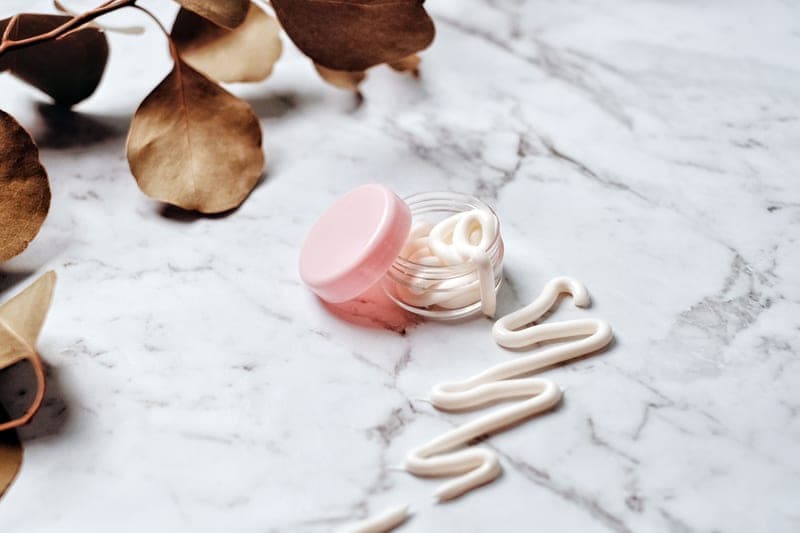 Badger Clear Zinc Sunscreen SPF 40Best minimal formula · SPF 40 | Travelers who want the shortest possible ingredient list | |
| 3 | 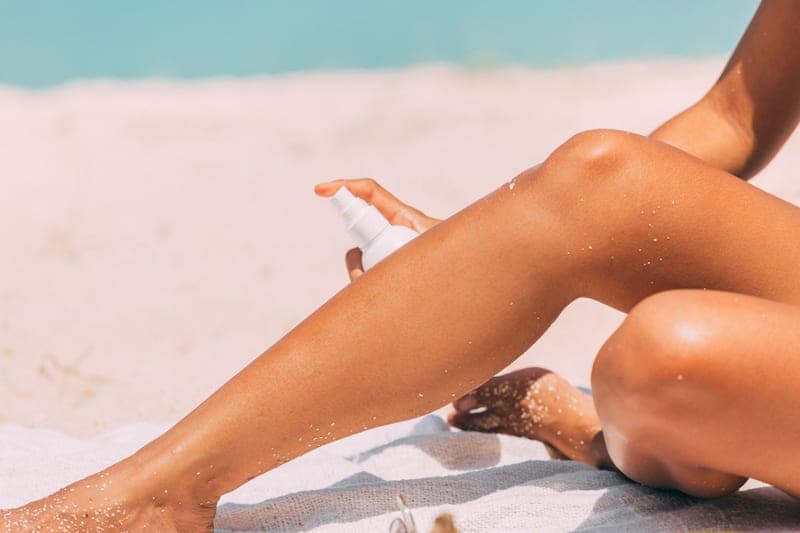 Blue Lizard Sensitive Mineral Sunscreen SPF 50+Best for a family trip · SPF 50+ | One brand covering adults, children and faces | |
| 4 |  Thinkbaby Safe Sunscreen SPF 50+Best for children in the water · SPF 50+ | Kids snorkeling or swimming in protected areas | |
| 5 | 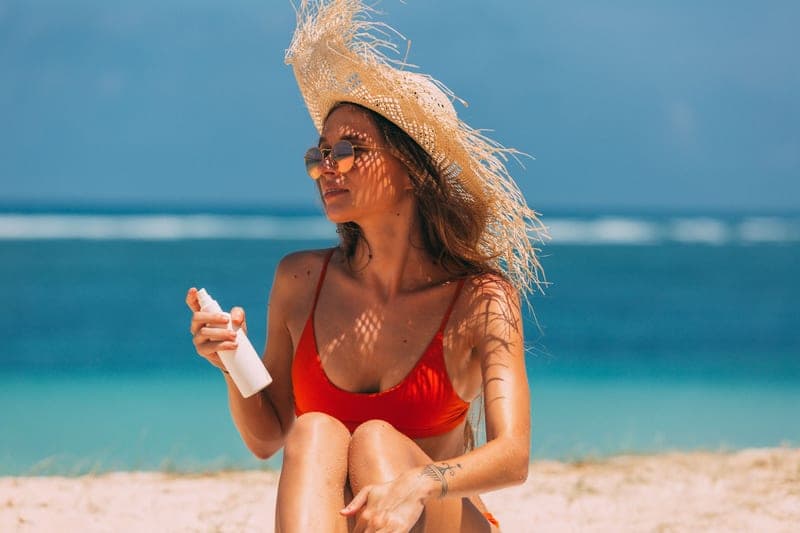 Australian Gold Botanical Mineral Sunscreen SPF 50Best value · SPF 50 | Covering a family for a week without rationing | |
| 6 |  Coolibar Morada Everyday Long Sleeve T-Shirt UPF 50+Better than any sunscreen here · UPF 50+ | Reducing how much product ends up in the water at all |
How we chose these
- Zinc oxide and/or titanium dioxide as the only active filters. No oxybenzone, no octinoxate, no octocrylene — the three most commonly restricted.
- Water resistance, because a reef-safe sunscreen you are wearing while snorkeling needs to stay on. 80 minutes is the maximum a US label may claim.
- Non-nano where the brand publishes it, as an extra precaution rather than because the evidence demands it.
- Real availability, so you can buy a replacement at your destination without resorting to a restricted product.
We read the drug facts panel on every product here. We do not run environmental testing and we cite NOAA rather than restating its findings as our own. Our methodology.
Our picks in detail
01 · Best overall
Thinksport Sunscreen SPF 50+
Thinksport · Read our Thinksport review
Zinc-only actives with the maximum 80 minutes of water resistance — the combination that matters when the product has to be both unrestricted and still on your skin after an hour in the sea.
- Actives:
- 20% non-nano zinc oxide
- SPF:
- SPF 50+
- Water resistance:
- 80 minutes
- Reef status:
- Zinc only — no oxybenzone, octinoxate or octocrylene
- Best for:
- Snorkeling and long days in the water
What works
- Zinc-only, so unrestricted everywhere
- Maximum labeled water resistance
- Published non-nano zinc concentration
The trade-off
- Visible white cast
- Heavy for daily face use
02 · Best minimal formula
Badger Clear Zinc Sunscreen SPF 40
Badger · Read our Badger review
Non-nano zinc in a very short base, from a brand that publishes its concentration. If the reef question is part of a broader preference for simple formulations, this is the coherent choice.
- Actives:
- Non-nano zinc oxide
- SPF:
- SPF 40
- Water resistance:
- 40 minutes
- Reef status:
- Zinc only
- Best for:
- Travelers who want the shortest possible ingredient list
What works
- Very short ingredient list
- Published non-nano zinc
- Fragrance-free options
The trade-off
- 40 minutes of water resistance
- Thick and slow to spread
03 · Best for a family trip
Blue Lizard Sensitive Mineral Sunscreen SPF 50+
Blue Lizard · Read our Blue Lizard review
Mineral actives with 80 minutes of water resistance across baby, kids, sensitive and face variants — the practical way to make a whole family compliant without buying four unrelated products.
- Actives:
- Zinc oxide and titanium dioxide
- SPF:
- SPF 50+
- Water resistance:
- 80 minutes
- Reef status:
- Mineral filters only; the Sensitive formula omits oxybenzone and octinoxate
- Best for:
- One brand covering adults, children and faces
What works
- Whole range is mineral-only
- 80-minute water resistance
- Easy to replace at most destinations
The trade-off
- Stubborn to rub in
- Obvious cast
04 · Best for children in the water
Thinkbaby Safe Sunscreen SPF 50+
Thinkbaby · Read our Thinkbaby review
20% non-nano zinc with the full 80 minutes of water resistance and no chemical filters to sting eyes — the child-appropriate version of the same argument.
- Actives:
- 20% non-nano zinc oxide
- SPF:
- SPF 50+
- Water resistance:
- 80 minutes
- Reef status:
- Zinc only — no oxybenzone, octinoxate or octocrylene
- Best for:
- Kids snorkeling or swimming in protected areas
What works
- Zinc-only and does not sting
- Maximum water resistance
- Suits the whole family, not just children
The trade-off
- Visible cast
- Thick texture
05 · Best value
Australian Gold Botanical Mineral Sunscreen SPF 50
Australian Gold · Read our Australian Gold review
Mineral filters with 80 minutes of water resistance at a price that makes applying the full ounce per person, twice a day, for a week, something you will actually do.
- Actives:
- Zinc oxide and titanium dioxide
- SPF:
- SPF 50
- Water resistance:
- 80 minutes
- Reef status:
- Mineral filters only
- Best for:
- Covering a family for a week without rationing
What works
- Mineral-only actives
- 80-minute water resistance
- Priced for generous use
The trade-off
- Scented
- Noticeable cast
06 · Better than any sunscreen here
Coolibar Morada Everyday Long Sleeve T-Shirt UPF 50+
Coolibar
A UPF 50+ shirt rated wet or dry covers the torso completely, which means less sunscreen on your skin, less washing off into the water, and no reapplication mid-swim.
- Actives:
- UPF 50+ knit — the protection is the fabric, not a coating
- SPF:
- UPF 50+
- Water resistance:
- Rated wet or dry
- Reef status:
- Not applicable
- Best for:
- Reducing how much product ends up in the water at all
What works
- Nothing washes off into the water
- Rated wet or dry
- Protects for the whole day
The trade-off
- Face, hands and legs still need sunscreen
- A wet shirt is warm out of the water
What the restrictions actually are
| Where | What is restricted |
|---|---|
| Hawaii | Sale of sunscreens containing oxybenzone or octinoxate without a prescription |
| Key West, Florida | Sale of sunscreens containing oxybenzone or octinoxate |
| US Virgin Islands | Oxybenzone, octinoxate and octocrylene, with import and possession also covered |
| Palau | One of the broadest lists in force, extending beyond the common three filters |
| Bonaire | Sale of sunscreens containing oxybenzone and octinoxate |
| Aruba | Sale of sunscreens containing oxybenzone |
Rules differ in scope — some cover sale only, others cover possession — and they change. Check before you travel rather than assuming. Where reef-safe sunscreen is required goes destination by destination.
What the science does and does not show
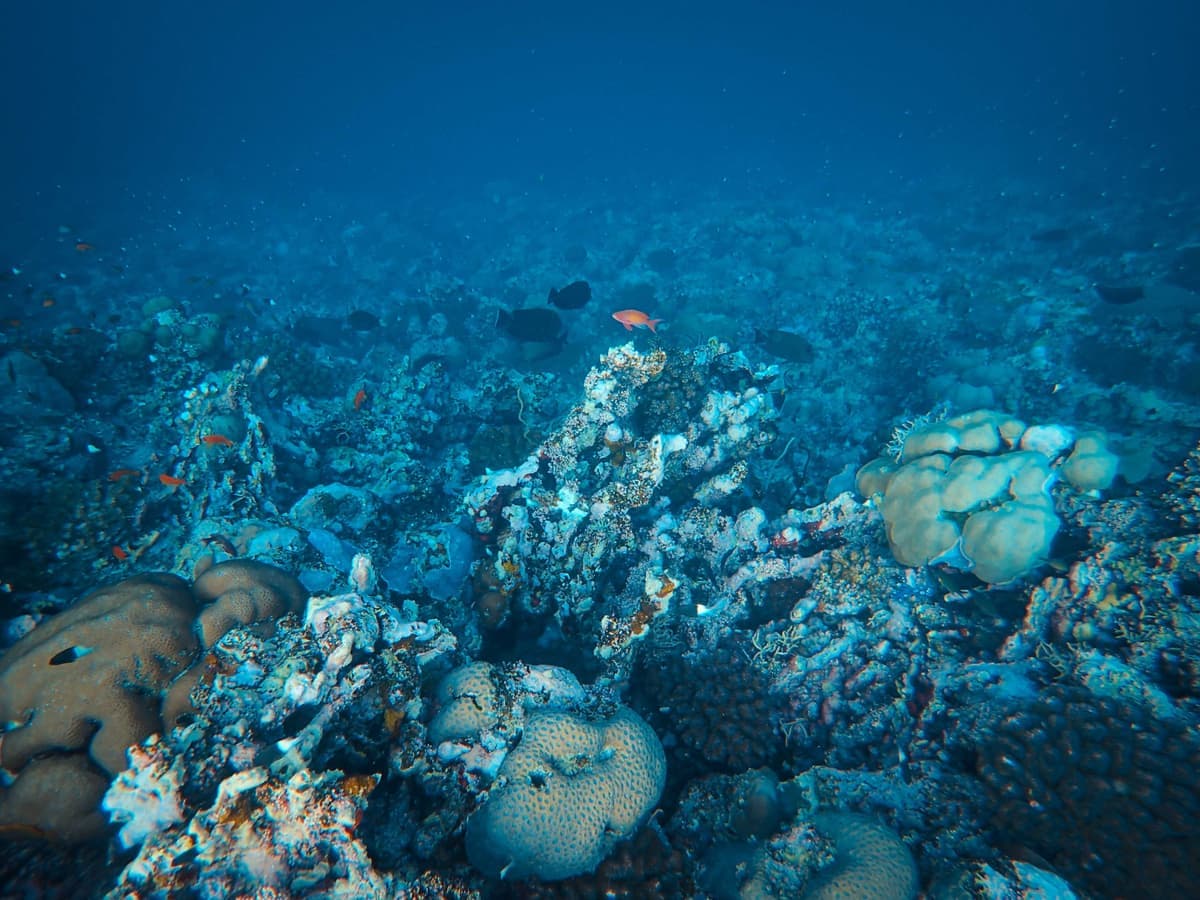
Laboratory research has demonstrated that oxybenzone harms coral larvae and contributes to bleaching at measurable concentrations, and that work is the basis for the legislation. Whether real-world concentrations at any given beach reach those levels varies enormously with water volume, current and how many swimmers are present.
Meanwhile the dominant driver of global coral loss is ocean warming, not sunscreen — the EPA's coral reef material is clear on that ordering. Choosing a mineral sunscreen for a snorkeling trip is a reasonable, essentially free precaution. Presenting it as the thing that will save reefs is overselling it, and the people who read ingredient lists tend to notice. Reef-safe versus reef-friendly sets out both sides properly.
What else you can do in the water
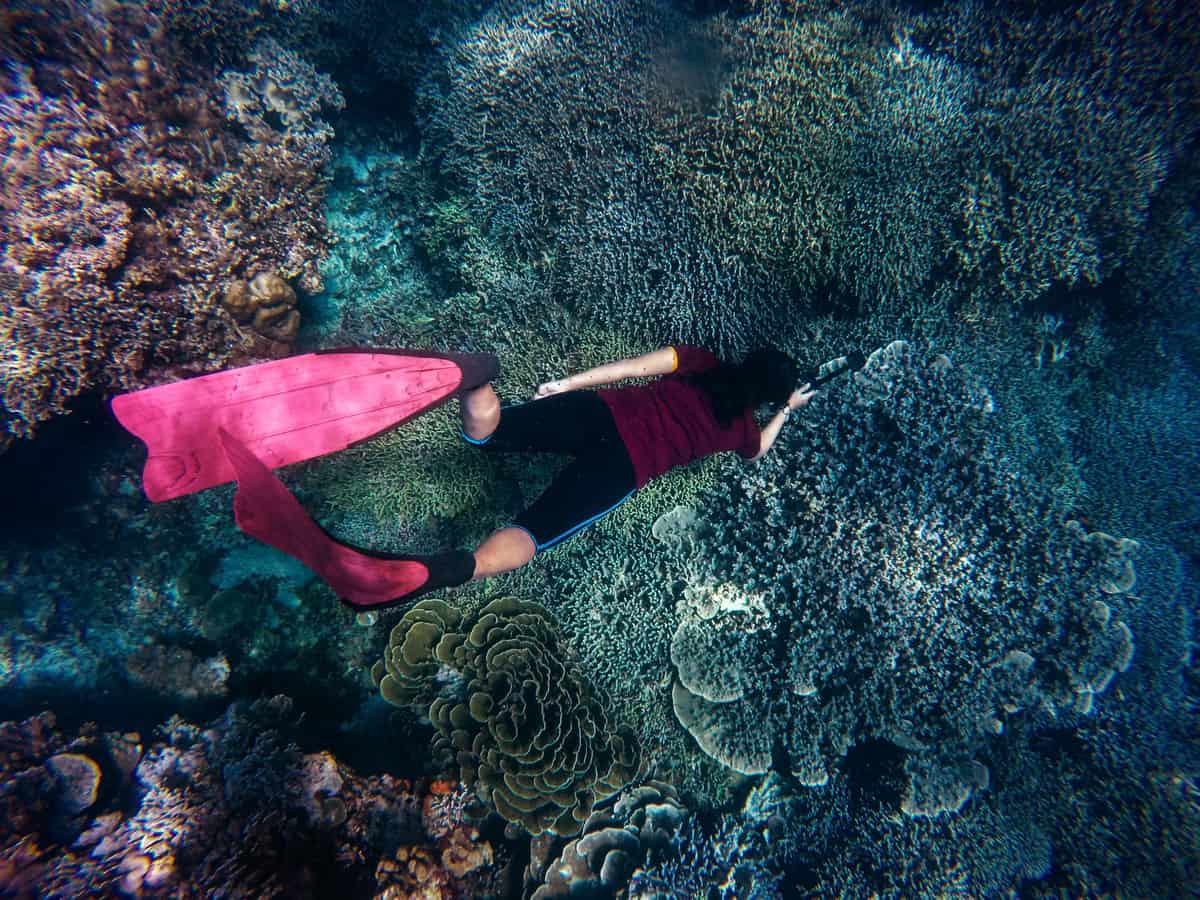
- Wear a rash guard. A UPF 50+ shirt covers the torso, which is the largest area you would otherwise be coating in anything at all.
- Apply 15 to 30 minutes before you get in, so the layer has bonded rather than washing straight off.
- Do not touch or stand on coral. Physical contact does more immediate damage than any sunscreen does.
- Reapply on land, not standing in the shallows.
Sources
- Sunscreen chemicals and coral reefs — NOAA National Ocean Service
- Coral Reefs — U.S. Environmental Protection Agency
- Sunscreen: How to Help Protect Your Skin from the Sun — U.S. Food and Drug Administration
- Sunscreen FAQs — American Academy of Dermatology
- Sunscreen — Skin Cancer Foundation
Frequently asked questions
What is the best reef-safe sunscreen?
A mineral formula whose only actives are zinc oxide and/or titanium dioxide, with 80 minutes of water resistance if you are swimming. Thinksport SPF 50+ is our pick on those criteria.
What makes a sunscreen reef safe?
There is no legal standard. In practice it means the only active filters are zinc oxide or titanium dioxide, and that oxybenzone, octinoxate and usually octocrylene are absent. Check the Drug Facts panel, not the front of the bottle.
Is reef-safe sunscreen required in Hawaii?
Hawaii bans the sale of sunscreens containing oxybenzone or octinoxate without a prescription. It does not require you to use a particular product, but it is why mineral sunscreen is what you will find on shelves there.
Is mineral sunscreen actually better for coral?
Zinc oxide and titanium dioxide are not restricted by any current reef-protection law, and the laboratory evidence behind the restrictions concerns oxybenzone in particular. It is a sensible precaution. It is not a substitute for addressing ocean warming, which is the dominant driver of coral loss.
Read next

Reef-Safe & Ingredients
What reef-safe sunscreen actually means
The unregulated claim, and the ingredient rules that actually matter — checkable in ten seconds.
Reef-Safe & Ingredients
Where reef-safe sunscreen is actually required
Destination-by-destination restrictions, what each one covers, and what to pack.
Reef-Safe & Ingredients
Reef-safe vs reef-friendly: is either real?
What the coral research shows, where it is contested, and the honest position on both phrases.
Reef-Safe & Ingredients
How to read a sunscreen label
How to read the drug facts panel line by line, and what every front-of-bottle claim is worth.

Mineral Sunscreen
The best mineral sunscreens
Zinc-only picks for faces, bodies and kids, chosen on actives and water resistance rather than packaging.

Sun Protective Gear
The best sun shirts
UPF 50+ shirts and hoodies chosen on fabric, fit and heat management — protection that never needs reapplying.