Sun Safety
How much sunscreen to apply
About an ounce for a body, a quarter teaspoon for a face. Applying half gives you far less than half the protection.
Disclosure: Spf & Shore earns commission from qualifying purchases made through links on this page, at no extra cost to you. It does not change which products we recommend. Read the full disclosure.
For an adult, about one ounce — a shot glass — covers the whole body. For face and neck, about a quarter teaspoon, or the two-finger measure. Reapply every two hours and immediately after swimming or toweling off. Most people apply between a quarter and a half of the amount SPF is measured at, and protection falls faster than the amount skipped.
This is the single most useful page on this site, and it costs nothing to act on. An SPF 30 applied properly outperforms an SPF 50 applied thinly.
The measures, by body area
| Area | Amount | Practical equivalent |
|---|---|---|
| Whole body, adult | About 1 ounce | A shot glass, or roughly a golf-ball volume |
| Face and neck | About 1/4 teaspoon | Two strips along your index and middle fingers |
| Face alone | About 1/8 teaspoon | One finger-length strip |
| Each arm | About 1/2 teaspoon | A generous line from wrist to shoulder |
| Each leg | About 1 teaspoon | Roughly twice an arm |
| Chest and stomach | About 1 teaspoon | |
| Back and shoulders | About 1 teaspoon | The area people most need help with |
| Whole body, school-age child | About 1/2 ounce | A large tablespoon |
Two consequences follow immediately. A 4-ounce bottle is four full-body adult applications — so a bottle that lasts a family all summer is evidence of under-application, not efficiency. And buying the larger tube is a protection decision, not just an economy.
The two-finger measure, for faces
Squeeze a line of sunscreen along the full length of your index finger, then another along your middle finger. That is roughly a quarter teaspoon, and it is the amount for face and neck together. Most people apply well under half of it, largely because the full amount looks like more product than they want on their face.
If the correct amount looks unacceptable on your skin, the answer is a different product rather than less of this one. A tinted or lighter formula applied fully beats an elegant one applied thinly.
Why under-applying costs more than it seems
SPF is measured in a laboratory at 2 milligrams per square centimeter of skin, spread evenly. A filter layer protects the skin it is actually covering — so a thinner layer is not a uniformly weaker shield but a patchier one, with more skin effectively uncovered.
The result is that halving the dose does not halve the SPF; it reduces effective protection by considerably more. Which is why the SPF 30 versus SPF 50 question matters far less than this one does.
The spots everyone misses
- Ears, especially the tops and the rims.
- The back of the neck, and the part in your hair.
- The tops of the feet, painful in sandals and consistently forgotten.
- Lips, which need an SPF balm rather than lotion.
- Under swimsuit straps that shift as you move.
- Behind the knees and the backs of the legs.
- Eyelids and under the eyes — a stick is the right tool here.
- Hands, which get more cumulative sun than almost anywhere else.
Applying it so it works
- Apply to dry skin, 15 to 30 minutes before going out if you are using a chemical formula.
- Dispense the full amount first, then spread. Squeezing as you go guarantees you stop early.
- Work in sections — one limb at a time — rather than trying to cover everything at once.
- Two thin layers beat one thick one for evenness and appearance.
- Reapply every two hours, and immediately after swimming or toweling off. A reapplication is a full second coat, not a top-up.
Making it realistic
An ounce per person per application, four times a day, for a family, is a lot of sunscreen — which is exactly why people quietly ration it. Two things genuinely help.
Buy value formats. Price per ounce decides whether you are generous. And reduce the area. A UPF 50+ shirt removes the torso from the calculation entirely, which cuts both the volume and the reapplication workload by most of the body.
Sources
- Sunscreen: How to Help Protect Your Skin from the Sun — U.S. Food and Drug Administration
- Sunscreen FAQs — American Academy of Dermatology
- Sunscreen — Skin Cancer Foundation
- How Do I Protect Myself from UV Rays? — American Cancer Society
- Questions and Answers: FDA Requirements for Over-the-Counter Sunscreen Products — U.S. Food and Drug Administration
Frequently asked questions
How much sunscreen should I use?
About one ounce — a shot glass — for an adult's whole body, and about a quarter teaspoon for face and neck. That means a 4-ounce bottle is four full-body applications.
How much sunscreen for the face?
About a quarter teaspoon for face and neck, commonly described as the two-finger measure: a strip of product along the full length of your index finger and another along your middle finger.
What happens if you do not apply enough sunscreen?
You get substantially less than the labeled SPF, and by more than the shortfall suggests. Halving the dose does not halve the protection — it reduces it by considerably more, because the layer becomes patchy rather than uniformly thinner.
How much sunscreen for a child?
About half an ounce — a large tablespoon — for a school-age child's whole body. For an infant, roughly a teaspoon covers face, hands and feet generously.
How often should you reapply?
Every two hours, and immediately after swimming, heavy sweating or toweling off. A reapplication is a full second coat, not a thin refresh over what is left.
Read next

Sun Safety
SPF 30 vs SPF 50
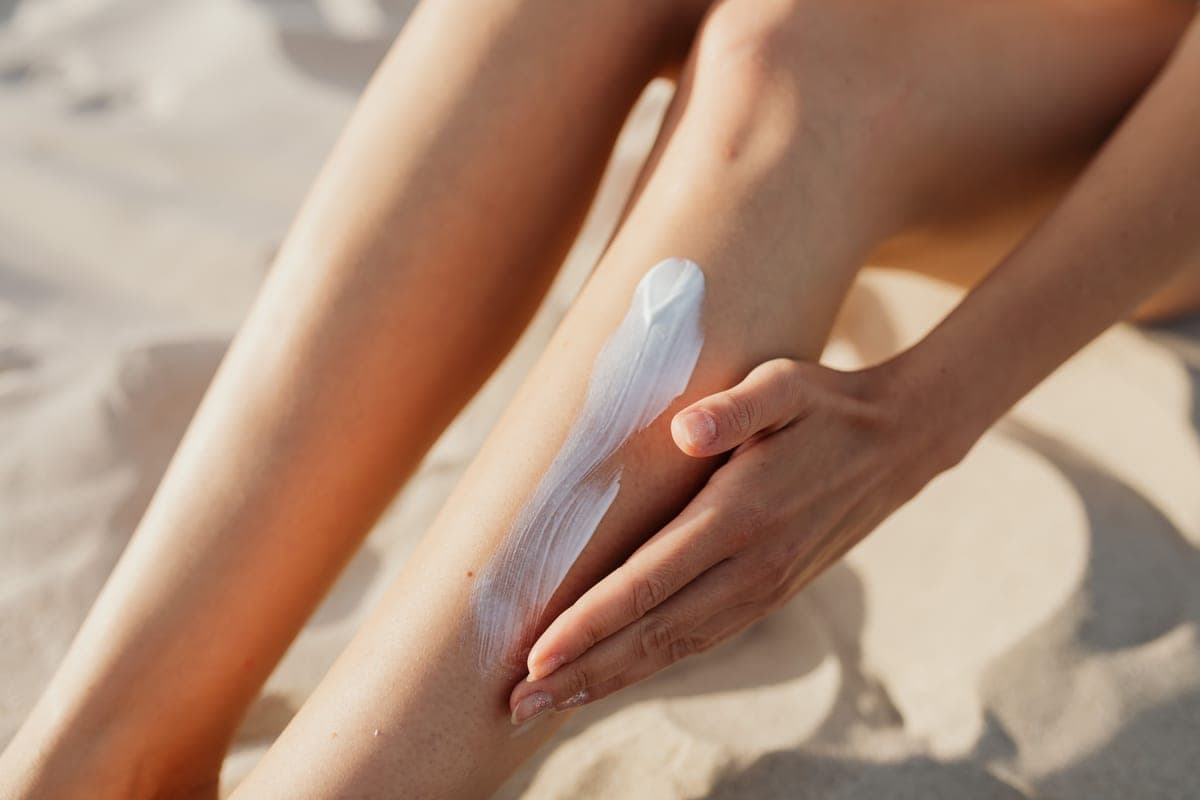
What the numbers actually mean, why the gap looks different depending on framing, and which to buy.
Sun Safety
How sunscreen works
The mechanism behind UV filters, the UVA and UVB difference, and why the amount applied matters so much.
Sun Safety
Stick vs lotion vs spray sunscreen
What each format delivers, why sprays under-perform, and the combination that works.

Kids & Baby
Reapplying sunscreen on kids without losing the day
The reapplication rule, why toweling off matters more than the clock, and how to make it work in practice.
Sun Safety
What water-resistant sunscreen actually means
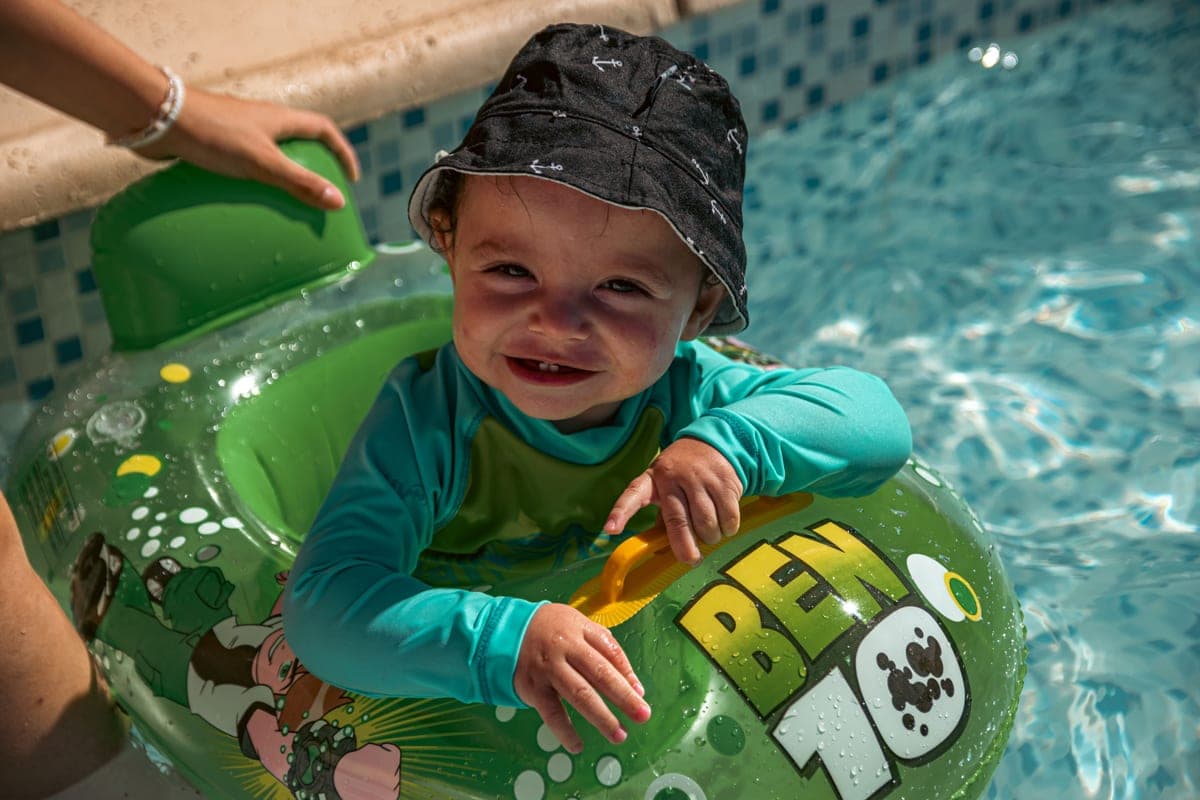
What the 40 and 80-minute claims measure, why toweling ends them, and how to plan a pool day around it.

Sun Protective Gear
The best sun shirts
UPF 50+ shirts and hoodies chosen on fabric, fit and heat management — protection that never needs reapplying.