Sun Protective Gear
Sun protection for your hair and scalp
Hair is not a sunscreen. Part lines, crowns and the tops of ears are among the easiest places to burn and the most commonly skipped.
Disclosure: Spf & Shore earns commission from qualifying purchases made through links on this page, at no extra cost to you. It does not change which products we recommend. Read the full disclosure.
A hat is the answer, and a wide brim rather than a cap: a UPF 50+ hat with a three-inch brim covers the scalp, the part line, both ears and the back of the neck at once, which is four separate sunscreen jobs removed in one action. Our pick is the Sunday Afternoons Ultra Adventure Hat, because the neck cape covers the one spot a brim alone still leaves open.
Where a hat is not practical — in water, under a bike helmet, with a hairstyle that will not survive one — a zinc stick along the part line and across the tops of the ears is the realistic second-best. Hair itself is not sun protection: dense hair shades the skin beneath it, a parting does not, and thinning hair protects progressively less.
Why the scalp gets missed
- It is horizontal. The top of a head faces the midday sun more directly than almost any other surface on a standing person.
- Sunscreen in hair is unpleasant. Lotion on a scalp means greasy hair, which is why people skip it even when they know better.
- You cannot see it. A part line, a crown and the back of a neck are all out of your own view, so a missed spot is invisible until it is sore.
- Caps feel like protection. A baseball cap shades a forehead and leaves ears, cheeks and the back of the neck fully exposed.
- Hair feels like protection. Dense hair does shade the skin under it, but a parting is a bare line of skin and a thinning crown is a bare patch.
What a hat does that nothing else does
A UPF 50+ fabric blocks at least 98% of the UV that hits it, for as long as it is worn, with nothing to reapply and no dose to get wrong. The Skin Cancer Foundation's guidance on sun-protective clothing covers how the rating works; UPF versus SPF covers how it compares with a sunscreen number.
Brim width is the whole specification. A brim shades by geometry, so a two-inch brim shades a forehead and some of a nose, and a three-inch brim reaches cheeks and ears. Beyond the brim, two features matter: a tight enough weave that you cannot see daylight through it when you hold it up, and a chin strap if you will be anywhere with wind — a hat in your hand protects nothing. The best sun hats compares the options.
Protecting a part line without greasy hair
- Use a stick, not a lotion. Run it directly along the parting — the wax base stays on skin rather than wicking into hair.
- Do the same across the tops of both ears, including the rims, which burn before anything else on a head.
- For a thinning crown, a stick in a grid, or a mineral powder brushed on if you have one. A powder is the least detectable option on hair.
- Never spray at a head. The FDA advises against inhaling sunscreen sprays, and a scalp is directly above a face.
- Reapply at two hours, like everywhere else. A part line in direct midday sun is working harder than your forearms.
Swimming, cycling and other hat-free situations
In water, a hat is usually gone and reflected UV comes back up at you, so the part line and the ears take a double dose. A long-brimmed surf hat with a strap is the real fix; failing that, a swim cap covers the whole scalp outright, and a zinc stick reapplied after every exit is the fallback.
Under a bike or climbing helmet, the vents are the problem — they sit directly over the crown and the stripes of sunburn they produce are unmistakable. A thin UPF cap or a buff under the helmet solves it completely and weighs nothing.
What the sun does to hair itself
Separately from the skin underneath, UV and salt water are hard on hair: colour fades, especially on dyed and light hair, and prolonged exposure leaves hair drier and more brittle. That is a cosmetic matter rather than a health one, and the protection is the same — a hat shades hair as well as scalp. Rinsing after salt or chlorinated water does more for hair condition than any leave-in product applied beforehand.
Our picks in detail
01 · Best overall
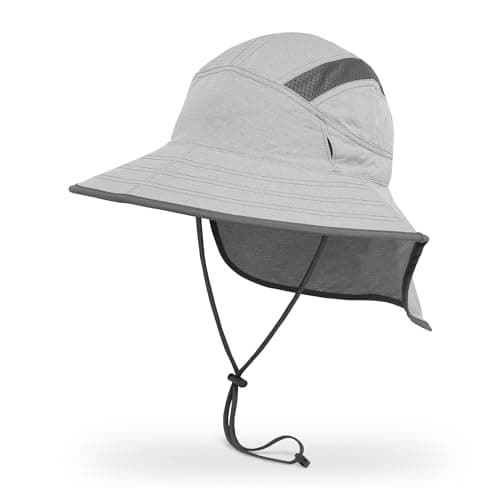
Sunday Afternoons Ultra Adventure Hat UPF 50+
Sunday Afternoons
A UPF 50+ crown with a full brim and a neck cape — the one hat here that closes the gap a brim alone leaves at the back of the neck, and it packs down into a bag.
- Actives:
- UPF 50+ crown with a neck cape
- SPF:
- UPF 50+
- Water resistance:
- Quick-dry
- Reef status:
- Not applicable
- Best for:
- Covering scalp, ears and neck in one move
What works
- Full brim plus neck cape
- UPF 50+ rated fabric
- Packable and quick-drying
The trade-off
- Catches wind on exposed ground
- Bulkier than a cap
#ad We earn from qualifying purchases · Price as of October 10, 2026
02 · Best everyday hat
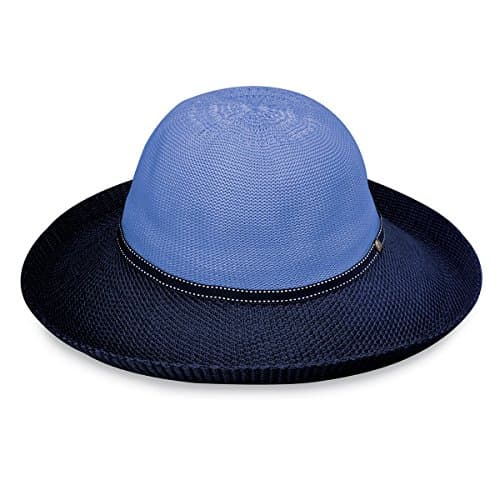
Wallaroo Hat Company Victoria Wide Brim Hat UPF 50+
Wallaroo
A UPF 50+ woven wide brim that packs flat and does not look like technical gear — the version of this that gets worn on a normal day rather than only on a hike.
- Actives:
- UPF 50+ woven brim, packable
- SPF:
- UPF 50+
- Water resistance:
- Not applicable
- Reef status:
- Not applicable
- Best for:
- A wide brim you will wear into town
What works
- Genuine wide brim
- Packable
- Wearable off the trail
The trade-off
- No chin strap in strong wind
- Not for water
#ad We earn from qualifying purchases · Price as of October 10, 2026
03 · Best for a part line
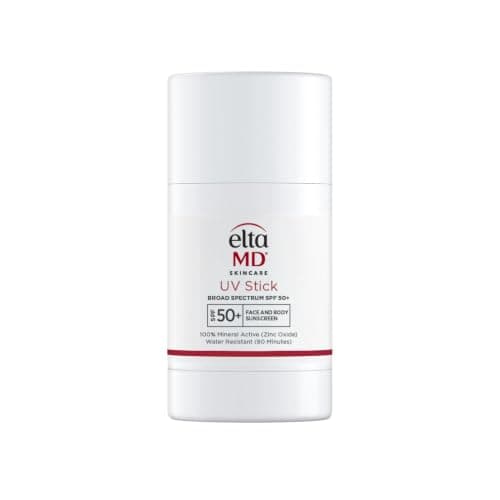
EltaMD UV Stick Broad Spectrum SPF 50+
EltaMD · Read our EltaMD review
22% transparent zinc oxide with 80 minutes of water resistance in a stick — it runs straight along a parting without wicking into hair, and it does not leave a white stripe.
- Actives:
- 22% transparent zinc oxide
- SPF:
- SPF 50+
- Water resistance:
- 80 minutes
- Reef status:
- Zinc only — no oxybenzone, octinoxate or octocrylene
- Best for:
- Partings, ears and a thinning crown
What works
- Transparent zinc, no white stripe
- 80-minute water resistance
- Precise on ears and partings
The trade-off
- Expensive per ounce
- Needs several slow passes
#ad We earn from qualifying purchases · Price as of October 10, 2026
04 · Best for children
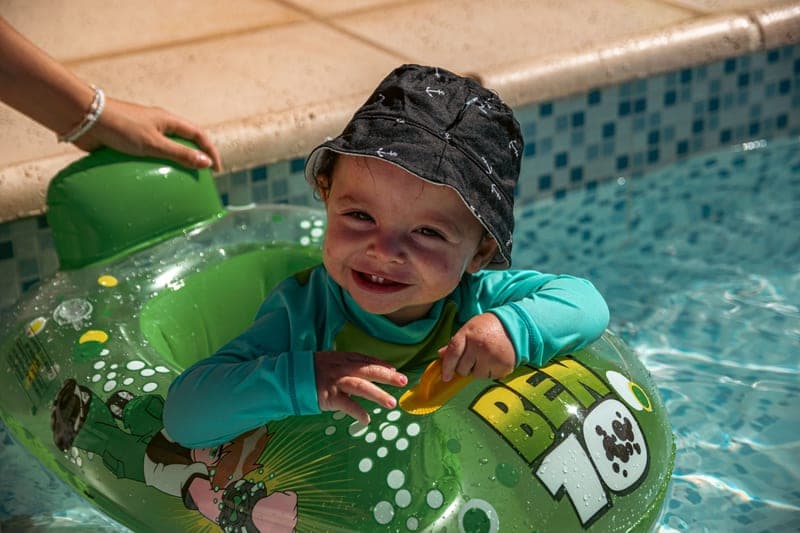
Coolibar Kids Bucket Hat UPF 50+
Coolibar
A UPF 50+ crown with a wide brim and a chin strap — the strap is the feature, because a hat that stays on is worth more than any brim measurement.
- Actives:
- UPF 50+ crown with a chin strap
- SPF:
- UPF 50+
- Water resistance:
- Rated wet or dry
- Reef status:
- Not applicable
- Best for:
- Keeping a hat on a small head
What works
- Chin strap keeps it on
- UPF 50+ rated
- Rated wet or dry
The trade-off
- Only as good as the strap being used
- Premium pricing
A word on children
On a small child a brimmed hat with a chin strap is worth more than any sunscreen decision, because scalps and ears are the hardest places to get cooperation for and the strap is what keeps the hat on a head rather than in the sand. Build it into the getting-ready routine rather than producing it at the beach. Reapplying sunscreen on kids covers the rest of the logistics.
Sources
- Sun-Protective Clothing — Skin Cancer Foundation
- How to prevent skin cancer — American Academy of Dermatology
- Sunscreen FAQs — American Academy of Dermatology
- How Do I Protect Myself from UV Rays? — American Cancer Society
- Sunscreen: How to Help Protect Your Skin from the Sun — U.S. Food and Drug Administration
Frequently asked questions
How do you protect your scalp from the sun?
A UPF 50+ hat with a brim of about three inches, ideally with a neck cape, covers the scalp, part line, ears and back of the neck at once. Where a hat is not practical, run a zinc stick along the part line and across the tops of the ears.
Can you put sunscreen on your scalp?
Yes, and a stick is the format to use — the wax base stays on skin rather than wicking into hair, so it protects a parting without leaving hair greasy. Never spray sunscreen at a head.
Does hair protect your scalp from the sun?
Dense hair shades the skin beneath it, but a part line is bare skin and a thinning crown is a bare patch. Hair is not a substitute for a hat or sunscreen on the skin that is actually exposed.
Is a baseball cap enough sun protection?
No. A cap shades the forehead and leaves the ears, cheeks and back of the neck fully exposed — three of the areas where sun damage is most commonly found on people who spend a lot of time outdoors.
Does the sun damage hair as well as scalp?
UV and salt or chlorinated water fade colour and leave hair drier and more brittle, particularly on dyed or light hair. That is cosmetic rather than a health issue, and a hat shades hair and scalp alike.
Read next
Sun Protective Gear
The best sun hats
Wide-brim UPF 50+ hats for adults and children, and why a baseball cap is not enough.

Sun Protective Gear
UPF vs SPF
What each scale measures, why they do not convert, and what UPF 50 is actually worth.
Sun Safety
The best sunscreen sticks
The sunscreen sticks worth buying, what their actives panels say, and the number of passes it takes to reach the SPF on the tube.

Sun Protective Gear
How UPF clothing works
What makes fabric block UV, why good garments do not wash out, and what actually degrades protection.
Sun Safety
The best sunscreen for hiking
Sweat-resistant sunscreen plus the shirt and hat that cut the reapplication job on a long exposed day.