Reviews
EltaMD sunscreen review
The most recommended face SPF in dermatology offices — and its best-known product is not a mineral sunscreen.
Disclosure: Spf & Shore earns commission from qualifying purchases made through links on this page, at no extra cost to you. It does not change which products we recommend. Read the full disclosure.
The most important thing to know about EltaMD is that its best-known product is not a mineral sunscreen. UV Clear pairs zinc oxide with octinoxate, a chemical filter restricted in Hawaii and Key West. It is an excellent product and it is a hybrid, and a great deal of coverage blurs that.
The genuinely mineral products in the range are UV Physical and UV Elements, both tinted with iron oxides. If you came here wanting a mineral EltaMD, those are the ones.
Quick picks
Tap any row to read the full write-up below.
| # | Product | Best for | Price |
|---|---|---|---|
| 1 |  EltaMD UV Physical Tinted Broad-Spectrum SPF 41The mineral one to buy · SPF 41 | Mineral protection with a tint and water resistance | |
| 2 |  EltaMD UV Clear Broad-Spectrum SPF 46Best for acne-prone skin · SPF 46 | Oily, acne-prone or rosacea-prone facial skin | |
| 3 |  EltaMD UV Elements Tinted Moisturizer SPF 44Best for dry skin · SPF 44 | Dry or mature skin wanting mineral and tinted |
Sorting the range
| Product | Filter type | Tinted? | Reef-law status |
|---|---|---|---|
| UV Clear SPF 46 | Hybrid — zinc oxide plus octinoxate | Tinted version available | Restricted in Hawaii and Key West |
| UV Physical SPF 41 | Mineral — zinc and titanium | Yes | Unrestricted |
| UV Elements SPF 44 | Mineral — zinc and titanium | Yes | Unrestricted |
| UV Daily SPF 40 | Hybrid | Tinted version available | Check the panel |
| UV Sport SPF 50 | Hybrid | No | Check the panel |
The lesson generalizes beyond this brand: a well-regarded, mineral-sounding product may not be mineral at all, and the only way to know is the actives panel. How to read a sunscreen label.
Our picks in detail
01 · The mineral one to buy
EltaMD UV Physical Tinted Broad-Spectrum SPF 41
EltaMD · Read our EltaMD review
Zinc and titanium under an iron-oxide tint, with 40 minutes of water resistance — the genuinely mineral EltaMD, and the one to take somewhere with reef restrictions.
- Actives:
- Zinc oxide and titanium dioxide, tinted with iron oxides
- SPF:
- SPF 41
- Water resistance:
- 40 minutes
- Reef status:
- Mineral filters only
- Best for:
- Mineral protection with a tint and water resistance
What works
- Mineral-only actives
- Iron-oxide tint cancels the cast
- Water resistant, unlike UV Clear
The trade-off
- One universal tint
- Dermatology-counter pricing
02 · Best for acne-prone skin
EltaMD UV Clear Broad-Spectrum SPF 46
EltaMD · Read our EltaMD review
The most recommended face SPF in dermatology offices, and a hybrid rather than a mineral: zinc alongside octinoxate, with 5% niacinamide. Excellent product, honestly labeled on the back.
- Actives:
- Zinc oxide with octinoxate; EltaMD lists 9% zinc oxide and 5% niacinamide
- SPF:
- SPF 46
- Water resistance:
- Not labeled water resistant
- Reef status:
- Contains octinoxate, which Hawaii and Key West restrict
- Best for:
- Oily, acne-prone or rosacea-prone facial skin
What works
- Niacinamide suits acne-prone and reactive skin
- Completely weightless, including on deep skin
- Pleasant enough that people reapply it
The trade-off
- Contains octinoxate, restricted in Hawaii and Key West
- Not water resistant
03 · Best for dry skin
EltaMD UV Elements Tinted Moisturizer SPF 44
EltaMD · Read our EltaMD review
A tinted mineral in a moisturizing base — the version of the range for skin that finds most mineral SPF flattening and most matte finishes ageing.
- Actives:
- Zinc oxide and titanium dioxide, tinted with iron oxides
- SPF:
- SPF 44
- Water resistance:
- 40 minutes
- Reef status:
- Mineral filters only
- Best for:
- Dry or mature skin wanting mineral and tinted
What works
- Moisturizing base with mineral-only actives
- Iron oxides for visible-light protection
- Blends further than a single shade suggests
The trade-off
- Dewy finish on oily skin
- 40 minutes of water resistance
Why UV Clear is recommended so often
Three reasons, all real.
- 5% niacinamide in the base, which is a genuinely useful ingredient for acne-prone and rosacea-prone facial skin rather than a marketing addition.
- It is weightless. It disappears completely, including on deep skin, which is why it is the answer for people who have given up on mineral formulas.
- People actually reapply it, because it is pleasant. Cosmetic elegance is not a frivolous property on a product whose real-world effectiveness depends on being used.
None of that requires it to be mineral, and it is not. Recommending it while being clear about what is in it is the honest position.
Honest limitations
- UV Clear contains octinoxate, restricted in Hawaii, Key West and several other destinations. Do not take it to those places. Where reef-safe sunscreen is required.
- UV Clear is not water resistant. Wrong for swimming, wrong for running in heat.
- Dermatology-counter pricing, several times drugstore alternatives per ounce — which matters, because applying the full dose daily is what protects you.
- The tinted products are single-shade, and the universal tint runs out before the deepest skin tones.
- The range is confusing, with several similarly named products of different filter types. That is the most common way people end up with something they did not intend to buy.
How it compares
Against [CeraVe](/reviews/cerave-mineral): CeraVe is the mineral option at a fraction of the price. EltaMD UV Clear is more cosmetically invisible and better suited to acne-prone skin. For most people CeraVe is the better value; for persistent breakouts UV Clear earns its price.
Against [Colorescience](/reviews/colorescience): both operate at the premium end. Colorescience has the better tinted coverage and a matching powder for reapplying; EltaMD has the better weightless untinted option.
Against [Blue Lizard](/reviews/blue-lizard): Blue Lizard for body, water and value; EltaMD for daily facial wear where cosmetic elegance decides whether you use it.
Who should buy what
- Acne-prone or rosacea-prone facial skin: UV Clear, accepting that it is a hybrid.
- You want mineral and a tint: UV Physical for a slightly firmer finish, UV Elements for a moisturizing one.
- You are traveling somewhere with reef restrictions: UV Physical or UV Elements, not UV Clear.
- You will be swimming: none of these — choose a water-resistant formula.
Sources
- Sunscreen: How to Help Protect Your Skin from the Sun — U.S. Food and Drug Administration
- Questions and Answers: FDA Requirements for Over-the-Counter Sunscreen Products — U.S. Food and Drug Administration
- Sunscreen FAQs — American Academy of Dermatology
- Sunscreen chemicals and coral reefs — NOAA National Ocean Service
Frequently asked questions
Is EltaMD sunscreen mineral?
Some of it. UV Physical and UV Elements are mineral. UV Clear, the brand's best-known product, is a hybrid pairing zinc oxide with octinoxate — a chemical filter restricted in Hawaii and Key West.
Is EltaMD UV Clear reef safe?
No. It contains octinoxate, which is restricted in Hawaii, Key West and several other jurisdictions. If you need a reef-compliant EltaMD, take UV Physical or UV Elements instead.
Why do dermatologists recommend EltaMD UV Clear?
It contains 5% niacinamide, which suits acne-prone and rosacea-prone skin, and it is completely weightless — which means people actually apply and reapply it. Real-world use is what determines real-world protection.
Is EltaMD water resistant?
UV Clear is not, which makes it wrong for swimming or running in heat. UV Physical and UV Elements carry 40 minutes. For serious water time, a formula with the full 80 minutes is the better choice.
Is EltaMD worth the price?
For acne-prone facial skin where the niacinamide and the weightless finish genuinely matter, it earns its price. For general mineral face protection, a drugstore mineral formula delivers the same regulated SPF for considerably less.
Read next
Face & Tinted SPF
The best sunscreen for your face
Daily face SPF by skin type and finish, from mineral to hybrid, with the trade-off named on each.

Face & Tinted SPF
The best tinted sunscreens
Tinted mineral formulas that cancel the cast and add visible-light protection, across every finish.
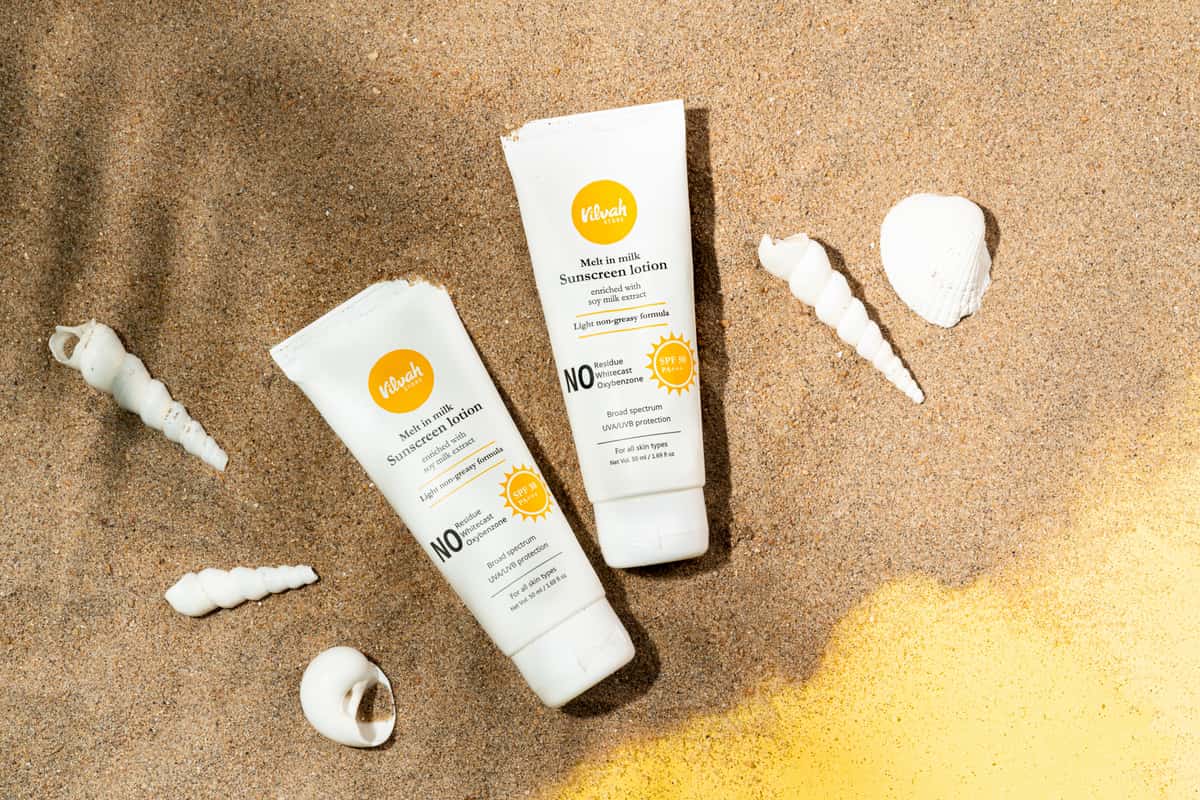
Mineral Sunscreen
Mineral vs chemical sunscreen
How each filter type works, what the absorption research actually found, and which to choose for your situation.
Reef-Safe & Ingredients
Where reef-safe sunscreen is actually required
Destination-by-destination restrictions, what each one covers, and what to pack.

Reviews
CeraVe mineral sunscreen review
Ceramides in a fragrance-free mineral base at drugstore prices, against 40-minute water resistance.

Reviews
Colorescience sunscreen review
Buildable iron-oxide tinting and a powder that reapplies over makeup — at the highest prices in this group.