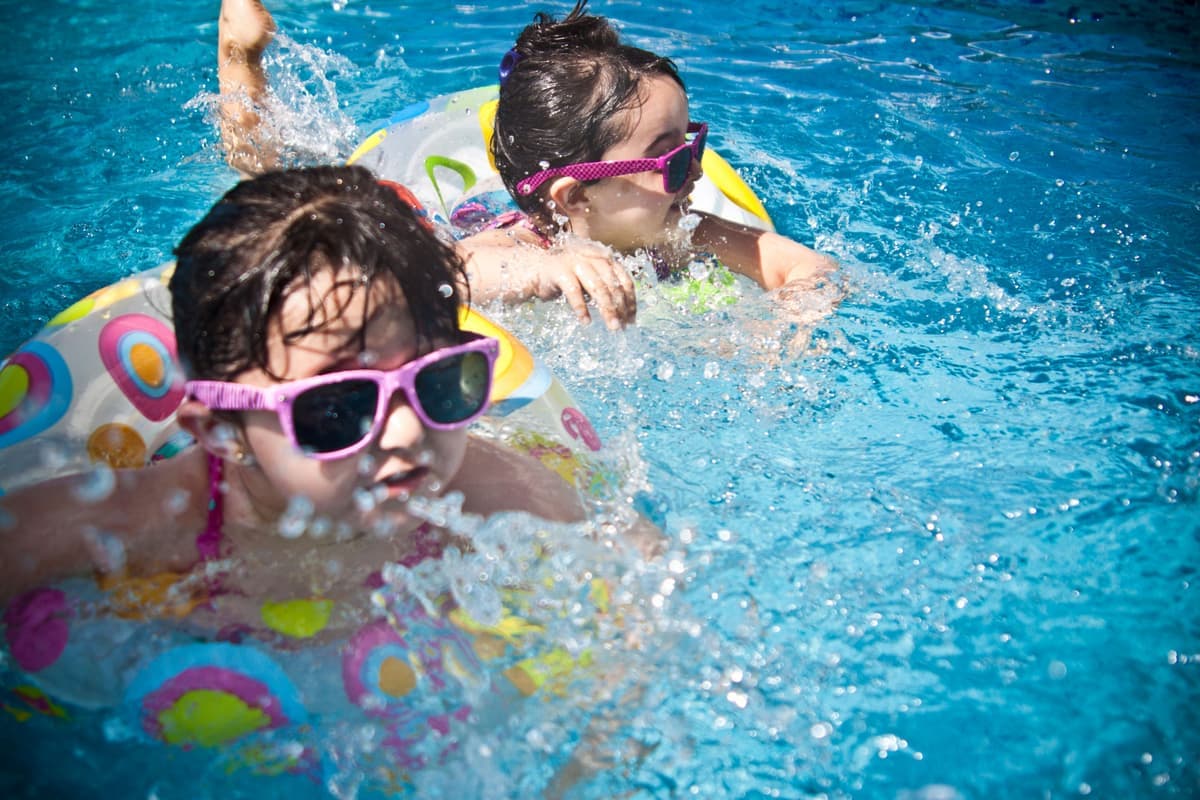
Best for Kids
The best sunscreen for kids
Zinc-first kids formulas chosen on water resistance, sting and how fast they go on.
Our top pick: Thinkbaby Safe Sunscreen SPF 50+
Category
What is safe at what age, what actually stays on, and the shirts and hats that mean less sunscreen in the first place.
Disclosure: Spf & Shore earns commission from qualifying purchases made through links on this page, at no extra cost to you. It does not change which products we recommend. Read the full disclosure.
For children, the guidance is unusually consistent across pediatric and dermatologic bodies: use shade and clothing first, mineral sunscreen second, and do not rely on sunscreen alone. Under six months, the American Academy of Pediatrics advises keeping infants out of direct sun and using clothing and shade rather than sunscreen, applying a small amount of a mineral product to exposed areas only when shade is genuinely unavailable.
That is not a hedge. A long-sleeve swim shirt delivers its protection for the whole day, does not wash off, and does not depend on a parent reapplying at the right interval on a beach with three children and one towel. Sunscreen is what covers the parts a shirt does not.
Best for Kids
Zinc-first kids formulas chosen on water resistance, sting and how fast they go on.
Our top pick: Thinkbaby Safe Sunscreen SPF 50+

Best for Babies
Zinc-only, fragrance-free formulas for six months and up, plus the AAP guidance for younger infants.
Our top pick: Badger Baby Sunscreen Cream SPF 40

Best for Eczema
Fragrance-free mineral formulas with short ingredient lists, plus what actually triggers reactions.
Our top pick: Vanicream Mineral Sunscreen SPF 50+ for Sensitive Skin

Best Sunscreen Stick
Mineral sticks for faces, ears and feet — the fastest format on a child, and where it falls short.
Our top pick: Thinkbaby Safe Sunscreen Stick SPF 30
Comparison
What genuinely differs between kids and adult formulas, and when the label is just packaging.
Comparison
Which format actually delivers the dose on a child, and why sprays are the weakest of the three.

Guide
What the AAP actually advises for infants, and how to apply it on a real day out.

Guide
The reapplication rule, why toweling off matters more than the clock, and how to make it work in practice.

Guide
Why sunscreen stings, which formulas and formats stop it, and how to apply around the eye area.
| Age | What to use | Why |
|---|---|---|
| Under 6 months | Shade, a wide-brim hat, lightweight long sleeves. A small amount of mineral sunscreen on the face and backs of hands only if shade is unavailable. | Infant skin is thinner and the surface-area-to-weight ratio is high. Full guidance here. |
| 6 months to ~3 years | Zinc-only mineral lotion, SPF 30 to 50, 80 minutes water resistance. Plus a hat and a rash guard. | Reapplication is unreliable at this age, so water resistance and clothing carry the load. |
| School age | Mineral lotion for the body, a stick for the face, and a UPF swim shirt. | A stick they can apply themselves on their own face actually gets used. |
| Teens | Whatever they will genuinely wear. Cosmetic elegance beats theoretical superiority. | An unused SPF 50 protects less than a used SPF 30. |
It stings their eyes. This is almost always a chemical-filter product running into the eyes with sweat or water. Zinc-only formulas are markedly less irritating, and a stick applied around the eye area avoids migration entirely. Which sunscreens do not sting covers what to look for.
It comes off in the water. Every water-resistance claim in the United States is either 40 or 80 minutes, tested by immersion. Eighty is the maximum the FDA permits anyone to claim. If your child is in and out of a pool for three hours, you are reapplying — the only question is whether you remember.
They will not sit still. This is a format problem, not a formula problem. Sticks and thick creams go on fast; sprays feel fast but are the hardest format to apply in sufficient quantity, and they should never be sprayed near a child's face. Spray, stick or lotion for kids works through the trade-offs.
For eczema-prone children the usual culprits are fragrance, botanical extracts, and chemical filters — in roughly that order. The safest starting point is a fragrance-free, zinc-only formula with a short ingredient list, patch-tested on the inside of a forearm a day before you need it. Our picks for eczema and reactive skin are chosen on exactly those criteria. If a child has diagnosed eczema or has reacted to a sunscreen before, talk to their pediatrician or a dermatologist before trying something new — this page is general information, not medical advice.
Usually less than the packaging implies. Many kids formulas are the same filter system as the brand's adult mineral line with different fragrance and marketing. What genuinely differs is the tendency toward zinc-only actives, fragrance-free bases, and thicker textures that show you where you have applied. That last one is a real feature, not a defect. Kids versus adult sunscreen compares actual labels rather than claims.
And yes — an adult can use a kids sunscreen and a child over six months can use an adult mineral sunscreen. The label is not a safety gate; the actives panel is.
The American Academy of Pediatrics advises shade and clothing for infants under six months, with a small amount of mineral sunscreen on exposed skin only when shade is not available. From six months, sunscreen is used normally alongside hats and clothing.
Often yes. Both tend to be zinc-only and fragrance-free. The practical difference is usually SPF level and texture rather than a different filter system.
Zinc-only mineral formulas with no fragrance sting far less than chemical-filter products, because they do not migrate into the eye with sweat the same way. A stick applied around the eye area avoids the problem almost entirely.
Every two hours, and immediately after swimming, toweling off, or heavy sweating — regardless of what the water-resistance number says.