Face & Tinted SPF
EltaMD UV Clear vs UV Physical
One is light and part-chemical. One is all-mineral and tinted. They are not interchangeable.
Disclosure: Spf & Shore earns commission from qualifying purchases made through links on this page, at no extra cost to you. It does not change which products we recommend. Read the full disclosure.
Buy UV Clear SPF 46 if you want the lightest possible daily layer on oily or acne-prone skin and you are fine with a part-chemical formula. Buy UV Physical SPF 41 if you want an all-mineral filter, a tint that cancels the cast, and a water-resistance claim. The deciding fact is the panel: UV Clear pairs zinc oxide with octinoxate, while UV Physical is zinc oxide and titanium dioxide only.
That octinoxate line matters more on this site than it would elsewhere. Hawaii and Key West restrict octinoxate, so UV Clear is not the product to pack for a reef destination — and if you came here because you wanted an all-mineral EltaMD, UV Physical is the one you are looking for. Everything else is texture and tint.
Quick picks
Tap any row to read the full write-up below.
| # | Product | Best for | Price |
|---|---|---|---|
| 1 | 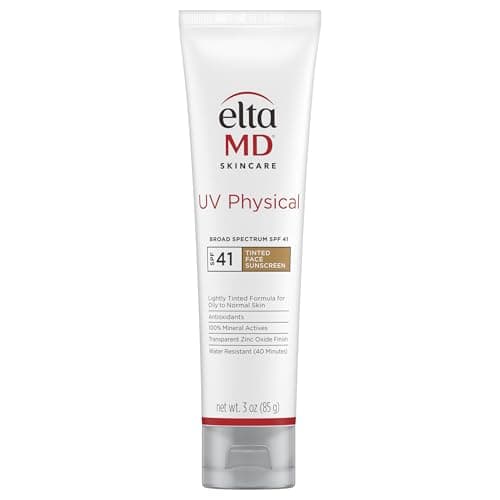 EltaMD UV Physical Tinted Broad-Spectrum SPF 41Best all-mineral pick · SPF 41 | Mineral filters, a tint that cancels the cast, and a reef trip | $50.00 · View on Amazon #ad We earn from qualifying purchases · Price as of November 2, 2026 |
| 2 | 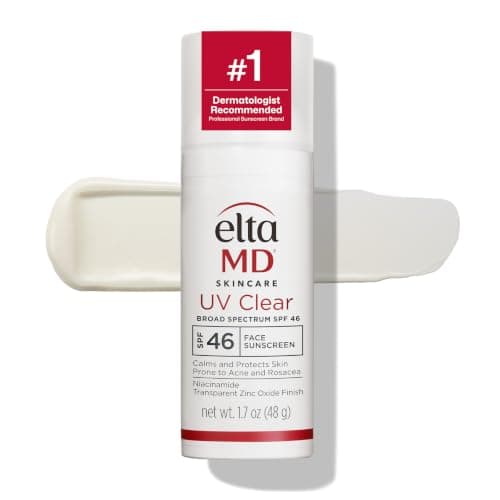 EltaMD UV Clear Broad-Spectrum SPF 46Lightest daily layer · SPF 46 | Oily, congestion-prone or rosacea-prone skin that rejects heavier formulas | $46.00 · View on Amazon #ad We earn from qualifying purchases · Price as of November 2, 2026 |
| 3 |  EltaMD UV Elements Tinted Moisturizer SPF 44Best middle ground · SPF 44 | An all-mineral layer that does not read as sunscreen |
The panels, side by side
| UV Clear SPF 46 | UV Physical SPF 41 | |
|---|---|---|
| Active filters | Zinc oxide with octinoxate; EltaMD lists 9% zinc oxide | Zinc oxide and titanium dioxide |
| Mineral only | No | Yes |
| Tint | Available tinted or untinted | Tinted with iron oxides |
| SPF | SPF 46 | SPF 41 |
| Water resistance | Not labeled water resistant | 40 minutes |
| Notable extras | 5% niacinamide | Iron oxides, which block some visible light |
| Reef-restricted filters | Contains octinoxate — restricted in Hawaii and Key West | None |
Two rows do most of the work here. The filter row decides whether the product is a mineral sunscreen at all, and the water-resistance row decides whether it belongs anywhere near sweat or water. Everything else on the table is preference.
The octinoxate question, stated plainly
UV Clear is frequently recommended as a mineral sunscreen. It is not one. It contains zinc oxide, which is why the confusion exists, but it also contains octinoxate — an organic filter that Hawaii and Key West have restricted in sunscreen sales. Where reef-safe sunscreen is actually required has the list of jurisdictions.
That does not make UV Clear a bad product. It makes it a city product. If you are choosing a daily face sunscreen for an office and a commute, octinoxate is doing useful work in a formula that is unusually light for its SPF. If you are choosing something to wear in the ocean in Maui, it is the wrong bottle and UV Physical is the right one. We would rather name that than let the word mineral do the work loosely.
Who should buy UV Clear
UV Clear earns its reputation on texture. It is one of the lightest SPF 40-plus face sunscreens on the market, which is why it gets recommended to people with oily skin, acne-prone skin and rosacea who have abandoned every other sunscreen for feeling heavy. The 5% niacinamide EltaMD lists is a genuine secondary reason to pick it.
Pick it if your skin is oily or congestion-prone, if you wear makeup over sunscreen daily, or if every mineral you have tried has pilled or looked gray. The best sunscreen for acne-prone skin and the best sunscreen for oily skin both cover that audience more fully.
Who should buy UV Physical
UV Physical is the all-mineral choice, and the tint is not a cosmetic afterthought — iron oxides block some visible light as well as UV, which matters for melasma and post-inflammatory pigmentation in a way an untinted sunscreen does not. Iron oxides and visible light explains the mechanism.
Pick it if you want mineral filters only, if pigmentation rather than sunburn is your concern, if you need a 40-minute water-resistance claim, or if you are going anywhere that restricts octinoxate. The trade is that a tint has to match you, and a single shade never matches everyone.
Water resistance: one has a claim, one does not
UV Clear is not labeled water resistant. That is not a small formatting difference — an absent claim means the product was not tested for one, and a US sunscreen with no water-resistance claim must direct you to use a water-resistant product if you will be swimming or sweating. UV Physical claims 40 minutes, which is a daily-wear rating rather than a swim rating.
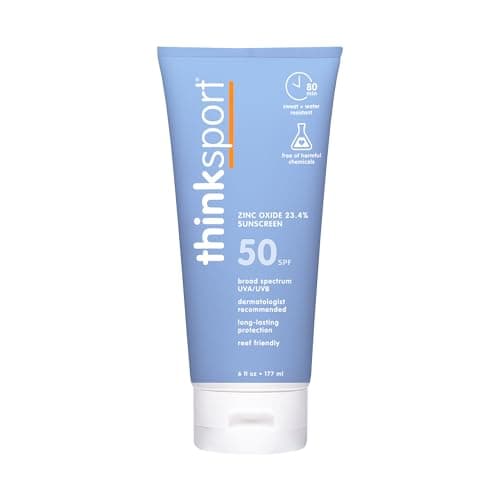
So for anything involving real water, neither of these is the pick, and we would send you to a sport mineral with an 80-minute claim instead. What water-resistant sunscreen actually means covers the test behind the two numbers.
Our picks in detail
01 · Best all-mineral pick
EltaMD UV Physical Tinted Broad-Spectrum SPF 41
EltaMD · Read our EltaMD review
Zinc oxide and titanium dioxide tinted with iron oxides at SPF 41, with a 40-minute water-resistance claim. The one to buy if the word mineral is why you are here.
- Actives:
- Zinc oxide and titanium dioxide, tinted with iron oxides
- SPF:
- SPF 41
- Water resistance:
- 40 minutes
- Reef status:
- Mineral filters only
- Best for:
- Mineral filters, a tint that cancels the cast, and a reef trip
What works
- Mineral filters only — nothing restricted in Hawaii or Key West
- Iron oxide tint blocks some visible light as well as UV
- Has a water-resistance claim, unlike UV Clear
The trade-off
- One tint shade will not suit every skin tone
- Heavier than UV Clear on oily skin
- SPF 41 rather than 46, though the gap is trivial
#ad We earn from qualifying purchases · Price as of November 2, 2026
02 · Lightest daily layer
EltaMD UV Clear Broad-Spectrum SPF 46
EltaMD · Read our EltaMD review
Zinc oxide with octinoxate at SPF 46, plus 5% niacinamide. Exceptionally light for its SPF — and not an all-mineral sunscreen, which we would rather say than imply.
- Actives:
- Zinc oxide with octinoxate; EltaMD lists 9% zinc oxide and 5% niacinamide
- SPF:
- SPF 46
- Water resistance:
- Not labeled water resistant
- Reef status:
- Contains octinoxate, which Hawaii and Key West restrict
- Best for:
- Oily, congestion-prone or rosacea-prone skin that rejects heavier formulas
What works
- One of the lightest high-SPF face sunscreens available
- Niacinamide alongside the zinc oxide
- Sits invisibly under makeup
The trade-off
- Contains octinoxate — restricted in Hawaii and Key West
- Not labeled water resistant at all
- Dermatology-counter pricing
#ad We earn from qualifying purchases · Price as of November 2, 2026
03 · Best middle ground
EltaMD UV Elements Tinted Moisturizer SPF 44
EltaMD · Read our EltaMD review
Zinc oxide and titanium dioxide tinted with iron oxides at SPF 44, in a moisturizer base. The all-mineral option for anyone who found UV Physical too much like a sunscreen.
- Actives:
- Zinc oxide and titanium dioxide, tinted with iron oxides
- SPF:
- SPF 44
- Water resistance:
- 40 minutes
- Reef status:
- Mineral filters only
- Best for:
- An all-mineral layer that does not read as sunscreen
What works
- All-mineral with an iron oxide tint
- Moisturizer base, so it suits dry skin
- Higher SPF than UV Physical
The trade-off
- 40 minutes of water resistance, not 80
- Tint coverage is sheer, so it will not cancel redness
- The most expensive of the three per ounce
The third option most comparisons skip
There is a middle product in the same range that resolves the main objection to each: an all-mineral tinted moisturizer with a higher SPF than UV Physical and a less obviously sunscreen-like finish. If what is really keeping you from wearing a mineral daily is that it reads as sunscreen on your face, that is the one to look at — it is the third pick above.
Our longer look at the whole range, including what each product in it is actually for, is the EltaMD sunscreen review.
Cost, and the reason we print no numbers
Both of these are dermatology-counter products and both cost multiples of a drugstore mineral. Whether that is worth it depends entirely on whether it is the difference between wearing sunscreen daily and not, which is a real consideration rather than a rationalization — the best sunscreen is genuinely the one you keep using.
If the answer is no, CeraVe Mineral versus La Roche-Posay Anthelios Mineral is the same decision one shelf down, and both of those options are mineral. We never type a price into an article; the figure beside each pick is read from Amazon and stamped with its date.
The verdict
On this site, UV Physical is the recommendation, because it is the all-mineral one, the tinted one, and the one you can take to a reef destination. UV Clear is the better product for a specific and common problem — oily, congestion-prone skin that rejects everything heavier — and it is worth owning for that, with the octinoxate understood rather than overlooked.
If you are buying one bottle and you do not have oily skin, buy UV Physical. If you have tried six sunscreens and hated all of them, buy UV Clear and read the panel honestly.
Sources
- Questions and Answers: FDA Requirements for Over-the-Counter Sunscreen Products — U.S. Food and Drug Administration
- 21 CFR 201.327 — Over-the-counter sunscreen drug products; required labeling — Legal Information Institute, Cornell Law School
- Sunscreen chemicals and coral reefs — NOAA National Ocean Service
- Sunscreen FAQs — American Academy of Dermatology
- Sunscreen — Skin Cancer Foundation
Frequently asked questions
Is EltaMD UV Clear a mineral sunscreen?
No. It contains zinc oxide, which is why it is often described as one, but it also contains octinoxate — an organic filter. EltaMD UV Physical is the all-mineral option in the range.
What is the difference between EltaMD UV Clear and UV Physical?
UV Clear is a very light SPF 46 that pairs zinc oxide with octinoxate and adds niacinamide, with no water-resistance claim. UV Physical is an all-mineral SPF 41 tinted with iron oxides, with a 40-minute water-resistance claim.
Which EltaMD sunscreen is reef safe?
UV Physical, of these two. It uses mineral filters only. UV Clear contains octinoxate, which Hawaii and Key West restrict, so it is not the one to take to a reef destination.
Which EltaMD is better for acne-prone skin?
UV Clear is the one usually recommended for oily and congestion-prone skin, because of how light it is and the niacinamide in the formula. If you want to stay all-mineral, UV Physical or the tinted moisturizer version are the alternatives.
Can you swim in EltaMD UV Physical?
Briefly. It claims 40 minutes of water resistance, which is a daily-wear rating rather than a swim rating. For a pool or ocean day, use a sport mineral with an 80-minute claim and reapply on every exit from the water.
Read next
Reviews
EltaMD sunscreen review
Which products in the range are actually mineral, why UV Clear is recommended so often, and what it contains.
Face & Tinted SPF
The best sunscreen for your face
Daily face SPF by skin type and finish, from mineral to hybrid, with the trade-off named on each.
Face & Tinted SPF
Iron oxides and visible light
Why iron oxides protect as well as tint, and what that means for melasma and hyperpigmentation.
Reef-Safe & Ingredients
Where reef-safe sunscreen is actually required
Destination-by-destination restrictions, what each one covers, and what to pack.
Face & Tinted SPF
CeraVe Mineral vs La Roche-Posay Anthelios Mineral
Zinc and ceramides against titanium dioxide and antioxidants: how the two best-known drugstore mineral face sunscreens differ, and which skin each one suits.
Face & Tinted SPF
The best sunscreen for acne-prone skin
Light, oil-free face SPF for acne-prone skin — chosen on the base and the finish, not just the filter.