Face & Tinted SPF
CeraVe Mineral vs La Roche-Posay Anthelios Mineral
Two pharmacy-shelf mineral faces at SPF 50. The filters are not the same, and that decides it.
Disclosure: Spf & Shore earns commission from qualifying purchases made through links on this page, at no extra cost to you. It does not change which products we recommend. Read the full disclosure.
Buy the CeraVe Hydrating Mineral Sunscreen SPF 50 if you want zinc oxide in the formula and a hydrating base — it pairs zinc and titanium dioxide with ceramides and hyaluronic acid. Buy the La Roche-Posay Anthelios Mineral SPF 50 if you want the lighter, more cosmetically elegant layer and you are comfortable with a titanium-dioxide-led filter plus antioxidants. Both are SPF 50, both are broad spectrum, and both carry a 40-minute water-resistance claim.
That is the whole decision, and it comes down to the actives panel rather than to price or packaging. CeraVe's is the more zinc-forward of the two; La Roche-Posay's is titanium-led. If you arrived here searching for a mineral sunscreen with zinc oxide specifically, that single line is your answer — and the rest of this page explains what the difference actually buys you.
Quick picks
Tap any row to read the full write-up below.
| # | Product | Best for | Price |
|---|---|---|---|
| 1 | 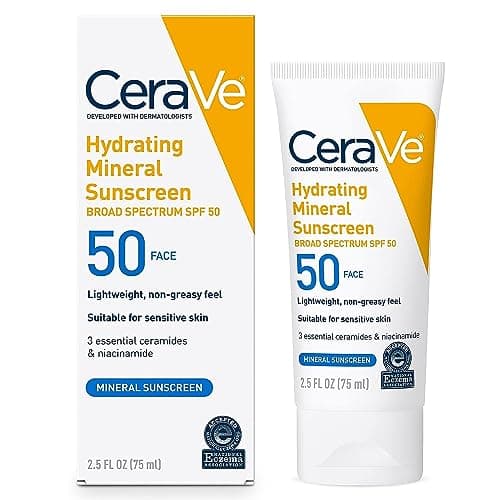 CeraVe Hydrating Mineral Sunscreen SPF 50 FaceBest for most people · SPF 50 | Anyone who specifically wants zinc oxide on a pharmacy shelf | $13.97 · View on Amazon #ad We earn from qualifying purchases · Price as of November 2, 2026 |
| 2 | 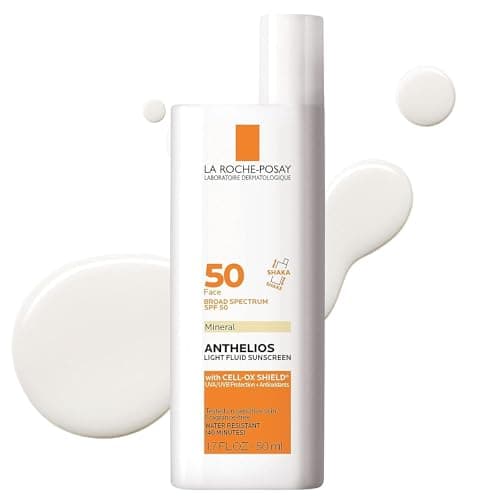 La Roche-Posay Anthelios Mineral SPF 50 Face SunscreenBest texture · SPF 50 | Daily wear under makeup, and anyone who finds zinc heavy | $29.99 · View on Amazon #ad We earn from qualifying purchases · Price as of November 2, 2026 |
| 3 | 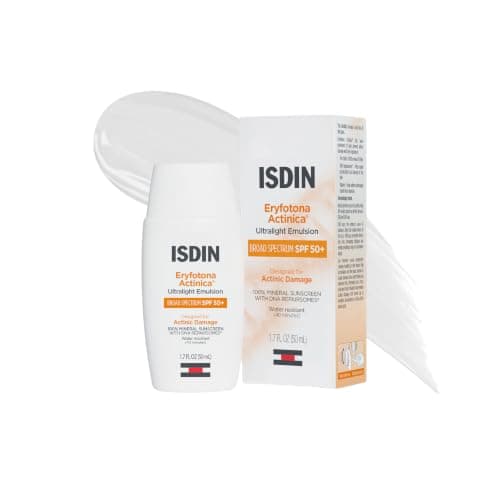 ISDIN Eryfotona Actinica Mineral Sunscreen SPF 50+Best zinc-only alternative · SPF 50+ | Wanting zinc oxide as the sole filter, with no titanium dioxide | $46.00 · View on Amazon #ad We earn from qualifying purchases · Price as of November 2, 2026 |
The panels, side by side
| CeraVe Hydrating Mineral SPF 50 | La Roche-Posay Anthelios Mineral SPF 50 | |
|---|---|---|
| Active filters | Zinc oxide and titanium dioxide | Titanium dioxide, with antioxidants |
| SPF | SPF 50 | SPF 50 |
| Broad spectrum | Yes | Yes |
| Water resistance | 40 minutes | 40 minutes |
| Notable extras | Ceramides and hyaluronic acid | Antioxidant complex |
| Reef-relevant filters | Mineral only | Mineral only |
Where a brand does not publish a filter percentage, we describe the filter rather than invent a number — and neither of these two publishes a straightforward percentage breakdown the way a sport zinc does. What both panels do tell you clearly is which minerals are present, and that is the axis this comparison turns on.
What the filter difference actually means
Zinc oxide and titanium dioxide are both mineral filters and both earn broad-spectrum claims in formulas that pass the test, but they do not cover the spectrum identically. Zinc oxide extends further into the long UVA range; titanium dioxide is stronger in UVB and shorter UVA, and it tends to feel lighter and look whiter per unit of protection. Zinc oxide versus titanium dioxide is the full comparison.
In practice this is why a zinc-containing formula is the usual recommendation for people whose concern is long-wave UVA — pigmentation, melasma, photoaging — and why a titanium-led formula often wins on texture. Neither is a trick; they are different engineering choices with different costs.
Who should buy the CeraVe
Pick the CeraVe if any of these describe you. You specifically want zinc in the formula — this is the pharmacy-shelf answer to that request. Your skin is dry or your barrier is unhappy, and a sunscreen carrying ceramides and hyaluronic acid saves you a step. You want one product for a household, since CeraVe's wide retail distribution means you can replace it on a grocery run.
The costs are honest ones. It is the thicker of the two, which shows up as more cast on deeper skin tones and a longer wait before makeup. And the face tube is a face product — using it on a body would be expensive. CeraVe mineral sunscreen review is the longer look at the range, including the body version.
Who should buy the La Roche-Posay
Pick the Anthelios Mineral if you want the lighter finish, if you are layering under makeup every day, or if zinc formulas have felt heavy or occlusive on you in the past. It is also a reasonable choice for skin that reacts to a lot of things: the Anthelios line is built around that audience and the panel is short.
Its costs are the mirror image. A titanium-led filter means less long-UVA reach than a zinc-led one, so if pigmentation rather than sunburn is your main concern, it is not the stronger pick on paper. And like the CeraVe, its 40-minute water-resistance claim makes it a daily-wear product rather than a pool product.
The 40-minute claim, which applies to both
Neither of these is a water sunscreen. A US label may claim water resistance for 40 or 80 minutes only, and both of these claim 40 — which is the rating of a product tested for a daily wear scenario rather than for swimming. What water-resistant sunscreen actually means covers the test, which alternates timed immersion with rest periods and forbids toweling.
So if the question behind your search is what to take on a beach day, neither of these is the answer and the honest recommendation is a sport mineral with an 80-minute claim. The best sunscreen for swimming covers that case specifically.
Our picks in detail
01 · Best for most people
CeraVe Hydrating Mineral Sunscreen SPF 50 Face
CeraVe · Read our CeraVe review
Zinc oxide and titanium dioxide at SPF 50 with ceramides and hyaluronic acid. The zinc in the panel and the hydrating base are the two reasons to pick it, and the thicker texture is what you pay for them.
- Actives:
- Zinc oxide and titanium dioxide, with ceramides and hyaluronic acid
- SPF:
- SPF 50
- Water resistance:
- 40 minutes
- Reef status:
- Mineral filters only
- Best for:
- Anyone who specifically wants zinc oxide on a pharmacy shelf
What works
- Zinc oxide in the actives, unlike the Anthelios
- Ceramides and hyaluronic acid in the base
- Stocked almost everywhere in the US
The trade-off
- Thicker, so more cast on deeper skin tones
- 40 minutes of water resistance, not 80
- Face-size tube — not a body product
#ad We earn from qualifying purchases · Price as of November 2, 2026
02 · Best texture
La Roche-Posay Anthelios Mineral SPF 50 Face Sunscreen
La Roche-Posay
Titanium dioxide at SPF 50 with an antioxidant complex, in the lighter of the two formulas. The elegance is the selling point; the titanium-led filter is the trade on long-wave UVA.
- Actives:
- Titanium dioxide with antioxidants
- SPF:
- SPF 50
- Water resistance:
- 40 minutes
- Reef status:
- Mineral filters only
- Best for:
- Daily wear under makeup, and anyone who finds zinc heavy
What works
- The lighter, more cosmetically elegant layer
- Antioxidants alongside the mineral filter
- Short panel built for reactive skin
The trade-off
- Titanium-led rather than zinc-led
- 40 minutes of water resistance, not 80
- Still leaves some cast, as all minerals do
#ad We earn from qualifying purchases · Price as of November 2, 2026
03 · Best zinc-only alternative
ISDIN Eryfotona Actinica Mineral Sunscreen SPF 50+
ISDIN
Zinc oxide as the only active filter at SPF 50+, in a strikingly light finish for a mineral. The reason to step off the pharmacy shelf — and the price is the reason most people do not.
- Actives:
- Zinc oxide as the sole active filter
- SPF:
- SPF 50+
- Water resistance:
- Not labeled water resistant
- Reef status:
- Zinc only
- Best for:
- Wanting zinc oxide as the sole filter, with no titanium dioxide
What works
- Zinc oxide as the sole active filter
- Remarkably light for a high-SPF mineral
- Short, fragrance-free panel
The trade-off
- No water-resistance claim at all
- Expensive per ounce
- Sold mainly through dermatology and specialty channels
#ad We earn from qualifying purchases · Price as of November 2, 2026
If neither one fits
There is a third pattern worth knowing about: people who want zinc oxide as the only filter, with no titanium dioxide in the formula at all. That usually means stepping off the pharmacy shelf and into a specialty product, and the trade is price. The third pick above is there for exactly that case.
If what you actually want is a tinted version of either — because the cast is the thing standing between you and wearing a mineral sunscreen daily — then the comparison to read is tinted versus untinted sunscreen, and the best tinted sunscreens has the picks.
On price, and why there are no numbers in this text
Both of these are drugstore products in the sense that they sit on US pharmacy shelves, and they are usually within range of each other. We do not type prices into our pages, because a number typed into an article is stale the next day — every price beside a pick above is read from Amazon and stamped with the date it was read.
The more useful cost framing for a face sunscreen is cost per morning rather than cost per tube, and that is decided by how much you apply. A face takes roughly a third of a teaspoon to reach the tested dose, which means a face tube is a weeks-not-months item if you are using it properly. How much sunscreen to apply has the measurements.
The verdict
For most people reading a sun care site, the CeraVe is the better default, because the zinc in the panel is the thing they came looking for and the ceramide base makes it easy to wear daily. The La Roche-Posay is the better pick for anyone who prioritizes texture and finish, or who has found zinc formulas heavy.
Neither is a mistake. Both are mineral, both are SPF 50 and broad spectrum, and the difference between them is smaller than the difference between wearing one every day and wearing one twice a week.
Sources
- Questions and Answers: FDA Requirements for Over-the-Counter Sunscreen Products — U.S. Food and Drug Administration
- 21 CFR 201.327 — Over-the-counter sunscreen drug products; required labeling — Legal Information Institute, Cornell Law School
- Sunscreen FAQs — American Academy of Dermatology
- Sunscreen — Skin Cancer Foundation
- Sunscreen: How to Help Protect Your Skin from the Sun — U.S. Food and Drug Administration
Frequently asked questions
Is CeraVe mineral sunscreen better than La Roche-Posay?
It depends on which filter you want. CeraVe's mineral face sunscreen contains zinc oxide alongside titanium dioxide and adds ceramides; La Roche-Posay's Anthelios Mineral is titanium-dioxide-led with antioxidants and feels lighter. Both are SPF 50, broad spectrum and rated for 40 minutes of water resistance.
Does La Roche-Posay Anthelios Mineral contain zinc oxide?
The Anthelios Mineral SPF 50 face sunscreen is titanium-dioxide-led. If zinc oxide in the actives panel is what you are looking for on a pharmacy shelf, the CeraVe Hydrating Mineral is the closer match.
Which is better for sensitive skin?
Both are built for it. The CeraVe has the stronger case if your barrier is dry or compromised, because of the ceramides; the La Roche-Posay has the stronger case if heavy formulas have irritated or congested your skin in the past.
Can you swim in either of these?
Not really. Both claim 40 minutes of water resistance rather than 80, which makes them daily-wear products. For water, use a sport mineral with an 80-minute claim and reapply on every exit from the water.
Which one is better under makeup?
The La Roche-Posay, generally — it is the lighter layer and sets faster. If you want the CeraVe's zinc and still wear makeup, give it a few extra minutes to set before you apply anything over it.
Read next
Reviews
CeraVe mineral sunscreen review
Ceramides in a fragrance-free mineral base at drugstore prices, against 40-minute water resistance.
Mineral Sunscreen
Zinc oxide vs titanium dioxide
Which mineral filter covers which part of the spectrum, how they differ on skin, and why formulas combine them.
Face & Tinted SPF
The best sunscreen for your face
Daily face SPF by skin type and finish, from mineral to hybrid, with the trade-off named on each.
Face & Tinted SPF
The best face sunscreen for sensitive skin
Fragrance-free mineral face formulas for reactive skin, and the ingredient groups that trigger most reactions.
Mineral Sunscreen
The best zinc oxide sunscreens
Zinc-only mineral sunscreens, compared on their published zinc percentage, SPF and water resistance.
Sun Safety
What water-resistant sunscreen actually means
What the 40 and 80-minute claims measure, why toweling ends them, and how to plan a pool day around it.