Mineral Sunscreen
The best zinc oxide sunscreens
Mineral SPF where zinc oxide is the only active filter — no titanium dioxide, no chemical filters, and a published percentage you can check.
Disclosure: Spf & Shore earns commission from qualifying purchases made through links on this page, at no extra cost to you. It does not change which products we recommend. Read the full disclosure.
Our overall pick is Thinksport SPF 50+: 20% non-nano zinc oxide as the sole active filter, the maximum 80 minutes of water resistance a US label may claim, and large tubes. It suits anyone who wants mineral sunscreen with zinc doing all of the filtering — no titanium dioxide, no chemical filters alongside it.
That is a narrower request than *mineral sunscreen*, and worth separating. Plenty of mineral formulas blend zinc oxide with titanium dioxide, and a few labeled mineral still carry a chemical filter. Every product below lists zinc oxide as its only active, and every one publishes the percentage. If you want the wider mineral field, the best mineral sunscreens includes the blends.
Quick picks
Tap any row to read the full write-up below.
| # | Product | Best for | Price |
|---|---|---|---|
| 1 | 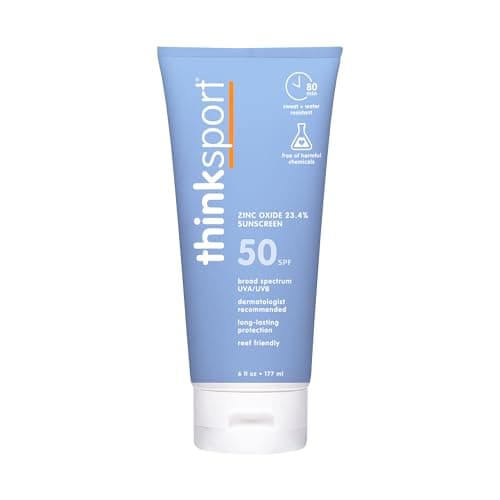 Thinksport Sunscreen SPF 50+Best overall · SPF 50+ | A single zinc-only bottle for a household | $19.97 · View on Amazon #ad We earn from qualifying purchases · Price as of October 10, 2026 |
| 2 | 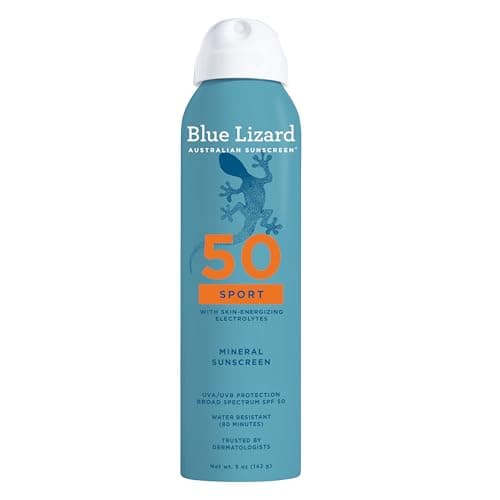 Blue Lizard Sport Mineral Sunscreen Spray SPF 50+Best for fast coverage · SPF 50+ | Reapplying on arms, legs and backs between swims | $16.98 · View on Amazon #ad We earn from qualifying purchases · Price as of October 10, 2026 |
| 3 | 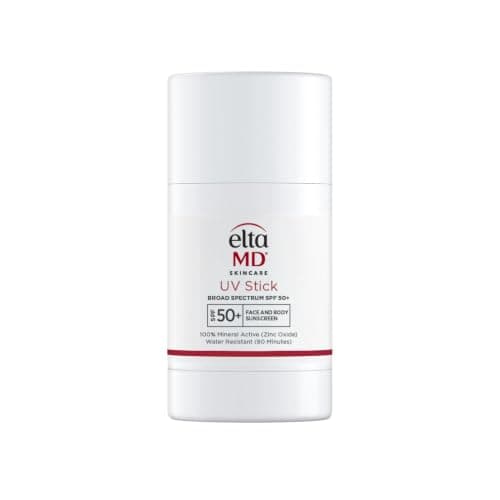 EltaMD UV Stick Broad Spectrum SPF 50+Best transparent zinc · SPF 50+ | Faces, ears and the tops of feet without a chalky film | $40.00 · View on Amazon #ad We earn from qualifying purchases · Price as of October 10, 2026 |
| 4 | 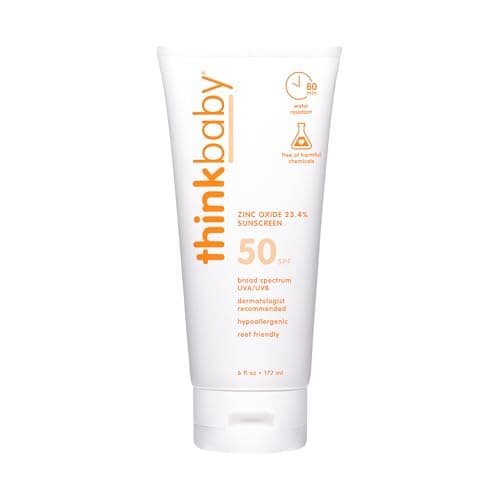 Thinkbaby Safe Sunscreen SPF 50+Best for children · SPF 50+ | Kids at a pool or a beach | $19.97 · View on Amazon #ad We earn from qualifying purchases · Price as of October 10, 2026 |
| 5 |  Coppertone Pure & Simple Mineral Sunscreen SPF 50Best value · SPF 50 | Covering several people without rationing the bottle | |
| 6 | 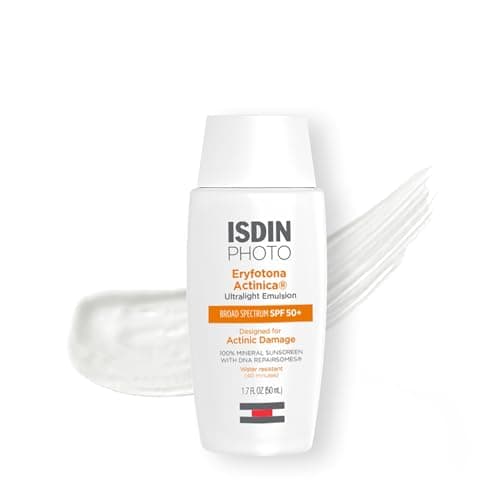 ISDIN Eryfotona Actinica Mineral Sunscreen SPF 50+Best for daily facial wear · SPF 50+ | Everyday face SPF on skin with a history of sun damage | $46.00 · View on Amazon #ad We earn from qualifying purchases · Price as of October 10, 2026 |
Why zinc-only rather than mineral generally
Zinc oxide is the broadest single sunscreen filter sold in the United States. It covers UVB and both halves of the UVA band on its own, which is why a zinc-only product can still be labeled broad spectrum without help. Titanium dioxide is excellent against UVB and short UVA, and weaker further into long UVA — useful in a blend, thinner on its own.
There are three practical reasons people ask for zinc specifically. It satisfies every current reef-protection law, because the laws restrict oxybenzone, octinoxate and in some places octocrylene — never zinc. It is the filter dermatology counters reach for on reactive skin, since there is no filter to react to beyond a mineral powder. And the FDA has proposed classifying zinc oxide and titanium dioxide as generally recognized as safe and effective, while requesting more absorption data on the common chemical filters — a difference in regulatory posture that matters to a lot of buyers.
The trade-off is honest: zinc is a white powder, so a zinc-only formula at a high percentage is the most likely of all sunscreens to leave a visible cast. Why mineral sunscreen leaves a white cast explains what can and cannot be engineered away.
How we chose these
- Zinc oxide as the only active filter. Checked on the brand's own actives panel. A blend with titanium dioxide is a fine sunscreen and is not on this page.
- A published percentage. Where a brand does not publish one, we say so rather than estimate it.
- SPF 30 or higher and broad spectrum, matching the American Academy of Dermatology's floor.
- Water resistance where the use case needs it — 40 or 80 minutes are the only claims a US label may make.
- A format that fits the job, because the bottle you actually finish beats the one you admire. Our methodology.
Our picks in detail
01 · Best overall
Thinksport Sunscreen SPF 50+
Thinksport · Read our Thinksport review
20% non-nano zinc oxide as the sole filter, the maximum 80 minutes of water resistance, and tube sizes large enough that applying a full ounce does not feel wasteful. The most useful zinc-only bottle on this list.
- Actives:
- 20% non-nano zinc oxide
- SPF:
- SPF 50+
- Water resistance:
- 80 minutes
- Reef status:
- Zinc only — no oxybenzone, octinoxate or octocrylene
- Best for:
- A single zinc-only bottle for a household
What works
- Zinc oxide is the only active filter
- Maximum labeled water resistance
- Large sizes make generous application realistic
The trade-off
- Visible white cast
- Too heavy for daily facial wear
#ad We earn from qualifying purchases · Price as of October 10, 2026
02 · Best for fast coverage
Blue Lizard Sport Mineral Sunscreen Spray SPF 50+
Blue Lizard · Read our Blue Lizard review
24% zinc oxide as the sole filter in a continuous spray — the highest published zinc percentage here, in the format that gets a second coat onto a wriggling family fastest.
- Actives:
- 24% zinc oxide as the sole active filter
- SPF:
- SPF 50+
- Water resistance:
- 80 minutes
- Reef status:
- Zinc only — no oxybenzone or octinoxate
- Best for:
- Reapplying on arms, legs and backs between swims
What works
- Highest published zinc percentage on this page
- 80-minute water resistance
- Fast to reapply on large areas
The trade-off
- Still needs rubbing in to deliver the tested dose
- Not for spraying near a face
#ad We earn from qualifying purchases · Price as of October 10, 2026
03 · Best transparent zinc
EltaMD UV Stick Broad Spectrum SPF 50+
EltaMD · Read our EltaMD review
22% transparent zinc oxide with 80 minutes of water resistance — the rare zinc-only product that goes on nearly invisible, in a stick that travels without leaking.
- Actives:
- 22% transparent zinc oxide
- SPF:
- SPF 50+
- Water resistance:
- 80 minutes
- Reef status:
- Zinc only — no oxybenzone, octinoxate or octocrylene
- Best for:
- Faces, ears and the tops of feet without a chalky film
What works
- Transparent zinc, so minimal cast
- 80-minute water resistance
- Precise around eyes, ears and hairlines
The trade-off
- Slow over large areas
- Dermatology-counter pricing
#ad We earn from qualifying purchases · Price as of October 10, 2026
04 · Best for children
Thinkbaby Safe Sunscreen SPF 50+
Thinkbaby · Read our Thinkbaby review
The same 20% non-nano zinc as our overall pick in a formulation built for children, with nothing in it to sting eyes — which is what decides whether a child cooperates with the second coat.
- Actives:
- 20% non-nano zinc oxide
- SPF:
- SPF 50+
- Water resistance:
- 80 minutes
- Reef status:
- Zinc only — no oxybenzone, octinoxate or octocrylene
- Best for:
- Kids at a pool or a beach
What works
- Does not sting eyes
- Maximum water resistance
- Works for adults too
The trade-off
- Visible cast
- Thick texture
#ad We earn from qualifying purchases · Price as of October 10, 2026
05 · Best value
Coppertone Pure & Simple Mineral Sunscreen SPF 50
Coppertone
Zinc oxide as the only filter with 80 minutes of water resistance at supermarket pricing — the zinc-only option that makes applying the correct amount to a whole family affordable.
- Actives:
- Zinc oxide
- SPF:
- SPF 50
- Water resistance:
- 80 minutes
- Reef status:
- Zinc only
- Best for:
- Covering several people without rationing the bottle
What works
- Zinc-only at a mass-market price
- 80-minute water resistance
- Widely stocked
The trade-off
- Zinc percentage not published
- Noticeable cast
06 · Best for daily facial wear
ISDIN Eryfotona Actinica Mineral Sunscreen SPF 50+
ISDIN
Zinc oxide as the sole active in a light fluid base that absorbs rather than sits on the skin — the zinc-only formula most people can wear under the rest of a routine every morning.
- Actives:
- Zinc oxide as the sole active filter
- SPF:
- SPF 50+
- Water resistance:
- Not labeled water resistant
- Reef status:
- Zinc only
- Best for:
- Everyday face SPF on skin with a history of sun damage
What works
- Zinc-only in a genuinely light texture
- Absorbs without a heavy film
- Fragrance-free
The trade-off
- Not labeled water resistant, so no swimming claim
- Dermatology-counter pricing
#ad We earn from qualifying purchases · Price as of October 10, 2026
Published zinc oxide percentages, compared
| Product | Zinc oxide | SPF | Water resistance | Format |
|---|---|---|---|---|
| Thinksport SPF 50+ | 20% non-nano | SPF 50+ | 80 minutes | Lotion |
| Blue Lizard Sport Mineral Spray | 24% | SPF 50+ | 80 minutes | Spray |
| EltaMD UV Stick SPF 50+ | 22% transparent | SPF 50+ | 80 minutes | Stick |
| Thinkbaby SPF 50+ | 20% non-nano | SPF 50+ | 80 minutes | Lotion |
| Coppertone Pure & Simple SPF 50 | Zinc oxide; percentage not published | SPF 50 | 80 minutes | Lotion |
| ISDIN Eryfotona Actinica SPF 50+ | Zinc oxide as sole filter | SPF 50+ | Not labeled water resistant | Fluid |
Does a higher percentage mean more protection?
Not directly, and this is the most common misreading of a zinc label. SPF is a tested outcome, not a calculation from the actives panel. A 20% zinc formula tested at SPF 50 protects to SPF 50; a 24% zinc formula tested at SPF 30 protects to SPF 30. Particle size, dispersion and the base all affect how evenly the zinc sits on skin, and a well-dispersed 20% beats a poorly dispersed 25%.
What the percentage does tell you is texture and cast. Higher zinc generally means a thicker product and a more visible white film, which is why the sheerest zinc-only formulas sit at the lower end of the range and the surf-style pastes sit well above it. Read the percentage as a cosmetic forecast, and read the SPF number as the protection claim. How much zinc oxide should be in a sunscreen works through the whole range.
Non-nano, and whether it matters here
Most zinc-only sunscreens aimed at families advertise non-nano zinc. The claim is about particle size rather than safety approval: non-nano particles are above 100 nanometers, which makes them more visible on skin and, their makers argue, less likely to be absorbed. Published work on zinc oxide in sunscreen has not found meaningful penetration past the outer skin layer either way. Non-nano versus nano zinc oxide sets out what each term actually covers.
Living with the cast
Three things genuinely help. Apply in thin layers and let each one set rather than trying to rub a full dose in at once. Choose a transparent or micronized zinc for your face and keep the thicker paste for a body, where a cast on your shins costs nothing. And on medium and deep skin tones, consider a tinted mineral instead of an untinted one — iron oxides cancel the grey cast and add visible-light protection the UV filters do not provide.
What a zinc-only sunscreen still will not do
Last the day. Reapply every two hours and immediately after swimming or toweling off, whatever the water-resistance claim said — toweling ends the clock. And no sunscreen covers you like fabric does: a UPF 50+ sun shirt blocks at least 98% of UV for as long as you wear it, which shrinks the reapplication job to faces, hands and lower legs.
Sources
- Sunscreen: How to Help Protect Your Skin from the Sun — U.S. Food and Drug Administration
- Questions and Answers: FDA Requirements for Over-the-Counter Sunscreen Products — U.S. Food and Drug Administration
- Sunscreen Drug Products for Over-the-Counter Human Use (proposed rule) — Federal Register / FDA
- Sunscreen FAQs — American Academy of Dermatology
- Sunscreen — Skin Cancer Foundation
Frequently asked questions
What is the best zinc oxide sunscreen?
For a single household bottle, Thinksport SPF 50+ — 20% non-nano zinc oxide as the only active filter, 80 minutes of water resistance, and large tubes. For a face, a transparent zinc stick or a light zinc fluid suits better than a thick body lotion.
Is mineral sunscreen with zinc oxide better than a blend with titanium dioxide?
Not better, but broader on its own. Zinc oxide covers UVB and the full UVA band by itself, while titanium dioxide weakens further into long UVA. A blend of the two is still a good broad-spectrum sunscreen; a zinc-only product simply needs no help.
How much zinc oxide should a sunscreen contain?
Formulas on sale in the US run from roughly 10% to 25% zinc oxide. The percentage predicts texture and white cast rather than protection — the tested SPF number on the front of the bottle is the protection claim.
Is zinc oxide sunscreen reef safe?
Zinc oxide is permitted by every current reef-protection law, including Hawaii's and Key West's, which restrict oxybenzone and octinoxate. No sunscreen is formally certified reef safe, because the term is unregulated.
Does zinc oxide sunscreen have to leave a white cast?
Untinted zinc almost always leaves some cast, and more of it at higher percentages. Transparent and micronized zinc reduce it substantially, and a tinted mineral formula cancels it outright.
Read next
Mineral Sunscreen
The best mineral sunscreens
Zinc-only picks for faces, bodies and kids, chosen on actives and water resistance rather than packaging.
Mineral Sunscreen
How much zinc oxide should be in a mineral sunscreen?
Zinc percentages run 10% to 25% in US sunscreens. What the number predicts about texture, cast and job fit.
Mineral Sunscreen
Does zinc oxide absorb into the skin?
What the evidence and the FDA record actually say about zinc oxide absorption, and what follows for buying.
Mineral Sunscreen
Zinc oxide sunscreen, explained
What zinc oxide does, what the percentage means, and how to choose a formula you will keep using.
Face & Tinted SPF
The best zinc oxide sunscreen for your face
Zinc-led face SPF compared on actives, tint and wearability — the mineral face formulas you will actually keep using.
Mineral Sunscreen
Zinc oxide vs titanium dioxide
Which mineral filter covers which part of the spectrum, how they differ on skin, and why formulas combine them.