Face & Tinted SPF
The best sunscreen for acne-prone skin
The filter is rarely the problem. The base is — so these are chosen on texture, finish and what is doing the moisturising.
Disclosure: Spf & Shore earns commission from qualifying purchases made through links on this page, at no extra cost to you. It does not change which products we recommend. Read the full disclosure.
Our overall pick is EltaMD UV Clear SPF 46: an oil-free fluid built around 9% zinc oxide with 5% niacinamide, light enough to wear daily on skin that breaks out under most sunscreens. One disclosure up front — it pairs the zinc with octinoxate, a chemical filter that Hawaii and Key West restrict, so it is not the pick for a reef trip.
If your skin breaks out under sunscreen, the filter is usually not the culprit. Zinc oxide is the same ingredient as most diaper creams and titanium dioxide is inert powder; what clogs is the base — rich emollients, heavy silicones and the thick water-resistant films that make a sunscreen survive a swim. Pick on texture first and the breakout problem largely solves itself.
Quick picks
Tap any row to read the full write-up below.
| # | Product | Best for | Price |
|---|---|---|---|
| 1 | 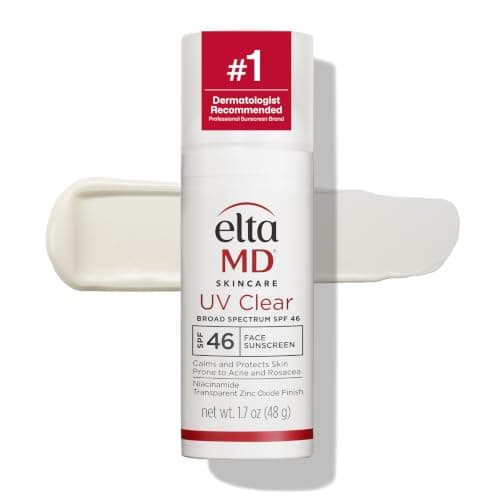 EltaMD UV Clear Broad-Spectrum SPF 46Best overall · SPF 46 | Daily wear on oily, breakout-prone skin | $45.00 · View on Amazon #ad We earn from qualifying purchases · Price as of October 10, 2026 |
| 2 | 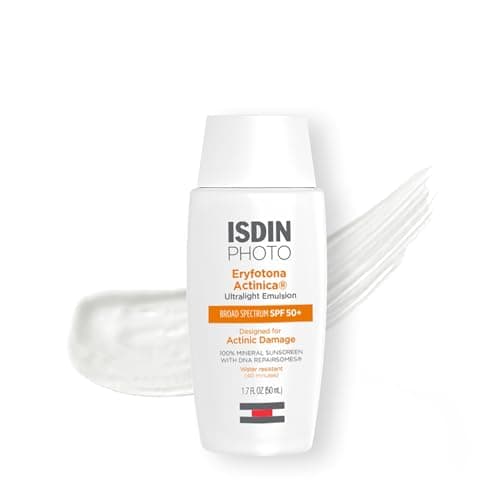 ISDIN Eryfotona Actinica Mineral Sunscreen SPF 50+Best mineral-only option · SPF 50+ | Light daily SPF without a chemical filter | $46.00 · View on Amazon #ad We earn from qualifying purchases · Price as of October 10, 2026 |
| 3 | 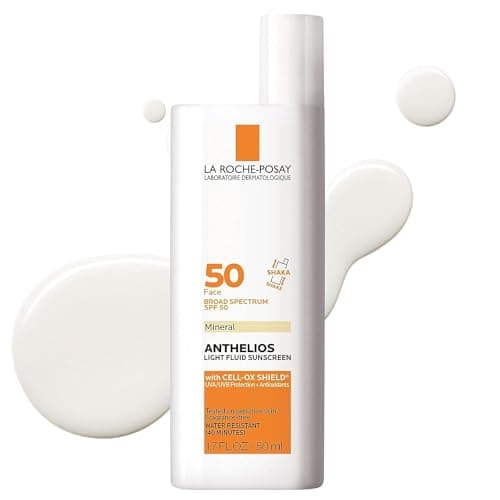 La Roche-Posay Anthelios Mineral SPF 50 Face SunscreenBest thin lotion · SPF 50 | Combination skin that wants a matte finish | $29.99 · View on Amazon #ad We earn from qualifying purchases · Price as of October 10, 2026 |
| 4 | 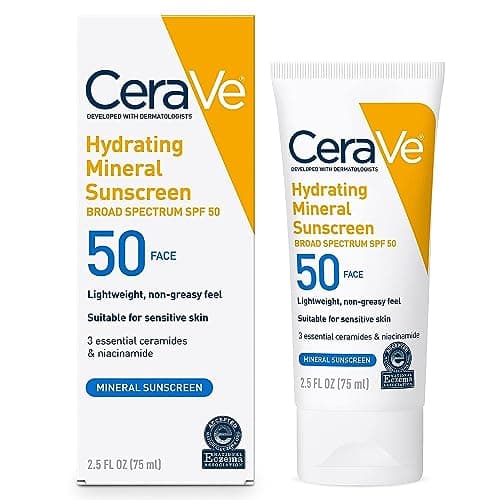 CeraVe Hydrating Mineral Sunscreen SPF 50 FaceBest on an acne routine · SPF 50 | Skin dried out by retinoids or benzoyl peroxide | $13.97 · View on Amazon #ad We earn from qualifying purchases · Price as of October 10, 2026 |
| 5 |  Colorescience Sunforgettable Total Protection Brush-On Shield SPF 50Best for reapplying · SPF 50 | Midday top-ups over makeup without adding oil |
What actually causes the breakout
Sunscreen is a leave-on product worn over a large area for the whole day, so a base that is slightly too rich has a lot of time to cause trouble. Three ingredients classes do most of it: heavy occlusives that trap sebum, the film-formers that create water resistance, and fragrance, which irritates rather than clogs but produces bumps people read as acne.
That points to a straightforward rule. For daily city wear, choose the lightest formula you can find and accept 40 minutes of water resistance or none. Save the thick 80-minute water-resistant bottle for days you are actually in water, and wash it off when you come in. A sunscreen used the right way on the right day rarely causes trouble; the same bottle worn every day for a month often does.
What we looked for
- A light, oil-free or low-oil base — fluids, gels and thin lotions rather than creams.
- Fragrance-free, which removes the most common cause of sunscreen bumps.
- SPF 30 minimum and broad spectrum, the AAD's floor for everyone.
- A finish that works under makeup, because a product that pills gets skipped.
- A reapplication option that adds no oil — a powder or a stick rather than a second layer of lotion. Our methodology.
Our picks in detail
01 · Best overall
EltaMD UV Clear Broad-Spectrum SPF 46
EltaMD · Read our EltaMD review
An oil-free fluid built on 9% zinc oxide with 5% niacinamide that genuinely disappears on skin — the face sunscreen most people with acne-prone skin actually keep using.
- Actives:
- Zinc oxide with octinoxate; EltaMD lists 9% zinc oxide and 5% niacinamide
- SPF:
- SPF 46
- Water resistance:
- Not labeled water resistant
- Reef status:
- Contains octinoxate, which Hawaii and Key West restrict
- Best for:
- Daily wear on oily, breakout-prone skin
What works
- Oil-free and weightless
- Fragrance-free, with niacinamide in the base
- Sits well under makeup
The trade-off
- Contains octinoxate, which Hawaii and Key West restrict
- Not labeled water resistant
#ad We earn from qualifying purchases · Price as of October 10, 2026
02 · Best mineral-only option
ISDIN Eryfotona Actinica Mineral Sunscreen SPF 50+
ISDIN
Zinc oxide as the sole active in a fluid light enough to pass for a serum — the answer when you want mineral-only and have been defeated by thick mineral lotions.
- Actives:
- Zinc oxide as the sole active filter
- SPF:
- SPF 50+
- Water resistance:
- Not labeled water resistant
- Reef status:
- Zinc only
- Best for:
- Light daily SPF without a chemical filter
What works
- Zinc-only
- Very light finish
- Fragrance-free
The trade-off
- Not labeled water resistant
- Expensive per ounce
#ad We earn from qualifying purchases · Price as of October 10, 2026
03 · Best thin lotion
La Roche-Posay Anthelios Mineral SPF 50 Face Sunscreen
La Roche-Posay
Titanium dioxide with antioxidants in a thin lotion that dries down matte rather than dewy, with 40 minutes of water resistance for warm days.
- Actives:
- Titanium dioxide with antioxidants
- SPF:
- SPF 50
- Water resistance:
- 40 minutes
- Reef status:
- Mineral filters only
- Best for:
- Combination skin that wants a matte finish
What works
- Matte finish
- 40-minute water resistance
- Pharmacy pricing
The trade-off
- Titanium dioxide alone is weaker at the long UVA end than zinc
- Can leave a cast on deeper tones
#ad We earn from qualifying purchases · Price as of October 10, 2026
04 · Best on an acne routine
CeraVe Hydrating Mineral Sunscreen SPF 50 Face
CeraVe · Read our CeraVe review
Fragrance-free mineral filters in a ceramide base — the pick when an acne routine has left skin tight and flaky and a mattifying fluid makes it worse.
- Actives:
- Zinc oxide and titanium dioxide, with ceramides and hyaluronic acid
- SPF:
- SPF 50
- Water resistance:
- 40 minutes
- Reef status:
- Mineral filters only
- Best for:
- Skin dried out by retinoids or benzoyl peroxide
What works
- Ceramides rebuild a stripped barrier
- Fragrance-free
- Inexpensive
The trade-off
- Too rich for genuinely oily skin
- Visible cast
#ad We earn from qualifying purchases · Price as of October 10, 2026
05 · Best for reapplying
Colorescience Sunforgettable Total Protection Brush-On Shield SPF 50
Colorescience · Read our Colorescience review
A loose mineral powder with 80 minutes of water resistance that brushes over a finished face, mattifies as it goes, and adds nothing greasy at the one time of day this skin is at its oiliest.
- Actives:
- Zinc oxide and titanium dioxide in a loose mineral powder
- SPF:
- SPF 50
- Water resistance:
- 80 minutes
- Reef status:
- Mineral filters only
- Best for:
- Midday top-ups over makeup without adding oil
What works
- Adds no oil
- Mattifies while it protects
- Travels without leaking
The trade-off
- A top-up rather than a full dose
- Easy to apply far too little
The picks compared
| Product | Actives | SPF | Texture | Water resistance |
|---|---|---|---|---|
| EltaMD UV Clear | Zinc oxide with octinoxate; 5% niacinamide | SPF 46 | Oil-free fluid | Not labeled water resistant |
| ISDIN Eryfotona Actinica | Zinc oxide as sole filter | SPF 50+ | Light fluid | Not labeled water resistant |
| La Roche-Posay Anthelios Mineral | Titanium dioxide with antioxidants | SPF 50 | Thin lotion | 40 minutes |
| CeraVe Hydrating Mineral Face | Zinc oxide and titanium dioxide | SPF 50 | Hydrating lotion | 40 minutes |
| Colorescience Brush-On Shield | Zinc oxide and titanium dioxide powder | SPF 50 | Loose powder | 80 minutes |
Mineral or chemical for acne-prone skin?
Either can work, and the choice is less important than the base. Mineral formulas have the advantage that zinc oxide is genuinely non-irritating for most people and has a mild astringent character; the disadvantage is that making a mineral sunscreen cosmetically light is hard, so budget mineral formulas often arrive thick. Chemical and hybrid formulas achieve a weightless finish more easily, which is why the classic acne-prone recommendations tend to be hybrids.
If you want mineral-only and light, you are paying for it — the formulas that manage both sit at dermatology-counter prices. Mineral versus chemical sunscreen covers the full comparison.
Niacinamide, and what it is doing there
Several face sunscreens aimed at this skin include niacinamide, our top pick at 5%. It is in the formula as a skin-conditioning ingredient rather than a sunscreen active — it does not contribute to the SPF, and the SPF number on the bottle is unaffected by it. Treat it as a reason to prefer one well-formulated option over another, not as a reason to expect a sunscreen to clear acne.
Reapplying without undoing the morning
A second layer of lotion over a day's sebum is exactly what this skin does not need. A loose mineral powder brushed on is the cleanest top-up — it adds protection, mattifies, and adds no oil. It will not deliver a full fresh dose, so it is a top-up rather than a reset. Powder versus lotion face sunscreen is honest about the gap.
One thing worth knowing about acne treatments
Retinoids, benzoyl peroxide and acids all thin or sensitise the outer skin layer, so skin on an active acne routine burns faster than it used to. That makes daily sunscreen more important on this skin than on most, not less — and it is a good reason to pick a formula pleasant enough that you do not negotiate with it at 8am.
Sources
- Sunscreen FAQs — American Academy of Dermatology
- Sunscreen: How to Help Protect Your Skin from the Sun — U.S. Food and Drug Administration
- Questions and Answers: FDA Requirements for Over-the-Counter Sunscreen Products — U.S. Food and Drug Administration
- Sunscreen — Skin Cancer Foundation
- Sunscreen ratings and lab testing — Consumer Reports
Frequently asked questions
What is the best sunscreen for acne-prone skin?
EltaMD UV Clear SPF 46 — an oil-free fluid on 9% zinc oxide with niacinamide, light enough for daily wear on skin that breaks out under most sunscreens. It does contain octinoxate, so choose a mineral pick for Hawaii or Key West.
Does sunscreen cause acne?
The filters rarely do. Heavy occlusive bases, the film-formers that create water resistance, and fragrance are the usual causes, which is why a light daily formula and a separate thicker bottle for water days works better than one product for everything.
Is mineral sunscreen better for acne?
Not inherently. Zinc oxide is well tolerated and mildly astringent, but mineral formulas are harder to make light, so a cheap mineral lotion can clog more than a well-formulated hybrid. Judge the base and the finish, not the filter.
Can I use sunscreen with tretinoin or benzoyl peroxide?
Yes, and you should — those treatments sensitise skin, so it burns more easily. Apply sunscreen in the morning as the last step before makeup, and keep the acne actives to your evening routine.
How do I reapply sunscreen over makeup without breaking out?
Use a loose mineral powder brushed on, or a stick pressed rather than dragged. Both avoid adding a second layer of lotion over the day's oil, though neither delivers a full fresh dose.
Read next
Face & Tinted SPF
The best sunscreen for your face
Daily face SPF by skin type and finish, from mineral to hybrid, with the trade-off named on each.
Face & Tinted SPF
The best face sunscreen for sensitive skin
Fragrance-free mineral face formulas for reactive skin, and the ingredient groups that trigger most reactions.
Face & Tinted SPF
Powder vs lotion face sunscreen
What each format delivers, why powder cannot be your primary SPF, and how to combine them.
Mineral Sunscreen
Mineral vs chemical sunscreen
How each filter type works, what the absorption research actually found, and which to choose for your situation.
Face & Tinted SPF
The best zinc oxide sunscreen for your face
Zinc-led face SPF compared on actives, tint and wearability — the mineral face formulas you will actually keep using.