Sun Safety
The best sunscreen for hiking
Long exposure, rising UV with altitude, constant sweat and no sink. The kit that solves it weighs less than most people carry.
Disclosure: Spf & Shore earns commission from qualifying purchases made through links on this page, at no extra cost to you. It does not change which products we recommend. Read the full disclosure.
Our overall pick is Thinksport Sunscreen Stick SPF 30+: 24% zinc oxide with 80 minutes of water resistance in a stick that cannot leak in a pack and goes on without stopping to wash your hands. For a hiking kit specifically, the stick beats the bottle — and the two gear picks below do more for a long day than any sunscreen will.
Hiking is the use case where sunscreen alone is most clearly the wrong answer. Exposure runs for hours, UV intensity rises as you climb, sweat is continuous, and there is nowhere to rinse your hands. A long-sleeve UPF shirt and a brimmed hat remove most of the problem permanently; sunscreen then covers what fabric cannot.
Quick picks
Tap any row to read the full write-up below.
| # | Product | Best for | Price |
|---|---|---|---|
| 1 | 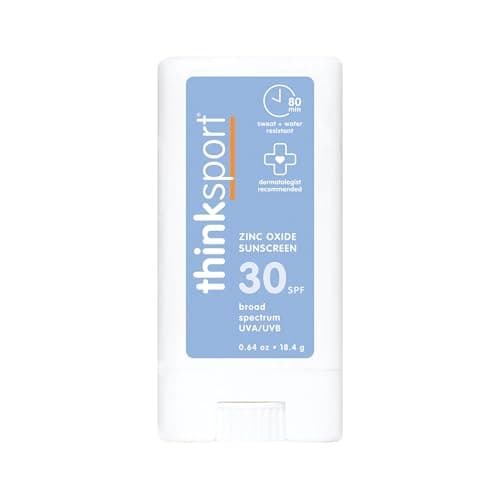 Thinksport Sunscreen Stick SPF 30+Best overall · SPF 30+ | Reapplying on trail without stopping to clean up | $9.99 · View on Amazon #ad We earn from qualifying purchases · Price as of October 10, 2026 |
| 2 | 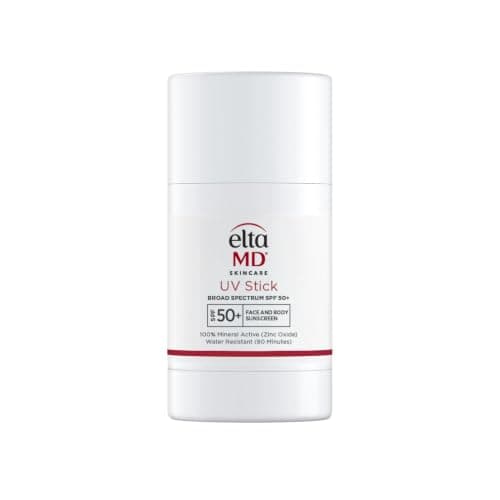 EltaMD UV Stick Broad Spectrum SPF 50+Best for face and neck · SPF 50+ | A face that is going in photos at the summit | $40.00 · View on Amazon #ad We earn from qualifying purchases · Price as of October 10, 2026 |
| 3 | 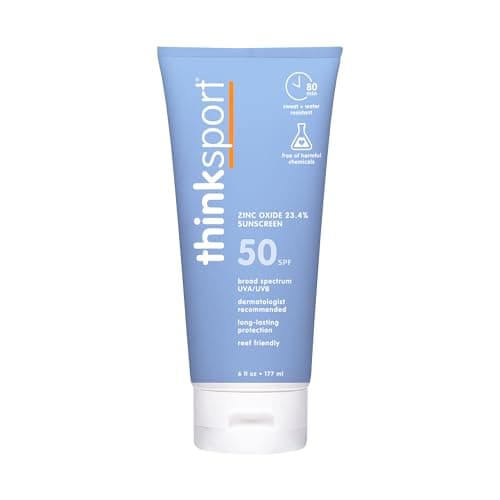 Thinksport Sunscreen SPF 50+Best base layer · SPF 50+ | The full dose at the trailhead | $19.97 · View on Amazon #ad We earn from qualifying purchases · Price as of October 10, 2026 |
| 4 | 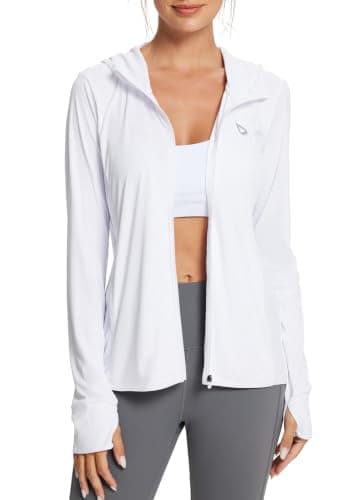 Baleaf UPF 50+ Sun Protection HoodieBest single upgrade · UPF 50+ | Taking arms, shoulders and neck out of the equation | $29.99 · View on Amazon #ad We earn from qualifying purchases · Price as of October 10, 2026 |
| 5 | 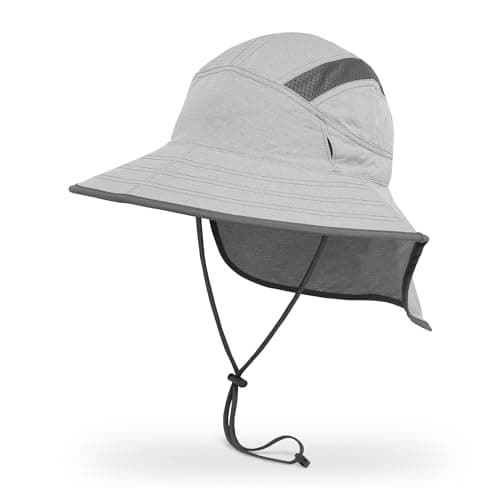 Sunday Afternoons Ultra Adventure Hat UPF 50+Best hat · UPF 50+ | Shading a face, ears and neck for a whole day | $60.00 · View on Amazon #ad We earn from qualifying purchases · Price as of October 10, 2026 |
Why trail sun protection is a different problem
- Exposure is measured in hours, not a lunchtime. A six-hour ridge walk is three to four reapplications, which is a volume and a weight decision as much as a product one.
- UV intensity rises with altitude, and snowfields and light rock reflect it back up — which is why people burn under their chins and inside their nostrils on alpine days.
- Sweat is constant. Water resistance is tested in water, and sweat plus a shirt strap does more to shift a sunscreen film than a swim does.
- There is no sink. Anything that leaves greasy palms makes trekking poles slippery and transfers to a phone, a map and your sunglasses.
- Every gram is carried. A 3-ounce bottle is fine; carrying three of them is not.
What we looked for
- The 80-minute water-resistance claim on every sunscreen pick, as the closest available proxy for sweat performance.
- A format that works without washing — sticks first, then lotions, with sprays as a reapplication tool rather than a base layer.
- UPF 50 or 50+ on the gear, the rating that corresponds to blocking at least 98% of UV.
- Pack-friendly size and no leak risk.
- Nothing that needs a mirror. Our methodology.
Our picks in detail
01 · Best overall
Thinksport Sunscreen Stick SPF 30+
Thinksport · Read our Thinksport review
24% zinc oxide with 80 minutes of water resistance in a stick that will not leak under pack compression and leaves no grease on your palms — the format that actually gets reapplied on a long day.
- Actives:
- 24% zinc oxide
- SPF:
- SPF 30+
- Water resistance:
- 80 minutes
- Reef status:
- Zinc only — no oxybenzone, octinoxate or octocrylene
- Best for:
- Reapplying on trail without stopping to clean up
What works
- No leak risk in a pack
- No greasy hands for poles or a phone
- Maximum labeled water resistance
The trade-off
- Obvious white film
- Slow over arms and legs
#ad We earn from qualifying purchases · Price as of October 10, 2026
02 · Best for face and neck
EltaMD UV Stick Broad Spectrum SPF 50+
EltaMD · Read our EltaMD review
22% transparent zinc oxide with 80 minutes of water resistance — the stick that reapplies on a sweaty face without the chalk, and small enough to live in a hip-belt pocket.
- Actives:
- 22% transparent zinc oxide
- SPF:
- SPF 50+
- Water resistance:
- 80 minutes
- Reef status:
- Zinc only — no oxybenzone, octinoxate or octocrylene
- Best for:
- A face that is going in photos at the summit
What works
- Transparent zinc, almost no cast
- 80-minute water resistance
- Pocket-sized
The trade-off
- Expensive per ounce
- Too slow for a whole body
#ad We earn from qualifying purchases · Price as of October 10, 2026
03 · Best base layer
Thinksport Sunscreen SPF 50+
Thinksport · Read our Thinksport review
20% non-nano zinc at SPF 50+ with 80 minutes of water resistance — the lotion to put a proper ounce on with before the pack goes on, then leave in the car.
- Actives:
- 20% non-nano zinc oxide
- SPF:
- SPF 50+
- Water resistance:
- 80 minutes
- Reef status:
- Zinc only — no oxybenzone, octinoxate or octocrylene
- Best for:
- The full dose at the trailhead
What works
- Maximum water resistance
- Zinc-only
- Large tubes
The trade-off
- Heavy to carry in volume
- Visible cast
#ad We earn from qualifying purchases · Price as of October 10, 2026
04 · Best single upgrade
Baleaf UPF 50+ Sun Protection Hoodie
Baleaf
A UPF 50+ hooded knit with thumbholes that covers everything a pack does not, blocks at least 98% of UV for as long as you wear it, and needs no reapplication at all.
- Actives:
- Polyester-spandex knit rated UPF 50+
- SPF:
- UPF 50+
- Water resistance:
- Quick-dry; rated dry
- Reef status:
- Not applicable
- Best for:
- Taking arms, shoulders and neck out of the equation
What works
- No reapplication, ever
- Hood covers the back of the neck under a pack
- Quick-drying and light
The trade-off
- Rated dry rather than wet
- Warm in still, humid air
#ad We earn from qualifying purchases · Price as of October 10, 2026
05 · Best hat
Sunday Afternoons Ultra Adventure Hat UPF 50+
Sunday Afternoons
A UPF 50+ crown with a full brim and a neck cape — it covers the three spots a cap leaves open, packs down, and survives being stuffed in a lid pocket.
- Actives:
- UPF 50+ crown with a neck cape
- SPF:
- UPF 50+
- Water resistance:
- Quick-dry
- Reef status:
- Not applicable
- Best for:
- Shading a face, ears and neck for a whole day
What works
- Full brim plus neck cape
- UPF 50+ rated
- Packable and quick-drying
The trade-off
- Catches wind on exposed ridges
- Bulkier than a cap
#ad We earn from qualifying purchases · Price as of October 10, 2026
The kit compared
| Item | Protection | Water resistance | Why it is in the pack |
|---|---|---|---|
| Thinksport Sunscreen Stick SPF 30+ | 24% zinc oxide | 80 minutes | No leak, no greasy hands, reaches ears and nose |
| EltaMD UV Stick SPF 50+ | 22% transparent zinc oxide | 80 minutes | Face and neck without a white film in photos |
| Thinksport SPF 50+ lotion | 20% non-nano zinc oxide | 80 minutes | Base layer on arms and legs before you start |
| Baleaf UPF 50+ hoodie | UPF 50+ knit | Quick-dry | Removes arms, shoulders and torso from the job entirely |
| Sunday Afternoons Ultra Adventure Hat | UPF 50+ with neck cape | Quick-dry | Shades face, ears and neck all day with nothing to reapply |
The order that works on trail
- Lotion at the trailhead, before the pack goes on — a full dose on everything the shirt will not cover, including the backs of hands and the tops of ears.
- Shirt and hat on from the start. Putting the shirt on after you are warm is how people end up carrying it.
- Stick every two hours, at the same time as a water stop so it becomes a habit rather than a decision. Nose, ears, cheekbones, back of neck, backs of hands.
- Lips with an SPF balm. Lips have no melanin defence and burn badly at altitude.
- Reapply after a summit stop, where the wind dries sweat and most people underestimate how long they sat still in full sun.
Why the shirt is the real answer
A UPF 50+ long-sleeve blocks at least 98% of UV for as long as you wear it, does not degrade across a day, and needs no reapplication. On a six-hour hike that is the difference between covering arms, shoulders and torso four times and never thinking about them again. A hooded version adds the back of the neck, which is the single most commonly burned spot on hikers carrying a pack.
The common objection is heat. Modern UPF knits are lighter and more breathable than a cotton t-shirt and dry faster when they do get wet, and in direct sun a loose light-coloured long sleeve is usually cooler than bare skin. How UPF clothing works covers the fabric side, and the best sun shirts the options.
Hats: brim width beats everything
A baseball cap shades a forehead and leaves ears, cheeks and the back of the neck fully exposed — the three areas where sun damage is most commonly found on people who hike a lot. A three-inch brim all the way round, ideally with a neck cape, is the functional choice. The best sun hats covers brim width, chin straps and packability.
Sources
- Sunscreen FAQs — American Academy of Dermatology
- Sunscreen — Skin Cancer Foundation
- Sun-Protective Clothing — Skin Cancer Foundation
- How Do I Protect Myself from UV Rays? — American Cancer Society
- Questions and Answers: FDA Requirements for Over-the-Counter Sunscreen Products — U.S. Food and Drug Administration
Frequently asked questions
What is the best sunscreen for hiking?
A zinc stick with the 80-minute water-resistance claim — our pick is Thinksport Sunscreen Stick SPF 30+, because it cannot leak in a pack and reapplies without leaving grease on your hands. Pair it with a UPF shirt and a brimmed hat.
How often should I reapply sunscreen while hiking?
Every two hours, and sooner if you are sweating heavily or have wiped your face. Tying it to a water stop is the easiest way to make it happen rather than remain a good intention.
Do I need more sun protection at altitude?
Yes. UV intensity rises as you climb, and snow and pale rock reflect it back up at your face from below. That reflected UV reaches the areas a hat shades least — under the chin, under the nose and inside the ears.
Is a sun shirt better than sunscreen for hiking?
For everything it covers, yes. A UPF 50+ long sleeve blocks at least 98% of UV with no reapplication and no degradation across the day. Sunscreen still handles the face, neck, ears and hands.
Does sweat wash off sunscreen?
It shifts it, especially under a pack strap or a hat band. Water resistance is tested in water rather than sweat, so treat the 80-minute claim as the best available proxy and reapply on schedule anyway.
Read next
Sun Protective Gear
The best sun shirts
UPF 50+ shirts and hoodies chosen on fabric, fit and heat management — protection that never needs reapplying.
Sun Protective Gear
The best sun hats
Wide-brim UPF 50+ hats for adults and children, and why a baseball cap is not enough.
Sun Safety
The best sunscreen sticks
The sunscreen sticks worth buying, what their actives panels say, and the number of passes it takes to reach the SPF on the tube.
Sun Protective Gear
How UPF clothing works
What makes fabric block UV, why good garments do not wash out, and what actually degrades protection.
Sun Safety
How much sunscreen to apply
The measures by body area, and why under-application costs more protection than it seems.