Mineral Sunscreen
How often should you reapply mineral sunscreen?
Every two hours. Mineral filters are more photostable than chemical ones, which is not the same thing as lasting longer on skin.
Disclosure: Spf & Shore earns commission from qualifying purchases made through links on this page, at no extra cost to you. It does not change which products we recommend. Read the full disclosure.
Every two hours while you are outdoors, and immediately after toweling off — exactly the same interval as a chemical sunscreen. Mineral filters are more photostable, meaning they degrade less in sunlight, but what ends a sunscreen's protection in the real world is almost never photodegradation. It is sweat, water, towels, sand and rubbing.
That is the whole answer, and it is worth stating plainly because the opposite belief is widespread. A zinc film that has been wiped off a shoulder by a towel is providing zero protection regardless of how stable zinc oxide is in UV light.
Where the myth comes from
It comes from a real property, misapplied. Avobenzone, the main UVA filter in US chemical sunscreens, breaks down measurably in sunlight, which is why formulators pair it with stabilizers such as octocrylene. Zinc oxide and titanium dioxide are inorganic and effectively do not photodegrade at all. So in a laboratory sense, mineral filters genuinely do hold up better under UV.
The leap to "so it lasts longer on me" skips the part that actually matters. Physical removal dominates: you touch your face, you sweat, you dry yourself, you lean against a chair. A mineral film sits on the surface of the skin, which is exactly where that friction happens — if anything it is more vulnerable to being wiped away than a chemical filter absorbed into the outer layer.
The FDA sets the direction clearly: the required labeling instruction is to reapply at least every two hours, and immediately after swimming or sweating. It does not carve out an exception for mineral products, and no US label may claim one. How to read a sunscreen label covers what the panel is allowed to say.
What actually removes a mineral film
- Toweling. The most complete removal method there is, and it ends water resistance whatever the label claimed.
- Sweat. Even a water-resistant formula is only tested for 40 or 80 minutes of immersion, and sweat runs continuously.
- Sand and clothing friction. Both abrade the film mechanically. Shoulder straps and waistbands are classic burn lines for this reason.
- Touching your face. Most people do it dozens of times an hour without noticing.
- Water. The 40 or 80 minutes on the label is the ceiling, and chlorinated water is harder on a film than fresh.
What to reapply with
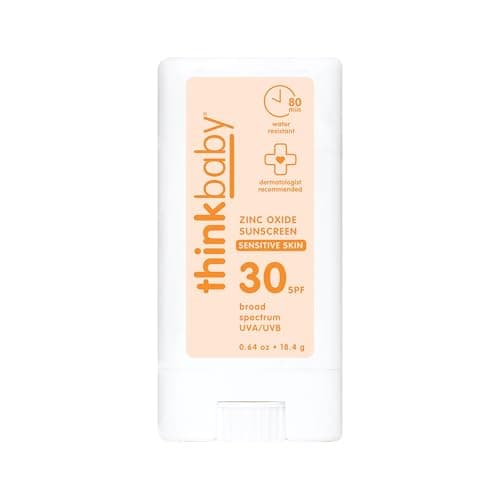
The honest obstacle is that nobody wants to put a second coat of thick white lotion on a face at two in the afternoon, which is why the second application so often does not happen. Three formats solve it: a transparent-zinc stick for faces, ears and hairlines; a mineral spray for backs, arms and legs, rubbed in afterward; and a loose mineral powder for a face that already has makeup on it.
Choosing one of those and keeping it where you will actually reach it does more for your protection than upgrading the morning bottle. The easiest sunscreens to apply weighs the format trade-offs, including the dose you give up for convenience.
Our picks in detail
01 · Best reapplication tool for a face
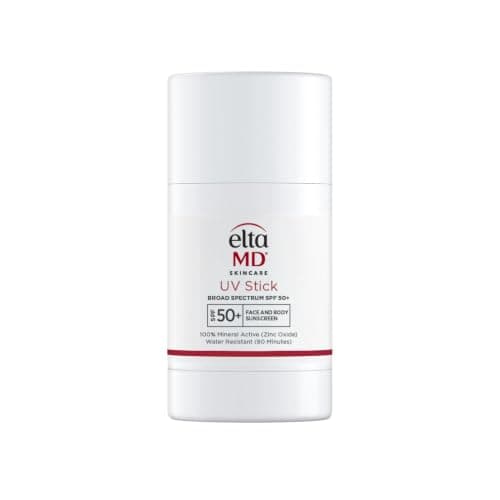
EltaMD UV Stick Broad Spectrum SPF 50+
EltaMD · Read our EltaMD review
22% transparent zinc at SPF 50+ with 80 minutes of water resistance — transparent zinc is what makes a second coat on a face acceptable in public, which is the whole battle.
- Actives:
- 22% transparent zinc oxide
- SPF:
- SPF 50+
- Water resistance:
- 80 minutes
- Reef status:
- Zinc only — no oxybenzone, octinoxate or octocrylene
- Best for:
- The two-hour top-up on faces, ears and hairlines
What works
- Minimal cast
- SPF 50+ with 80 minutes
- Fits in a pocket
The trade-off
- Slow over large areas
- Small for the price
#ad We earn from qualifying purchases · Price as of October 11, 2026
02 · Fastest second coat on a body
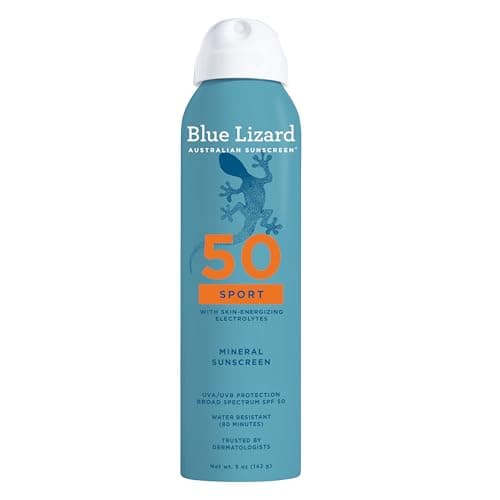
Blue Lizard Sport Mineral Sunscreen Spray SPF 50+
Blue Lizard · Read our Blue Lizard review
24% zinc oxide as the sole filter with 80 minutes of water resistance in a continuous spray — the quickest way to get a genuine second coat onto a whole body.
- Actives:
- 24% zinc oxide as the sole active filter
- SPF:
- SPF 50+
- Water resistance:
- 80 minutes
- Reef status:
- Zinc only — no oxybenzone or octinoxate
- Best for:
- Backs, arms and legs between swims
What works
- High published zinc percentage
- 80-minute water resistance
- Covers fast
The trade-off
- Must still be rubbed in to deliver the tested dose
- Never spray near a face
#ad We earn from qualifying purchases · Price as of October 11, 2026
03 · Best over makeup
Colorescience Sunforgettable Total Protection Brush-On Shield SPF 50
Colorescience · Read our Colorescience review
Zinc and titanium in a loose powder at SPF 50 with 80 minutes of water resistance — the only format that reapplies without disturbing what is already on the skin.
- Actives:
- Zinc oxide and titanium dioxide in a loose mineral powder
- SPF:
- SPF 50
- Water resistance:
- 80 minutes
- Reef status:
- Mineral filters only
- Best for:
- Reapplying on a face that is already made up
What works
- Goes over makeup
- Absorbs oil
- SPF 50 with 80 minutes
The trade-off
- Hard to apply a full dose with a brush
- Best as a top-up rather than the first layer
The two-hour rule in practice
- Apply the first coat 15 minutes before going out, at a full dose — about an ounce for an adult body.
- Set a reminder for two hours. Nobody reapplies accurately from memory, and the interval is a hard rule rather than a guideline.
- Reapply immediately after toweling off, regardless of where you are in the two hours.
- Reapply after heavy sweat, which in practice means every water break on a hot day.
- Cover what you can instead. A UPF 50+ shirt protects for as long as it is on and needs nothing reapplied. How UPF clothing works.
Does mineral sunscreen need reapplying indoors?
No, in any practical sense. The two-hour rule exists because of exposure and physical removal, and a desk day supplies neither in quantity. Apply once in the morning, and reapply when you go outside — that is the application that matters. Do you need sunscreen indoors? covers what window glass does and does not stop.
Sources
- Questions and Answers: FDA Requirements for Over-the-Counter Sunscreen Products — U.S. Food and Drug Administration
- Sunscreen: How to Help Protect Your Skin from the Sun — U.S. Food and Drug Administration
- 21 CFR 201.327 — Over-the-counter sunscreen drug products; required labeling — Legal Information Institute, Cornell Law School
- Sunscreen FAQs — American Academy of Dermatology
- Sunscreen — Skin Cancer Foundation
Frequently asked questions
How often should you reapply mineral sunscreen?
Every two hours outdoors, and immediately after toweling off, swimming or heavy sweating. The interval is the same as for chemical sunscreen — US labels are required to carry that instruction and may not claim an exception for mineral filters.
Does mineral sunscreen last longer than chemical?
Not on skin. Mineral filters are more photostable, so they degrade less in sunlight, but what ends protection in practice is physical removal by sweat, water, towels and rubbing — and a surface film is at least as vulnerable to that.
Do I need to reapply mineral sunscreen if I am not in the sun?
Not in any practical sense. Reapply when you go outside. A desk day with no sweat and no water does not remove the film, so a single morning application is reasonable.
Is mineral sunscreen water resistant?
Many mineral formulas carry the maximum 80-minute water-resistance claim, which is the longest any US label may state. Water resistance ends when you towel off, regardless of the number.
What is the easiest way to reapply mineral sunscreen?
A transparent-zinc stick for faces and ears, a mineral spray rubbed in for bodies, or a loose mineral powder over makeup. Picking one you will actually carry matters more than which morning bottle you bought.
Read next

Sun Safety
How much sunscreen to apply
The measures by body area, and why under-application costs more protection than it seems.
Sun Safety
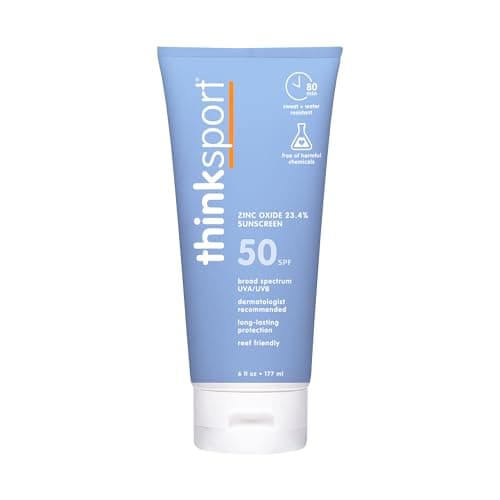
What water-resistant sunscreen actually means
What the 40 and 80-minute claims measure, why toweling ends them, and how to plan a pool day around it.
Sun Safety
The easiest sunscreens to apply
Lowest-friction sunscreens by format, with the dose trade-off each one carries named outright.
Mineral Sunscreen
Mineral vs chemical sunscreen
How each filter type works, what the absorption research actually found, and which to choose for your situation.
Kids & Baby
Reapplying sunscreen on kids without losing the day
The reapplication rule, why toweling off matters more than the clock, and how to make it work in practice.