Sun Safety
The best after-sun care for a sunburn
Nothing in this category reverses a burn. These are the products that make the next three days bearable, and the one ingredient to put back on the shelf.
Disclosure: Spf & Shore earns commission from qualifying purchases made through links on this page, at no extra cost to you. It does not change which products we recommend. Read the full disclosure.
Our overall pick is the Blue Lizard After Sun Soothing Lotion — a plain, lightweight shea butter lotion from a brand this site already trusts for sunscreen, with no fragrance load and no numbing agent in it. On a burn, boring is the whole point.
Start with the uncomfortable part. After-sun care does not heal a sunburn and does not undo the damage that caused it. By the time skin is red and sore, MedlinePlus puts it plainly: the damage has been done, and while the symptoms are temporary the injury to skin cells is often permanent. What a good after-sun product does is manage water loss, itch and discomfort for the two or three days the skin needs to repair itself. That is worth buying. It is not the same as a cure, and any bottle that implies otherwise is selling you something.
So this page is short on miracle formulas and long on two things: what the American Academy of Dermatology and MedlinePlus actually tell people to do with a burn, and which widely sold after-sun gels contain an ingredient both sources say to skip.
Quick picks
Tap any row to read the full write-up below.
| # | Product | Best for | Price |
|---|---|---|---|
| 1 | 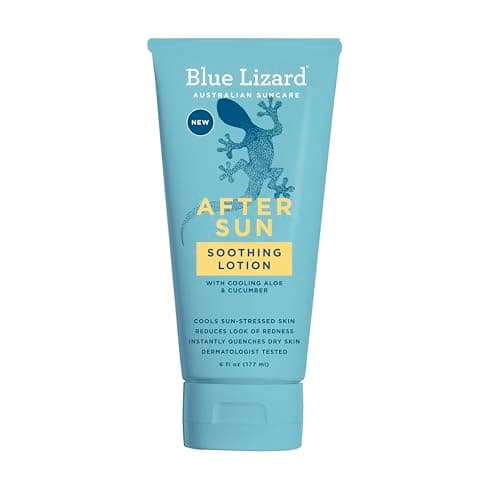 Blue Lizard After Sun Soothing LotionBest overall · None — after-sun care, not sun protection | A whole-body burn you will be reapplying to for three days | $9.86 · View on Amazon #ad We earn from qualifying purchases · Price as of November 2, 2026 |
| 2 | 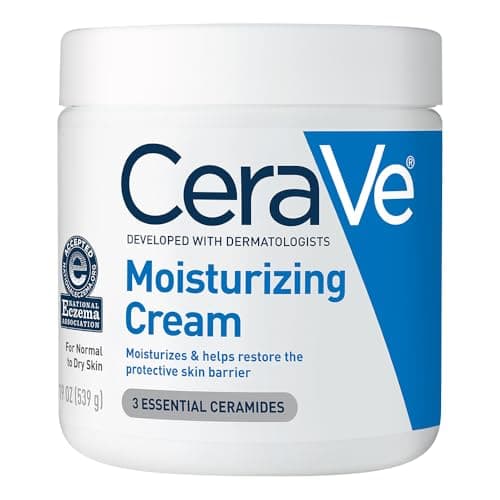 CeraVe Moisturizing CreamBest for sensitive or reactive skin · None — after-sun care, not sun protection | Anyone whose skin reacts to fragrance, or a burn on top of eczema | $16.77 · View on Amazon #ad We earn from qualifying purchases · Price as of November 2, 2026 |
| 3 | 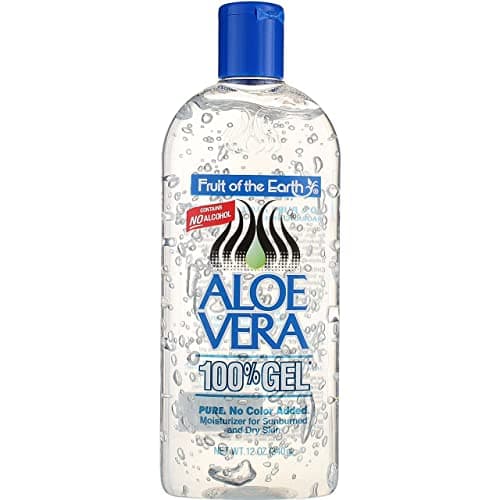 Fruit of the Earth Aloe Vera 100% GelBest budget aloe gel · None — after-sun care, not sun protection | Keeping two bottles in the fridge all summer without thinking about cost | $11.91 · View on Amazon #ad We earn from qualifying purchases · Price as of November 2, 2026 |
| 4 | 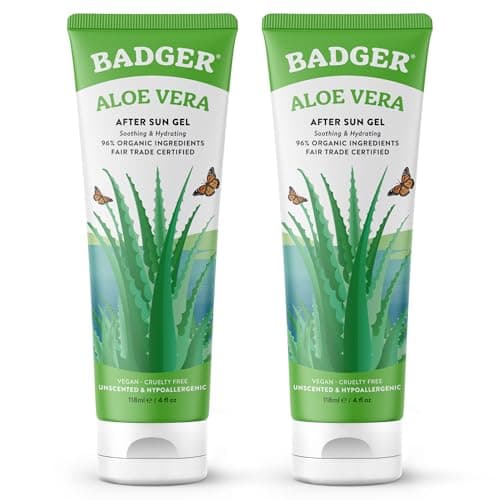 Badger Organic Aloe Vera GelBest unscented aloe · None — after-sun care, not sun protection | A burn on a child, or on anyone who reacts to fragrance | $14.99 · View on Amazon #ad We earn from qualifying purchases · Price as of November 2, 2026 |
| 5 | 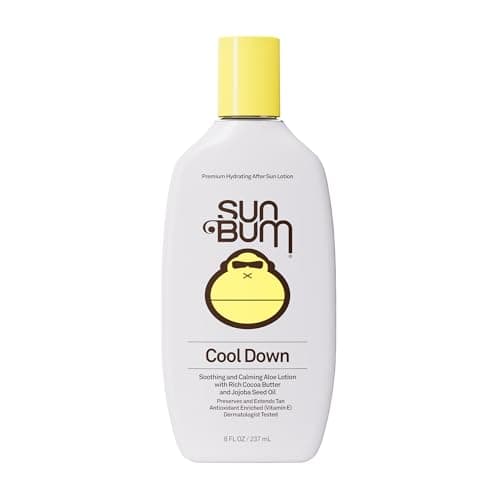 Sun Bum Cool Down Aloe Vera LotionBest for the beach bag · None — after-sun care, not sun protection | Sunburn care that travels with the family and gets actually used | $11.05 · View on Amazon #ad We earn from qualifying purchases · Price as of November 2, 2026 |
| 6 | 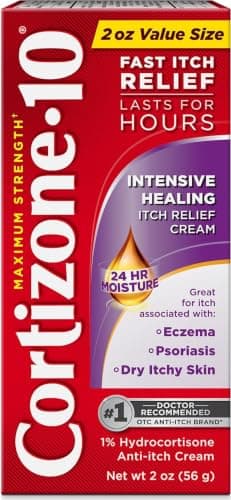 Cortizone-10 Max Strength Intensive Healing Itch Relief CreamBest for the itch · None — an OTC itch-relief drug, not sun protection | Day two or three, when a healing burn starts to itch rather than hurt | $9.42 · View on Amazon #ad We earn from qualifying purchases · Price as of November 2, 2026 |
| 7 | 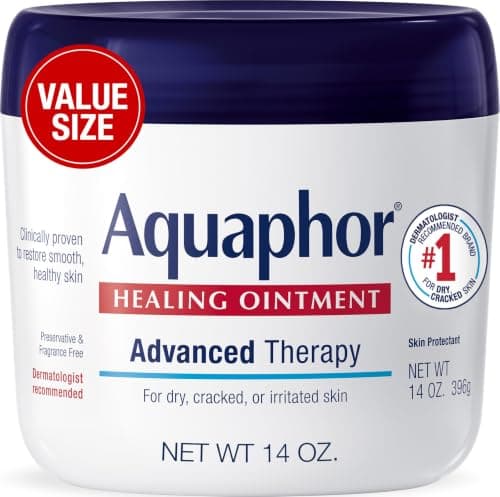 Aquaphor Advanced Therapy Healing OintmentBest for blisters and the peeling stage · None — an OTC skin protectant, not sun protection | Intact blisters, and dry flaking skin several days after the burn | $16.49 · View on Amazon #ad We earn from qualifying purchases · Price as of November 2, 2026 |
How we chose these
The criteria came from the guidance first and the shelf second. Dermatology advice for a sunburn converges on a short list: get out of the sun, cool the skin, then put moisture back into it while it is still damp, repeatedly, and treat pain and itch with ordinary over-the-counter medicine. Nothing on that list requires a product labeled after-sun. So we looked for the products that do those jobs honestly.
- No benzocaine or lidocaine. MedlinePlus is explicit: do not use products containing benzocaine or lidocaine on a sunburn, because they cause allergic reactions in some people and can make the burn worse. A striking share of the brightly colored after-sun gels in a drugstore cooler contain exactly that. Every pick below is free of them.
- Moisture, not numbing. The job is to replace what the burn is pulling out of the skin. A thin lotion that can be reapplied freely beats a thick treatment used once.
- A short ingredient list and a light fragrance load, because a burn is a compromised skin barrier and that is the worst possible moment to introduce a reactive formula. Sunscreen allergy and rash covers how those reactions usually present.
- Honest category labeling. Two picks here are over-the-counter drugs rather than cosmetics — a 1% hydrocortisone cream and a petrolatum skin protectant — and both are listed as what they are.
- Currently sold in the US. Every pick was confirmed available on its retailer listing before it went on this page. We do not run laboratory tests and there are no scores here for that reason. Our methodology.
Our picks in detail
01 · Best overall
Blue Lizard After Sun Soothing Lotion
Blue Lizard · Read our Blue Lizard review
A plain, lightweight after-sun lotion with shea butter, no numbing agent and no heavy fragrance — from a brand whose mineral sunscreens this site already rates. Boring is the correct answer on broken-in skin.
- Actives:
- No UV filters — a lightweight shea butter lotion
- SPF:
- None — after-sun care, not sun protection
- Water resistance:
- Not applicable
- Reef status:
- Not applicable — contains no UV filters
- Best for:
- A whole-body burn you will be reapplying to for three days
What works
- No benzocaine or lidocaine
- Thin enough to reapply as often as the guidance says to
- Vegan and hypoallergenic per Blue Lizard's own labeling
The trade-off
- Narrower distribution than the drugstore brands — often easier to find online than in a store
- 6 oz goes quickly on two sunburned adults
- Costs more per ounce than a plain aloe gel that does most of the same work
#ad We earn from qualifying purchases · Price as of November 2, 2026
02 · Best for sensitive or reactive skin
CeraVe Moisturizing Cream
CeraVe · Read our CeraVe review
Not sold as after-sun care at all, which is exactly why it belongs here: a fragrance-free ceramide cream is the lowest-risk thing you can put on a compromised barrier, and the AAD's instruction is simply to moisturize while the skin is damp.
- Actives:
- No UV filters — ceramides and hyaluronic acid, fragrance-free
- SPF:
- None — after-sun care, not sun protection
- Water resistance:
- Not applicable
- Reef status:
- Not applicable — contains no UV filters
- Best for:
- Anyone whose skin reacts to fragrance, or a burn on top of eczema
What works
- Fragrance-free, with ceramides and hyaluronic acid
- The 19 oz tub is the cheapest way to cover a lot of skin repeatedly
- Works year-round rather than sitting in a cupboard until August
The trade-off
- Thick — on a hot, tight burn it feels heavier than a gel or a lotion
- No cooling sensation at all, which some people genuinely want
- The tub is awkward to use with sore hands; the pump lotion is easier
#ad We earn from qualifying purchases · Price as of November 2, 2026
03 · Best budget aloe gel
Fruit of the Earth Aloe Vera 100% Gel
Fruit of the Earth
The plain aloe gel that has been on US drugstore shelves for decades, at a price that lets you use it as freely as the guidance actually recommends. Buy it, refrigerate it, stop over-thinking the category.
- Actives:
- No UV filters — aloe vera gel
- SPF:
- None — after-sun care, not sun protection
- Water resistance:
- Not applicable
- Reef status:
- Not applicable — contains no UV filters
- Best for:
- Keeping two bottles in the fridge all summer without thinking about cost
What works
- Cheap enough to use generously, which is the whole trick
- Aloe vera is the ingredient the AAD names for after-sun moisturizing
- No topical anesthetic
The trade-off
- Lightly scented, which not everyone wants on raw skin
- Dries to a slight tackiness
- Thin — on very dry peeling skin you will want a cream over the top
#ad We earn from qualifying purchases · Price as of November 2, 2026
04 · Best unscented aloe
Badger Organic Aloe Vera Gel
Badger · Read our Badger review
An unscented aloe gel from a brand whose whole range is built around short ingredient lists — the one to reach for when you want aloe without the perfume that usually comes with it.
- Actives:
- No UV filters — aloe vera gel the brand lists at 96% pure, unscented
- SPF:
- None — after-sun care, not sun protection
- Water resistance:
- Not applicable
- Reef status:
- Not applicable — contains no UV filters
- Best for:
- A burn on a child, or on anyone who reacts to fragrance
What works
- Unscented, with aloe listed by Badger at 96% of the formula
- Small 4 oz bottles suit a bag rather than a bathroom shelf
- Same ingredient philosophy as the Badger sunscreens on this site
The trade-off
- Several times the price per ounce of a drugstore aloe gel
- Sold mainly in multi-packs online, so the entry cost is higher
- 4 oz does not go far on a sunburned back
#ad We earn from qualifying purchases · Price as of November 2, 2026
05 · Best for the beach bag
Sun Bum Cool Down Aloe Vera Lotion
Sun Bum · Read our Sun Bum review
An aloe lotion with cocoa butter and vitamin E that people reliably keep in a bag and reach for — and the format matters, because an after-sun product in a bathroom cabinet at home does nothing for a burn that happens at 4 p.m. on a beach.
- Actives:
- No UV filters — aloe vera with cocoa butter and vitamin E
- SPF:
- None — after-sun care, not sun protection
- Water resistance:
- Not applicable
- Reef status:
- Not applicable — contains no UV filters
- Best for:
- Sunburn care that travels with the family and gets actually used
What works
- Widely stocked, so replacing it mid-trip is easy
- Lotion texture spreads further than a gel on a large area
- No topical anesthetic
The trade-off
- Strongly scented — the banana note is divisive and it is a lot on raw skin
- Thicker than a gel, so it feels warm rather than cooling
- Priced above a plain aloe gel for benefits that are mostly textural
#ad We earn from qualifying purchases · Price as of November 2, 2026
06 · Best for the itch
Cortizone-10 Max Strength Intensive Healing Itch Relief Cream
Cortizone-10
An over-the-counter 1% hydrocortisone cream, which is the thing MedlinePlus actually points to for the inflammation phase. Not a moisturizer and not a substitute for one — a short-term tool for a specific symptom.
- Actives:
- Hydrocortisone 1%, an OTC anti-itch active
- SPF:
- None — an OTC itch-relief drug, not sun protection
- Water resistance:
- Not applicable
- Reef status:
- Not applicable — contains no UV filters
- Best for:
- Day two or three, when a healing burn starts to itch rather than hurt
What works
- Addresses itch and inflammation, which no lotion on this page does
- Cheap, small and keeps for years in a medicine cabinet
- A standard OTC active rather than a proprietary blend
The trade-off
- An OTC drug, not daily skincare — follow the label on duration, area and age
- Does nothing about dryness, so you still need a moisturizer alongside it
- Not for broken or blistered skin, or for large areas; ask a clinician first
#ad We earn from qualifying purchases · Price as of November 2, 2026
07 · Best for blisters and the peeling stage
Aquaphor Advanced Therapy Healing Ointment
Aquaphor
A petrolatum skin protectant, ranked last on purpose. The AAD recommends petroleum jelly specifically to protect intact blisters while they heal, and it is the right texture for the peeling stage — but MedlinePlus advises against oil-based products on an unbroken burn, so this is not the thing to coat a hot red back in.
- Actives:
- Petrolatum, listed as the skin-protectant active; dye- and fragrance-free
- SPF:
- None — an OTC skin protectant, not sun protection
- Water resistance:
- Not applicable
- Reef status:
- Not applicable — contains no UV filters
- Best for:
- Intact blisters, and dry flaking skin several days after the burn
What works
- The AAD names petroleum jelly for protecting blisters as they heal
- Excellent on the dry, flaking days at the end of a burn
- Dye-free and fragrance-free, and useful long after the burn is gone
The trade-off
- MedlinePlus explicitly advises against oil-based products on a sunburn — it can trap heat and sweat on an unbroken burn
- Greasy, and it marks clothing and bedding
- Wrong product for the first 24 hours of a flat, hot burn
#ad We earn from qualifying purchases · Price as of November 2, 2026
What to do in the first hour, before any product
The sequence matters more than the bottle. Both the AAD and MedlinePlus start in the same place, and none of the first three steps costs anything.
- Get out of the sun, and preferably indoors. Shade is not neutral — reflected and scattered ultraviolet still reaches skin under an umbrella.
- Cool the skin. Frequent cool baths or showers, or clean wet cool washcloths laid on the burn. Pat dry gently afterward rather than rubbing.
- Moisturize while the skin is still damp, and again whenever it feels uncomfortable. The AAD specifically suggests a moisturizer containing aloe vera or soy.
- Drink extra water. A sunburn draws fluid toward the skin's surface and away from the rest of the body, which is why a bad burn and mild dehydration so often arrive together.
- Treat the pain with an ordinary oral analgesic if you need to. The AAD mentions aspirin or ibuprofen; MedlinePlus lists ibuprofen or acetaminophen and adds the important caveat that aspirin should not be given to children.
The ingredient to put back on the shelf
If you remember one thing from this page, make it this one. MedlinePlus's home-care instructions for sunburn include a direct negative: do not use products that contain benzocaine or lidocaine. The reasoning is that they provoke allergic reactions in some people and can make the burn worse. These are topical anesthetics, and they are the active ingredient in a large number of the after-sun sprays and gels sold specifically for sunburn relief, usually flagged on the front of the bottle as pain-relieving or cooling.
That is an awkward fact for a page that earns money when you buy something, so here it is stated as plainly as we can: the single most useful thing you can do in a drugstore sunburn aisle is turn the bottle over and put it back if the actives panel says lidocaine. The cheapest aloe gel with no actives panel at all is the better purchase.
Where two reputable sources disagree — petroleum jelly
We would rather show you a real disagreement than pretend the guidance is unanimous, because this one changes what you should buy.
| Source | What it says |
|---|---|
| American Academy of Dermatology | If the skin blisters, let the blisters heal, do not pop them, keep them clean and apply petroleum jelly to protect them while they heal. |
| MedlinePlus (US National Library of Medicine) | Do not use butter, petroleum jelly or other oil-based products, because they can block pores so heat and sweat cannot escape, which can lead to infection. |
Read closely and the two are answering slightly different questions. The AAD's petroleum-jelly advice sits inside its instruction about blisters — an intact blister is a wound dressing, and the ointment is there to protect it. MedlinePlus is describing a broad hot, unbroken burn, where sealing the surface traps heat. Our reading, and the reason the ointment below is ranked last rather than first: use a thin lotion or gel on a flat red burn, and keep a petrolatum ointment for intact blisters and for the dry, peeling stage several days later. If a burn has blistered over a large area you should be talking to a clinician, not to a product page.
Does aloe actually do anything?
It does something, and less than the marketing implies. The AAD's own guidance names aloe vera as an ingredient to look for in an after-sun moisturizer, so recommending it is not folk medicine. But most of the measurable benefit of a bottle of aloe gel on a burn is what any good moisturizer would deliver — water held in the skin, a cooler surface, less tightness — plus the genuine comfort of something cold out of the fridge. MedlinePlus separately notes that creams with vitamins C and E may help limit damage to skin cells, which is a more modest claim than most vitamin-C marketing makes.
What this means at the till: do not pay a premium for aloe as an active. Pay for a clean formula you will reapply often. A plain drugstore aloe gel and a mid-priced after-sun lotion are both reasonable buys, and the thing that should decide between them is texture, scent and how much of it you will actually use — not a belief that one contains more medicine than the other.
When a sunburn stops being a product problem
Blistering over a large area, fever, chills, nausea, dizziness or confusion are not symptoms for an after-sun lotion to solve. MedlinePlus groups those under severe reactions, which people commonly call sun poisoning, and they warrant medical attention. Sun poisoning versus sunburn sets out the line in more detail. This site publishes general information; for a burn you are worried about, call a clinician.
The same goes for a burn on a baby or a very young child, or on skin already compromised by eczema or a recent procedure. The best sunscreen for a compromised skin barrier covers what to put on that skin once it has healed, and sunscreen for babies under six months covers why the answer for infants is shade and clothing rather than a bottle.
What to buy so you need this page less
Every product below is a consolation prize. The pages worth more of your attention are the ones that prevent the burn: how much sunscreen to apply, because under-application is the single most common failure, and the best sunscreens overall for the bottle itself.
The structural fix is to stop relying on reapplication for the areas you can simply cover. The best sun shirts removes the torso from the problem entirely, the best UPF sun sleeves and gloves covers the arms and the backs of the hands that a shirt misses, and the best sunglasses for UV protection handles the one area where no amount of after-sun lotion helps at all.
Sources
- How to treat sunburn — American Academy of Dermatology
- Sunburn — MedlinePlus, U.S. National Library of Medicine
- Sunburn — Skin Cancer Foundation
- How to prevent skin cancer — American Academy of Dermatology
- How Do I Protect Myself from UV Rays? — American Cancer Society
Frequently asked questions
What is the best thing to put on a sunburn?
A plain moisturizer, applied while the skin is still damp from a cool shower and reapplied whenever it feels uncomfortable. The American Academy of Dermatology suggests one containing aloe vera or soy. Cool baths or showers and extra water matter as much as the product does.
Is aloe vera good for sunburn?
Yes, as a moisturizer. The AAD names aloe vera as an ingredient to look for in an after-sun product. Most of the benefit is moisture and cooling rather than anything medicinal, so a cheap plain aloe gel used generously beats an expensive one used sparingly.
Should you avoid lidocaine in after-sun products?
Yes. MedlinePlus advises against using products containing benzocaine or lidocaine on a sunburn, because they can cause allergic reactions in some people and make the burn worse. Many drugstore sunburn-relief gels contain one of them, so check the actives panel.
Can you put Vaseline or Aquaphor on a sunburn?
The guidance splits. The AAD recommends petroleum jelly to protect intact blisters while they heal. MedlinePlus advises against petroleum jelly and other oil-based products on a sunburn generally, because they can trap heat and sweat. Use a thin lotion or gel on a flat red burn and keep ointment for blisters and for the later peeling stage.
Does after-sun lotion help a burn heal faster?
There is no good reason to believe it shortens the burn. It manages the symptoms — dryness, tightness, itch and discomfort — while the skin repairs itself over a few days. The visible redness is a sign of damage that has already happened.
How long does a sunburn take to heal?
A mild sunburn is usually largely settled within three to five days, with peeling arriving several days in. Pain is typically worst between 6 and 48 hours after the exposure, which is why a burn that looks manageable the same evening can be considerably worse the next morning.
When should you see a doctor about a sunburn?
Blistering over a large area, or a burn with fever, chills, nausea, dizziness or confusion. MedlinePlus groups these as severe reactions, often called sun poisoning, and they warrant medical attention rather than home care.
Read next
Sun Safety
Sun poisoning vs sunburn
How to tell severe sunburn from ordinary, the warning signs, and when to call a clinician.
Sun Safety
How much sunscreen to apply
The measures by body area, and why under-application costs more protection than it seems.
Sun Safety
The best sunscreens
One pick per situation — face, body, kids, water, sensitive skin — chosen on the label, not the packaging.
Reef-Safe & Ingredients
The best sunscreen for a compromised skin barrier
Sunscreen for skin that is mid-flare, post-procedure or over-exfoliated: short mineral panels, barrier ingredients, and the formats you can apply without dragging.

Reef-Safe & Ingredients
Sunscreen allergy and sunscreen rash
What actually causes a sunscreen rash, why fragrance is the usual culprit rather than the filters, and the formulas to fall back on.
Sun Protective Gear
The best UPF sun sleeves and gloves
UPF 50+ arm sleeves, sun gloves and leg sleeves for the forearms, hands and shins a shirt and hat never reach.