Sun Protective Gear
The best sunglasses for UV protection
The eye is the one exposed area no sunscreen reaches. Here is what the lens actually has to do, and why price has almost nothing to do with it.
Disclosure: Spf & Shore earns commission from qualifying purchases made through links on this page, at no extra cost to you. It does not change which products we recommend. Read the full disclosure.
Our overall pick is the Knockaround Premiums Polarized Sunglasses — a UV400 polycarbonate lens in a frame that costs less than a tank of gas, which is the honest answer to this question for most people. You are not buying better UV protection as you spend more. You are buying optics, impact resistance, coverage and durability.
That is the single most useful thing on this page, so it goes first. Lens darkness is not UV protection, and neither is polarization. A near-black lens with no ultraviolet filter and a nearly clear lens with a full one are not remotely equivalent, and nothing you can see tells you which is which. The reason it matters is mechanical: a tinted lens reduces visible brightness, so the pupil opens wider behind it. If that lens is not also filtering ultraviolet, the wider pupil is a larger opening for UV to reach the inside of the eye.
The American Optometric Association is specific about what adequate protection means, and it is a four-item list rather than a number on a hangtag. We have used that list as the criteria for this page.
Quick picks
Tap any row to read the full write-up below.
| # | Product | Best for | Price |
|---|---|---|---|
| 1 | 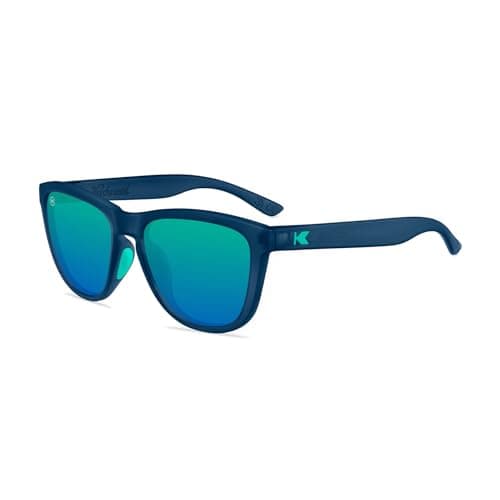 Knockaround Premiums Polarized SunglassesBest overall value · UV400 lens (UVA and UVB) | Everyday wear, and anyone who has lost sunglasses before | $38.00 · View on Amazon #ad We earn from qualifying purchases · Price as of November 2, 2026 |
| 2 | 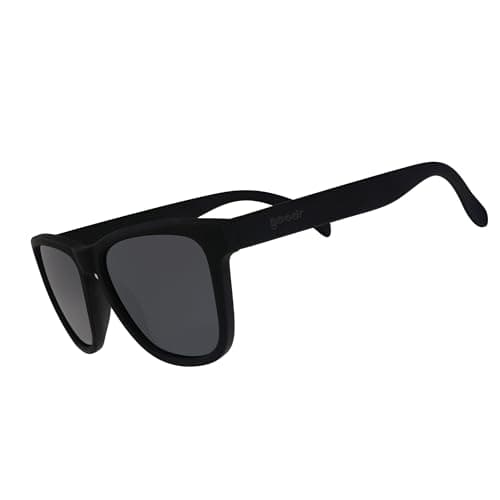 goodr OG Polarized SunglassesBest for running · UV400 lens (UVA and UVB) | Running, hiking and anything where sunglasses slide down a sweaty nose | $30.00 · View on Amazon #ad We earn from qualifying purchases · Price as of November 2, 2026 |
| 3 | 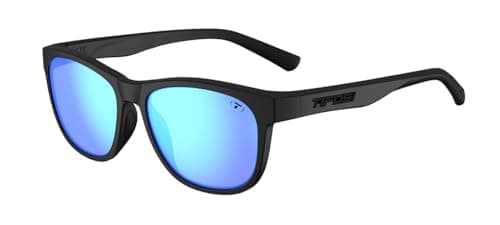 Tifosi Optics Swank Polarized SunglassesBest for sport and wind · 100% UVA and UVB per the brand | Cycling, golf and long days where glare comes in from the side | $59.95 · View on Amazon #ad We earn from qualifying purchases · Price as of November 2, 2026 |
| 4 | 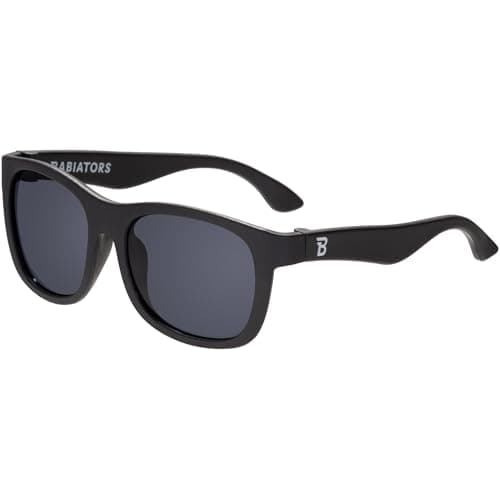 Babiators Original Navigator Kids SunglassesBest for kids · UV protection per the brand | Toddlers and young children, where the pair has to survive being sat on | $29.99 · View on Amazon #ad We earn from qualifying purchases · Price as of November 2, 2026 |
| 5 | 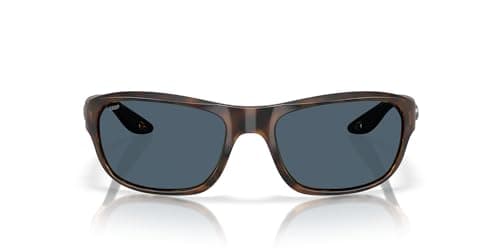 Costa Del Mar Clipperton Polarized SunglassesBest for the water · 100% UV protection per the brand | Fishing, boating and anyone on open water for hours at a time | $164.00 · View on Amazon #ad We earn from qualifying purchases · Price as of November 2, 2026 |
| 6 | 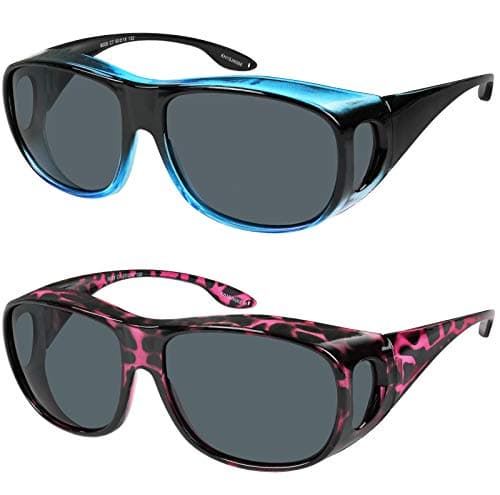 Yogo Vision Fit Over Wrap SunglassesBest over prescription glasses · 100% UV protection per the brand | Glasses wearers who are not buying prescription sunglasses | $17.99 · View on Amazon #ad We earn from qualifying purchases · Price as of November 2, 2026 |
How we chose these — the optometrist criteria
The AOA states that to provide adequate protection for your eyes, sunglasses should do four things:
- Block out 100% of both UV-A and UV-B radiation. This is the non-negotiable one, and it is what UV400 on a label is claiming — a lens that filters ultraviolet up to the 400-nanometer boundary where visible light begins.
- Screen out 75 to 90% of visible light. Comfort, not protection, but it is why a very lightly tinted fashion lens is a poor choice for a beach day even when its UV filter is fine.
- Have lenses perfectly matched in color and free of distortion and imperfection. This is the thing cheap sunglasses genuinely get wrong, and the reason to buy from a brand with a returns policy rather than a gas-station rack.
- Have lenses that are gray for proper color recognition. A useful default. Brown, amber and copper tints are legitimate choices for contrast in specific conditions, but they shift color.
On top of that, the AOA adds two situational recommendations we have weighted here. For potentially eye-hazardous outdoor work or sport, lenses should be polycarbonate or Trivex, which provide the most impact resistance. And if you spend a lot of time outdoors in bright sunlight, consider wraparound frames for additional protection — because UV arrives at the eye from the sides and from below off water, sand and pavement, not only straight ahead.
The honest limitation of this page: we report what each brand states about its own lenses. We do not have a spectrophotometer and we do not test lenses, so there are no measured transmission figures here and there will not be. Where UV blocking genuinely matters to you — a child, a water sport, a medication that increases light sensitivity — buy from a brand that stands behind its claim and ask an optometrist to check the pair at your next exam. Our methodology.
Our picks in detail
01 · Best overall value
Knockaround Premiums Polarized Sunglasses
Knockaround
A UV400 polarized polycarbonate lens in a square frame at a price where losing a pair is annoying rather than painful. This is the pair that makes the argument of this page: protection is cheap, and everything above this price is comfort and build.
- Actives:
- Polycarbonate lens the brand rates UV400 — blocks ultraviolet to 400 nm
- SPF:
- UV400 lens (UVA and UVB)
- Water resistance:
- Not applicable
- Reef status:
- Not applicable
- Best for:
- Everyday wear, and anyone who has lost sunglasses before
What works
- States UV400, which is the claim that matters
- Polarized and polycarbonate at this price
- Many frame and lens combinations, so fit is actually findable
The trade-off
- Flat-fronted frame, so less off-axis coverage than a wrap
- Lens coatings scratch more readily than premium glass
- Priced low enough that optical tolerances are not premium-grade
#ad We earn from qualifying purchases · Price as of November 2, 2026
02 · Best for running
goodr OG Polarized Sunglasses
goodr
A UV400 polarized lens in a grip frame built around one problem: staying on a face that is moving and wet. Unremarkable optics, genuinely solved fit — and fit is a protection feature, because sunglasses on your forehead protect nothing.
- Actives:
- Polycarbonate lens the brand rates UV400, in a no-slip grip frame
- SPF:
- UV400 lens (UVA and UVB)
- Water resistance:
- Not applicable
- Reef status:
- Not applicable
- Best for:
- Running, hiking and anything where sunglasses slide down a sweaty nose
What works
- Grip coating keeps them on through sweat, which no amount of lens quality substitutes for
- States UV400 and polarized
- Fixed single price across colorways, so there is no decision to agonize over
The trade-off
- The medium OG fit suits a narrow range of face sizes
- Mirrored and limited-edition colorways come and go, so a specific pair may not be re-orderable
- Flat frame with modest coverage, and no real wrap
#ad We earn from qualifying purchases · Price as of November 2, 2026
03 · Best for sport and wind
Tifosi Optics Swank Polarized Sunglasses
Tifosi
Shatterproof polycarbonate that Tifosi rates at 100% UVA/UVB, with hydrophilic nose pads and a tangle-free hinge. This is the pick that meets the AOA's impact-resistance recommendation for eye-hazardous sport rather than just claiming a UV number.
- Actives:
- Shatterproof polycarbonate lens the brand rates 100% UVA/UVB
- SPF:
- 100% UVA and UVB per the brand
- Water resistance:
- Not applicable
- Reef status:
- Not applicable
- Best for:
- Cycling, golf and long days where glare comes in from the side
What works
- Shatterproof polycarbonate — the material the AOA points to for sport
- Brand states 100% UVA and UVB
- Nose pads that grip harder as you sweat, not less
The trade-off
- The most sport-looking frame here, which limits everyday wear
- Priced well above the value picks for no extra UV protection
- Non-polarized versions exist at a lower price — check the listing you are on
#ad We earn from qualifying purchases · Price as of November 2, 2026
04 · Best for kids
Babiators Original Navigator Kids Sunglasses
Babiators
A flexible kids frame that Babiators rates for UV protection, in the aviator shape the brand is known for. The AOA says children spend more time in the sun than adults, and the only pair that protects a child is the one they will keep on their face.
- Actives:
- Flexible kids frame with a lens the brand rates for UV protection; not polarized
- SPF:
- UV protection per the brand
- Water resistance:
- Not applicable
- Reef status:
- Not applicable
- Best for:
- Toddlers and young children, where the pair has to survive being sat on
What works
- Flexible frame built for being bent, dropped and sat on
- Brand states UV protection, and sizes the frames by age
- Replacement policy for lost and broken pairs is the reason parents buy these
The trade-off
- This is the Original, not the Polarized model — no glare filter, which matters on water
- Expensive for a child's accessory, even allowing for the replacement policy
- Small lenses, so coverage around the eye is limited
#ad We earn from qualifying purchases · Price as of November 2, 2026
05 · Best for the water
Costa Del Mar Clipperton Polarized Sunglasses
Costa Del Mar
Costa's 580P polarized lens in a wrapped frame — the specialist answer for water, where glare off the surface is relentless and light arrives from below as well as above. Buy this for the glare control and the coverage, not because the UV filter is better than a $30 pair's.
- Actives:
- Costa 580P polarized lens in a wrapped frame
- SPF:
- 100% UV protection per the brand
- Water resistance:
- Not applicable
- Reef status:
- Not applicable
- Best for:
- Fishing, boating and anyone on open water for hours at a time
What works
- Wrapped frame, which is the AOA's recommendation for a lot of time in bright sun
- Polarized lens genuinely built for water glare
- Brand states 100% UV protection
The trade-off
- Costs several times any other pick here, and not for extra UV protection
- Wrapped sport styling that looks out of place off the water
- Heavier than the lightweight picks over a full day
#ad We earn from qualifying purchases · Price as of November 2, 2026
06 · Best over prescription glasses
Yogo Vision Fit Over Wrap Sunglasses
Yogo Vision
A polarized wrap sized to sit over your own eyeglasses, which solves a problem most sunglasses pages ignore entirely. The wrap shape is also, incidentally, the coverage geometry the AOA recommends.
- Actives:
- Polarized wrap lens sized to sit over prescription eyeglasses
- SPF:
- 100% UV protection per the brand
- Water resistance:
- Not applicable
- Reef status:
- Not applicable
- Best for:
- Glasses wearers who are not buying prescription sunglasses
What works
- Lets glasses wearers get UV coverage without prescription sunglasses or contacts
- Wrap shape blocks side light, including from the gap beside a lens
- Inexpensive enough to keep a pair in the car
The trade-off
- Bulky and obviously worn over something else
- Fit depends entirely on your own frame size — measure before ordering
- A generic listing rather than an optical brand, so the UV claim rests on the seller's word alone
#ad We earn from qualifying purchases · Price as of November 2, 2026
What UV actually does to an eye
Two different timescales, and most people only know about one of them.
In a single day, excessive UV exposure over a short period causes photokeratitis, which the AOA describes as a sunburn of the eye. It is painful, and the symptoms are recognizable once you know them: red eyes, a gritty or foreign-body sensation, extreme sensitivity to light and excessive tearing. The AOA notes these symptoms are usually temporary and rarely cause permanent damage — but anyone who has had it after a day on snow or open water does not forget it.
Over years, the AOA says the longer the eyes are exposed to solar radiation, the greater the risk of developing cataracts, eye cancer, pterygium — surfer's eye — or macular degeneration later in life. It also says plainly that it is not clear how much exposure causes damage, which is the honest state of the evidence and the reason the advice is simply to wear protection whenever you are outdoors rather than above some threshold.
UV400, polarized, mirrored, photochromic: what each word buys you
| Term | What it means | Does it affect UV protection? |
|---|---|---|
| UV400 | The lens filters ultraviolet up to 400 nm, which covers UVA and UVB | Yes — this is the claim that matters |
| Polarized | A filter that cuts glare reflected off flat surfaces like water and wet road | No. A comfort and clarity feature, sold alongside UV protection but independent of it |
| Mirrored | A reflective coating that reduces how much visible light enters | No, not by itself |
| Photochromic | The lens darkens in response to UV and lightens indoors | No. It changes visible tint, and the UV filter is a separate property |
| Polycarbonate / Trivex | Impact-resistant lens materials the AOA recommends for hazardous work and sport | Not directly, but these are the materials UV400 lenses are usually made from |
Polarization is worth paying for on water, snow and long drives, where reflected glare is genuinely fatiguing. It is simply not the thing protecting your eyes, and treating the two as one purchase is the most common misunderstanding in this category.
Why cheap sunglasses are usually fine, and when they are not
A UV filter is inexpensive to build into a polycarbonate lens, which is why a $30 pair from a brand that states UV400 and a $300 pair can offer the same ultraviolet protection. What the money buys, in rough order of how much it matters:
- Optical quality — lenses free of distortion and matched in tint, which is the AOA criterion cheap eyewear most often fails. Distortion is tiring over a long day and genuinely unsafe while driving.
- Coverage — a larger lens and a wrapped frame block more off-axis light. This is a real protection difference, not a cosmetic one.
- Durability and fit — hinges, nose pads, grip. A pair that slides down your nose on a run gets pushed up on your head, where it protects nothing.
- Lens tech for a specific condition — contrast-enhancing tints for fishing or cycling. Useful, highly situational, and nothing to do with UV.
The case for spending more is strongest for anyone outdoors in bright conditions daily, and for impact risk. The case for spending less is strongest for anyone who loses sunglasses, because the best pair of sunglasses in the world protects nothing from the bottom of a lake.
Children need these more than adults do
The AOA makes the point directly: do not forget protection for children and teenagers, because they typically spend more time in the sun than adults. The practical obstacle is not cost but compliance — sunglasses on a small child come off, get sat on and get lost, which is why a flexible frame and a strap matter more than lens pedigree at that age.
It fits the same logic as the rest of this hub: the sun protection that works on a child is the sun protection a child will tolerate. That is also why a UPF swim shirt outperforms a better sunscreen, and why the best sunscreen for kids weights sting and texture so heavily.
What sunglasses do not cover
The eyelids and the skin around the eye, mostly. A frame shades a narrow band and leaves the rest of the orbital area exposed, and that skin is thin, highly sun-damaged in most adults, and the place people are most reluctant to apply sunscreen. Sunscreen for eyelids covers how to handle that without stinging your eyes.
Beyond that, the usual: sunglasses are one item in a kit. A wide-brim hat handles overhead light, a face SPF handles the skin, and UPF sleeves and gloves handle the forearms and hands. If the day has already gone wrong, after-sun care covers what actually helps a burn — and what to leave on the shelf.
One last practical note: UV is not proportional to heat or brightness, so the cold bright day is the one people get wrong. What UV index needs sunscreen applies to your eyes as much as your skin, and snow and water both reflect UV back up into them.
Sources
- Ultraviolet (UV) protection — American Optometric Association
- Keep Your Eyes Healthy — National Eye Institute, National Institutes of Health
- How to prevent skin cancer — American Academy of Dermatology
- How Do I Protect Myself from UV Rays? — American Cancer Society
- Sun-Protective Clothing — Skin Cancer Foundation
Frequently asked questions
Does UV400 mean 100% UV protection?
It is the claim that the lens filters ultraviolet up to 400 nanometers, which covers UVA and UVB. The American Optometric Association's standard is that sunglasses block 100% of both UV-A and UV-B, so a genuine UV400 lens meets it. The caveat is that UV400 is printed on labels by sellers of all kinds, and nothing you can see verifies it.
Are polarized sunglasses better for UV protection?
No. Polarization cuts glare reflected off flat surfaces like water and wet road. It is a comfort and clarity feature, and a lens can be polarized with poor UV filtering or unpolarized with excellent UV filtering. They are sold together but they are separate properties.
Do dark lenses block more UV?
No, and this is the assumption worth unlearning. Tint controls visible brightness, not ultraviolet. A dark lens that does not filter UV is arguably worse than no sunglasses, because the pupil opens wider behind the tint and that is a larger opening for UV to reach the inside of the eye.
Can the sun damage your eyes in one day?
Yes. The AOA describes photokeratitis as a sunburn of the eye, caused by excessive UV over a short period, with red eyes, a gritty feeling, extreme light sensitivity and excessive tearing. It says the symptoms are usually temporary and rarely cause permanent damage. Snow and open water make it much more likely.
What long-term eye problems does UV cause?
The AOA states that the longer eyes are exposed to solar radiation, the greater the risk of cataracts, eye cancer, pterygium (surfer's eye) and macular degeneration later in life. It also says it is not clear how much exposure causes damage, which is why the advice is to wear protection outdoors generally rather than above a threshold.
Are expensive sunglasses worth it for sun protection?
Not for the UV filter, which is cheap to build into a polycarbonate lens. Money buys optical quality, impact resistance, coverage from a wrapped frame, fit that stays put and durability. Those are real, and the first and third of them are on the AOA's own list — they are just not the UV number.
Do children need sunglasses?
The AOA says not to forget protection for children and teenagers, because they typically spend more time in the sun than adults. In practice a flexible frame with a strap that a child will actually keep on beats a technically better pair that lives in a bag.
Read next
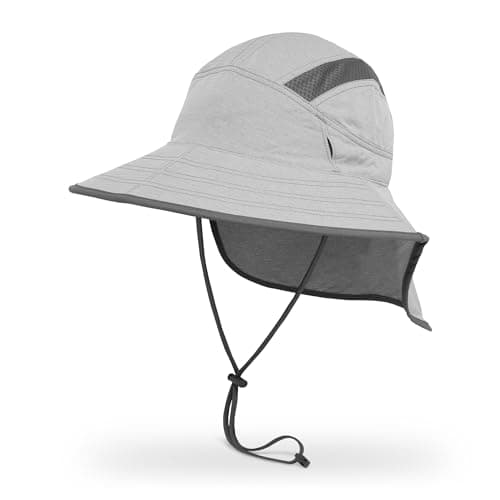
Sun Protective Gear
The best sun hats
Wide-brim UPF 50+ hats for adults and children, and why a baseball cap is not enough.
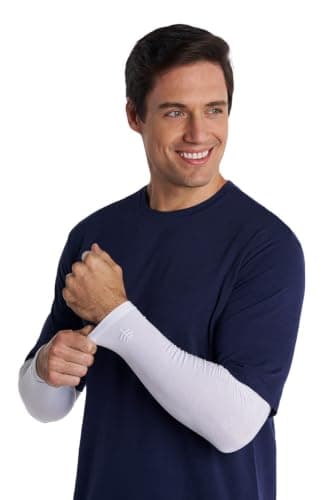
Sun Protective Gear
The best UPF sun sleeves and gloves
UPF 50+ arm sleeves, sun gloves and leg sleeves for the forearms, hands and shins a shirt and hat never reach.
Face & Tinted SPF
Sunscreen for eyelids and around your eyes
Why eyelids need sun protection, which formats do not sting, how to apply around the orbital bone, and why sunglasses are the real answer for the lid itself.

Sun Protective Gear
UPF vs SPF
What each scale measures, why they do not convert, and what UPF 50 is actually worth.
Sun Safety
The best after-sun care for a sunburn
After-sun care manages a burn rather than undoing it. The lotions, aloe gels and OTC creams worth owning, and the numbing ingredient to avoid.
Sun Safety
What UV index do you need sunscreen?
The EPA's UV Index thresholds, what each band actually asks you to do, the shadow rule for when you have no forecast, and why the number alone is not the whole decision.