Sun Safety
What UV index do you need sunscreen?
Three is where it starts. Eight is where shade stops being optional.
Disclosure: Spf & Shore earns commission from qualifying purchases made through links on this page, at no extra cost to you. It does not change which products we recommend. Read the full disclosure.
Protection starts at a UV Index of 3. The EPA's scale puts 1 to 2 in the Low band, where no protection is needed and you can be outside with minimal precautions; 3 to 7 in the Moderate to High band, where it asks you to seek shade through the middle of the day and to apply broad-spectrum SPF 15 or higher on exposed skin; and 8 and above in the Very High to Extreme band, where it asks for extra protection on top of all of that.
That is the short answer, and it is worth knowing that the US scale follows the international UV Index guidelines set by the World Health Organization, so a 7 in Denver means what a 7 means anywhere. The number is a snapshot of UV intensity, not a forecast of your exposure — which is why the rest of this page is about turning the number into a decision.
The bands, and what each one asks of you
| UV Index | Band | What the EPA advises |
|---|---|---|
| 1-2 | Low | No protection needed; minimal sun protection is enough |
| 3-7 | Moderate to High | Protection needed: seek shade late morning through mid-afternoon, apply broad-spectrum SPF 15 or higher generously, wear protective clothing, a wide-brimmed hat and sunglasses |
| 8+ | Very High to Extreme | Extra protection needed: be careful outside, especially midday; if your shadow is shorter than you, seek shade, cover up and apply a minimum of broad-spectrum SPF 15 generously |
Two things in that table are easy to misread. SPF 15 is the floor the EPA states, not a recommendation to stop there — it is the level at which a US label may claim to reduce skin cancer risk and early aging at all, and most guidance for real exposure goes higher. And the clothing, hat and sunglasses are listed alongside the sunscreen rather than after it, because they are not a lesser option.
The shadow rule, for when you have no forecast
The EPA publishes a field test that needs no app: look at your shadow. If your shadow is taller than you are, UV is relatively low. If your shadow is shorter than you are, UV is high and it is time to seek shade and cover up. It works because shadow length is a direct read on the sun's angle, and the sun's angle is the main driver of how much atmosphere the UV has travelled through.
This is the most useful thing on this page for a parent at a playground or a hiker without signal. It also explains why the advice always names late morning through mid-afternoon rather than a temperature: heat and UV are different things, and the coolest part of a clear morning in summer can carry more UV than a hot late afternoon.
Why the index understates some days
The forecast index is calculated for a horizontal surface at ground level under clear conditions. Three real-world factors push your actual exposure above it.
- Reflection. Water, sand and especially fresh snow send UV back upward. That is light arriving at an angle a hat brim cannot cover — it hits the underside of a chin, the inside of a nostril and the lower lip.
- Altitude. UV intensity climbs as you gain elevation, which is why a ski day and a high-altitude hike both burn faster than the temperature suggests.
- Duration and cumulative dose. A UV Index of 4 for six hours is a larger dose than a UV Index of 9 for twenty minutes. The index is intensity; your exposure is intensity multiplied by time.
And one factor that does less than people think: cloud. Thin and broken cloud can leave most UV intact, and some cloud conditions scatter it so that exposure is barely reduced at all. Do you need sunscreen on a cloudy day is the dedicated page.
What to wear, by band
Translating the bands into a routine is easier than it sounds, because the decisions are mostly about what you add rather than what you swap.
- At 1 to 2: your normal face sunscreen if you wear one, and nothing special beyond it. This is most of a northern winter.
- At 3 to 5: sunscreen on exposed skin in the morning, a hat if you will be out at midday, and reapplication if you are out for hours.
- At 6 to 7: sunscreen plus a brim plus sleeves, and shade through the middle of the day. Reapply every two hours and after water.
- At 8 to 10: treat shade as the primary tool and sunscreen as the backup. A UPF shirt removes the reapplication problem for your arms and shoulders entirely.
- At 11 and above: avoid the midday hours outdoors if you can. If you cannot, cover everything you reasonably can with fabric and treat exposed skin as a two-hour reapplication cycle.
Our picks in detail
01 · For the high-index days
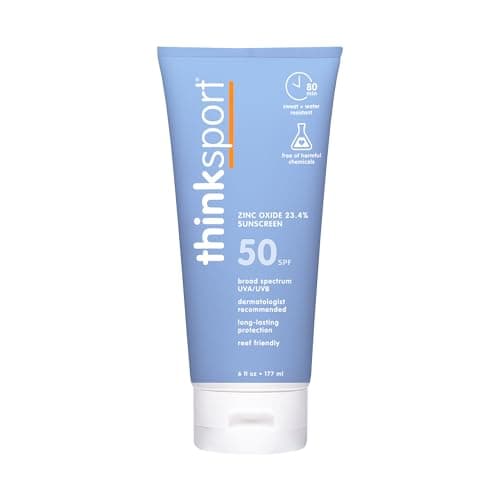
Thinksport Sunscreen SPF 50+
Thinksport · Read our Thinksport review
20% non-nano zinc at SPF 50+ with 80 minutes of water resistance, in a large tube. On extreme days the limiting factor is how much you are willing to use, and this is the bottle that makes a full dose affordable.
- Actives:
- 20% non-nano zinc oxide
- SPF:
- SPF 50+
- Water resistance:
- 80 minutes
- Reef status:
- Zinc only — no oxybenzone, octinoxate or octocrylene
- Best for:
- A UV Index of 8 and up, outdoors, for hours
What works
- Maximum SPF and water-resistance claims
- Large sizes make the tested dose realistic
- Fragrance-free, so it works on faces too
The trade-off
- Thick and slow to spread
- Visible cast on deeper skin tones
- Too slow to apply in a hurry
#ad We earn from qualifying purchases · Price as of November 2, 2026
02 · For reapplying through the midday window
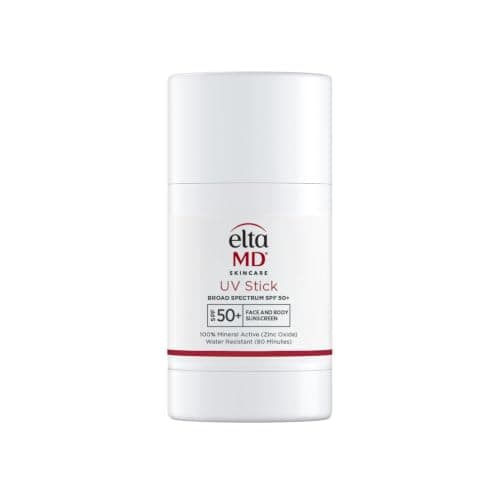
EltaMD UV Stick Broad Spectrum SPF 50+
EltaMD · Read our EltaMD review
22% transparent zinc at SPF 50+ and 80 minutes of water resistance. The band from 6 upward is really a reapplication problem, and a stick is the format people actually reapply with.
- Actives:
- 22% transparent zinc oxide
- SPF:
- SPF 50+
- Water resistance:
- 80 minutes
- Reef status:
- Zinc only — no oxybenzone, octinoxate or octocrylene
- Best for:
- The two-hour cycle on faces, ears and shoulders
What works
- Pocketable — the second application genuinely happens
- Zinc-only actives at the maximum water-resistance claim
- Goes on clear enough for a face in public
The trade-off
- Thin film — four passes over the same patch
- Dermatology-counter pricing
- Softens out of shape in a hot car
#ad We earn from qualifying purchases · Price as of November 2, 2026
03 · For when shade is the real answer
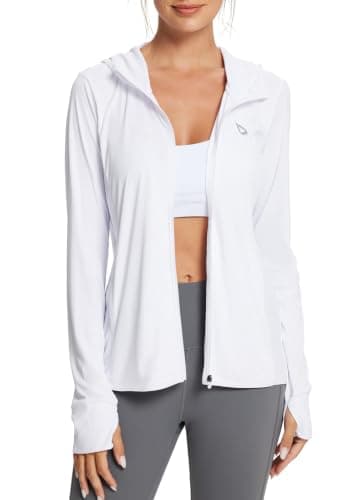
Baleaf UPF 50+ Sun Protection Hoodie
Baleaf
A UPF 50+ knit with a hood and thumbholes. Above an index of 8 the EPA's advice is to cover up as well as apply, and fabric is the one layer that does not wear off in the middle of the day.
- Actives:
- Polyester-spandex knit rated UPF 50+
- SPF:
- UPF 50+
- Water resistance:
- Quick-dry; rated dry
- Reef status:
- Not applicable
- Best for:
- Extreme-index days when reapplication is not realistic
What works
- Rated UPF 50+ — no dose question, no reapplication
- Covers the neck and the backs of the hands
- Often cooler than bare skin in direct sun
The trade-off
- Rated dry; a soaked knit transmits more UV
- Does nothing for your face
- Warm on a humid day
#ad We earn from qualifying purchases · Price as of November 2, 2026
How to find today's number
The UV Index appears in most weather apps and on the EPA's own UV Index pages, usually as a daily peak and sometimes as an hourly curve. The hourly version is the more useful one, because it shows you the shape of the day — a peak of 9 at 1pm often means a 4 at 9am, which is a different decision about when to go for a walk.
One caution worth stating: a daily-peak figure does not tell you about the hours you will actually be outside. If the only number you have is a peak, assume you will be in it, and plan the day around the midday window rather than around the number itself.
What the index is not
It is not a burn timer, and it is not personalized. It makes no allowance for your skin's own sensitivity, for medications that increase photosensitivity, or for a history of skin cancer — all of which shift the threshold at which you should be covering up. The CDC's sun safety guidance and the Skin Cancer Foundation both frame UV protection as a daily habit rather than a number-triggered event, and for anyone with a personal or family history, that is the better frame.
It is also not a reason to skip sunscreen on low days if you have an existing routine. A face sunscreen worn daily is doing work against cumulative UVA exposure that the index, which is weighted for sunburn, does not fully describe. How sunscreen works covers the mechanism. The index applies to your eyes as much as your skin, and snow and water reflect UV straight back up into them — the best sunglasses for UV protection covers what the lens has to do.
Sources
- UV Index Scale — U.S. Environmental Protection Agency
- Learn About the UV Index — U.S. Environmental Protection Agency
- Sun Safety — Centers for Disease Control and Prevention
- Sunscreen — Skin Cancer Foundation
- How to prevent skin cancer — American Academy of Dermatology
Frequently asked questions
What UV index do you need sunscreen at?
The EPA puts the threshold at 3. At 1 to 2 it says no protection is needed. From 3 to 7 it asks you to seek shade through the middle of the day and to generously apply broad-spectrum SPF 15 or higher on exposed skin, plus clothing, a wide-brimmed hat and sunglasses.
What UV index is high?
The EPA's bands are 1-2 Low, 3-7 Moderate to High, and 8 or above Very High to Extreme. From 8 up the advice is extra protection on top of the standard measures, with particular care through late morning to mid-afternoon.
Is UV index 5 enough to burn?
Yes, with enough time. The index describes intensity, and your dose is intensity multiplied by duration — so a moderate index over several hours can exceed a high index over twenty minutes. Treat anything from 3 upward as a day that needs protection.
What is the shadow rule?
The EPA's field test for UV without a forecast: if your shadow is taller than you are, UV exposure is likely lower; if your shadow is shorter than you are, UV is high and it is time to seek shade and cover up.
Do you need sunscreen at UV index 1 or 2?
The EPA says no protection is needed in that band. If you already wear a daily face sunscreen, there is no reason to stop — a daily habit is working against cumulative UVA exposure, which the sunburn-weighted index does not fully describe.
Read next
Sun Safety
Do you need sunscreen on a cloudy day?
Why cloud is a poor UV filter, how overcast burns happen, what thin and broken cloud actually do to exposure, and the simple rule for deciding on a gray day.
Sun Safety
How sunscreen works
The mechanism behind UV filters, the UVA and UVB difference, and why the amount applied matters so much.

Sun Safety
How much sunscreen to apply
The measures by body area, and why under-application costs more protection than it seems.
Sun Protective Gear
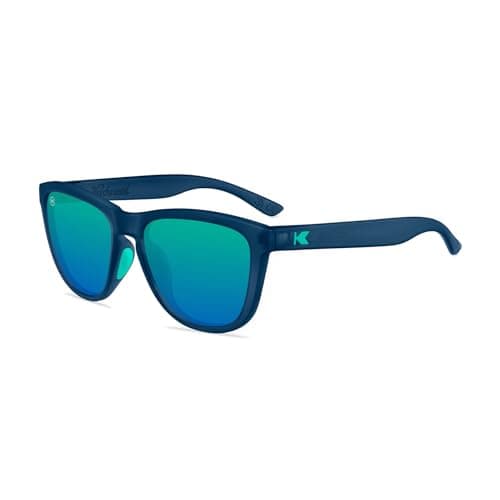
The best sunglasses for UV protection
Dark is not protective and polarized is not the same as UV-blocking. The optometrist criteria that matter and the sunglasses that meet them.
Sun Safety
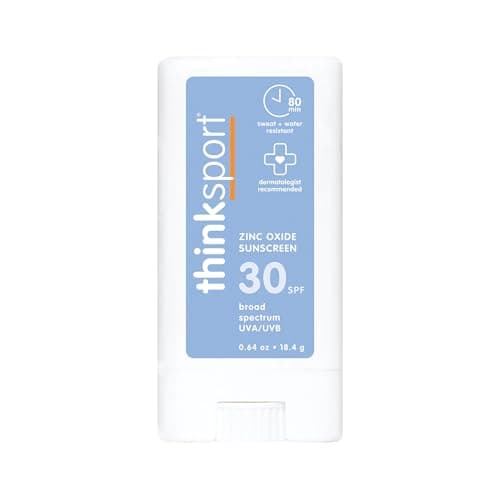
The best sunscreen for hiking
Sweat-resistant sunscreen plus the shirt and hat that cut the reapplication job on a long exposed day.
Sun Safety
Sun poisoning vs sunburn
How to tell severe sunburn from ordinary, the warning signs, and when to call a clinician.