Reef-Safe & Ingredients
The best sunscreen for a compromised skin barrier
For skin that is already angry: short panels, no fragrance, nothing you have to rub in hard.
Disclosure: Spf & Shore earns commission from qualifying purchases made through links on this page, at no extra cost to you. It does not change which products we recommend. Read the full disclosure.
Our pick is the CeraVe Hydrating Mineral Sunscreen SPF 50: zinc oxide and titanium dioxide at SPF 50, fragrance-free, in a base carrying ceramides and hyaluronic acid. On a barrier that is already impaired, the vehicle matters as much as the filter — and this is the pharmacy-shelf formula that brings barrier ingredients with it rather than just suspending minerals in something inert.
This is not the same page as sunscreen for sensitive skin. Sensitive skin is a long-run tendency to react; a compromised barrier is a temporary state — mid-eczema flare, the week after a retinoid went too far, post-procedure, over-exfoliated, or recovering from a burn. In that state the skin is more permeable, more reactive to things it normally tolerates, and more easily damaged by the mechanical act of rubbing a product in. If you want the general case instead, the best sunscreen for sensitive skin is the right page.
Quick picks
Tap any row to read the full write-up below.
| # | Product | Best for | Price |
|---|---|---|---|
| 1 | 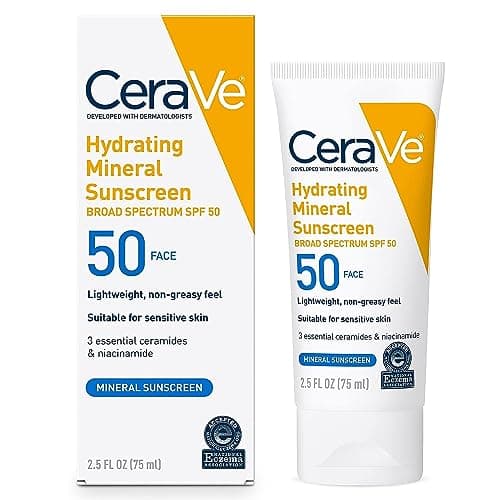 CeraVe Hydrating Mineral Sunscreen SPF 50 FaceBest overall · SPF 50 | A healing face that needs barrier support as well as a filter | $13.97 · View on Amazon #ad We earn from qualifying purchases · Price as of November 2, 2026 |
| 2 | 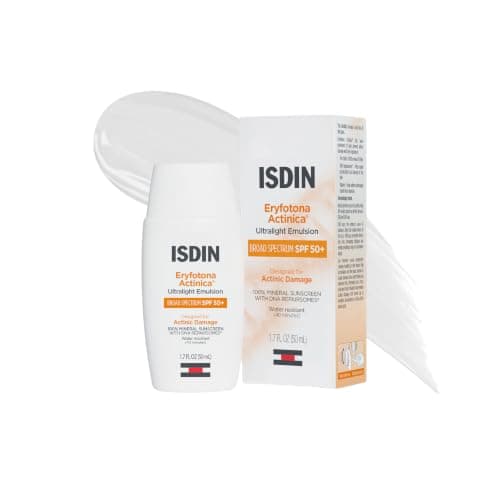 ISDIN Eryfotona Actinica Mineral Sunscreen SPF 50+Best after a procedure · SPF 50+ | Skin that cannot tolerate any weight or any handling | $46.00 · View on Amazon #ad We earn from qualifying purchases · Price as of November 2, 2026 |
| 3 |  Vanicream Mineral Sunscreen SPF 50+ for Sensitive SkinShortest panel we trust · SPF 50+ | Anyone who reacts to things and cannot work out which | |
| 4 | 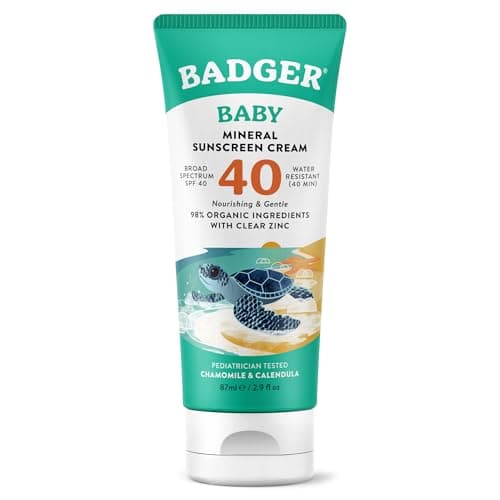 Badger Baby Sunscreen Cream SPF 40Fewest ingredients · SPF 40 | A flare where you want the simplest possible formula | $17.99 · View on Amazon #ad We earn from qualifying purchases · Price as of November 2, 2026 |
| 5 | 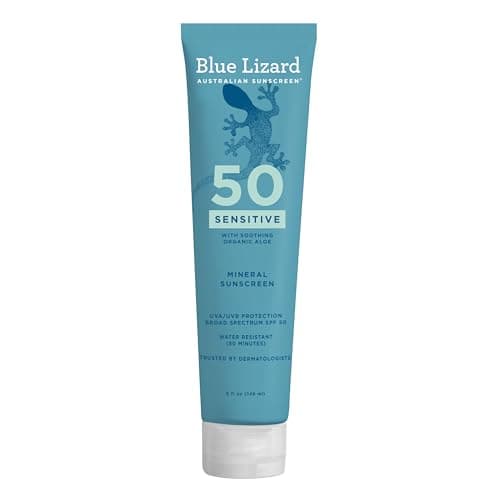 Blue Lizard Sensitive Mineral Sunscreen SPF 50+Best for going outdoors · SPF 50+ | A healing face that still has to spend a day in real sun | $12.91 · View on Amazon #ad We earn from qualifying purchases · Price as of November 2, 2026 |
What a compromised barrier changes
Three things, and each one reshapes what you should be reaching for.
- Permeability goes up. Ingredients that normally stay on the surface have an easier route in, so a formula with fewer things in it is a genuinely lower-risk formula — not because any one ingredient is dangerous, but because there is less to react to.
- Reaction thresholds drop. Fragrance, essential oils and preservatives you have tolerated for years can sting on broken skin. A product being well-tolerated normally tells you very little about this week.
- Mechanical handling becomes the problem. Rubbing a thick lotion into inflamed skin is itself an insult. The format needs to be something you can pat or press rather than work in, which rules out several otherwise-excellent sport minerals.
What does not change is the need for sun protection. Healing skin is more vulnerable to UV, and UV exposure on inflamed or recently treated skin is a well-recognized route to post-inflammatory pigmentation — the mark that outlasts the problem by months. This is the situation where skipping sunscreen costs the most.
How we chose these
Five gates. Mineral filters only — zinc oxide, titanium dioxide, or both. Fragrance-free, with no added essential oils. A short actives and excipients story, read from the brand's own US product page or the retail drug-facts listing. A base that supports the barrier rather than simply carrying the filter. And a texture you can apply without dragging, which in practice means a cream or a light lotion rather than a thick sport formula.
We also looked for third-party acceptance where it exists. The National Eczema Association runs a Seal of Acceptance program for products evaluated for use on eczema-prone skin, and the Skin Cancer Foundation runs a Seal of Recommendation with published criteria for sunscreens. Where a product carries one, that is worth knowing — and we attribute it to the organization rather than restating it as our own testing. Our methodology is the long version, and dermatologist-recommended sunscreens covers what those seals do and do not mean.
One thing is deliberately absent: we do not claim to have wear-tested any of this on compromised skin, because we do not run a lab and we are not a clinic. If your barrier is broken because of a procedure, follow the aftercare instructions you were given over anything on this page — a provider who has seen your skin outranks a product roundup.
What to avoid while it heals
- Fragrance and essential oils, including the botanical-sounding ones. On intact skin these are a minor risk; on a broken barrier they are the most common cause of a reaction.
- Alcohol-heavy quick-dry vehicles, which are what make some light sunscreens feel so pleasant on oily skin and what make them sting on compromised skin.
- Physical exfoliants and brushes in the same routine, including when removing the sunscreen. How to remove mineral sunscreen covers doing it gently.
- Sprays, during this period. They are hard to apply evenly without rubbing, and the propellant and alcohol content is the wrong thing on broken skin.
- Active ingredients stacked underneath. Retinoids, acids and vitamin C can all wait a week. Sunscreen cannot.
- Patch-testing on your face. Test a new product on an unaffected area — the inner forearm — for a few days first. Sunscreen allergy and sunscreen rash covers how to tell a reaction from ordinary stinging.
Our picks in detail
01 · Best overall
CeraVe Hydrating Mineral Sunscreen SPF 50 Face
CeraVe · Read our CeraVe review
Zinc and titanium dioxide at SPF 50, fragrance-free, with ceramides and hyaluronic acid in the base. The vehicle is the reason it leads: it is doing something useful rather than just carrying the minerals.
- Actives:
- Zinc oxide and titanium dioxide, with ceramides and hyaluronic acid
- SPF:
- SPF 50
- Water resistance:
- 40 minutes
- Reef status:
- Mineral filters only
- Best for:
- A healing face that needs barrier support as well as a filter
What works
- Ceramides and hyaluronic acid in a fragrance-free base
- Mineral filters with zinc oxide in the panel
- Cheap and available everywhere, so you can use it generously
The trade-off
- Thick enough to need patting rather than rubbing
- 40 minutes of water resistance, not 80
- Leaves a cast on deeper skin tones
#ad We earn from qualifying purchases · Price as of November 2, 2026
02 · Best after a procedure
ISDIN Eryfotona Actinica Mineral Sunscreen SPF 50+
ISDIN
Zinc oxide as the sole active filter at SPF 50+, light enough to pat on without dragging, with no water-resistance claim — which here is a feature, because it comes off with a gentle cleanse.
- Actives:
- Zinc oxide as the sole active filter
- SPF:
- SPF 50+
- Water resistance:
- Not labeled water resistant
- Reef status:
- Zinc only
- Best for:
- Skin that cannot tolerate any weight or any handling
What works
- Zinc oxide as the only active filter
- Light enough to apply without working it in
- Comes off without an oil cleanse
The trade-off
- No water-resistance claim, so it is wrong for sweat or water
- Expensive per ounce
- Little hydration of its own on very dry skin
#ad We earn from qualifying purchases · Price as of November 2, 2026
03 · Shortest panel we trust
Vanicream Mineral Sunscreen SPF 50+ for Sensitive Skin
Vanicream · Read our Vanicream review
Zinc oxide and titanium dioxide at SPF 50+ from a brand built entirely around leaving things out — no fragrance, no dyes, no masking scent. The reductionist option when the ingredient list is the variable.
- Actives:
- Zinc oxide and titanium dioxide
- SPF:
- SPF 50+
- Water resistance:
- 80 minutes
- Reef status:
- Mineral filters only
- Best for:
- Anyone who reacts to things and cannot work out which
What works
- Free of fragrance, dyes and masking scents
- Mineral filters at a high SPF
- The brand's whole premise is a short list
The trade-off
- 80-minute claim means a clingier film to remove
- Thick, and needs warming before it spreads
- Noticeably white on application
04 · Fewest ingredients
Badger Baby Sunscreen Cream SPF 40
Badger · Read our Badger review
Non-nano zinc oxide, which Badger lists at 22.5%, in a base of a handful of recognizable ingredients. The purist's choice, and the thickest thing here — which is the trade.
- Actives:
- Non-nano zinc oxide, which Badger lists at 22.5%
- SPF:
- SPF 40
- Water resistance:
- 40 minutes
- Reef status:
- Zinc only — reef-relevant chemical filters absent
- Best for:
- A flare where you want the simplest possible formula
What works
- Non-nano zinc only, with a very short ingredient list
- Formulated for infant skin, which is a fair benchmark
- No fragrance and no synthetic preservative system
The trade-off
- The thickest product on this page — hard to apply without pressure
- Visibly white and stays that way
- 40 minutes of water resistance
#ad We earn from qualifying purchases · Price as of November 2, 2026
05 · Best for going outdoors
Blue Lizard Sensitive Mineral Sunscreen SPF 50+
Blue Lizard · Read our Blue Lizard review
Zinc oxide and titanium dioxide at SPF 50+ with the full 80 minutes of water resistance, fragrance-free. When the choice is between a clingier film and an actual sunburn, take the film.
- Actives:
- Zinc oxide and titanium dioxide
- SPF:
- SPF 50+
- Water resistance:
- 80 minutes
- Reef status:
- Mineral filters only; the Sensitive formula omits oxybenzone and octinoxate
- Best for:
- A healing face that still has to spend a day in real sun
What works
- Maximum SPF and water-resistance claims
- Fragrance-free with mineral filters only
- Widely available in US pharmacies
The trade-off
- Needs an oil or balm cleanse to remove properly
- Thick — pat it on rather than rubbing
- Leaves a pronounced cast
#ad We earn from qualifying purchases · Price as of November 2, 2026
How to apply it on skin that hurts
The technique is as important as the product, and it is the opposite of how most people apply sunscreen.
- Dot it on, then press. Place small amounts across the area and pat each one out with the pads of your fingers. Do not spread with pressure and do not rub in circles.
- Do it in two thin passes rather than one thick one. Two passes get you closer to a real dose with less handling.
- Wait for the first pass to settle before the second, so you are not dragging the first layer around.
- Reapply on the two-hour cycle outdoors, patting again rather than rubbing. How long sunscreen lasts on skin covers why removal rather than time is what ends a film.
- Use a hat and shade as the primary tool. On a healing face, fabric and a brim do more good than any amount of product, and they cost the skin nothing. The best sun hats covers brim width.
Tint, and the pigmentation problem
If the thing you are trying to prevent is a dark mark rather than a burn, there is a specific reason to consider a tinted mineral: the iron oxides that create the tint also block part of the visible light spectrum, and visible light contributes to pigmentation in a way that SPF — which is measured against sunburn — does not describe. Iron oxides and visible light explains the mechanism.
The trade is that tinted formulas tend to need more spreading to blend, which is exactly the handling you are trying to avoid. The workable compromise on an actively inflamed week is an untinted mineral patted on; once the skin has calmed, a tinted one is the better long-run choice against marks. The best sunscreen for rosacea covers the flushing-specific version of the same decision.
Why no water-resistance claim can be the right answer
A US sunscreen may claim 40 or 80 minutes of water resistance, and an 80-minute claim is earned with a vehicle built to cling. That is a benefit at a pool and a cost on a healing face, because the same cling is what makes removal require an oil cleanse and a minute of massage.
So during a flare, a product with a shorter claim or none at all is not a weaker choice — it is a formula that comes off with a gentle cleanse. Save the sport mineral for when the barrier is intact, and pick for removability while it is not. What water-resistant sunscreen actually means covers the test behind the two numbers.
When to see someone rather than shop
A compromised barrier that is worsening, weeping, crusting, spreading or painful is not a product problem. Nor is a reaction that keeps happening across unrelated formulas, which may be a contact allergy worth testing properly rather than guessing at. In both cases a dermatologist is the right next step, and a sunscreen roundup is not.
The honest scope of this page is narrower than its title: it covers which sunscreen to use on skin that is temporarily impaired and healing, while you protect it from the UV that would otherwise leave a mark. That is a real and common situation, and it has a real answer. It is not a substitute for care.
Sources
- Sunscreen FAQs — American Academy of Dermatology
- About the NEA Seal of Acceptance — National Eczema Association
- Recommended Products (Seal of Recommendation directory) — The Skin Cancer Foundation
- Sunscreen — Skin Cancer Foundation
- 21 CFR 201.327 — Over-the-counter sunscreen drug products; required labeling — Legal Information Institute, Cornell Law School
Frequently asked questions
What sunscreen is best for a damaged skin barrier?
A fragrance-free mineral formula in a base that supports the barrier, applied by patting rather than rubbing. CeraVe's Hydrating Mineral SPF 50 is our pick because it pairs zinc and titanium dioxide with ceramides and hyaluronic acid.
Should you wear sunscreen on a compromised barrier?
Yes. Healing and inflamed skin is more vulnerable to UV, and sun exposure on it is a recognized route to post-inflammatory pigmentation — the dark mark that outlasts the original problem. Pick a gentler formula rather than skipping it.
Is mineral sunscreen better for a broken barrier?
It is the safer starting point. Mineral filters sit largely on the surface, the panels tend to be shorter, and there is less to react to on skin that has become more permeable. Mineral is not automatically non-irritating, so patch test on an unaffected area first.
Why does sunscreen sting on a damaged barrier?
Because a compromised barrier is more permeable and more reactive, so emulsifiers, alcohol-based quick-dry vehicles, preservatives and fragrance can all sting on skin that tolerates them normally. Switching to a simpler, fragrance-free cream and patting rather than rubbing fixes most cases.
How is this different from sunscreen for sensitive skin?
Sensitive skin is an ongoing tendency to react. A compromised barrier is a temporary state — mid-flare, post-procedure, over-exfoliated — in which permeability is higher, reaction thresholds are lower, and the act of rubbing a product in is itself an irritant.
Read next
Reef-Safe & Ingredients
The best sunscreen for sensitive skin
Fragrance-free mineral formulas for reactive skin, chosen on the inactive ingredients.

Kids & Baby
The best sunscreen for kids with eczema and sensitive skin
Fragrance-free mineral formulas with short ingredient lists, plus what actually triggers reactions.

Reef-Safe & Ingredients
Sunscreen allergy and sunscreen rash
What actually causes a sunscreen rash, why fragrance is the usual culprit rather than the filters, and the formulas to fall back on.
Face & Tinted SPF
The best sunscreen for rosacea
Fragrance-free mineral sunscreens chosen for rosacea: no heat, no friction, and a tint that corrects redness.
Mineral Sunscreen
How to remove mineral sunscreen
Why mineral sunscreen needs an oil or balm step rather than a rinse, the method by formula type, and how to do it without stripping your barrier.
Face & Tinted SPF
Iron oxides and visible light
Why iron oxides protect as well as tint, and what that means for melasma and hyperpigmentation.