Mineral Sunscreen
How to remove mineral sunscreen
An 80-minute water-resistance claim is a promise that rinsing will not work.
Disclosure: Spf & Shore earns commission from qualifying purchases made through links on this page, at no extra cost to you. It does not change which products we recommend. Read the full disclosure.
Use an oil, balm or micellar cleanser first, then a gentle face wash. Mineral sunscreen is designed to sit on the surface of the skin in a water-resistant film — that is the whole point of the 80-minute claim — so water and a foaming cleanser on their own slide over it rather than lifting it. The first step dissolves the film; the second step removes what the first step loosened.
Two steps, in that order, with no scrubbing. The temptation with a stubborn zinc film is to work harder at it, and that is the one approach that causes problems — the mineral particles themselves make an abrasive paste if you rub. The film comes off with solvent and patience, not pressure.
Why water does not work on it
Chemical filters are mostly dissolved into the formula and come away relatively easily. Zinc oxide and titanium dioxide are solid particles suspended in a vehicle, and in a water-resistant sunscreen that vehicle is specifically engineered to resist being washed off — it has to be, to pass the FDA's immersion test. What water-resistant sunscreen actually means describes the procedure, which alternates timed immersion in water with timed rest and explicitly forbids toweling.
So when a zinc sunscreen is hard to remove, that is not a formulation defect. It is the product doing exactly what it was tested to do. The removal step you need is the one that breaks the vehicle rather than the one that adds more water.
The method, step by step
- Start on dry skin with dry hands. An oil or balm cleanser needs to contact the film directly; water in between forms a barrier and the oil never reaches the sunscreen.
- Work it for a full sixty seconds. This is the step people cut short. Massage gently in circles over the whole face, including the hairline, jaw and the sides of the neck — all three places sunscreen goes and cleanser usually does not.
- Emulsify with a little water. Add water to your hands and keep massaging; an oil or balm cleanser turns milky at this point, which is the signal that it has lifted what it is going to lift.
- Rinse with lukewarm water, not hot. Hot water does nothing extra for the film and strips lipids from the skin.
- Follow with a gentle second cleanse. A low-foam or cream cleanser removes the residue of the first step. This is where a foaming wash finally earns its place.
- Pat dry and moisturize while skin is still slightly damp. Removal is mildly disruptive by nature; this is the step that puts it back.
What to avoid: physical scrubs, exfoliating brushes, washcloths used with pressure, and repeating the whole process a third time because you can still see a faint film. A faint film is usually residual oil, not sunscreen, and another round of cleansing costs you more than it gains.
It depends on what you put on, though
Not all mineral sunscreens need the same effort, and matching the removal to the formula saves your skin a lot of unnecessary cleansing. The three picks below are the three tiers — a sheer face mineral, a lighter pharmacy-shelf face formula, and a high-zinc sport lotion — and they come off differently.
Our picks in detail
01 · Easiest to remove
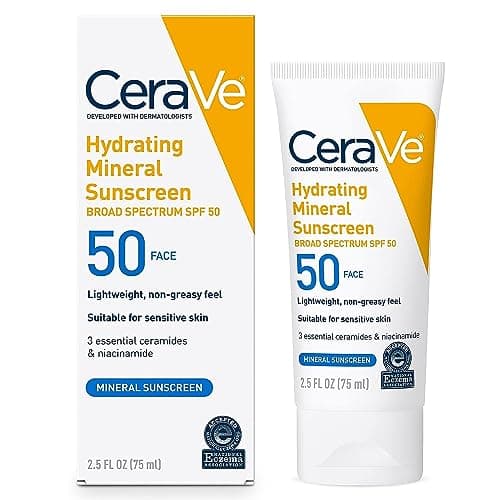
CeraVe Hydrating Mineral Sunscreen SPF 50 Face
CeraVe · Read our CeraVe review
Zinc and titanium dioxide at SPF 50 with ceramides, in a lighter vehicle with a 40-minute water-resistance claim. The shorter claim is exactly why a micellar water or cream cleanser handles it.
- Actives:
- Zinc oxide and titanium dioxide, with ceramides and hyaluronic acid
- SPF:
- SPF 50
- Water resistance:
- 40 minutes
- Reef status:
- Mineral filters only
- Best for:
- A daily face sunscreen that does not demand a double cleanse
What works
- Comes off with a single gentle cleanse most nights
- Ceramides in the base soften the removal step
- Drugstore pricing and wide availability
The trade-off
- 40 minutes of water resistance — not a water-day product
- Still leaves cast on deeper skin tones
- Face-size tube only
#ad We earn from qualifying purchases · Price as of November 2, 2026
02 · Lightest daily film
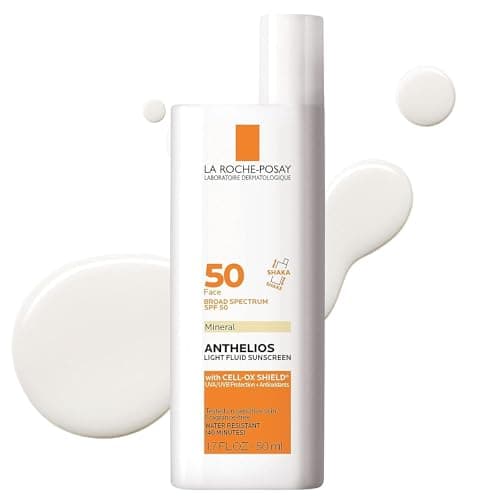
La Roche-Posay Anthelios Mineral SPF 50 Face Sunscreen
La Roche-Posay
Titanium dioxide at SPF 50 with antioxidants, in the lighter of the pharmacy-shelf minerals. Less film means less work, which is a legitimate reason to choose a sunscreen.
- Actives:
- Titanium dioxide with antioxidants
- SPF:
- SPF 50
- Water resistance:
- 40 minutes
- Reef status:
- Mineral filters only
- Best for:
- People who dislike the end-of-day cleansing routine
What works
- Thin film that rinses with an ordinary cleanse
- Antioxidants alongside the mineral filter
- Widely available on US pharmacy shelves
The trade-off
- Titanium-led rather than zinc-led
- 40 minutes of water resistance, not 80
- Not the pick for a long day outdoors
#ad We earn from qualifying purchases · Price as of November 2, 2026
03 · Worth the oil cleanse
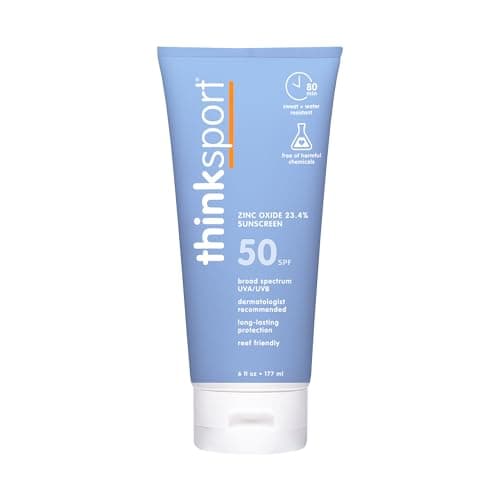
Thinksport Sunscreen SPF 50+
Thinksport · Read our Thinksport review
20% non-nano zinc at SPF 50+ with the full 80 minutes of water resistance. This is the formula that genuinely needs an oil or balm step — and on a beach day it is the one you want.
- Actives:
- 20% non-nano zinc oxide
- SPF:
- SPF 50+
- Water resistance:
- 80 minutes
- Reef status:
- Zinc only — no oxybenzone, octinoxate or octocrylene
- Best for:
- Water and sport days, when removal effort is the right trade
What works
- Maximum SPF and water-resistance claims
- High non-nano zinc, fragrance-free
- Large sizes make a real dose affordable
The trade-off
- Needs an oil or balm cleanse to come off properly
- Thick and slow to spread
- Visible cast on deeper skin tones
#ad We earn from qualifying purchases · Price as of November 2, 2026
Removal effort by format
| Format | Why | What it needs |
|---|---|---|
| Sheer face mineral, 40-minute claim | Lighter vehicle, less filter load | A micellar water or cream cleanser is usually enough |
| High-zinc sport lotion, 80-minute claim | Built to resist water by design | Oil or balm first, then a gentle wash |
| Mineral stick | Wax base, high filter load | Oil or balm first; the wax needs a solvent |
| Tinted mineral | Iron oxides cling to the film | Oil or balm first, and expect visible color on the cloth |
| Loose mineral powder | Sitting on top, not bound in | A normal cleanse removes it |
The practical consequence is worth stating: if you are wearing a sheer daily face mineral, you do not need a double cleanse every night, and doing one anyway is a small ongoing tax on your barrier. Save the oil step for the days you wore the sport formula.
Bodies, and the one place people over-clean
A body does not need a double cleanse. An ordinary shower with a gentle body wash removes enough of a body sunscreen that whatever remains is not doing any harm, and the barrier cost of aggressively degreasing arms and legs every evening is worse than the residue. The exception is skin that will be occluded overnight under tight clothing, or anyone prone to body breakouts across the back and shoulders.
Children are the other case for restraint. A gentle wash and a thorough rinse is the whole protocol; an oil cleanse on a toddler is an unnecessary production. If a child's skin is already reactive, the sunscreen choice matters far more than the removal method does — the best sunscreen for kids with eczema and sensitive skin covers that.
Does leaving it on overnight matter?
Once is not a crisis. As a habit, it is worth fixing for two reasons that have nothing to do with the filters: a film of any product plus a day's sebum and dust left on skin overnight is a common contributor to congestion, and a water-resistant vehicle is particularly good at holding all of that in place. Does mineral sunscreen clog pores addresses the specific question of whether zinc itself is comedogenic, which is a separate issue.
The zinc and titanium dioxide are not absorbing into you while you sleep — does zinc oxide absorb into the skin covers the evidence on that. The argument for cleansing is about everything else in and on the film.
Getting it off clothes, towels and car seats
The same chemistry that makes mineral sunscreen cling to skin makes it cling to fabric, and the zinc or titanium dioxide can leave a pale residue on dark colors. The short version is to treat it as a grease stain — a liquid detergent or a stain treatment worked in before washing, warm rather than hot water, and never a dryer until you have confirmed the mark is gone.
Does sunscreen stain clothes covers that in full, including the separate and more stubborn problem of avobenzone reacting with iron in hard water to leave rust-colored marks. For car upholstery, the same principle applies and the same caution does too: test any solvent on a hidden area first.
Sources
- 21 CFR 201.327 — Over-the-counter sunscreen drug products; required labeling — Legal Information Institute, Cornell Law School
- Questions and Answers: FDA Requirements for Over-the-Counter Sunscreen Products — U.S. Food and Drug Administration
- Sunscreen FAQs — American Academy of Dermatology
- Sunscreen — Skin Cancer Foundation
- How to Remove Sunscreen Stains — Tide, Procter & Gamble
Frequently asked questions
How do you remove mineral sunscreen?
Start on dry skin with an oil, balm or micellar cleanser and massage for a full minute, emulsify with a little water, rinse lukewarm, then follow with a gentle second cleanse. Do not scrub — mineral particles are abrasive under pressure.
Why is mineral sunscreen so hard to wash off?
Because it is designed that way. Zinc oxide and titanium dioxide are solid particles held in a vehicle engineered to resist water, which is what earns the 40- or 80-minute water-resistance claim. The removal step has to break the vehicle, not add more water.
Do you need to double cleanse after mineral sunscreen?
After a high-zinc sport formula, a stick or a tinted mineral, yes. After a sheer daily face mineral with a 40-minute claim, usually not — and double cleansing every night anyway is a small ongoing cost to your barrier.
Is it bad to sleep in mineral sunscreen?
Once is not a problem. As a habit it is worth fixing, mainly because a water-resistant film holds a day's sebum and dust against the skin overnight, which contributes to congestion. The mineral filters themselves are not the concern.
How do you get mineral sunscreen off clothes?
Treat it as a grease stain: work a liquid detergent or stain treatment in before washing, use warm rather than hot water, and do not put the item in a dryer until the mark is confirmed gone. Zinc and titanium dioxide can leave a pale residue on dark fabrics.
Read next
Sun Safety
What water-resistant sunscreen actually means
What the 40 and 80-minute claims measure, why toweling ends them, and how to plan a pool day around it.
Face & Tinted SPF
Does mineral sunscreen clog pores?
Why zinc oxide and titanium dioxide are not the cause of sunscreen breakouts, and the four things in the bottle and the routine that usually are.
Mineral Sunscreen
Does zinc oxide absorb into the skin?
What the evidence and the FDA record actually say about zinc oxide absorption, and what follows for buying.
Sun Safety
Does sunscreen stain clothes?
Why sunscreen leaves orange-brown marks on collars and swimwear, which filter is responsible, and the formulas that avoid the problem.
Face & Tinted SPF
How to reapply sunscreen over makeup
The powder, stick and mist options for topping up SPF over makeup, what each one actually delivers, and when the honest answer is to wash your face.
Mineral Sunscreen
Why mineral sunscreen leaves a white cast
The physics behind the cast, the three levers formulators have, and which one actually solves it.