Sun Safety
Does sunscreen stain clothes?
Yes — and the orange-brown marks on a white collar are not grease. They are rust, and that tells you which bottle to blame.
Disclosure: Spf & Shore earns commission from qualifying purchases made through links on this page, at no extra cost to you. It does not change which products we recommend. Read the full disclosure.
Yes, and the worst of it has a specific cause: avobenzone, a common chemical UVA filter, reacts with iron in tap water to produce the orange-brown marks people describe as rust stains. Avoid avobenzone — which means choosing a mineral sunscreen — and the stubborn staining largely disappears.
There are really two different problems being described as one. Greasy translucent marks are oils and emollients from the base, and they wash out of most fabrics with a normal detergent. The orange-brown discoloration on white collars, waistbands and swimwear is a chemical reaction, it sets with heat, and Tide's own stain guidance treats it as a rust stain rather than an oil stain — which is why ordinary detergent does nothing to it.
Why avobenzone is the culprit
Avobenzone is the main UVA filter in most US chemical sunscreens. It is oil-soluble and prone to oxidizing, and when it meets the iron that is present in most tap water — more so in hard-water areas — the result is a reddish-orange compound deposited in the fabric. The severity depends on your water's mineral profile and on the fabric: synthetics hold the stain more tenaciously than cotton, which is exactly why swimwear and technical shirts suffer worst.
That is also why the stain often appears *after* washing rather than at the beach. The sunscreen transfers to the garment dry, then meets iron-bearing water in the machine, and the reaction happens in the drum. A hot wash or a tumble dry then sets it.
What mineral sunscreen does instead
Zinc oxide and titanium dioxide do not oxidize into rust. They are inorganic powders suspended in a cream base, so what they leave on fabric is a white or chalky residue plus whatever oils the base contains — annoying on dark clothes, but a mechanical deposit rather than a chemical stain, and it comes out with normal washing.
The exception is a tinted mineral sunscreen. Iron oxides are pigments, and pigments transfer: a tinted face formula will mark a white collar or a pillowcase much like a foundation does. That is a dye-transfer problem rather than a rust problem, and it responds to the treatments that work on makeup. Is tinted sunscreen makeup? covers what is in them.
How to stop it happening
- Let it dry before dressing. Fifteen minutes is the same interval the label recommends before sun exposure anyway, and it is the single most effective step.
- Switch to a mineral formula for anything worn under light-colored clothing. No avobenzone, no rust.
- Use a stick on faces and necks, which puts far less product near a collar than a lotion does.
- Wear a UPF shirt instead of sunscreen on the torso. Nothing to transfer, and better protection. How UPF clothing works.
- Wash in cool water and skip the dryer on anything you suspect — heat is what makes the stain permanent.
Our picks in detail
01 · Best zinc-only option
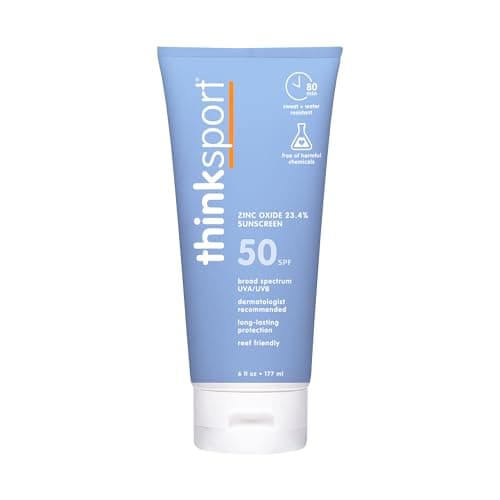
Thinksport Sunscreen SPF 50+
Thinksport · Read our Thinksport review
20% non-nano zinc oxide and no avobenzone anywhere on the panel, at SPF 50+ with 80 minutes of water resistance — no filter in it can turn into a rust stain.
- Actives:
- 20% non-nano zinc oxide
- SPF:
- SPF 50+
- Water resistance:
- 80 minutes
- Reef status:
- Zinc only — no oxybenzone, octinoxate or octocrylene
- Best for:
- Bodies under light-colored clothing
What works
- No avobenzone
- SPF 50+ with maximum water resistance
- Large sizes
The trade-off
- Can leave a chalky residue on dark fabric
- Visible white cast on skin
#ad We earn from qualifying purchases · Price as of October 11, 2026
02 · Best untinted everyday formula
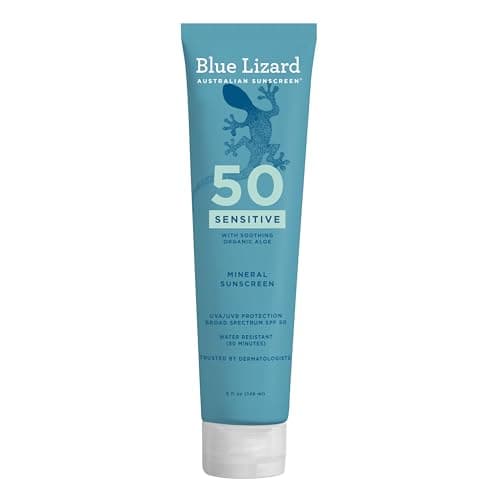
Blue Lizard Sensitive Mineral Sunscreen SPF 50+
Blue Lizard · Read our Blue Lizard review
Mineral filters only, fragrance-free, untinted — so there is neither an avobenzone rust risk nor an iron-oxide pigment to transfer onto a white shirt.
- Actives:
- Zinc oxide and titanium dioxide
- SPF:
- SPF 50+
- Water resistance:
- 80 minutes
- Reef status:
- Mineral filters only; the Sensitive formula omits oxybenzone and octinoxate
- Best for:
- Daily wear where collars and cuffs are at stake
What works
- Mineral filters only
- No tint to transfer
- SPF 50+ and 80 minutes
The trade-off
- Noticeable cast
- Thick on a face
#ad We earn from qualifying purchases · Price as of October 11, 2026
03 · Least product near a collar
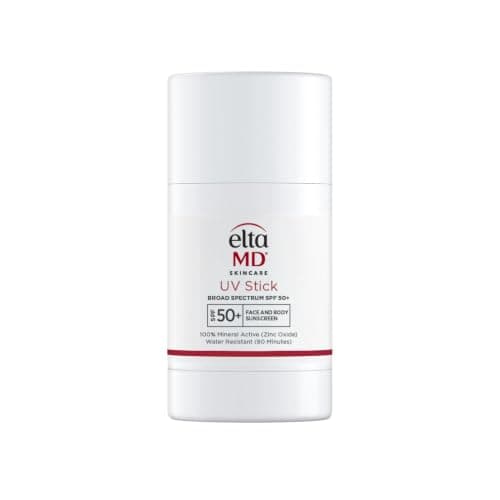
EltaMD UV Stick Broad Spectrum SPF 50+
EltaMD · Read our EltaMD review
22% transparent zinc in a stick — it goes exactly where you put it, which means far less migrating onto fabric than a lotion applied by hand.
- Actives:
- 22% transparent zinc oxide
- SPF:
- SPF 50+
- Water resistance:
- 80 minutes
- Reef status:
- Zinc only — no oxybenzone, octinoxate or octocrylene
- Best for:
- Faces, ears and the back of the neck
What works
- No avobenzone
- Precise application
- 80 minutes of water resistance
The trade-off
- Slow over large areas
- Small format
#ad We earn from qualifying purchases · Price as of October 11, 2026
Getting an existing stain out
- Identify it first. Translucent and greasy means oil; orange-brown means rust. The treatments are different and using the wrong one wastes the attempt.
- For oily marks, work a little liquid detergent into the spot, leave it a few minutes, then wash warm. A degreasing dish soap works on heavy residue.
- For orange-brown rust marks, a rust remover or a dedicated stain remover is what the laundry guidance calls for. Oxygen bleach and ordinary detergent will not shift it.
- Never use chlorine bleach on a rust stain. It can react with the iron and darken the mark instead of lifting it.
- Keep it wet and out of the dryer until the stain is actually gone. Every heat cycle sets it further.
On swimwear, rinse in fresh water as soon as you are out, before chlorine and sunscreen residue have a day in a bag to work on the fabric. That one habit prevents most of the damage people blame on sunscreen.
Sources
- How to Remove Sunscreen Stains — Tide, Procter & Gamble
- Sunscreen: How to Help Protect Your Skin from the Sun — U.S. Food and Drug Administration
- Questions and Answers: FDA Requirements for Over-the-Counter Sunscreen Products — U.S. Food and Drug Administration
- Sunscreen FAQs — American Academy of Dermatology
Frequently asked questions
Does sunscreen stain clothes?
Yes. Greasy marks come from the oils in the base and wash out normally. The orange-brown marks on collars and swimwear are rust stains caused by avobenzone reacting with iron in tap water, and they need a rust remover.
Which sunscreen ingredient stains clothing?
Avobenzone. It is oil-soluble and oxidizes readily, and in contact with the iron present in most tap water it produces a reddish-orange deposit in fabric. Hard water makes it worse, and synthetics hold it more than cotton.
Does mineral sunscreen stain clothes?
Not in the same way. Zinc oxide and titanium dioxide leave a white, chalky residue that washes out. A tinted mineral sunscreen can transfer its iron-oxide pigment onto fabric, which is a makeup-style mark rather than a rust stain.
How do you get sunscreen stains out of white clothes?
Work out which stain it is. Oily marks respond to liquid detergent worked into the spot before a warm wash. Orange-brown rust marks need a rust remover or dedicated stain remover — and never chlorine bleach, which can darken them.
How do I stop sunscreen marking my clothes?
Let it dry for about fifteen minutes before dressing, choose a mineral formula, use a stick near collars, and wash suspect garments cool without tumble drying. Heat is what makes a sunscreen stain permanent.
Read next
Mineral Sunscreen
Mineral vs chemical sunscreen
How each filter type works, what the absorption research actually found, and which to choose for your situation.
Reef-Safe & Ingredients
Oxybenzone vs avobenzone
What each chemical filter does, why only one is restricted, and what that means for your bottle.
Sun Safety
The best sunscreen sticks
The sunscreen sticks worth buying, what their actives panels say, and the number of passes it takes to reach the SPF on the tube.
Face & Tinted SPF
Is tinted sunscreen makeup?
Why tinted SPF is legally a sunscreen, when it can replace foundation, and when it cannot.

Sun Protective Gear
How UPF clothing works
What makes fabric block UV, why good garments do not wash out, and what actually degrades protection.