Face & Tinted SPF
Is tinted sunscreen makeup?
Legally a sunscreen. Practically, often a foundation replacement. Both things are true and the distinction matters.
Disclosure: Spf & Shore earns commission from qualifying purchases made through links on this page, at no extra cost to you. It does not change which products we recommend. Read the full disclosure.
Tinted sunscreen is legally a sunscreen. In the United States sunscreen is regulated as an over-the-counter drug, and adding a tint does not change that classification — a tinted SPF 50 has to meet exactly the same FDA requirements, including the broad-spectrum test, as an untinted one. Practically, many tinted formulas offer enough coverage to replace a light foundation, and using them that way is entirely reasonable.
The distinction matters for one reason above all: a foundation with SPF is not a sunscreen you can rely on, and a tinted sunscreen is.
Tinted sunscreen vs foundation with SPF
This is the practical heart of the question, and the two products are not interchangeable.
| Tinted sunscreen | Foundation with SPF | |
|---|---|---|
| Regulated as | An OTC drug | A cosmetic that also makes a drug claim |
| SPF tested to the FDA standard | Yes | Yes, at the tested dose |
| Applied at the tested dose in real use | Usually, if you use a quarter teaspoon | Almost never |
| Broad spectrum | Required if claimed, and usually claimed | Frequently not |
| Reapplied during the day | Yes, that is the expectation | Rarely |
| Reliable as your only SPF | Yes | No |
The failure of foundation-with-SPF is a dose problem rather than a formulation one. The SPF is genuine at the tested amount, but nobody applies a quarter teaspoon of foundation to their face — you would look painted. Applied at realistic foundation quantities, the protection delivered is a small fraction of the number on the bottle.
So: wear foundation with SPF if you like it, and treat the SPF as a bonus rather than as your protection. The sunscreen underneath is what is actually working.
Can tinted sunscreen replace foundation?
Often, yes — and it is one of the genuine attractions of the category. What it comes down to is coverage level:
- Sheer tints even out tone slightly and cancel the sunscreen's own cast. They will not cover much.
- Buildable, encapsulated-pigment formulas reach medium coverage and can genuinely stand in for a tinted moisturizer or light foundation.
- Nothing in this category reaches full coverage. If you want a full-coverage base, wear one over a sunscreen rather than expecting the sunscreen to do it.
The honest limit is shade range. Most tinted sunscreens are sold in one to four shades against a foundation range's twenty or forty, which is why buildable formulas outperform fixed-shade ones for most people. Our tinted picks.
The thing the tint adds that makeup does not
Iron oxides absorb visible light, which zinc and titanium barely touch and which contributes to melasma and post-inflammatory hyperpigmentation. That is a protective property, and it is present whether you think of the product as sunscreen or as makeup.
It is also why a tinted mineral SPF is the specified product for melasma rather than an untinted one — the tint is part of the treatment, not a cosmetic preference. Iron oxides and visible light.
Using it as makeup without losing the protection
- Apply the full quarter teaspoon, even if it looks like more coverage than you wanted. Under-applying for cosmetic reasons is the fastest way to lose the SPF.
- Build in two thin layers if the coverage feels heavy applied at once. Same total, better finish.
- Do the neck and ears. Makeup habits stop at the jaw; sunscreen habits should not.
- Reapply at midday, with a matching powder if you are wearing the tint as your base. Powder versus lotion.
- Do not layer more of it over makeup as a touch-up — a cream will drag. That is the powder's job.
Is tinted sunscreen bad for acne?
Not inherently. Non-comedogenic is an unregulated term, so it is not a guarantee, but many tinted mineral formulas suit acne-prone skin well — zinc is mildly anti-inflammatory, and a demi-matte finish handles oil better than a dewy one. What does matter is removing it properly at the end of the day with a gentle cleanser, since a tinted product sits on the skin more substantially than a clear one.
If you have persistent acne, a dermatologist is the right person to ask about specific products. This page is general information.
Sources
- Questions and Answers: FDA Requirements for Over-the-Counter Sunscreen Products — U.S. Food and Drug Administration
- Sunscreen: How to Help Protect Your Skin from the Sun — U.S. Food and Drug Administration
- Sunscreen FAQs — American Academy of Dermatology
- Sunscreen — Skin Cancer Foundation
Frequently asked questions
Is tinted sunscreen considered makeup?
Legally it is a sunscreen — an over-the-counter drug — and adding a tint does not change that classification. Practically, many people wear it instead of foundation, which is a reasonable use of a buildable tinted formula.
Can tinted sunscreen replace foundation?
A buildable, encapsulated-pigment formula can replace a light to medium foundation. Sheer tints even out tone but will not cover much, and nothing in this category reaches full coverage.
Is foundation with SPF enough sun protection?
No. The SPF is genuine at the tested dose, but nobody applies a quarter teaspoon of foundation to their face. At realistic quantities you get a small fraction of the number on the bottle. Wear sunscreen underneath.
Is tinted sunscreen bad for acne-prone skin?
Not inherently. Non-comedogenic is an unregulated term, but many tinted mineral formulas suit acne-prone skin, and zinc is mildly anti-inflammatory. Remove it properly at the end of the day with a gentle cleanser.
Read next
Face & Tinted SPF
The best tinted sunscreens
Tinted mineral formulas that cancel the cast and add visible-light protection, across every finish.
Face & Tinted SPF
Tinted vs untinted sunscreen
What tint adds beyond cosmetics, where untinted still wins, and how to choose between them.
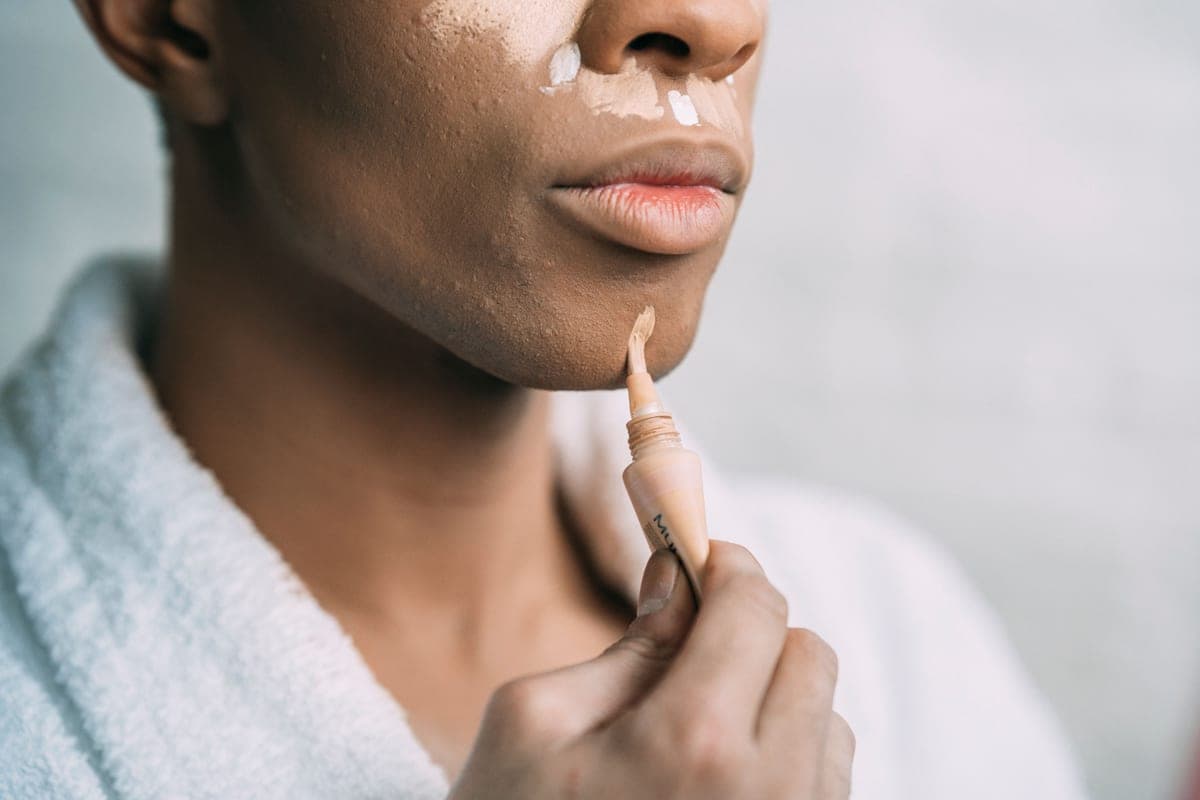
Face & Tinted SPF
Iron oxides and visible light
Why iron oxides protect as well as tint, and what that means for melasma and hyperpigmentation.
Face & Tinted SPF
Powder vs lotion face sunscreen
What each format delivers, why powder cannot be your primary SPF, and how to combine them.
Face & Tinted SPF
Where sunscreen goes in your routine
The correct order, why pilling happens, and how to reapply over a finished face.
Face & Tinted SPF
The best sunscreen for your face
Daily face SPF by skin type and finish, from mineral to hybrid, with the trade-off named on each.