Sun Safety
Dermatologist-recommended sunscreens
No dermatology association endorses a brand. What the seals on the box really test, which sunscreens have earned one, and why the absence of a seal proves nothing.
Disclosure: Spf & Shore earns commission from qualifying purchases made through links on this page, at no extra cost to you. It does not change which products we recommend. Read the full disclosure.
Our pick is CeraVe Hydrating Mineral Sunscreen SPF 50 Face — a zinc-and-titanium face formula that holds The Skin Cancer Foundation's Daily Use Seal of Recommendation, which means a volunteer photobiology committee has read its SPF, UVA and human irritation test data rather than taking the front of the box at its word.
Start with the thing no sunscreen brand will tell you. The American Academy of Dermatology does not endorse sunscreen brands or products. Its guidance is a specification, not a shopping list — broad spectrum, SPF 30 or higher, water resistant — and it adds that the best type of sunscreen is the one you will use again and again. So when a carton says it is dermatologist recommended, no dermatology association put that there. The brand did.
There is one claim on a sunscreen box that does have published criteria and an outside committee behind it, and it is not the one most shoppers look for. The five picks below all carry it. Then we will explain why three sunscreens we recommend elsewhere on this site do not, and why that is not the verdict it looks like.
Quick picks
Tap any row to read the full write-up below.
| # | Product | Best for | Price |
|---|---|---|---|
| 1 | 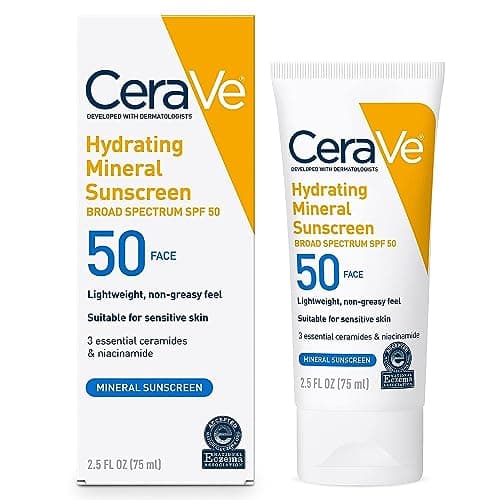 CeraVe Hydrating Mineral Sunscreen SPF 50 FaceBest overall · SPF 50 | A daily face sunscreen with an outside body behind it | $13.97 · View on Amazon #ad We earn from qualifying purchases · Price as of October 9, 2026 |
| 2 | 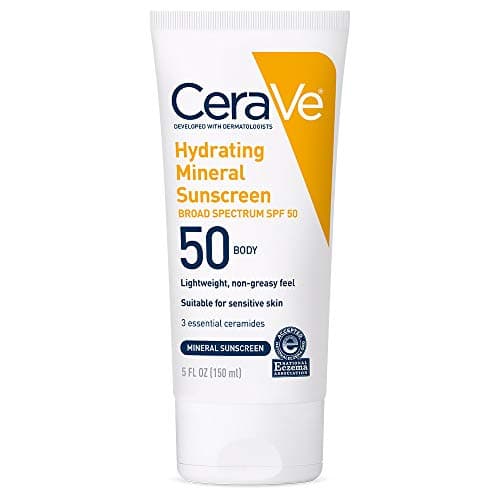 CeraVe Hydrating Mineral Sunscreen SPF 50 BodyBest for everyday body use · SPF 50 | Arms, chest and legs on an ordinary day outdoors | $14.99 · View on Amazon #ad We earn from qualifying purchases · Price as of October 9, 2026 |
| 3 | 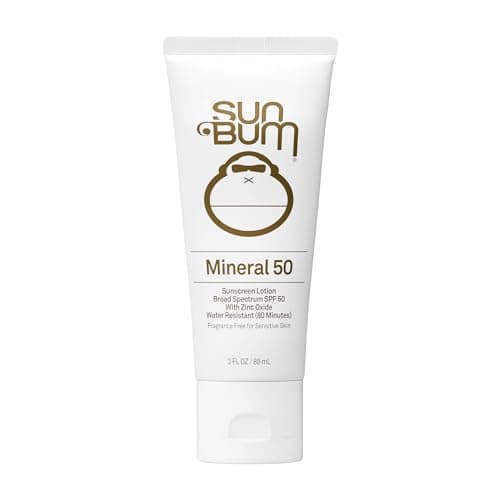 Sun Bum Mineral Sunscreen Lotion SPF 50Best for the beach bag · SPF 50 | Swim days, sweat and anything that needs the Active tier | $16.99 · View on Amazon #ad We earn from qualifying purchases · Price as of October 9, 2026 |
| 4 | 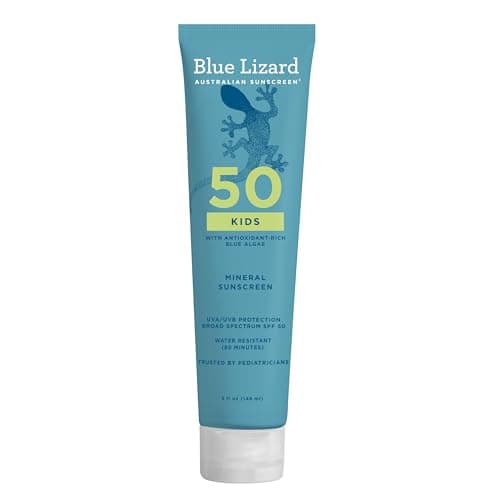 Blue Lizard Kids Mineral Sunscreen SPF 50+Best for kids · SPF 50+ | Children at a pool, a beach or a long day in a field | $14.86 · View on Amazon #ad We earn from qualifying purchases · Price as of October 9, 2026 |
| 5 |  Colorescience Sunforgettable Total Protection Face Shield SPF 50Best tinted, and best over makeup · SPF 50 | A tinted face sunscreen that holds the Active seal |
How we chose these
One hard filter came first: every pick had to match a named entry in The Skin Cancer Foundation's public Recommended Products directory, which we read in full on October 9, 2026. Not the brand — the exact product, by name, with its seal type. The directory held 682 entries that day across sunscreen, clothing, window film, shade and accessories, and we matched each pick to its row rather than trusting a badge printed on a carton.
After that we applied the same criteria we use everywhere else on this site. Broad spectrum and SPF 30 or higher as the floor, which is the American Academy of Dermatology's standing guidance. Then zinc oxide or titanium dioxide actives where there was a choice, fragrance-free bases preferred, and a spread of formats so the list is useful to a household rather than to one face.
We do not run a lab, we do not wear-test, and there are no scores on this page for that reason. The seal data is the Foundation's, the label data is each brand's, and where an independent organization has tested — Consumer Reports lab-verifies label SPF — we name them rather than restating their work as ours. Our methodology.
What a dermatologist-recommended claim means on a box
Very little, on its own. The phrase is marketing copy, not a regulated drug claim, and it is usually supported by a survey the brand commissioned among some number of dermatologists it selected. There is no register of which dermatologists, how many, what they were asked, or what they were shown. Two products with identical actives can differ on whether they carry the phrase purely on whether the company bought the survey.
The same is true of pediatrician tested, allergy tested and clinically proven. They describe that testing happened, not what the result was or what standard it was measured against. The regulated part of a sunscreen carton is the Drug Facts panel: the active ingredients and their percentages, the SPF, the broad-spectrum statement and the water-resistance minutes. Everything above that panel is advertising. How to read a sunscreen label walks the panel line by line.
The one seal with published criteria
The Skin Cancer Foundation's Seal of Recommendation is the exception, because the standard is written down and the testing thresholds are specific. The Foundation's Photobiology Committee updated the criteria on May 1, 2025, and there are two sunscreen tiers.
| Requirement | Daily Use Seal | Active Seal |
|---|---|---|
| Minimum SPF | 30 | 50 |
| Critical wavelength (UVA) | 373 nm minimum | 373 nm minimum |
| Water resistance | Substantiation required if claimed | Substantiation required for 40 or 80 minutes |
| Human irritation (HRIPT) and phototoxicity | Minimum 20 human subjects passing each test | Minimum 20 human subjects passing each test |
Two things in that table are worth more than the SPF number. The critical wavelength threshold of 373 nanometers is a real UVA bar, and it is stricter than the 370 nm that the FDA's broad-spectrum test requires — so a sealed product has demonstrated UVA coverage slightly beyond the legal minimum for calling itself broad spectrum. And the requirement that at least 20 human subjects pass both a repeat-insult patch test and a phototoxicity test is the part that speaks to sensitive skin, because it is the only part measured on people rather than in an instrument.
The Foundation also applies the seal to fabric at a minimum UPF of 50, to hats with a brim of at least three inches all around, and to window products that block at least 99 percent of UVA and UVB. Coolibar holds the fabric seal, which is why a sun shirt earns a mention on a sunscreen page.
The part the seal does not tell you
Here is the sentence that changes how you should read the directory, published by the Foundation itself on the same page as the product list: Members of The Skin Cancer Foundation's Corporate Council who manufacture or market sun protection products are eligible to submit products into our application process for the Seal of Recommendation. Companies representing about 100 brands support the Foundation's mission with an annual Corporate Council membership fee of $15,000.
So the gate is not only scientific. A sunscreen cannot be considered for the seal unless its parent company pays to join the Corporate Council first. The Foundation is transparent that the fee funds the program's administrative costs, and it is equally clear that payment does not buy the outcome: not all of a Corporate Council member's products meet its standards, not all submitted products are approved, and the seal is awarded to individual products rather than to brands.
What that produces is a directory shaped as much by who joined as by what works. Banana Boat held 53 separate seal entries the day we read it. Thinksport, Badger, Vanicream, Neutrogena, Coppertone and Australian Gold held zero between them — not one row. Those are mostly small independent brands making some of the highest-zinc mineral sunscreens on the US market, and the honest reading is that they have not entered the process, not that their sunscreens failed it.
Use the seal the way it deserves to be used: as positive evidence when it is there, and as no evidence at all when it is absent.
Our picks in detail
01 · Best overall
CeraVe Hydrating Mineral Sunscreen SPF 50 Face
CeraVe · Read our CeraVe review
Listed in the Skin Cancer Foundation directory as CeraVe Hydrating Mineral Sunscreen Face SPF 30, SPF 50, carrying the Daily Use seal. A 100% mineral face formula on a fragrance-free, ceramide-containing base, widely stocked and priced like a drugstore product rather than a clinic one.
- Actives:
- Zinc oxide and titanium dioxide, with ceramides and hyaluronic acid
- SPF:
- SPF 50
- Water resistance:
- 40 minutes
- Reef status:
- Mineral filters only
- Best for:
- A daily face sunscreen with an outside body behind it
What works
- Daily Use Seal of Recommendation, matched to the product by name
- Mineral actives on a fragrance-free base
- Sold in ordinary drugstores, so replacing it is never a project
The trade-off
- Leaves a visible cast on medium and deep skin until worked in
- Thicker than a chemical face sunscreen under makeup
- Daily Use tier, so it is not the one to take on a boat
#ad We earn from qualifying purchases · Price as of October 9, 2026
02 · Best for everyday body use
CeraVe Hydrating Mineral Sunscreen SPF 50 Body
CeraVe · Read our CeraVe review
The body counterpart, listed as CeraVe Hydrating Mineral Sunscreen Broad Spectrum Body SPF 30, SPF 50 with the Daily Use seal. The same mineral actives in a larger, cheaper bottle, which is the practical difference that decides whether you apply enough.
- Actives:
- Zinc oxide and titanium dioxide, with ceramides
- SPF:
- SPF 50
- Water resistance:
- 40 minutes
- Reef status:
- Mineral filters only
- Best for:
- Arms, chest and legs on an ordinary day outdoors
What works
- Daily Use Seal of Recommendation on the body formula specifically
- Larger bottle makes a full-body dose realistic
- Fragrance-free, which matters more over a whole torso
The trade-off
- Heavier and slower to rub in than a chemical body lotion
- Cast is more obvious over a large area
- Daily Use rather than Active, so swim days want something else
#ad We earn from qualifying purchases · Price as of October 9, 2026
03 · Best for the beach bag
Sun Bum Mineral Sunscreen Lotion SPF 50
Sun Bum
Holds the Active seal at SPF 50 and the Daily Use seal at SPF 30, listed under both in the directory. Zinc-only actives with 80 minutes of water resistance, in the format people actually reach for at a beach.
- Actives:
- Zinc oxide and titanium dioxide
- SPF:
- SPF 50
- Water resistance:
- 80 minutes
- Reef status:
- Mineral filters only
- Best for:
- Swim days, sweat and anything that needs the Active tier
What works
- Active Seal of Recommendation, the tier that requires substantiated water resistance
- Zinc-only, so unrestricted under every reef law
- Stocked almost everywhere, including resort shops
The trade-off
- Noticeable white cast, the usual price of a high zinc load
- A scented range sits alongside it on the shelf, so check the box you grab
- Thicker than the chemical sprays next to it
#ad We earn from qualifying purchases · Price as of October 9, 2026
04 · Best for kids
Blue Lizard Kids Mineral Sunscreen SPF 50+
Blue Lizard · Read our Blue Lizard review
Listed as Blue Lizard Kids Sunscreen SPF 50+ with the Active seal. Zinc-only actives, fragrance-free, 80 minutes of water resistance, and a bottle cap that changes color in UV — a gimmick that happens to teach a child something true.
- Actives:
- Zinc oxide and titanium dioxide
- SPF:
- SPF 50+
- Water resistance:
- 80 minutes
- Reef status:
- Mineral filters only
- Best for:
- Children at a pool, a beach or a long day in a field
What works
- Active Seal of Recommendation on the kids formula
- Zinc-only and fragrance-free, the right spec for young skin
- 80 minutes of water resistance, the US maximum
The trade-off
- Thick, and slow to spread on a child who will not stand still
- Visible cast that needs working in
- Costs more per ounce than a drugstore chemical kids lotion
#ad We earn from qualifying purchases · Price as of October 9, 2026
05 · Best tinted, and best over makeup
Colorescience Sunforgettable Total Protection Face Shield SPF 50
Colorescience · Read our Colorescience review
Listed as Colorescience Sunforgettable Total Protection Face Shield SPF 50 with the Active seal, alongside several of the brand's other Shield formulas. Encapsulated iron-oxide pigment gives buildable coverage across a wide tonal range, and iron oxides add visible-light protection that no UV filter provides.
- Actives:
- Zinc oxide and titanium dioxide, tinted with iron oxides
- SPF:
- SPF 50
- Water resistance:
- 40 minutes
- Reef status:
- Mineral filters only
- Best for:
- A tinted face sunscreen that holds the Active seal
What works
- Active Seal of Recommendation on a tinted face formula, which is rare
- Iron oxides cancel the mineral cast and add visible-light protection
- Buildable pigment covers a wider tonal range than a single universal shade
The trade-off
- The most expensive pick here by a wide margin
- No confident Amazon listing match, so the buy link is a tagged search
- The tint will not suit everyone straight from the tube
Daily Use or Active — which seal you actually want
The two tiers are not better and worse. They describe different jobs, and the difference matters when you are standing in an aisle choosing between two sealed products.
- Daily Use means SPF 30 or more and the full UVA and human-testing package, with water resistance substantiated only if the product claims it. This is the tier for a face sunscreen worn on a commuting, school-run, errand-running day.
- Active means SPF 50 or more and water resistance substantiated at 40 or 80 minutes. This is the tier for a beach, a boat, a trailhead, a soccer sideline or anything involving sweat.
- Fabric is a separate category entirely, at UPF 50 minimum, and it is the only seal that covers a product you never have to reapply.
- A product line can appear twice at different strengths. Sun Bum's Mineral Lotion holds the Active seal at SPF 50 and the Daily Use seal at SPF 30, which is a neat illustration that the tier follows the formula, not the brand.
The second seal, and the one that speaks to sensitive skin
If your reason for searching for a dermatologist-recommended sunscreen is that something has stung, flared or broken you out, the Skin Cancer Foundation seal is not the most relevant mark. The National Eczema Association's Seal of Acceptance is, and its sunscreen rule is unusually blunt.
- Chemical UV absorbers are not accepted. For sunscreen, the NEA states that only physical products containing titanium, zinc and iron will be considered. A chemical-filter sunscreen cannot hold this seal at any SPF.
- Fragrance-free is mandatory, with no discernible or strong scent in the finished product. Fragrance is the most common irritant in a sunscreen base.
- Nothing on the Ecz-clusion List, the association's published list of ingredients an accepted product may not contain.
- Clinical safety testing is required: a product must pass at least one of a Human Repeat Insult Patch Test, a Cumulative Irritation Test, or a Safety In Use test.
- A panel decides, not the company. The Seal Review Panel is made up of doctors chosen by the NEA for expertise in dermatology, eczema and sensitive skin care, and it is the final decision maker on acceptance.
The two seals answer different questions. The Skin Cancer Foundation's asks whether the sunscreen protects as claimed. The NEA's asks whether the base will irritate skin that is already reactive. For eczema-prone skin and reactive faces we would weight the second one higher, and we would still read the actives panel before buying. The best sunscreen for sensitive skin is our full list for that problem.
How to use any of this at the shelf
- Turn the box over first. The Drug Facts panel is the only regulated part. Look for zinc oxide or titanium dioxide if you want mineral, and read the percentage.
- Confirm the two words broad spectrum next to the SPF. Without them you have sunburn protection and much less UVA protection. What broad spectrum means.
- Check for 40 or 80 minutes of water resistance if there is any chance of water or sweat. Those are the only two claims a US label may make.
- Treat a seal as a tiebreaker, not a filter. Between two products you would otherwise buy, the sealed one has been looked at by someone outside the company.
- Give the dermatologist-recommended line no weight at all. It is the one claim on the carton with no published standard behind it.
- Buy the size you will use generously. Nothing on this page matters if the bottle is rationed. How much sunscreen to apply.
Three sunscreens we rate highly that carry no seal
We are naming these because leaving them out would imply something untrue.
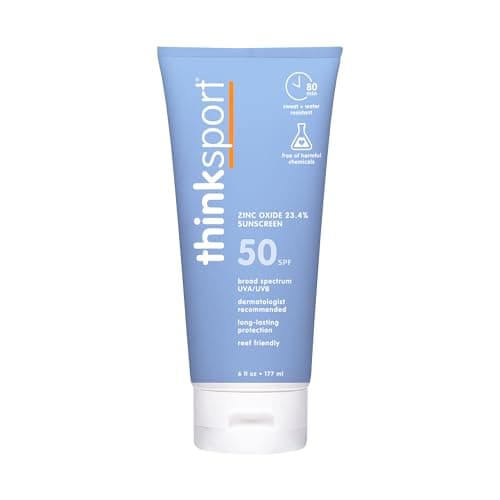
- Thinksport SPF 50+ — 20% non-nano zinc oxide and 80 minutes of water resistance, and our overall pick in the best sunscreens. No row in the directory.
- Badger Kids Sunscreen Cream SPF 40 — one of the shortest ingredient lists in the category, zinc only. No row in the directory.
- Vanicream Mineral Sunscreen SPF 50+ — built specifically for reactive skin, fragrance-free and dye-free. No row in the directory.
All three carry Drug Facts panels that meet or beat the Foundation's published thresholds on SPF and water resistance. What they do not carry is a $15,000 Corporate Council membership. If you came to this page looking for permission to buy one of them, you have it.
What no seal can do
A seal certifies a formula under test conditions. It says nothing about the two variables that actually decide your protection: how much of the product you put on, and whether you put more on two hours later. SPF is measured at a laboratory dose most people never apply, and a generously applied SPF 30 beats a thinly applied sealed SPF 50 every time. Sunscreen versus no sunscreen covers what the daily habit is actually worth, measured.
The change that shrinks the whole problem is wearing a UPF 50+ sun shirt over the torso and arms, which blocks at least 98% of UV for as long as it is on and needs nothing reapplied — and which, in Coolibar's case, carries the same Foundation's fabric seal. Sunscreen then has a small, realistic job: a face, two ears, a neck and the tops of your feet.
Sources
- Sunscreen FAQs — American Academy of Dermatology
- Recommended Products (Seal of Recommendation directory) — The Skin Cancer Foundation
- The Skin Cancer Foundation Photobiology Committee Announces Updated Criteria for Seal of Recommendation — The Skin Cancer Foundation
- About the NEA Seal of Acceptance — National Eczema Association
- Questions and Answers: FDA Requirements for Over-the-Counter Sunscreen Products — U.S. Food and Drug Administration
- Sunscreen ratings and lab testing — Consumer Reports
Frequently asked questions
What sunscreen do dermatologists recommend?
No dermatology association endorses a specific sunscreen. The American Academy of Dermatology recommends a specification instead: broad spectrum, SPF 30 or higher, and water resistant, adding that the best sunscreen is the one you will use again and again. The closest thing to an outside recommendation on a specific product is The Skin Cancer Foundation's Seal of Recommendation, which has published criteria and a volunteer photobiology committee behind it.
Does a dermatologist-recommended claim on the box mean anything?
Not on its own. It is unregulated marketing copy, usually supported by a brand-commissioned survey whose size, questions and respondents are not published. The regulated part of the carton is the Drug Facts panel: actives and percentages, SPF, the broad-spectrum statement and the water-resistance minutes.
What does the Skin Cancer Foundation Seal of Recommendation require?
As updated on May 1, 2025: the Daily Use seal needs SPF 30 or higher, a critical wavelength of at least 373 nm, water-resistance substantiation if claimed, and a minimum of 20 human subjects passing both a repeat-insult patch test and a phototoxicity test. The Active seal needs SPF 50 or higher plus substantiated water resistance at 40 or 80 minutes.
Why is my favorite sunscreen not on the Skin Cancer Foundation list?
Most likely because its maker has not joined the Foundation's Corporate Council, which is the eligibility gate and costs $15,000 a year. The Foundation publishes this on the same page as the directory. Several zinc-only sunscreens we recommend, including Thinksport, Badger and Vanicream, have no entry at all, which reflects program participation rather than a test they failed.
Do these sunscreens include dermatologist or pediatrician testing for sensitive skin?
Every product carrying the Skin Cancer Foundation seal has passed human repeat-insult patch testing and phototoxicity testing on at least 20 subjects, which is irritation testing on people rather than a marketing claim. For eczema-prone or highly reactive skin, the National Eczema Association's Seal of Acceptance is the more specific mark: it only considers physical sunscreens containing titanium, zinc and iron, requires a fragrance-free formula, bars its Ecz-clusion List ingredients, and requires clinical safety testing reviewed by a panel of dermatologists and allergists.
Is a sealed sunscreen better than an unsealed one?
It is better evidenced, which is not the same thing. A seal confirms an outside committee has seen the test data. An unsealed sunscreen with 20% zinc oxide, broad-spectrum labeling and 80 minutes of water resistance is not worse protection; it is unverified by that particular program. Treat a seal as a tiebreaker between two products you would buy anyway.
Read next
Sun Safety
The best sunscreens
One pick per situation — face, body, kids, water, sensitive skin — chosen on the label, not the packaging.
Reef-Safe & Ingredients
How to read a sunscreen label
How to read the drug facts panel line by line, and what every front-of-bottle claim is worth.
Reef-Safe & Ingredients
The best sunscreen for sensitive skin
Fragrance-free mineral formulas for reactive skin, chosen on the inactive ingredients.
Kids & Baby
The best sunscreen for kids
Zinc-first kids formulas chosen on water resistance, sting and how fast they go on.

Sun Protective Gear
The best sun shirts
UPF 50+ shirts and hoodies chosen on fabric, fit and heat management — protection that never needs reapplying.
Reviews
CeraVe mineral sunscreen review
Ceramides in a fragrance-free mineral base at drugstore prices, against 40-minute water resistance.