Sun Safety
What independent sunscreen testing actually finds
Who runs a lab, who runs a scoring database, and who runs a field test — and why the three produce different answers.
Disclosure: Spf & Shore earns commission from qualifying purchases made through links on this page, at no extra cost to you. It does not change which products we recommend. Read the full disclosure.
Very few organisations lab-test sunscreen independently. The one that routinely sends US sunscreens for SPF verification is Consumer Reports; outdoor publications such as OutdoorGearLab and Treeline Review field-test for wear and feel rather than SPF; and the databases that score sunscreens by ingredient — the Environmental Working Group's being the best known — are not labs and do not measure protection at all. Knowing which kind of source you are reading settles most sunscreen arguments.
We do not run a lab, do not wear-test, and publish no scores. What follows is who does what, what each method can and cannot establish, and how to read the results without mistaking one for another. Where we cite a tester we name them; we never restate their findings as our own.
The three kinds of sunscreen source
| Kind of source | What it measures | What it cannot tell you |
|---|---|---|
| Independent lab testing (e.g. Consumer Reports) | Whether a product delivers its labeled SPF and UVA protection when tested | Whether you will like wearing it, or whether a result still holds for a reformulated batch |
| Field testing (e.g. OutdoorGearLab, Treeline Review) | Feel, finish, cast across skin tones, sweat and water performance in real use | Whether the labeled SPF is accurate — that needs a lab |
| Ingredient scoring databases | How a formula scores against that organisation's own hazard criteria | Measured protection of any kind; a score is not a test result |
| Criteria-based seals (e.g. the Skin Cancer Foundation's) | That a product met a published threshold and was reviewed by a committee | How it ranks against other products — a seal is a floor, not a league table |
What lab SPF verification has found
The recurring theme in independent SPF testing of US sunscreens is that some products test below their labeled SPF. Consumer Reports publishes its sunscreen testing and ratings and has reported shortfalls across multiple years of testing, which is why its ratings are worth reading before a purchase and why we cite them by name rather than summarising them as fact here.
Two caveats matter if you go looking. A result applies to the batch tested, not to every bottle on every shelf forever — brands reformulate. And a single test result is a single test result; patterns across years are more informative than any one product's score.
Why field tests and lab tests disagree
They are answering different questions. A lab asks whether the product performs to its label when applied at the test dose of two milligrams per square centimeter. A field test asks what happens when a real person applies it at a quarter of that dose, in wind, over sunscreen they put on four hours ago, with a towel involved.
Both answers are useful and neither replaces the other. A lab-verified SPF 50 that feels so unpleasant you ration it will protect you worse than a cosmetically excellent SPF 30 you apply generously — which is the single most under-appreciated fact in sun care. How much sunscreen to apply has the arithmetic.
What to look for yourself, before any review
- Broad spectrum. Without it you have sunburn protection and much less UVA protection. What broad spectrum means.
- SPF 30 minimum, per the American Academy of Dermatology, and 50 for long exposure.
- A water-resistance claim of 40 or 80 minutes if it is going near water or sweat.
- The actives panel, which is regulated, rather than the front of the carton, which is not. How to read a sunscreen label.
- Fragrance-free if your skin is reactive — fragrance causes more sunscreen reactions than filters do.
Our picks in detail
01 · Clearest label
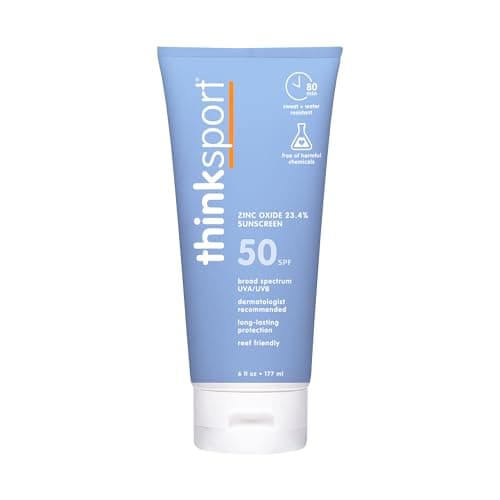
Thinksport Sunscreen SPF 50+
Thinksport · Read our Thinksport review
20% non-nano zinc oxide published outright, SPF 50+, and the maximum 80 minutes of water resistance — a label with nothing left to infer, which is the easiest kind to check.
- Actives:
- 20% non-nano zinc oxide
- SPF:
- SPF 50+
- Water resistance:
- 80 minutes
- Reef status:
- Zinc only — no oxybenzone, octinoxate or octocrylene
- Best for:
- Buyers who want every figure published
What works
- Zinc percentage published
- Maximum labeled water resistance
- Zinc-only actives panel
The trade-off
- Visible white cast
- Heavy on a face
#ad We earn from qualifying purchases · Price as of October 10, 2026
02 · Most widely stocked mineral face option
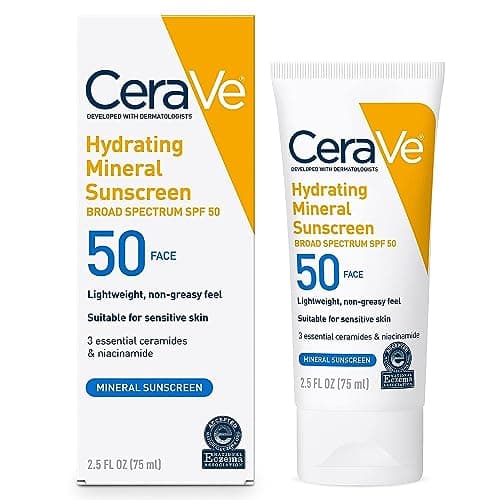
CeraVe Hydrating Mineral Sunscreen SPF 50 Face
CeraVe · Read our CeraVe review
Fragrance-free mineral filters in a ceramide base at SPF 50 — the mineral face formula most likely to be on a shelf near you, which matters more than any score if the alternative is running out.
- Actives:
- Zinc oxide and titanium dioxide, with ceramides and hyaluronic acid
- SPF:
- SPF 50
- Water resistance:
- 40 minutes
- Reef status:
- Mineral filters only
- Best for:
- Daily facial SPF on a budget
What works
- Fragrance-free
- Widely available
- Cheap enough to use generously
The trade-off
- Cast on medium and deep tones
- 40 minutes of water resistance
#ad We earn from qualifying purchases · Price as of October 10, 2026
03 · Strongest label claims for long exposure
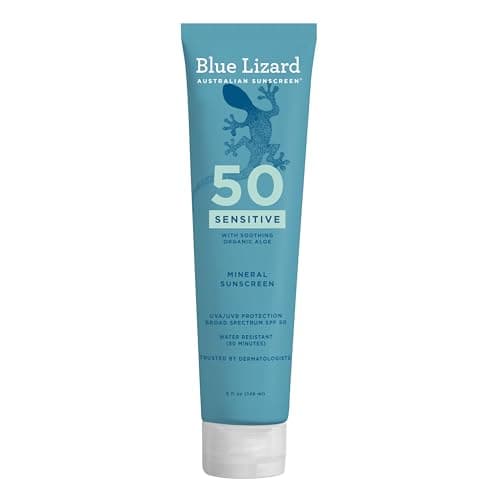
Blue Lizard Sensitive Mineral Sunscreen SPF 50+
Blue Lizard · Read our Blue Lizard review
Fragrance-free mineral filters at SPF 50+ with the maximum 80 minutes of water resistance — the combination of claims to look for when the day is long and the skin is sensitive.
- Actives:
- Zinc oxide and titanium dioxide
- SPF:
- SPF 50+
- Water resistance:
- 80 minutes
- Reef status:
- Mineral filters only; the Sensitive formula omits oxybenzone and octinoxate
- Best for:
- Full days outdoors on reactive skin
What works
- 80-minute water resistance
- Fragrance-free
- Mineral filters only
The trade-off
- Thick texture
- Noticeable cast
#ad We earn from qualifying purchases · Price as of October 10, 2026
Claims that look like test results but are not
- "Dermatologist recommended." Unregulated marketing. No dermatology association endorses brands. Dermatologist-recommended sunscreens sets out what the phrase does and does not mean, and what the Skin Cancer Foundation's seal actually tests.
- "Clinically proven." Every US sunscreen is SPF-tested to be sold at all, so this describes the legal minimum.
- "Reef safe" and "reef friendly." Neither term is defined or certified by anyone. What reef-safe actually means.
- A hazard score out of ten. A score against one organisation's criteria, not a measurement of protection.
- "Non-toxic" and "chemical-free." Meaningless on a product that is chemically formulated by definition and regulated as a drug.
How we use other people's testing
We read published label data for every product we list, and the actives, SPF and water-resistance figures on this site come from brands' own US actives panels. Where an independent organisation has tested something, we name it and link to it so you can read the result yourself. We do not have a lab, we do not wear-test, and we publish no scores — which is why you will not find a numbered ranking anywhere on this site. Our methodology in full.
Sources
- Sunscreen ratings and lab testing — Consumer Reports
- Questions and Answers: FDA Requirements for Over-the-Counter Sunscreen Products — U.S. Food and Drug Administration
- Sunscreen: How to Help Protect Your Skin from the Sun — U.S. Food and Drug Administration
- Sunscreen FAQs — American Academy of Dermatology
- The Skin Cancer Foundation Photobiology Committee Announces Updated Criteria for Seal of Recommendation — The Skin Cancer Foundation
- Best Spray Sunscreens of 2026 (tested across skin tones) — Treeline Review
- Best Sun Protection Shirts for Men (tested) — OutdoorGearLab
Frequently asked questions
Who independently tests sunscreen?
Consumer Reports is the organisation that routinely lab-tests US sunscreens for labeled SPF. Outdoor publications such as OutdoorGearLab and Treeline Review field-test for feel, cast and water performance. Ingredient-scoring databases are not labs and do not measure protection.
Do sunscreens really test below their labeled SPF?
Independent testing has repeatedly reported products that fall short of their labeled SPF. Those are findings published by the testing organisations themselves, so read their current results directly rather than relying on a summary.
Is an ingredient hazard score a test result?
No. A score reflects how a formula rates against one organisation's own criteria. It measures nothing about how much UV the product blocks.
Does a seal of recommendation mean a sunscreen is the best?
No — a seal means a product met a published threshold and passed a committee review. It is a floor rather than a ranking, so plenty of excellent sunscreens do not carry one.
Do you test sunscreens yourselves?
No. We read published label data and cite independent testers by name where they have tested something. We do not run a lab, do not wear-test, and publish no scores.
Read next
Sun Safety
Sunscreen versus no sunscreen
What the Nambour trial found when it randomized a whole town to daily sunscreen or not: skin aging, squamous cell carcinoma, melanoma, and the endpoints that did not move.
Sun Safety
Dermatologist-recommended sunscreens
What a seal on a sunscreen box actually certifies, which products carry one, and why several sunscreens we rate highly carry none.
Reef-Safe & Ingredients
How to read a sunscreen label
How to read the drug facts panel line by line, and what every front-of-bottle claim is worth.
Sun Safety
The best sunscreens
One pick per situation — face, body, kids, water, sensitive skin — chosen on the label, not the packaging.
Mineral Sunscreen
What broad spectrum means on a sunscreen label
The regulated FDA claim behind the phrase, why SPF alone is not enough, and what UVA actually does.