Sun Safety
Sunscreen versus no sunscreen
A real randomized trial ran this comparison on 1,621 people. The results are more specific, and more interesting, than either side of the argument usually admits.
Disclosure: Spf & Shore earns commission from qualifying purchases made through links on this page, at no extra cost to you. It does not change which products we recommend. Read the full disclosure.
Almost every argument about sunscreen is fought with anecdotes, because the experiment seems impossible to run. It was run. In 1992, 1,621 residents of Nambour, a township in Queensland, Australia, were randomly assigned to apply broad-spectrum sunscreen daily or to use it at their own discretion — and then followed for four and a half years, and in one arm of the research for a further decade after that.
That trial is the single best answer to "what happens if I do not wear sunscreen," and the honest version of its results will satisfy neither camp. Daily sunscreen measurably slowed skin aging and cut one kind of skin cancer. It did nothing detectable for another kind. The melanoma result arrived only ten years later, and it was dramatic. Below is each finding, what it means for an ordinary week, and the sunscreens that make daily use realistic rather than aspirational.
Quick picks
Tap any row to read the full write-up below.
| # | Product | Best for | Price |
|---|---|---|---|
| 1 | 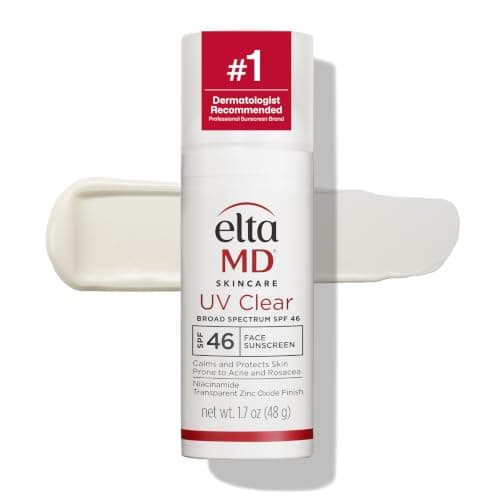 EltaMD UV Clear Broad-Spectrum SPF 46Best for everyday face wear · SPF 46 | A face sunscreen light enough to apply before work without thinking about it | $45.00 · View on Amazon #ad We earn from qualifying purchases · Price as of October 9, 2026 |
| 2 | 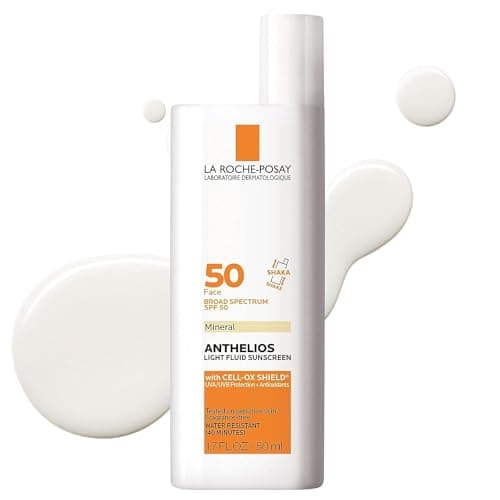 La Roche-Posay Anthelios Mineral SPF 50 Face SunscreenBest 100% mineral daily face · SPF 50 | Daily wear when you want mineral filters only | $29.99 · View on Amazon #ad We earn from qualifying purchases · Price as of October 9, 2026 |
| 3 | 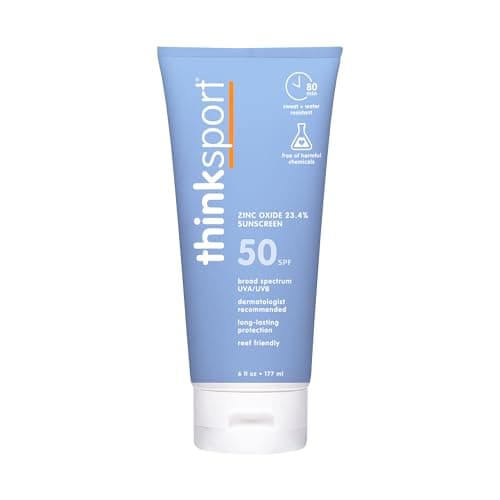 Thinksport Sunscreen SPF 50+Best for whole days outside · SPF 50+ | The days the trial was really about — hours of exposure, not minutes | $19.97 · View on Amazon #ad We earn from qualifying purchases · Price as of October 9, 2026 |
| 4 | 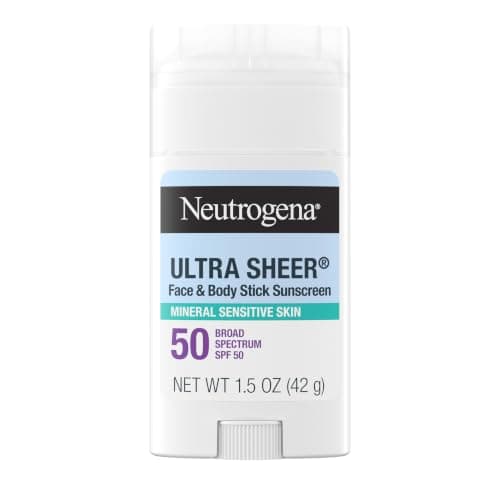 Neutrogena Ultra Sheer Face & Body Mineral Sunscreen Stick SPF 50Best for the reapplication you keep skipping · SPF 50 | Hands, ears and the back of a neck at hour two | $14.73 · View on Amazon #ad We earn from qualifying purchases · Price as of October 9, 2026 |
The trial, in one paragraph
The Nambour Skin Cancer Prevention Trial was a community-based randomized controlled trial with a two-by-two factorial design. Participants were assigned to daily application of an SPF 15-plus sunscreen to the head, neck, arms and hands, or to discretionary use — that is, whatever they would have done anyway — and separately to 30 mg of betacarotene a day or a placebo. The sunscreen analysis counted only skin cancers that appeared on the sites of daily application, and everything was analyzed by intention to treat. The results were published in The Lancet in 1999.
Two things about that design matter before you read the numbers. The comparison was not sunscreen against nothing; it was daily sunscreen against normal human behavior, which in subtropical Queensland already included a fair amount of sunscreen. And the product was SPF 15-plus, not the SPF 50 most people now buy. Both of those make the trial a conservative test, which makes a positive result more impressive, not less.
Finding one: squamous cell carcinoma fell, basal cell carcinoma did not
| Endpoint | Daily sunscreen | No daily sunscreen | Rate ratio |
|---|---|---|---|
| Squamous cell carcinoma tumors | 1,115 per 100,000 | 1,832 per 100,000 | 0.61 (95% CI 0.46-0.81) |
| Basal cell carcinoma tumors | No significant difference | No significant difference | Not significant |
| First new basal cell carcinoma | 2,588 per 100,000 | 2,509 per 100,000 | 1.03 (95% CI 0.73-1.46) |
| First new squamous cell carcinoma | 876 per 100,000 | 996 per 100,000 | 0.88 (95% CI 0.50-1.56) |
Read that table carefully, because it is routinely misquoted in both directions. The clear, statistically significant result is in the number of squamous cell carcinoma tumors: a rate ratio of 0.61, which is roughly a 39% lower tumor rate in the daily sunscreen group. The trial did not find a significant difference in the number of people who developed a first new skin cancer of either type, and it found nothing at all for basal cell carcinoma.
The authors' own conclusion was precise: squamous cell carcinoma, but not basal cell carcinoma, appears amenable to prevention through routine sunscreen use by adults over four and a half years. If you have seen someone claim this trial proved sunscreen prevents all skin cancer, or that it proved sunscreen does nothing, both were reading one row of that table and ignoring the others.
Finding two: measurable skin aging, ten years before it shows
The same cohort produced the only randomized evidence on photoaging that exists. Published in the Annals of Internal Medicine in 2013, it followed the 903 participants under 55 and graded skin aging from silicone impressions taken of the backs of their hands in 1992 and again in 1996, assessed by graders who did not know which group anyone was in.
The daily sunscreen group showed no detectable increase in skin aging over the four and a half years. Compared with the discretionary group, skin aging was 24% less, with relative odds of 0.76 (95% CI 0.59 to 0.98). Betacarotene supplements had no overall effect, which is worth remembering the next time a supplement is marketed as an internal sunscreen.
That is a strikingly concrete result for a question usually answered with before-and-after photographs of truck drivers. It also explains why this is the finding most likely to change behavior: skin cancer is a probability, but the texture of the backs of your hands is a thing you can see.
Finding three: the melanoma result arrived a decade later
The trial stopped in 1996 but the participants were tracked through questionnaires, pathology laboratories and the cancer registry until 2006. That follow-up was published in the Journal of Clinical Oncology in 2011 and it is the most consequential number in the whole program.
- 11 new primary melanomas in the group randomized to daily sunscreen, against 22 in the discretionary group — a hazard ratio of 0.50 (95% CI 0.24 to 1.02), which just misses the conventional threshold for significance at P = .051.
- Invasive melanomas, the ones that matter most, were 3 in the daily group against 11 in the control group — a hazard ratio of 0.27 (95% CI 0.08 to 0.97).
- Preinvasive melanomas showed a smaller, non-significant reduction, hazard ratio 0.73 (95% CI 0.29 to 1.81).
- The authors' conclusion was deliberately careful: melanoma may be preventable by regular sunscreen use in adults.
Two caveats are part of the honest version. The absolute numbers are small — 33 melanomas in total — so the confidence intervals are wide. And the benefit appeared years after the intervention had stopped, which suggests what is being prevented is cumulative damage rather than this weekend's exposure.
What "no sunscreen" costs, in the terms people actually ask about
| Question | The honest answer |
|---|---|
| Does sunscreen slow visible skin aging? | Yes, and this is the best-evidenced claim. Randomized, blind-graded, 24% less skin aging over 4.5 years. |
| Does it prevent squamous cell carcinoma? | The tumor rate was 39% lower in the daily group. Significant and consistent. |
| Does it prevent basal cell carcinoma? | The trial found no effect over 4.5 years. This is the finding sunscreen advocates skip. |
| Does it prevent melanoma? | Probably, on a ten-year view. The reduction in invasive melanoma was large; the total count was small. |
| Does it help if you apply it occasionally? | The trial tested daily application. The discretionary group was the comparison, and it is the group that did worse. |
Alongside the trial data, The Skin Cancer Foundation's published statistics put the background risk in context: at least one in five Americans will develop skin cancer by the age of 70, an estimated 80 percent of visible skin aging in Caucasian women is caused by the sun, and a person's melanoma risk on average doubles after more than five sunburns.
Our picks in detail
01 · Best for everyday face wear
EltaMD UV Clear Broad-Spectrum SPF 46
EltaMD · Read our EltaMD review
SPF 46 with 9% transparent zinc oxide, oil-free, fragrance-free and non-comedogenic. The reason it belongs on this page rather than a beach page is the finish: it disappears on most skin tones, which is the property that decides whether a bottle gets used 300 days a year or 12.
- Actives:
- Zinc oxide with octinoxate; EltaMD lists 9% zinc oxide and 5% niacinamide
- SPF:
- SPF 46
- Water resistance:
- Not labeled water resistant
- Reef status:
- Contains octinoxate, which Hawaii and Key West restrict
- Best for:
- A face sunscreen light enough to apply before work without thinking about it
What works
- Light enough to wear daily under makeup
- Zinc oxide as part of the filter system, oil-free base
- The finish is the whole point: no cast on most skin tones
The trade-off
- Clinic pricing, which is a real barrier to daily use
- Not a swim-day sunscreen despite the SPF number
- Small bottle for the money
#ad We earn from qualifying purchases · Price as of October 9, 2026
02 · Best 100% mineral daily face
La Roche-Posay Anthelios Mineral SPF 50 Face Sunscreen
La Roche-Posay
A fluid mineral face sunscreen at SPF 50 that spreads far more easily than its zinc content suggests. If the reason you skip sunscreen on weekdays is that mineral formulas feel heavy, this is the one that most often changes that.
- Actives:
- Titanium dioxide with antioxidants
- SPF:
- SPF 50
- Water resistance:
- 40 minutes
- Reef status:
- Mineral filters only
- Best for:
- Daily wear when you want mineral filters only
What works
- Mineral filters in a genuinely fluid texture
- SPF 50 in a daily-wear format
- Sold in ordinary drugstores at a drugstore price
The trade-off
- Still leaves some cast on deeper skin tones
- The fluid runs, so it needs a steady hand
- Matte finish reads dry on already-dry skin
#ad We earn from qualifying purchases · Price as of October 9, 2026
03 · Best for whole days outside
Thinksport Sunscreen SPF 50+
Thinksport · Read our Thinksport review
20% non-nano zinc oxide, the maximum 80 minutes of water resistance a US label may claim, and tubes big enough that applying the full amount feels normal. Our overall pick across the site, and the one to own if you only own one.
- Actives:
- 20% non-nano zinc oxide
- SPF:
- SPF 50+
- Water resistance:
- 80 minutes
- Reef status:
- Zinc only — no oxybenzone, octinoxate or octocrylene
- Best for:
- The days the trial was really about — hours of exposure, not minutes
What works
- 20% non-nano zinc oxide, zinc-only actives
- 80 minutes of water resistance, the US maximum
- Large tubes make a generous dose affordable
The trade-off
- Thick, and leaves a cast that needs working in
- Too heavy for most people as an everyday face sunscreen
- No seal in the Skin Cancer Foundation directory, as we note elsewhere
#ad We earn from qualifying purchases · Price as of October 9, 2026
04 · Best for the reapplication you keep skipping
Neutrogena Ultra Sheer Face & Body Mineral Sunscreen Stick SPF 50
Neutrogena
21.6% zinc oxide with 80 minutes of water resistance in a 1.5 ounce stick, with its actives published on a public OTC drug label. A stick in a pocket is the format most likely to turn a single morning application into two.
- Actives:
- 21.6% zinc oxide
- SPF:
- SPF 50
- Water resistance:
- 80 minutes
- Reef status:
- Zinc only — no oxybenzone, octinoxate or octocrylene
- Best for:
- Hands, ears and the back of a neck at hour two
What works
- Zinc-only actives, published in full on an OTC drug label
- 1.5 ounces, a generous amount of stick
- Nothing to spill, so it genuinely travels
The trade-off
- The no-cast claim overstates it at 21.6% zinc
- Wide format is clumsy around the eyes
- Needs four slow passes to reach the labeled dose
#ad We earn from qualifying purchases · Price as of October 9, 2026
Why the word "daily" is doing most of the work
Nothing in the Nambour results suggests a sunscreen that lives in a beach bag changes anything. The intervention that produced every one of those numbers was applying it to the head, neck, arms and hands every day, in a place where that is an ordinary thing to do.
Which turns the practical question away from which bottle is best and toward which bottle you will put on at 7:40am on a Tuesday in March. That is a question about texture, finish, price and where the bottle lives — not about SPF. A pleasant SPF 30 applied every morning beats a heavy SPF 50 applied eleven times a year, and it is not close.
- Keep it where you already stand. Next to the toothbrush, not in a cupboard. The single highest-return change most people can make.
- Pick on texture first. If it pills under makeup or leaves your face shiny by 10am, you will stop. The best sunscreen for your face is sorted by finish for exactly this reason.
- Use enough. Roughly a teaspoon for the face and neck. How much sunscreen to apply covers the rest of the body.
- Cover the hands. They were a primary site in the trial, they are the site photographed for the aging result, and they are the first place most people skip.
- Reapply only when it matters. Indoors at a desk, one morning application is the realistic standard. Outdoors, every two hours and after swimming or toweling off.
- Do not wait for summer. UV index, not temperature, decides the exposure — which is why the trial ran year-round.
What the trial cannot tell you
It ran at latitude 26 degrees south in subtropical Queensland, on a population that is overwhelmingly fair-skinned and heavily sun-exposed. The absolute risk reduction somewhere cloudier, or for someone with more melanin, is not the same number. It used an SPF 15-plus product of the early 1990s, which is not the formulation chemistry sold today. And it did not test sunscreen against staying out of the sun, wearing a hat, or putting on a UPF 50+ shirt — the comparison it ran was sunscreen against ordinary behavior.
That last omission matters, because a shirt is the one intervention with no dose problem and no reapplication problem. If the honest lesson of Nambour is that consistency beats strength, then fabric is the most consistent sun protection there is: a UPF 50+ garment blocks at least 98% of UV for as long as you are wearing it, and nothing about hour three weakens it. Sunscreen is for the parts a shirt does not cover.
The short version
If you wear sunscreen every day on the parts of you that are exposed every day, the best available randomized evidence says your skin will age visibly more slowly over the next five years, you will get fewer squamous cell carcinoma tumors, and your odds of an invasive melanoma over the next decade look better. If you wear it on beach days only, you are not the group that produced those results.
And if you are deciding between an expensive sunscreen you will use twice and a cheap one you will use every morning, the trial has already answered that for you. Our overall picks are sorted by situation, SPF 30 versus SPF 50 covers how little the number matters next to the habit, and dermatologist-recommended sunscreens explains which claims on the carton are worth anything.
Sources
- Daily sunscreen application and betacarotene supplementation in prevention of basal-cell and squamous-cell carcinomas of the skin: a randomised controlled trial — Green et al., The Lancet (1999)
- Sunscreen and prevention of skin aging: a randomized trial — Hughes et al., Annals of Internal Medicine (2013)
- Reduced melanoma after regular sunscreen use: randomized trial follow-up — Green et al., Journal of Clinical Oncology (2011)
- Skin Cancer Facts & Statistics — The Skin Cancer Foundation
- Sunscreen FAQs — American Academy of Dermatology
- How Do I Protect Myself from UV Rays? — American Cancer Society
Frequently asked questions
What actually happens if you do not wear sunscreen?
In the only randomized trial to test it, the group that used sunscreen at their own discretion rather than daily showed measurably more skin aging over 4.5 years, a higher rate of squamous cell carcinoma tumors, and twice as many new melanomas over the following decade. The same trial found no difference in basal cell carcinoma.
Does sunscreen really prevent skin aging?
Yes, and it is the best-evidenced claim on this page. In the Nambour trial, the daily sunscreen group showed no detectable increase in skin aging over 4.5 years, and skin aging was 24% less than in the discretionary group, with relative odds of 0.76 (95% CI 0.59 to 0.98). Graders did not know who was in which group.
Does sunscreen prevent melanoma?
Probably, on a long enough view. Ten years after the trial ended, there were 11 new primary melanomas in the daily sunscreen group against 22 in the discretionary group (hazard ratio 0.50, P = .051), and invasive melanomas were 3 against 11 (hazard ratio 0.27). The numbers are small, so the authors wrote that melanoma may be preventable rather than that it is.
Why did the trial find no effect on basal cell carcinoma?
Nobody knows for certain. Basal cell carcinoma is thought to relate to a different pattern of lifetime exposure than squamous cell carcinoma, and 4.5 years may simply be too short a window to move it. The honest statement is that this trial did not show a benefit for basal cell carcinoma, and reporting that is part of reading the trial properly.
Is SPF 15 enough, since that is what the trial used?
The trial used an SPF 15-plus product and still produced those results, which tells you consistency carries more weight than the number. That said, a higher SPF buys a buffer against the thin application almost everyone does in real life, which is why current guidance from the American Academy of Dermatology is SPF 30 or higher.
Is wearing sunscreen every day better than covering up?
They are not in competition, and the trial did not compare them. A UPF 50+ garment blocks at least 98% of UV for as long as it is on and needs no reapplication, which makes fabric the more reliable option for anything it covers. Sunscreen is for the face, ears, neck, hands and anything else left exposed.
Read next
Sun Safety
The best sunscreens
One pick per situation — face, body, kids, water, sensitive skin — chosen on the label, not the packaging.
Sun Safety
How sunscreen works
The mechanism behind UV filters, the UVA and UVB difference, and why the amount applied matters so much.
Sun Safety
SPF 30 vs SPF 50
What the numbers actually mean, why the gap looks different depending on framing, and which to buy.

Sun Safety
How much sunscreen to apply
The measures by body area, and why under-application costs more protection than it seems.
Face & Tinted SPF
The best sunscreen for your face
Daily face SPF by skin type and finish, from mineral to hybrid, with the trade-off named on each.

Sun Protective Gear
The best sun shirts
UPF 50+ shirts and hoodies chosen on fabric, fit and heat management — protection that never needs reapplying.