Face & Tinted SPF
The best sunscreen for rosacea
Mineral filters, no fragrance, and a green or neutral tint — the three things that decide whether a sunscreen helps or sets off a flush.
Disclosure: Spf & Shore earns commission from qualifying purchases made through links on this page, at no extra cost to you. It does not change which products we recommend. Read the full disclosure.
Our overall pick is EltaMD UV Physical Tinted SPF 41: mineral filters only, fragrance-free, and an iron-oxide tint that neutralises redness while it protects. It suits anyone whose skin flushes in sun and who has had enough of sunscreens that sting, heat up or leave a grey film on already-red cheeks.
Sun exposure is among the most commonly reported rosacea triggers, which makes daily sunscreen non-negotiable and the choice of sunscreen unusually consequential. The criteria are narrow and they are not the same as general sensitive-skin criteria: mineral filters, nothing fragranced, nothing that has to be rubbed in hard, and a tint, because untinted mineral on flushed skin reads worse than no product at all.
Quick picks
Tap any row to read the full write-up below.
| # | Product | Best for | Price |
|---|---|---|---|
| 1 | 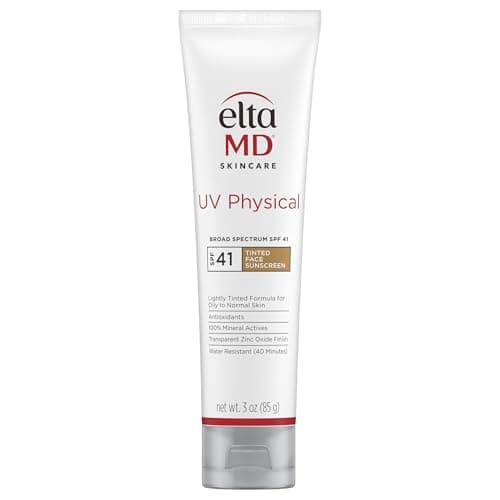 EltaMD UV Physical Tinted Broad-Spectrum SPF 41Best overall · SPF 41 | Flushing skin that needs colour correction as well as SPF | $50.00 · View on Amazon #ad We earn from qualifying purchases · Price as of October 10, 2026 |
| 2 | 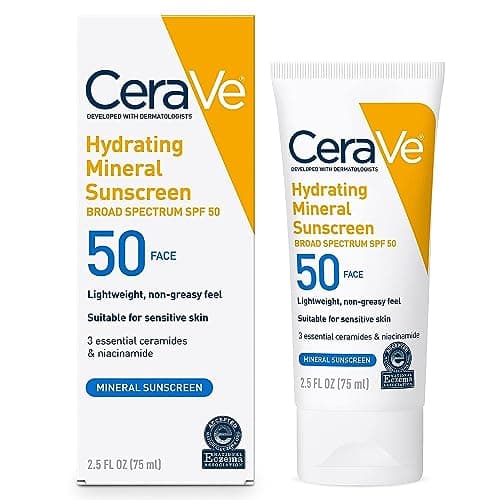 CeraVe Hydrating Mineral Sunscreen SPF 50 FaceBest drugstore option · SPF 50 | Daily wear on dry, reactive skin at a sane price | $13.97 · View on Amazon #ad We earn from qualifying purchases · Price as of October 10, 2026 |
| 3 |  Vanicream Mineral Sunscreen SPF 50+ for Sensitive SkinShortest list of irritants · SPF 50+ | Skin that has reacted to several sunscreens already | |
| 4 | 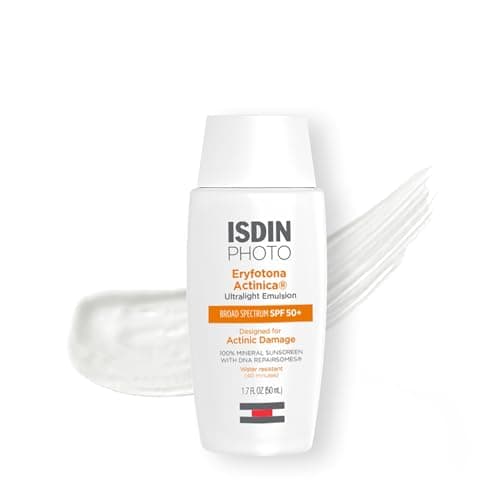 ISDIN Eryfotona Actinica Mineral Sunscreen SPF 50+Lightest texture · SPF 50+ | Skin that finds every mineral sunscreen too heavy | $46.00 · View on Amazon #ad We earn from qualifying purchases · Price as of October 10, 2026 |
| 5 | 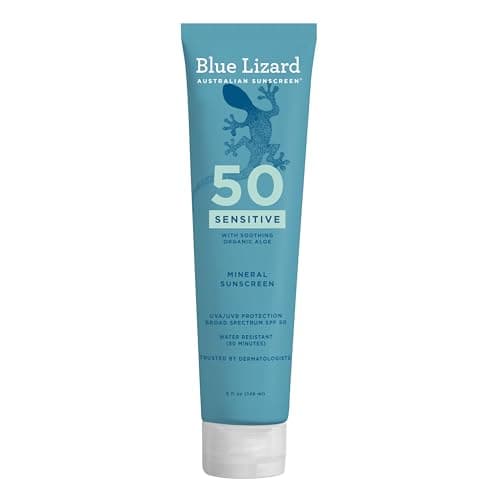 Blue Lizard Sensitive Mineral Sunscreen SPF 50+Best for outdoors and water · SPF 50+ | Long days outside, where 40 minutes is not enough | $12.91 · View on Amazon #ad We earn from qualifying purchases · Price as of October 10, 2026 |
Why rosacea narrows the field so much
Three things set rosacea skin apart from merely sensitive skin, and each one rules out a category of sunscreen.
- Heat is a trigger. Chemical filters convert UV into heat in the skin. That is a small amount of heat, but on skin that flushes from a warm room it is a reasonable thing to avoid — which is why mineral filters, which reflect and absorb at the surface, are the usual starting point.
- Friction is a trigger. A thick zinc paste that needs a minute of rubbing is working against you. Formulas that spread with light pressure matter more here than in any other category.
- The skin is already red. A white or grey cast over redness produces a mauve tone that most people dislike more than the redness. Iron-oxide tints correct it; untinted mineral sunscreen makes it worse.
What we looked for
- Mineral actives — zinc oxide, titanium dioxide, or both — with no chemical filter in the panel.
- No added fragrance, no dyes, and no essential oils. Fragrance is the single most common cause of a sunscreen reaction.
- No denatured alcohol high in the list, which can sting compromised skin.
- A tint where possible, for the colour correction and the visible-light protection iron oxides add.
- SPF 30 minimum and broad spectrum, matching the AAD's guidance. Our methodology.
Our picks in detail
01 · Best overall
EltaMD UV Physical Tinted Broad-Spectrum SPF 41
EltaMD · Read our EltaMD review
Mineral filters under an iron-oxide tint, fragrance-free, with 40 minutes of water resistance — it neutralises redness instead of greying it, and it goes on with light pressure rather than work.
- Actives:
- Zinc oxide and titanium dioxide, tinted with iron oxides
- SPF:
- SPF 41
- Water resistance:
- 40 minutes
- Reef status:
- Mineral filters only
- Best for:
- Flushing skin that needs colour correction as well as SPF
What works
- Tint corrects redness rather than adding a cast
- Mineral filters only, fragrance-free
- Spreads with minimal friction
The trade-off
- One universal tint
- Dermatology-counter pricing
#ad We earn from qualifying purchases · Price as of October 10, 2026
02 · Best drugstore option
CeraVe Hydrating Mineral Sunscreen SPF 50 Face
CeraVe · Read our CeraVe review
Fragrance-free mineral filters in a ceramide and hyaluronic acid base — it repairs the barrier while it protects, and it costs little enough to apply properly every day.
- Actives:
- Zinc oxide and titanium dioxide, with ceramides and hyaluronic acid
- SPF:
- SPF 50
- Water resistance:
- 40 minutes
- Reef status:
- Mineral filters only
- Best for:
- Daily wear on dry, reactive skin at a sane price
What works
- Ceramides support a compromised barrier
- Fragrance-free
- Inexpensive and widely stocked
The trade-off
- Untinted, so it can grey red skin
- 40 minutes of water resistance
#ad We earn from qualifying purchases · Price as of October 10, 2026
03 · Shortest list of irritants
Vanicream Mineral Sunscreen SPF 50+ for Sensitive Skin
Vanicream · Read our Vanicream review
No fragrance, no dyes, no botanical extracts, mineral-only actives and 80 minutes of water resistance — the fewest candidate triggers of anything here, with no performance compromise.
- Actives:
- Zinc oxide and titanium dioxide
- SPF:
- SPF 50+
- Water resistance:
- 80 minutes
- Reef status:
- Mineral filters only
- Best for:
- Skin that has reacted to several sunscreens already
What works
- No fragrance, dyes or botanical extracts
- 80-minute water resistance
- Built for reactive skin throughout
The trade-off
- Thick and slow to spread
- Visible cast
04 · Lightest texture
ISDIN Eryfotona Actinica Mineral Sunscreen SPF 50+
ISDIN
Zinc oxide as the sole filter in a fluid that absorbs at the surface rather than sitting on it — almost no friction to apply, which matters more on this skin than on any other.
- Actives:
- Zinc oxide as the sole active filter
- SPF:
- SPF 50+
- Water resistance:
- Not labeled water resistant
- Reef status:
- Zinc only
- Best for:
- Skin that finds every mineral sunscreen too heavy
What works
- Zinc-only
- Very light, minimal rubbing
- Fragrance-free
The trade-off
- Not labeled water resistant
- Expensive per ounce
#ad We earn from qualifying purchases · Price as of October 10, 2026
05 · Best for outdoors and water
Blue Lizard Sensitive Mineral Sunscreen SPF 50+
Blue Lizard · Read our Blue Lizard review
Fragrance-free mineral filters with the maximum 80 minutes of water resistance — the pick for a boat or a beach, where the gentler daily formulas wash off too soon.
- Actives:
- Zinc oxide and titanium dioxide
- SPF:
- SPF 50+
- Water resistance:
- 80 minutes
- Reef status:
- Mineral filters only; the Sensitive formula omits oxybenzone and octinoxate
- Best for:
- Long days outside, where 40 minutes is not enough
What works
- 80-minute water resistance
- Fragrance-free
- Mineral filters only
The trade-off
- Thicker than the daily picks
- Noticeable cast
#ad We earn from qualifying purchases · Price as of October 10, 2026
The picks compared
| Product | Actives | SPF | Fragrance | Tint |
|---|---|---|---|---|
| EltaMD UV Physical Tinted | Zinc oxide and titanium dioxide | SPF 41 | Fragrance-free | Iron-oxide tint |
| CeraVe Hydrating Mineral Face | Zinc oxide and titanium dioxide | SPF 50 | Fragrance-free | Untinted |
| Vanicream Mineral SPF 50+ | Zinc oxide and titanium dioxide | SPF 50+ | Fragrance-free, no dyes or botanicals | Untinted |
| ISDIN Eryfotona Actinica | Zinc oxide as sole filter | SPF 50+ | Fragrance-free | Untinted |
| Blue Lizard Sensitive Mineral SPF 50+ | Zinc oxide and titanium dioxide | SPF 50+ | Fragrance-free | Untinted |
Why a tint matters more here than anywhere else
A green-leaning or neutral iron-oxide tint does two jobs at once on rosacea-prone skin. It cancels the red tone optically, so a single product replaces sunscreen plus colour-correcting primer and halves the number of things being dragged across the skin. And iron oxides absorb visible light, which contributes to flushing and pigmentation in a way the UV filters alone do not address.
One honest limitation: tinted mineral sunscreens usually ship in one or two universal shades. On very fair or very deep skin the match can be imperfect. Tinted versus untinted sunscreen covers the trade-off, and is tinted sunscreen makeup? covers how much coverage to expect.
How to apply it without triggering a flush
- Moisturise first and let it absorb. Applying sunscreen onto dry, tight skin needs more pressure, and pressure is the thing to avoid.
- Press, do not rub. Tap the product on in sections with flat fingers or a damp sponge rather than massaging it in.
- Two thin layers beat one thick one. Mineral filters sit on the surface, so a second light pass evens out the film without more friction.
- Top up with a stick or a powder, not with another round of rubbing.
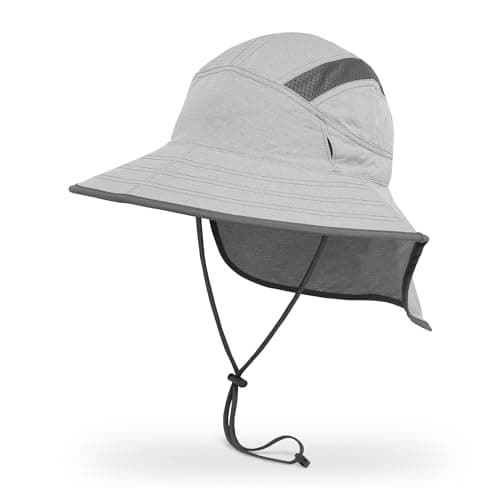
- Add a hat. A wide brim removes a large share of facial UV with no product and no friction at all.
What sunscreen cannot do for rosacea
Treat it. Sunscreen removes one commonly reported trigger; it is not a therapy, and a persistent flush, visible vessels or bumps are worth taking to a clinician who can tell rosacea from the several conditions that look like it. Nothing on this page is medical advice, and no sunscreen choice substitutes for a diagnosis.
The highest-leverage change alongside it is shade and a brim. The best sun hats covers the ones that actually shade a face rather than decorating it.
Sources
- Sunscreen FAQs — American Academy of Dermatology
- Sunscreen: How to Help Protect Your Skin from the Sun — U.S. Food and Drug Administration
- Questions and Answers: FDA Requirements for Over-the-Counter Sunscreen Products — U.S. Food and Drug Administration
- Sunscreen — Skin Cancer Foundation
- About the NEA Seal of Acceptance — National Eczema Association
Frequently asked questions
What sunscreen is best for rosacea?
A fragrance-free mineral formula with an iron-oxide tint. EltaMD UV Physical Tinted SPF 41 is our pick, because it protects with zinc and titanium, adds no fragrance, spreads with light pressure and corrects redness instead of greying it.
Is mineral or chemical sunscreen better for rosacea?
Mineral is the usual starting point. Chemical filters convert UV into heat in the skin, and heat is a commonly reported rosacea trigger, so mineral filters that work at the surface are the lower-risk choice.
Can sunscreen make rosacea worse?
The wrong sunscreen can. Fragrance, essential oils, denatured alcohol high in the ingredient list and formulas that need vigorous rubbing are the usual culprits, along with untinted mineral sunscreen that turns red skin mauve.
What SPF should I use with rosacea?
SPF 30 as a minimum and broad spectrum, which is the general recommendation for everyone. SPF 50 is sensible if you are outdoors for long stretches, mainly because it buffers the thin application almost everyone does.
Does tinted sunscreen help rosacea redness?
Visually, yes — iron-oxide pigments cancel red tones, so one product does the job of sunscreen plus a colour-correcting primer. Iron oxides also absorb visible light, which the UV filters do not.
Read next
Face & Tinted SPF
The best face sunscreen for sensitive skin
Fragrance-free mineral face formulas for reactive skin, and the ingredient groups that trigger most reactions.
Reef-Safe & Ingredients
The best sunscreen for sensitive skin
Fragrance-free mineral formulas for reactive skin, chosen on the inactive ingredients.
Face & Tinted SPF
The best tinted sunscreens
Tinted mineral formulas that cancel the cast and add visible-light protection, across every finish.
Face & Tinted SPF
Iron oxides and visible light
Why iron oxides protect as well as tint, and what that means for melasma and hyperpigmentation.
Sun Protective Gear
The best sun hats
Wide-brim UPF 50+ hats for adults and children, and why a baseball cap is not enough.