Sun Safety
The best SPF 30 sunscreens
SPF 30 is the floor the guidance actually names. Applied properly it is enough for most days — and the dose is the part that decides.
Disclosure: Spf & Shore earns commission from qualifying purchases made through links on this page, at no extra cost to you. It does not change which products we recommend. Read the full disclosure.
Our overall pick is Badger Mineral Sunscreen Cream SPF 30: 18.75% uncoated zinc oxide as the only active filter, published in full on its OTC drug label, in a base with no added fragrance. It is the SPF 30 to buy if you read panels, and the trade-off is on the label too — 40 minutes of water resistance rather than 80, in a 2.9 ounce tube.
SPF 30 is not a budget version of SPF 50. It is the number the American Academy of Dermatology names as its minimum, and the point at which a sunscreen filters roughly 97% of UVB. What decides whether you actually get that is the layer you put on, not the number on the tube — which is also why the best sunscreens under $15 is a protection page as much as a value one.
Quick picks
Tap any row to read the full write-up below.
| # | Product | Best for | Price |
|---|---|---|---|
| 1 | 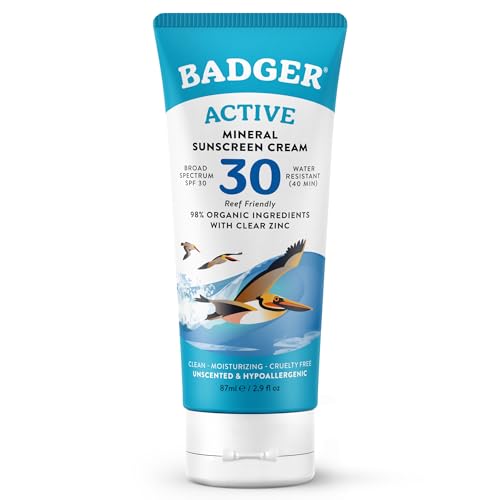 Badger Mineral Sunscreen Cream SPF 30Best overall · SPF 30 | Anyone who reads the panel and wants the shortest honest ingredient list at SPF 30 | $16.99 · View on Amazon #ad We earn from qualifying purchases · Price as of November 23, 2026 |
| 2 | 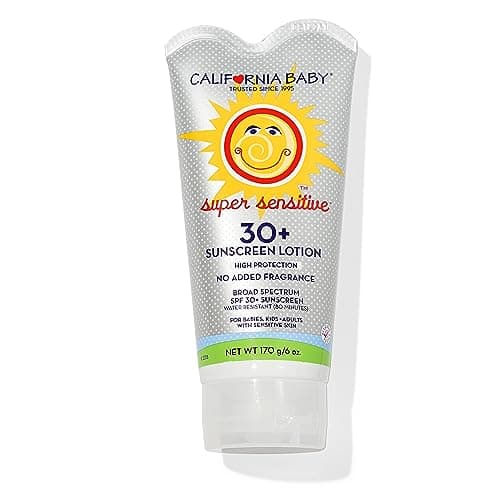 California Baby Super Sensitive Broad Spectrum SPF 30+Best for water and sweat · SPF 30+ | Pool afternoons, reactive skin and small children | $47.99 · View on Amazon #ad We earn from qualifying purchases · Price as of November 23, 2026 |
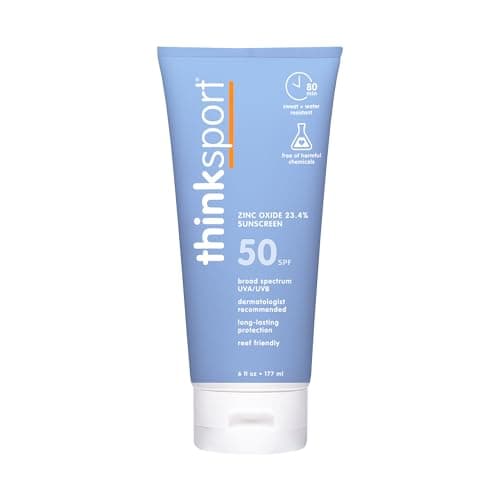
| 3 | 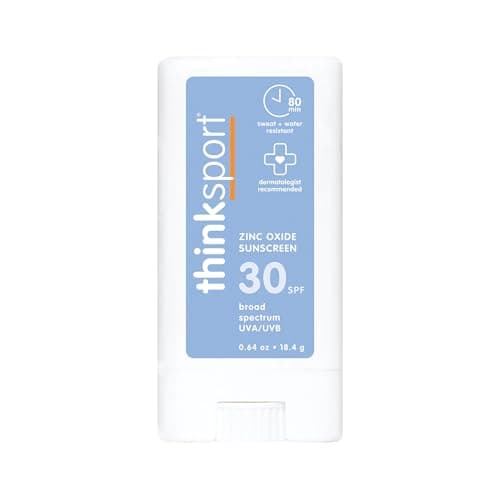 Thinksport Sunscreen Stick SPF 30+Best for sport and reapplication · SPF 30+ | Faces, ears and necks on long, sweaty days outside | |
| 4 | 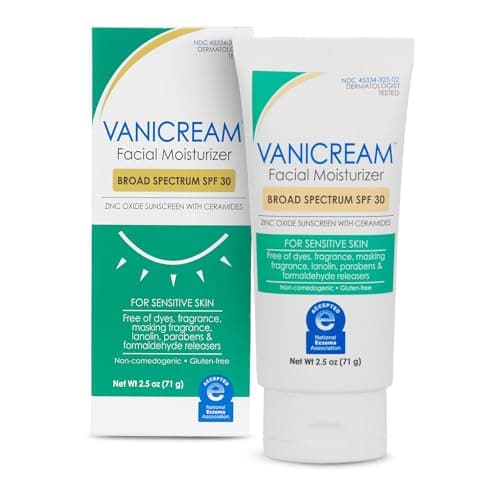 Vanicream Facial Moisturizer SPF 30Best everyday face SPF 30 · SPF 30 | A daily face layer on sensitive, reactive or barrier-compromised skin | $13.97 · View on Amazon #ad We earn from qualifying purchases · Price as of November 23, 2026 |
| 5 |  Supergoop! Mineral Sheerscreen SPF 30Best sheer finish · SPF 30 | Faces that will not wear a flat white mineral layer | |
| 6 | 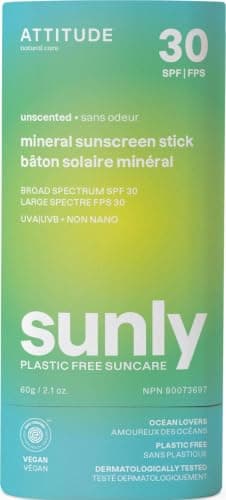 ATTITUDE Mineral Sunscreen Stick SPF 30 UnscentedBest value stick · SPF 30 | Keeping one in every bag, car and jacket pocket | $19.17 · View on Amazon #ad We earn from qualifying purchases · Price as of November 23, 2026 |
| 7 | 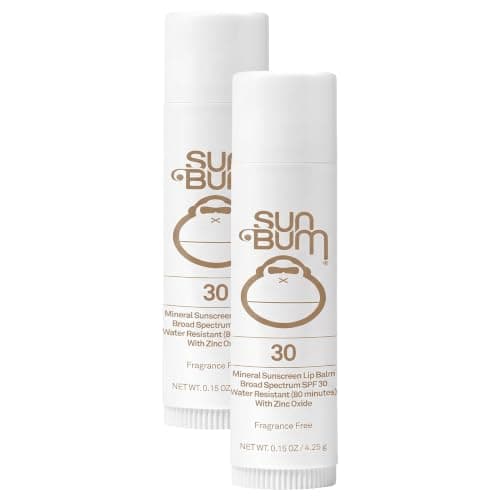 Sun Bum Mineral SPF 30 Sunscreen Lip BalmBest for lips · SPF 30 | The one place a body sunscreen never properly covers | $7.98 · View on Amazon #ad We earn from qualifying purchases · Price as of November 23, 2026 |
What SPF 30 actually buys you
SPF is a ratio measured against sunburn, which is predominantly a UVB effect. Applied at the laboratory test dose, an SPF 30 lets through about one part in thirty of the UVB that would otherwise reach skin — roughly 97% filtered. SPF 50 is roughly 98%. The gap is real but small, and both sit well above the SPF 15 floor the FDA requires before a sunscreen may claim it reduces the risk of skin cancer and early skin aging when used as directed.
The number is also only half of the label. Broad spectrum is the separate claim, and it is the one that covers UVA — the part of the spectrum most implicated in photoaging. An SPF 30 without the broad-spectrum wording is not the product you want at any price. What broad spectrum means covers the test behind the phrase.
Then why does anyone buy SPF 50?
Because nobody applies the test dose. Real-world application is routinely a quarter to a half of the two milligrams per square centimeter SPF is measured at, and protection falls faster than the amount you skip. A higher label number buys back some of that margin, which is the honest case for SPF 50 and the reason our SPF 50 roundup exists.
So here is the tension, stated plainly rather than hidden: SPF 30 is enough if you apply enough, and SPF 50 is more forgiving if you do not. The useful question is not which number wins in a laboratory, but which bottle you will put on thickly and reapply. A pleasant SPF 30 used generously beats a tacky SPF 50 spread thin, and the reverse is true as well. SPF 30 versus SPF 50 works through the arithmetic on both sides.
How we chose these
Broad spectrum and a labeled SPF of 30 or 30+ was the entry requirement — nothing here is an SPF 40 or 50 rounded down to fit the page. After that we read the actives panel for every product on the brand's own US listing or on its published OTC drug label, preferred zinc-forward and fragrance-free formulas, and confirmed each one had a working add-to-cart on the day this page was written.
We do not run a laboratory and we do not wear-test, so there are no scores here and no claim that we rubbed these into anybody's arm. Where an independent organization has tested — Consumer Reports lab-verifies label SPF — we name them rather than restating their findings as our own. Our methodology sets out the whole process.
One finding is worth stating up front, because it shaped this list: the SPF 30 shelf has thinned out at the body end. Mineral body lotions have largely standardized on SPF 50 and 50+, so the honest SPF 30 field is weighted toward faces, sticks, sensitive-skin creams and lips. Where a brand's SPF 30 exists only as a face product, we say so rather than implying it will cover a family at the beach.
What is actually in these seven
| Product | Active filters | SPF | Water resistance |
|---|---|---|---|
| Badger Mineral Sunscreen Cream | 18.75% uncoated zinc oxide | SPF 30 | 40 minutes |
| California Baby Super Sensitive | Non-nano titanium dioxide | SPF 30+ | 80 minutes |
| Thinksport Sunscreen Stick | 24% zinc oxide | SPF 30+ | 80 minutes |
| Vanicream Facial Moisturizer SPF 30 | Zinc oxide | SPF 30 | Not claimed |
| Supergoop! Mineral Sheerscreen | Zinc oxide and titanium dioxide, lightly tinted | SPF 30 | 40 minutes |
| ATTITUDE Mineral Sunscreen Stick | Non-nano zinc oxide | SPF 30 | 80 minutes |
| Sun Bum Mineral Lip Balm | 8% zinc oxide | SPF 30 | 80 minutes |
Every pick here is a mineral formula. That is not a rule we imposed on the category — it is what the SPF 30 shelf looks like once you filter for published panels and fragrance-free bases. If you want chemical filters at this SPF they exist, and you will need to read the panel yourself; how to read a sunscreen label is the short version of how.
Our picks in detail
01 · Best overall
Badger Mineral Sunscreen Cream SPF 30
Badger · Read our Badger review
18.75% uncoated zinc oxide as the sole active filter, broad spectrum SPF 30, 40 minutes of water resistance, in a base of four inactive ingredients with no added fragrance. The whole formula is published on a public OTC drug label, so none of that is a marketing claim.
- Actives:
- 18.75% uncoated zinc oxide, the sole active filter on its OTC drug label
- SPF:
- SPF 30
- Water resistance:
- 40 minutes
- Reef status:
- Zinc only — no oxybenzone, octinoxate or octocrylene
- Best for:
- Anyone who reads the panel and wants the shortest honest ingredient list at SPF 30
What works
- Zinc-only actives at a published 18.75%, verifiable on its OTC drug label
- Four inactive ingredients and no added fragrance
- Unrestricted under every current reef-protection law
The trade-off
- 40 minutes of water resistance, not 80 — the wrong pick for a swimming day
- 2.9 ounces, which is under three full-body applications
- A thick, waxy cream that needs warming between the hands and leaves a visible cast
#ad We earn from qualifying purchases · Price as of November 23, 2026
02 · Best for water and sweat
California Baby Super Sensitive Broad Spectrum SPF 30+
California Baby
Non-nano titanium dioxide with the maximum 80 minutes of water resistance a US label may claim, unscented, in a 6 ounce tube — the only pick here you can realistically apply to a whole family and still have product left.
- Actives:
- Non-nano titanium dioxide
- SPF:
- SPF 30+
- Water resistance:
- 80 minutes
- Reef status:
- Mineral filters only
- Best for:
- Pool afternoons, reactive skin and small children
What works
- 80 minutes of water resistance, the maximum permitted claim
- 6 ounces, by far the most product on this page
- Unscented and formulated for sensitive and infant skin
The trade-off
- Among the most expensive sunscreens here per ounce
- Titanium-only, so check the broad-spectrum wording is on the tube you buy
- Thick and slow to rub in, with a heavy white cast while you do it
#ad We earn from qualifying purchases · Price as of November 23, 2026
03 · Best for sport and reapplication
Thinksport Sunscreen Stick SPF 30+
Thinksport · Read our Thinksport review
24% zinc oxide — the heaviest mineral load on this page — with 80 minutes of water resistance in a pocketable stick that clears airport security. It is the SPF 30 you will actually reapply at hour two, which is worth more than a higher number left in a bag.
- Actives:
- 24% zinc oxide
- SPF:
- SPF 30+
- Water resistance:
- 80 minutes
- Reef status:
- Zinc only — no oxybenzone, octinoxate or octocrylene
- Best for:
- Faces, ears and necks on long, sweaty days outside
What works
- 24% zinc oxide and 80 minutes of water resistance
- Fragrance-free, with no chemical filters
- A solid, so nothing leaks and no liquids limit applies in carry-on
The trade-off
- A stick is a precision tool — covering a body with it is slow and expensive
- The heaviest cast here, for the same reason it protects well
- Small tube, so proper four-pass application empties it quickly
04 · Best everyday face SPF 30
Vanicream Facial Moisturizer SPF 30
Vanicream · Read our Vanicream review
Zinc oxide in a Vanicream base built without fragrance, dyes, lanolin, parabens or formaldehyde releasers — a moisturizer and an SPF 30 in one step, which is the version of this habit people keep.
- Actives:
- Zinc oxide, in a base Vanicream formulates without common irritants
- SPF:
- SPF 30
- Water resistance:
- Not claimed — a daily facial moisturizer, not a water-resistant sunscreen
- Reef status:
- Zinc only — no oxybenzone, octinoxate or octocrylene
- Best for:
- A daily face layer on sensitive, reactive or barrier-compromised skin
What works
- Fragrance-free and free of the usual reactive-skin triggers
- Doubles as the morning moisturizer, so it is one step rather than two
- Widely stocked in ordinary pharmacies
The trade-off
- No water-resistance claim at all — a daily face product, not a beach one
- Not enough product in the tube to use below the neck
- A soft cast that needs a minute of blending on medium and deep tones
#ad We earn from qualifying purchases · Price as of November 23, 2026
05 · Best sheer finish
Supergoop! Mineral Sheerscreen SPF 30
Supergoop!
Zinc oxide and titanium dioxide with a light universal tint, which is the formulation answer to mineral cast: tinting counteracts the white rather than pretending it is not there. Forty minutes of water resistance.
- Actives:
- Zinc oxide and titanium dioxide, lightly tinted
- SPF:
- SPF 30
- Water resistance:
- 40 minutes
- Reef status:
- Mineral filters only
- Best for:
- Faces that will not wear a flat white mineral layer
What works
- The lightest finish of the mineral picks here
- A light tint that evens out the cast instead of hiding from it
- Suits oily and combination skin better than the heavier creams
The trade-off
- 40 minutes of water resistance only
- A single universal tint cannot flatter every skin tone
- Priced like prestige skincare, in a small tube
06 · Best value stick
ATTITUDE Mineral Sunscreen Stick SPF 30 Unscented
ATTITUDE
Non-nano zinc oxide, unscented, with 80 minutes of water resistance in a 2.1 ounce stick — a plastic-free tube at a price low enough that owning three of them is reasonable, which is the actual trick with sticks.
- Actives:
- Non-nano zinc oxide
- SPF:
- SPF 30
- Water resistance:
- 80 minutes
- Reef status:
- Zinc only
- Best for:
- Keeping one in every bag, car and jacket pocket
What works
- 80 minutes of water resistance at the lowest price on this page
- Unscented, non-nano zinc, in a paperboard tube
- Cheap enough to duplicate so one is always within reach
The trade-off
- Drags on dry skin until the wax warms up
- Visible cast that needs blending with fingertips
- Paperboard packaging softens if it gets wet in a bag
#ad We earn from qualifying purchases · Price as of November 23, 2026
07 · Best for lips
Sun Bum Mineral SPF 30 Sunscreen Lip Balm
Sun Bum · Read our Sun Bum review
8% zinc oxide at SPF 30 with 80 minutes of water resistance in a lip balm. Lips have almost no melanin and burn readily, and no amount of face sunscreen fixes that, because nobody puts lotion on their mouth.
- Actives:
- 8% zinc oxide
- SPF:
- SPF 30
- Water resistance:
- 80 minutes
- Reef status:
- Zinc only — no oxybenzone or octinoxate
- Best for:
- The one place a body sunscreen never properly covers
What works
- SPF 30 with the maximum 80-minute water-resistance claim
- Zinc-only actives in a balm pleasant enough to reapply
- Sold almost everywhere, so replacing a lost one is easy
The trade-off
- Leaves a faint white film on the lips, as any zinc balm does
- Comes off with every drink and every meal
- Solves one small area and nothing else
#ad We earn from qualifying purchases · Price as of November 23, 2026
The dose, which is the whole argument
An SPF 30 applied at the tested dose outperforms an SPF 50 applied at half of it. That sentence is why this page exists, and it is an instruction rather than a reassurance: the tested dose is more product than almost anyone uses.
- A full ounce for an adult body — about a shot glass. If a 3 ounce tube is lasting your household a fortnight of beach days, the tube is not the problem.
- A quarter teaspoon for a face and neck, which looks like two full strips along your index and middle fingers.
- Fifteen minutes before you go out, so the film has set rather than being rubbed straight into a towel.
- Every two hours, and immediately after swimming or toweling off, whatever the water-resistance claim says.
- The places people skip: ears, the part in your hair, the back of the neck, the tops of the feet, and lips, which need their own product.
How much sunscreen to apply has the amounts by body area, and how long sunscreen lasts on skin covers what actually ends a layer's working life.
Water resistance is the number to check after SPF
A US label may claim 40 minutes or 80 minutes of water resistance and nothing else. Those are the only two tested durations permitted, and the words waterproof and sweatproof were banned outright in 2012. Several of the best-formulated SPF 30 creams on sale claim 40 minutes rather than 80 — fine for a park afternoon, the wrong tool for a day in a pool.
That is the most common mismatch at this SPF: a thoughtful, short-ingredient SPF 30 bought for a swimming holiday. If the day involves water, buy the 80-minute claim or buy a higher SPF. Water-resistant sunscreen explained covers how the clock is measured and when it stops.
When SPF 30 is not the number you want
- A full day in open sun or on water, where reapplication slips and reflected UV adds up. The best sunscreens for swimming are chosen for exactly that day.
- At altitude or on snow, where UV intensity climbs and reflection reaches the places you did not cover — and on a multi-day trip, where resupply is impossible. The best sunscreen for backpacking sizes a kit for that.
- If you take a photosensitizing medication — some antibiotics, retinoids and diuretics among them — which is a conversation with a pharmacist rather than a sunscreen-aisle decision.
- If you have a history of skin cancer or precancerous lesions, where the standing clinical advice is the highest practical SPF plus shade and clothing, not the minimum.
- If you know you under-apply. Most people do, and SPF 50 is the cheapest available insurance against your own habits.
What SPF 30 costs, honestly
There is a comfortable assumption that SPF 30 is the cheap option. It is not reliably true. Short-ingredient mineral creams at SPF 30 are often priced like specialty skincare, while drugstore SPF 50 lotions sell in large bottles for less per ounce — so a household buying on price frequently ends up at the higher number anyway. The best drugstore mineral sunscreens covers that end of the aisle.
Compare by the ounce rather than by the sticker, and treat the per-ounce figure as a protection decision: the bottle that feels expensive is the one you will ration, and rationing is how a laboratory SPF 30 becomes a real-world SPF 10.
Mineral at SPF 30, and the cast question
Every pick here is zinc or titanium led — two of them use both minerals, which sunscreens with zinc oxide and titanium dioxide explains — and all of them leave something visible before they are worked in. That is the filter doing its job rather than a formulation failure — why mineral sunscreen leaves a white cast explains the physics. On light skin a well-blended layer settles within a minute; on medium and deep tones it needs working in deliberately, and on the deepest tones a lightly tinted formula is the honest answer. Tinted sunscreen for deeper skin tones covers those in full.
What we will not do is tell you an 18.75% zinc cream disappears on everybody. It does not, and the brands implying otherwise are selling the packaging.
Sources
- Sunscreen: How to Help Protect Your Skin from the Sun — U.S. Food and Drug Administration
- Questions and Answers: FDA Requirements for Over-the-Counter Sunscreen Products — U.S. Food and Drug Administration
- Sunscreen FAQs — American Academy of Dermatology
- Sunscreen ratings and lab testing — Consumer Reports
- 21 CFR 201.327 — Over-the-counter sunscreen drug products; required labeling — Legal Information Institute, Cornell Law School
- Badger Active SPF 30 Mineral Sunscreen (zinc oxide) cream — OTC drug label — DailyMed / U.S. National Library of Medicine
Frequently asked questions
Is SPF 30 enough?
For most days, yes — SPF 30 filters about 97% of UVB and is the minimum the American Academy of Dermatology recommends. The condition attached is the dose: SPF is measured at a laboratory amount most people never apply, so an SPF 30 only performs like one if you use roughly an ounce for an adult body and reapply every two hours.
What is the best SPF 30 sunscreen?
Badger Mineral Sunscreen Cream SPF 30 is our pick: 18.75% uncoated zinc oxide as the only active filter, published on its OTC drug label, with no added fragrance. For a water day, California Baby Super Sensitive SPF 30+ is the better choice because it claims the maximum 80 minutes of water resistance in a 6 ounce tube.
Is SPF 30 or SPF 50 better?
SPF 50 filters about one percentage point more UVB and, more usefully, gives you a margin for under-applying. SPF 30 applied properly beats SPF 50 applied thinly. Choose SPF 30 as a floor for ordinary days and SPF 50 for long exposure, water, altitude, or if you know you apply sparingly.
Is SPF 30 enough for the beach?
Only with discipline. A beach day combines hours of exposure, water and reflected UV off sand, which is exactly where reapplication slips. If you will be in and out of water, check that the water-resistance claim says 80 minutes rather than 40, and consider SPF 50 instead.
How much SPF 30 sunscreen should I use?
About one ounce — a shot glass — for an adult body, and about a quarter teaspoon for face and neck, applied fifteen minutes before going out and reapplied every two hours. Protection falls faster than the amount you skip, so half the dose does not give you half the protection.
Why are most mineral sunscreens SPF 50 rather than SPF 30?
Because the higher number sells, and because it buys a margin against under-application. The practical consequence for a shopper is that the SPF 30 field is now weighted toward face products, sticks, sensitive-skin creams and lip balms, with fewer large body lotions than there were a few years ago.
Read next
Sun Safety
SPF 30 vs SPF 50
What the numbers actually mean, why the gap looks different depending on framing, and which to buy.
Sun Safety
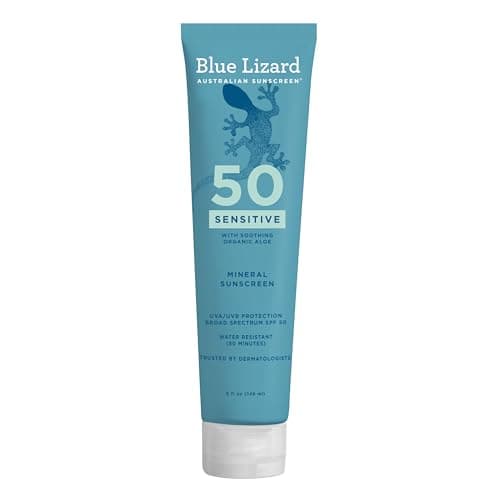
The best SPF 50 sunscreens
The SPF 50 and 50+ sunscreens worth buying, and the real reason the higher number helps: it covers the dose you actually apply.
Sun Safety
How much sunscreen to apply
The measures by body area, and why under-application costs more protection than it seems.
Mineral Sunscreen
The best mineral sunscreens
Zinc-only picks for faces, bodies and kids, chosen on actives and water resistance rather than packaging.
Sun Safety
What water-resistant sunscreen actually means
What the 40 and 80-minute claims measure, why toweling ends them, and how to plan a pool day around it.
Reviews
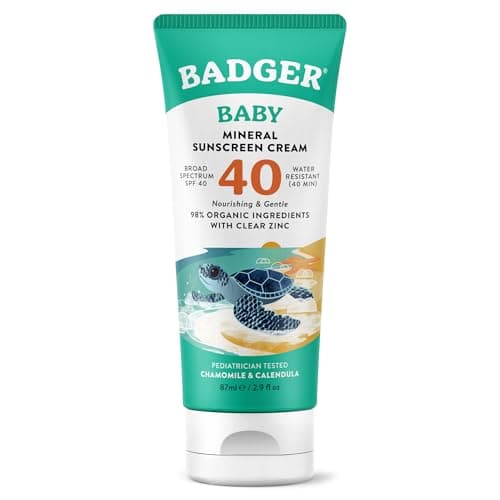
Badger sunscreen review
Published zinc concentrations and very short ingredient lists, against a thick texture and 40-minute water resistance.