Sun Safety
The best sunscreen for backpacking
Five days out, the rules change. No sink, no spare bottle, and every gram on your back — here is the kit that still protects you on day four.
Disclosure: Spf & Shore earns commission from qualifying purchases made through links on this page, at no extra cost to you. It does not change which products we recommend. Read the full disclosure.
Our overall pick is the Neutrogena Ultra Sheer Face & Body Mineral Stick SPF 50: 21.6% zinc oxide, 80 minutes of water resistance, and 1.5 ounces of product in a solid that cannot leak into a sleeping bag. It is the most protection per gram carried of anything here, and it is stocked in ordinary drugstores, so a trail-town resupply is realistic.
Backpacking is not a longer day hike, and the sun problem is not the same one. There is no sink to wash your hands, no second bottle in a car, and everything you apply on day four has to have been carried since day one. The real answer on a multi-day trip is to cover most of your skin with fabric and use sunscreen on what is left — the arithmetic below is why.
Quick picks
Tap any row to read the full write-up below.
| # | Product | Best for | Price |
|---|---|---|---|
| 1 | 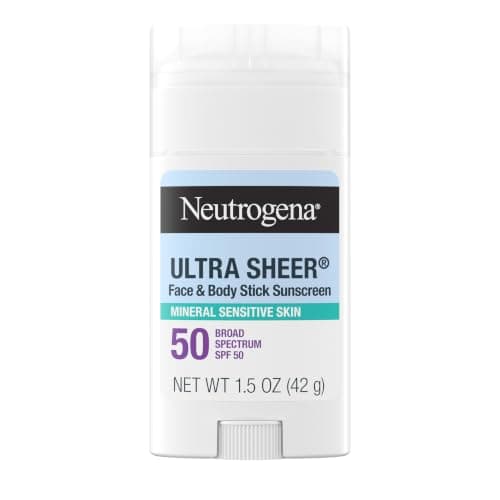 Neutrogena Ultra Sheer Face & Body Mineral Sunscreen Stick SPF 50Best overall · SPF 50 | The one sunscreen to carry if you carry only one | $15.00 · View on Amazon #ad We earn from qualifying purchases · Price as of November 23, 2026 |
| 2 | 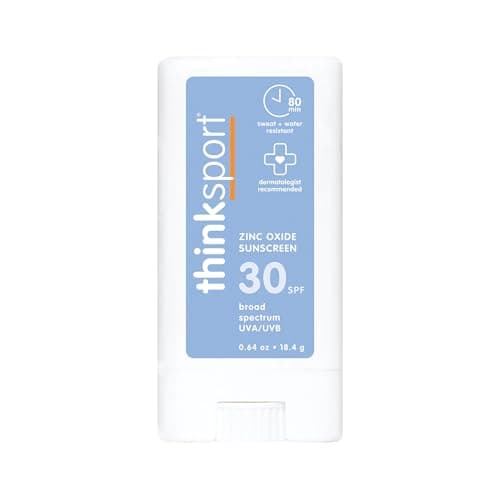 Thinksport Sunscreen Stick SPF 30+Best for sweat · SPF 30+ | Hot, exposed days with a pack strap rubbing at your neck | |
| 3 | 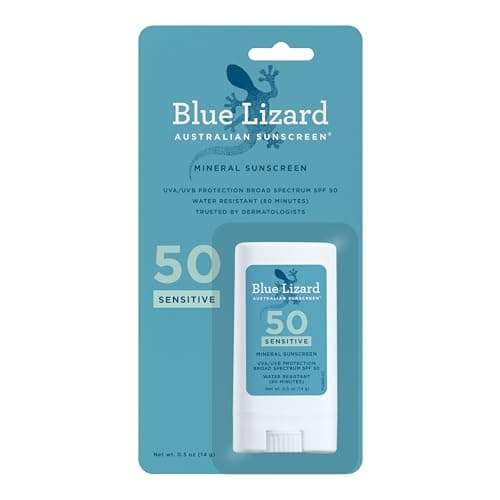 Blue Lizard Sensitive Mineral Sunscreen Stick SPF 50+Best spare · SPF 50+ | The redundancy that lives in a different pocket from your main stick | $8.77 · View on Amazon #ad We earn from qualifying purchases · Price as of November 23, 2026 |
| 4 | 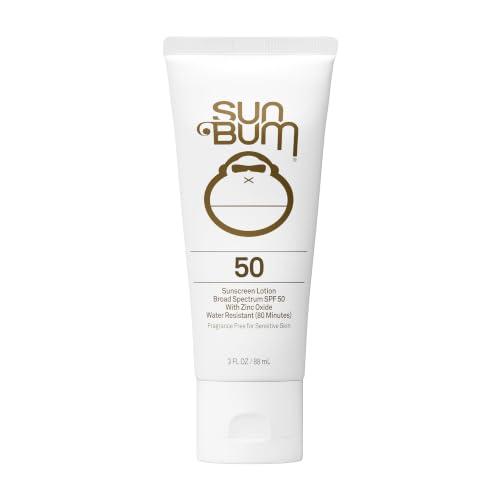 Sun Bum Mineral Sunscreen Lotion SPF 50Best small lotion · SPF 50 | Day-one legs, forearms and the tops of the feet | $15.97 · View on Amazon #ad We earn from qualifying purchases · Price as of November 23, 2026 |
| 5 | 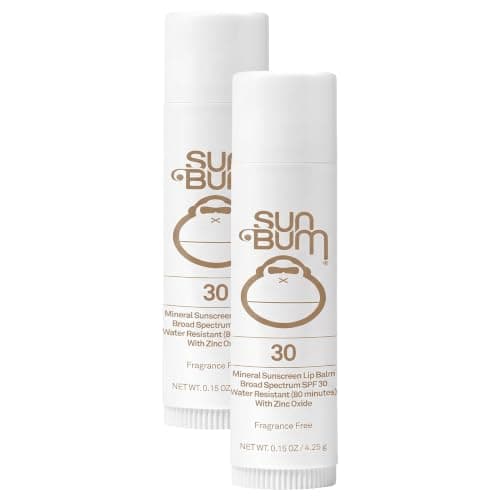 Sun Bum Mineral SPF 30 Sunscreen Lip BalmBest for lips · SPF 30 | The first place that burns at altitude and on water | $7.98 · View on Amazon #ad We earn from qualifying purchases · Price as of November 23, 2026 |
| 6 | 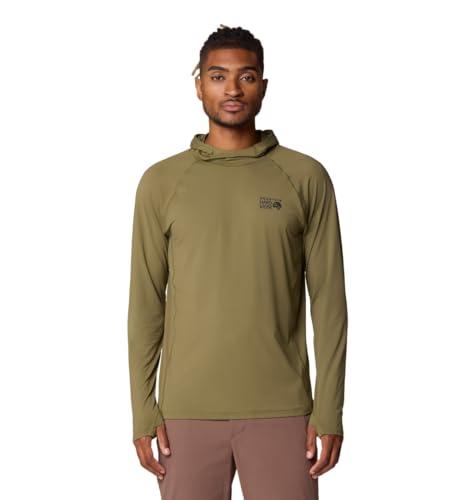 Mountain Hardwear Crater Lake Hoody UPF 50Best single upgrade · UPF 50 | Replacing most of the sunscreen you would otherwise carry | $63.75 · View on Amazon #ad We earn from qualifying purchases · Price as of November 23, 2026 |
| 7 | 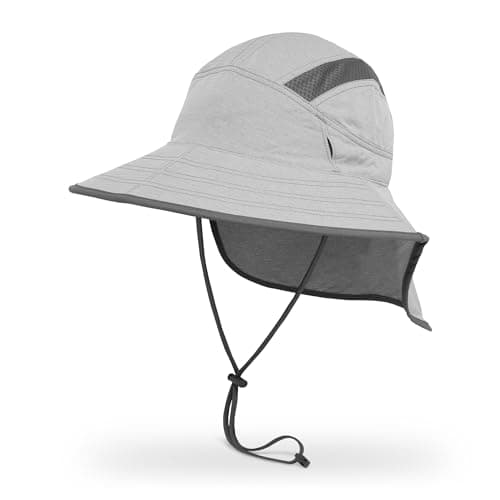 Sunday Afternoons Ultra Adventure Hat UPF 50+Best hat · UPF 50+ | Ears and the back of the neck, which nobody reapplies | $60.00 · View on Amazon #ad We earn from qualifying purchases · Price as of November 23, 2026 |
| 8 | 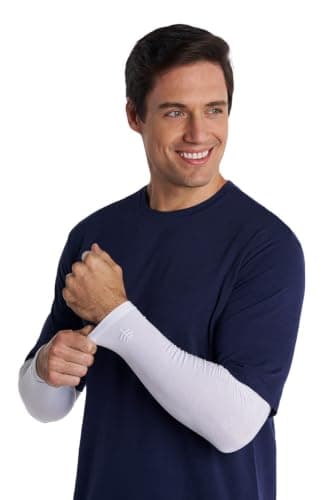 Coolibar Sun Arm Sleeves UPF 50+Best for warm days · UPF 50+ | Trips where a long-sleeve shirt is too hot to wear all day | $32.00 · View on Amazon #ad We earn from qualifying purchases · Price as of November 23, 2026 |
The weight arithmetic nobody does
A full-dose adult body application is about one ounce of sunscreen. Three applications a day across a five-day trip is fifteen ounces — getting on for a pound of product, before the container. Nobody carries that, which means every backpacker is under-applying by a wide margin, every trip, by necessity rather than carelessness.
Once you accept the arithmetic, the planning changes. You are not choosing a sunscreen to cover your whole body three times a day for five days. You are choosing a small amount of sunscreen for the skin that fabric cannot cover, and then choosing fabric for everything else. That is the difference between this page and the best sunscreen for hiking, which is written for a day out and back with the car at the end.
What changes when you cannot wash
- No sink. Greasy palms stay greasy. They transfer to trekking pole grips, a phone screen, a map and the inside of your sunglasses, and there is nothing to wipe them on but your own clothing.
- No rinse at night. Mineral sunscreen sits on the surface of the skin, and after a day it is carrying trail dust, salt and sweat. Rubbing a fresh layer over that in the morning is the real reapplication problem on day three.
- Liquids leak. A squeeze bottle in a pack gets compressed, heated and carried over passes. A split bottle is not just lost sunscreen; it is a sleeping bag with sunscreen in it.
- Nothing gets replaced. Drop a stick on day two and you have no sunscreen for three days. Redundancy matters more than it does anywhere else.
- Every gram is carried. A 5 ounce family bottle weighs more than a down jacket's worth of warmth. That is a real trade, not a notional one.
What we looked for
- Solid formats first. Sticks cannot leak, need no hand-washing afterward, and are not counted against the liquid allowance if you fly to the trailhead.
- Product per gram carried. A 1.5 ounce stick and a 0.47 ounce stick weigh about the same on the shelf and do very different amounts of work on a trip.
- 80 minutes of water resistance rather than 40, because sweat under a pack strap moves a film faster than swimming does.
- Zinc-forward, fragrance-free actives, read off each brand's own US listing or its published OTC drug label.
- UPF fabric that earns its weight, because a hooded sun shirt replaces reapplication on the largest area of skin you have.
- Resupply reality — whether you could buy it again in a small town with one pharmacy.
We do not run a laboratory and we do not field-test, so there are no durability scores here. Label facts come from the brand or the OTC drug label; where an independent organization has tested, we name them. Our methodology sets out the whole process.
The kit compared
| Item | Protection | Water resistance | Why it is in the pack |
|---|---|---|---|
| Neutrogena Ultra Sheer Face & Body Mineral Stick | 21.6% zinc oxide, SPF 50 | 80 minutes | The most product per stick, and usable below the neck |
| Thinksport Sunscreen Stick | 24% zinc oxide, SPF 30+ | 80 minutes | Heaviest zinc load, travel-sized, the sweat pick |
| Blue Lizard Sensitive Mineral Stick | 20% zinc oxide, SPF 50+ | 80 minutes | Cheap enough to carry as the spare |
| Sun Bum Mineral SPF 50 Lotion, 3 oz | Zinc oxide and titanium dioxide, SPF 50 | 80 minutes | Day-one legs, arms and feet, before the shirt goes on |
| Sun Bum Mineral Lip Balm | 8% zinc oxide, SPF 30 | 80 minutes | Lips, which burn first at altitude |
| Mountain Hardwear Crater Lake Hoody | UPF 50 knit, hood and thumbholes | Quick-dry | Removes the torso, arms and back of the hands from the job |
| Sunday Afternoons Ultra Adventure Hat | UPF 50+ crown with a neck cape | Quick-dry | Covers the ears and the back of the neck, which nobody reapplies |
| Coolibar Sun Arm Sleeves | UPF 50+ knit sleeve | Quick-dry | The t-shirt compromise — sun cover you can strip in a minute |
Our picks in detail
01 · Best overall
Neutrogena Ultra Sheer Face & Body Mineral Sunscreen Stick SPF 50
Neutrogena
21.6% zinc oxide with 80 minutes of water resistance in a 1.5 ounce tube — the most product of any stick we would recommend, and the only one wide enough to be sensible on forearms and the tops of the feet as well as a face. Its OTC drug label is published in full, and it is stocked in ordinary drugstores, which makes a mid-trip resupply realistic.
- Actives:
- 21.6% zinc oxide
- SPF:
- SPF 50
- Water resistance:
- 80 minutes
- Reef status:
- Zinc only — no oxybenzone, octinoxate or octocrylene
- Best for:
- The one sunscreen to carry if you carry only one
What works
- 1.5 ounces, the most product per stick in this kit
- Zinc-only actives published on a public OTC drug label
- Easy to replace in a small-town pharmacy
The trade-off
- The wide format is clumsy around eyes compared with a slim face stick
- Still leaves a cast that needs blending, despite the no-white-cast marketing
- Covering legs with it is slow enough that you will not do it twice
#ad We earn from qualifying purchases · Price as of November 23, 2026
02 · Best for sweat
Thinksport Sunscreen Stick SPF 30+
Thinksport · Read our Thinksport review
24% zinc oxide, the heaviest mineral load in this kit, with 80 minutes of water resistance in a genuinely travel-sized tube. Sweat under a strap shifts a film faster than swimming does, and this is the one we would reapply at a water stop.
- Actives:
- 24% zinc oxide
- SPF:
- SPF 30+
- Water resistance:
- 80 minutes
- Reef status:
- Zinc only — no oxybenzone, octinoxate or octocrylene
- Best for:
- Hot, exposed days with a pack strap rubbing at your neck
What works
- 24% zinc oxide and 80 minutes of water resistance
- Fragrance-free, with no chemical filters
- Small and light enough that carrying it as a second stick costs nothing
The trade-off
- SPF 30+ rather than 50, so less margin when you apply thinly — and on a trip you will
- The heaviest cast here, for the same reason it protects well
- The small tube empties quickly with proper four-pass application
03 · Best spare
Blue Lizard Sensitive Mineral Sunscreen Stick SPF 50+
Blue Lizard · Read our Blue Lizard review
20% zinc oxide and 80 minutes of water resistance, fragrance-free, at a price low enough that carrying a second one is an easy decision. Losing your only sunscreen on day two of a five-day trip is a real failure mode, and this is the cheapest fix for it.
- Actives:
- 20% zinc oxide
- SPF:
- SPF 50+
- Water resistance:
- 80 minutes
- Reef status:
- Zinc only — no oxybenzone, octinoxate or octocrylene
- Best for:
- The redundancy that lives in a different pocket from your main stick
What works
- Zinc-only actives at the lowest price in this kit
- Fragrance-free and formulated for sensitive skin
- Cheap enough to duplicate without thinking about it
The trade-off
- Smaller than the Neutrogena stick, so it runs out faster as a primary
- Noticeable cast until it is worked in
- Drags on wind-dried skin more than the sheerer face sticks
#ad We earn from qualifying purchases · Price as of November 23, 2026
04 · Best small lotion
Sun Bum Mineral Sunscreen Lotion SPF 50
Sun Bum
Zinc oxide and titanium dioxide at SPF 50 with 80 minutes of water resistance in a 3 ounce travel tube — enough for the skin a shirt does not cover, without carrying a family bottle over a pass.
- Actives:
- Zinc oxide and titanium dioxide
- SPF:
- SPF 50
- Water resistance:
- 80 minutes
- Reef status:
- Mineral filters only
- Best for:
- Day-one legs, forearms and the tops of the feet
What works
- 80 minutes of water resistance at SPF 50
- 3 ounces: real coverage for legs without real weight
- Mineral actives, so unrestricted wherever reef rules apply
The trade-off
- It is a liquid — bag it, because a split tube ruins more than itself
- Needs hands, and there is nowhere to wash them afterward
- A visible cast that trail dust sticks to by the afternoon
#ad We earn from qualifying purchases · Price as of November 23, 2026
05 · Best for lips
Sun Bum Mineral SPF 30 Sunscreen Lip Balm
Sun Bum · Read our Sun Bum review
8% zinc oxide at SPF 30 with 80 minutes of water resistance. Lips have almost no melanin, they take reflected light from below, and on a long trip they crack before anything else does — a balm you will actually reapply is worth more here than a higher number you will not.
- Actives:
- 8% zinc oxide
- SPF:
- SPF 30
- Water resistance:
- 80 minutes
- Reef status:
- Zinc only — no oxybenzone or octinoxate
- Best for:
- The first place that burns at altitude and on water
What works
- SPF 30 with the maximum 80-minute water-resistance claim
- Zinc-only actives in a balm that is pleasant to reapply
- Weighs nothing and fits in a hip-belt pocket
The trade-off
- Comes off with every drink and every meal
- Leaves a faint white film, as any zinc balm does
- Small enough to lose, which is an argument for two
#ad We earn from qualifying purchases · Price as of November 23, 2026
06 · Best single upgrade
Mountain Hardwear Crater Lake Hoody UPF 50
Mountain Hardwear
A UPF 50 hooded knit with thumbholes, which covers the torso, arms, the backs of the hands and — hood up — the neck and ears, for as long as you wear it. Over a five-day trip it weighs less than the sunscreen it replaces and needs nothing reapplied.
- Actives:
- UPF 50 knit with a hood and thumbholes
- SPF:
- UPF 50
- Water resistance:
- Quick-dry
- Reef status:
- Not applicable
- Best for:
- Replacing most of the sunscreen you would otherwise carry
What works
- UPF 50 across the largest area of skin you have
- Hood and thumbholes cover the neck, ears and the backs of the hands
- Quick-drying, so it is wearable through a sweaty climb
The trade-off
- Synthetic knits hold odor over several days without washing
- Costs more than every sunscreen on this page combined
- Hot in still, humid air, which is when you most want to take it off
#ad We earn from qualifying purchases · Price as of November 23, 2026
07 · Best hat
Sunday Afternoons Ultra Adventure Hat UPF 50+
Sunday Afternoons
A UPF 50+ crown with a wide brim and a neck cape — the cape is the part that matters, because the back of the neck is the area most exposed under a pack and least likely to get a second coat of anything.
- Actives:
- UPF 50+ crown with a neck cape
- SPF:
- UPF 50+
- Water resistance:
- Quick-dry
- Reef status:
- Not applicable
- Best for:
- Ears and the back of the neck, which nobody reapplies
What works
- Brim plus neck cape covers ears and the back of the neck together
- UPF 50+ rated and quick-drying
- Chin strap keeps it on in exposed wind, where you need it most
The trade-off
- It looks like a backpacking hat, and there is no getting around that
- Bulkier to stow than a cap
- Does nothing about UV reflected up off snow or water
#ad We earn from qualifying purchases · Price as of November 23, 2026
08 · Best for warm days
Coolibar Sun Arm Sleeves UPF 50+
Coolibar
UPF 50+ knit sleeves that give you long-sleeve coverage over a t-shirt and come off in under a minute when you drop into shade or a cool canyon. The compromise that keeps sun cover on when a full hoody would come off and stay off.
- Actives:
- UPF 50+ knit sleeve — the protection is the fabric, not a coating
- SPF:
- UPF 50+
- Water resistance:
- Quick-dry
- Reef status:
- Not applicable
- Best for:
- Trips where a long-sleeve shirt is too hot to wear all day
What works
- Full forearm and upper-arm coverage at UPF 50+
- On and off in seconds, so they get used rather than abandoned
- Pack down to almost nothing
The trade-off
- Leave a gap at the shoulder that a shirt sleeve has to cover
- Can slip down on thinner arms over a long day
- One more thing to lose at a lunch stop
#ad We earn from qualifying purchases · Price as of November 23, 2026
How much to actually carry
Here is the working rule we would plan a trip around. It assumes a hooded sun shirt and a brimmed hat are doing the heavy lifting, which is the only version of this that is honest about the weight.
- One 1.5 ounce stick as the primary. Face, ears, neck, the backs of the hands and the gap between a sock and a trouser cuff — four passes per area, blended with fingertips.
- One small stick as a spare, carried in a different pocket from the first. This is the single most useful redundancy in a sun kit, and it weighs almost nothing.
- One 3 ounce lotion if the trip has exposed days with shorts and a t-shirt. Use it on legs and the tops of the feet in the morning and accept that it will not be reapplied properly.
- One lip balm, clipped or pocketed where you can reach it without stopping. Lips are the most commonly burned area on a multi-day trip and the fastest to fix.
- Nothing else. A second bottle, a spray can and a tinted face product are three things you will carry over every pass and use twice.
How much sunscreen to apply has the full-dose amounts by body area, which is the number this kit is deliberately not trying to hit on a body.
Reapplying on day four, over dirt
This is the part trail advice skips. By the third morning your face is carrying yesterday's zinc, sunscreen-trapped dust and dried sweat, and a fresh layer over all of it goes on patchy and stays greasy. A stick makes this better than a lotion does, because you are laying product down in defined passes rather than spreading a thin film over whatever is already there.
- Wipe first if you can spare it. A bandana damp from a water bottle across the face, ears and neck takes the top layer off and makes the new one sit properly.
- Warm the stick against your skin for a second. A cold stick out of a pack skips and deposits unevenly.
- Four passes per area, then blend with fingertips — the same technique as at home, and no faster in the backcountry.
- Do the ears and the parting. They are the two places a hat brim misses on a low sun angle, and the two places people reliably burn on a thru-hike.
- Put it back in the same pocket. A stick at the bottom of a pack is a stick you will not use at midday.
The best sunscreen sticks covers the four-pass technique in more detail and why a single swipe never reaches the SPF on the tube.
Why the shirt is the actual gear decision
A UPF 50+ hooded shirt blocks at least 98% of UV across the torso, arms and — with the hood up — most of the head and neck, for as long as you wear it. It needs no reapplication, cannot be sweated off, and weighs less than the sunscreen it replaces over a five-day trip. On a multi-day trip it is not a nice-to-have; it is the thing that makes the sunscreen arithmetic work.
Thumbholes matter more than they sound: the backs of the hands take direct sun for every hour you are holding poles, and they are the first place a stick gets forgotten. How UPF clothing works explains what the rating measures, and the best sun shirts covers the wider field including lighter and cheaper options.
Altitude, snow and water
UV intensity rises as you climb, and reflective ground sends it back at you from below. Snowfields, light granite and open water all do this, and the burns that follow are the odd-looking ones: under the chin, inside the nostrils, the underside of the jaw and the backs of the ears. A hat brim does nothing about light coming up off a glacier. The best sunscreen for skiing and snowboarding is built entirely around that reflection problem if your trip is a snow one.
On a trip with any of those, plan for reapplication you would otherwise skip and treat the underside of your face as an area in its own right. What UV index needs sunscreen covers how to read the forecast before you go.
Kayaking, packrafting and canoe trips
Water trips are the hardest version of this problem: constant reflection, constant wet, and hands that are never dry. Three adjustments are worth making. Use the 80-minute water-resistance claim as a minimum rather than a preference. Put the sun sleeves or long sleeves on before you launch, because reapplying in a boat is unrealistic. And carry the lip balm on a leash or in a pocket you can open one-handed.
The best sunscreens for swimming covers the water-resistance question in full, and UPF sun sleeves and gloves covers the hand coverage that paddlers specifically lose.
Getting to the trailhead
If you fly, a stick is a solid rather than a liquid, so it does not count against the carry-on liquids allowance and there is nothing to burst at altitude in a hold. That one property is a good reason to make the stick your primary and the lotion the optional extra rather than the other way round. Can you bring sunscreen on a plane? has the rules.
If you drive, do not leave the kit in the car at the trailhead for a week. Heat degrades sunscreen faster than time does, and a bottle that has cooked through a summer week in a hot car is not the one to trust on the way home. Sunscreen in a hot car covers what actually happens to the filters.
What this kit does not solve
It does not make a five-day trip equivalent to a day at home. You will apply less sunscreen than the label assumes, you will reapply it over dirt, and the margin you carry is the fabric rather than the SPF number. Shade in the middle of the day is still the cheapest protection there is, and on a long trip it is often the one you can actually afford to take.
And if the trip ends with a burn anyway, the best after-sun care covers what genuinely helps — including the common numbing ingredient two major health bodies tell you to avoid. On the water the same constraint is sharper still, because your hands are wet and there is no sink: the best sunscreen for kayaking.
Sources
- Sunscreen: How to Help Protect Your Skin from the Sun — U.S. Food and Drug Administration
- Questions and Answers: FDA Requirements for Over-the-Counter Sunscreen Products — U.S. Food and Drug Administration
- Sunscreen FAQs — American Academy of Dermatology
- Sun-Protective Clothing — Skin Cancer Foundation
- Neutrogena Ultra Sheer Face and Body Sunscreen Broad Spectrum SPF 50 (zinc oxide) stick — OTC drug label — DailyMed / U.S. National Library of Medicine
Frequently asked questions
What is the best sunscreen for backpacking?
The Neutrogena Ultra Sheer Face & Body Mineral Stick SPF 50 is our pick: 21.6% zinc oxide, 80 minutes of water resistance, and 1.5 ounces of product in a solid that cannot leak in a pack. A stick is the right primary format on a multi-day trip because there is nowhere to wash your hands and nothing to spill.
How much sunscreen do you need for a multi-day hike?
Less than a full dose, because a full dose is not carryable. Three full-body applications a day for five days would be about fifteen ounces of product. The workable plan is a hooded UPF shirt and a brimmed hat for most of your skin, one 1.5 ounce stick as the primary, a small spare, a 3 ounce lotion if you will hike in shorts, and a lip balm.
Is a sunscreen stick or lotion better for backpacking?
A stick, as the primary. It cannot leak, it needs no hand-washing afterward, it is not counted against the carry-on liquids allowance, and it reapplies cleanly over a dusty face. Carry a small lotion as well only if you will have bare legs.
Does UPF clothing replace sunscreen on a long trip?
For the skin it covers, largely yes — a UPF 50+ fabric blocks at least 98% of UV for as long as you wear it and needs nothing reapplied. It does not cover your face, ears, the backs of your hands or your lips, which is exactly what the sunscreen in this kit is for.
How do you reapply sunscreen when you cannot wash your hands?
Use a stick, which puts the product down in passes without coating your palms, and blend with clean fingertips rather than a whole hand. If you can spare the water, wipe your face with a damp bandana first — a fresh layer over yesterday's zinc and trail dust goes on patchy and stays greasy.
Does sunscreen go bad in a backpack?
Heat is what degrades it, not the backpack. Several hot days strapped to the outside of a pack or left in a car at the trailhead will shorten a bottle's life, so keep it inside the pack and replace anything that has separated, changed color or turned grainy.
Read next
Sun Safety
The best sunscreen for hiking
Sweat-resistant sunscreen plus the shirt and hat that cut the reapplication job on a long exposed day.
Sun Safety
The best sunscreen sticks
The sunscreen sticks worth buying, what their actives panels say, and the number of passes it takes to reach the SPF on the tube.

Sun Protective Gear
The best sun shirts
UPF 50+ shirts and hoodies chosen on fabric, fit and heat management — protection that never needs reapplying.
Sun Protective Gear
The best UPF sun sleeves and gloves
UPF 50+ arm sleeves, sun gloves and leg sleeves for the forearms, hands and shins a shirt and hat never reach.
Sun Safety
The best travel-size sunscreens
Why a stick beats a mini bottle in a carry-on, the mineral travel formats worth packing, and the dose trade-off each one makes.
Sun Safety
The best SPF lip balms
Why lips burn first, what separates a real lip sunscreen from a balm with a number on it, and the four worth owning.