Sun Safety
The best sunscreen for skiing and snowboarding
A cold day on a bright mountain is the most under-protected UV exposure most people get — the light comes at you from above and from below at once.
Disclosure: Spf & Shore earns commission from qualifying purchases made through links on this page, at no extra cost to you. It does not change which products we recommend. Read the full disclosure.
Our overall pick is the Neutrogena Ultra Sheer Face & Body Mineral Stick SPF 50: 21.6% zinc oxide, 80 minutes of water resistance, and a solid you can use in a lift line without removing a glove and without greasing your hands. It is the format that survives a ski day, and format is most of the problem here.
The reason skiers burn is arithmetic, not carelessness. Snow and ice reflect up to 80% of UV, so the light hits you twice, and UV exposure rises about 4 to 5 percent with every 1,000 feet of elevation, both figures from the Skin Cancer Foundation. A bluebird day at 9,000 feet above a fresh snowfield is a more intense UV environment than most beaches, and it is the one where nobody feels hot enough to remember sunscreen.
Quick picks
Tap any row to read the full write-up below.
| # | Product | Best for | Price |
|---|---|---|---|
| 1 | 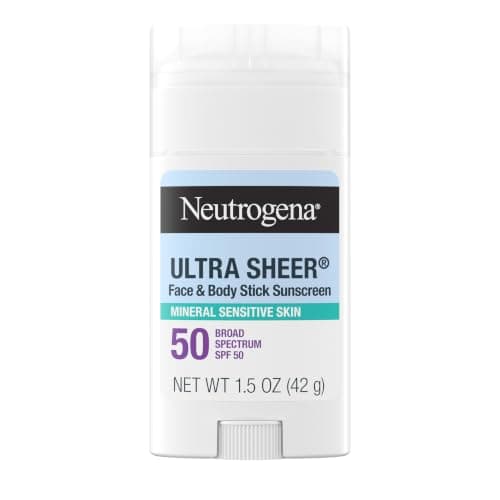 Neutrogena Ultra Sheer Face & Body Mineral Sunscreen Stick SPF 50Best overall · SPF 50 | The one thing to carry in an inside pocket all day | $15.00 · View on Amazon #ad We earn from qualifying purchases · Price as of November 23, 2026 |
| 2 | 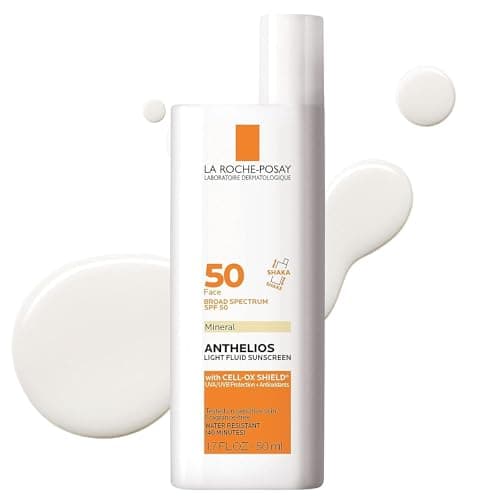 La Roche-Posay Anthelios Mineral SPF 50 Face SunscreenBest morning base layer · SPF 50 | A face cream applied indoors on skin that cold air has dried out | |
| 3 | 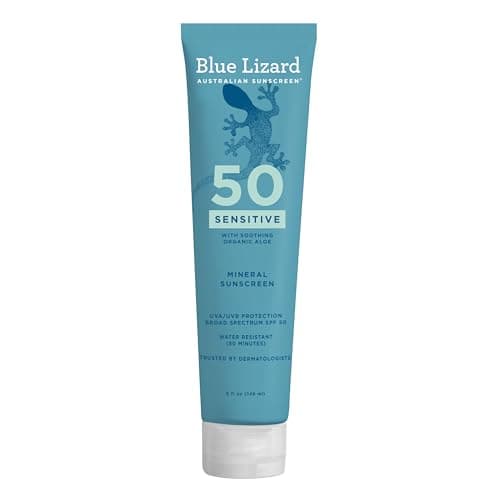 Blue Lizard Sensitive Mineral Sunscreen SPF 50+Best for a group · SPF 50+ | One bottle in the car for everyone's face and neck | $13.46 · View on Amazon #ad We earn from qualifying purchases · Price as of November 23, 2026 |
| 4 | 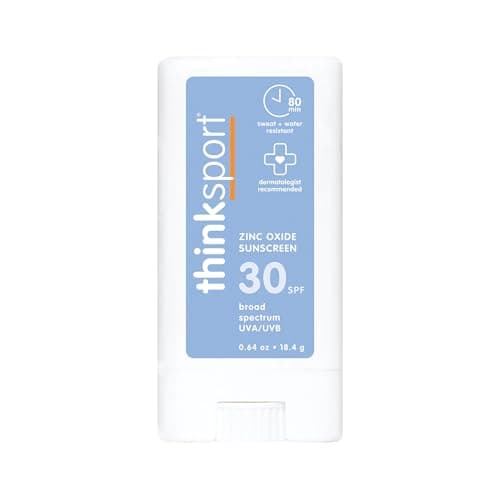 Thinksport Sunscreen Stick SPF 30+Best for kids on the hill · SPF 30+ | Small faces, high zinc, one reapplication at lunch | |
| 5 | 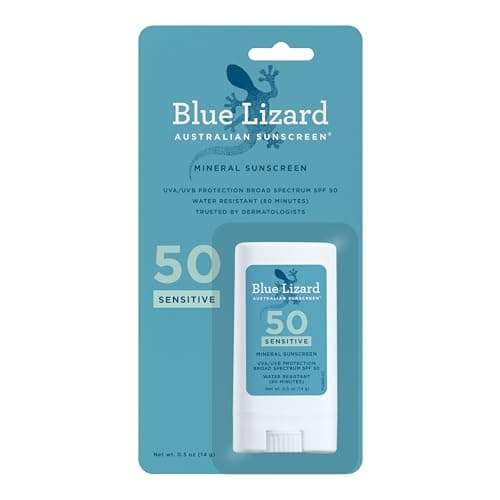 Blue Lizard Sensitive Mineral Sunscreen Stick SPF 50+Budget pick · SPF 50+ | The spare that lives in a jacket pocket all season | $8.77 · View on Amazon #ad We earn from qualifying purchases · Price as of November 23, 2026 |
| 6 | 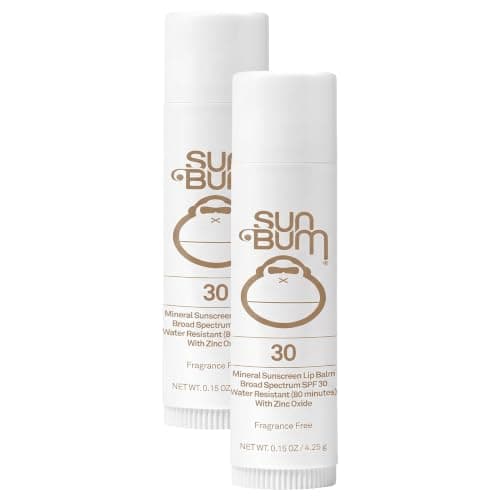 Sun Bum Mineral SPF 30 Sunscreen Lip BalmBest for lips · SPF 30 | The lower lip, which burns and cracks on the same day | $7.98 · View on Amazon #ad We earn from qualifying purchases · Price as of November 23, 2026 |
| 7 | 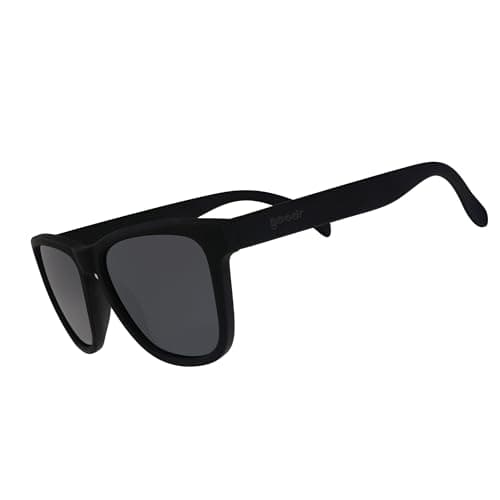 goodr OG Polarized SunglassesBest for snow glare · UV400 lens (UVA and UVB) | The lift queue, the skin up, and lunch on a bright deck | $30.00 · View on Amazon #ad We earn from qualifying purchases · Price as of November 23, 2026 |
| 8 | 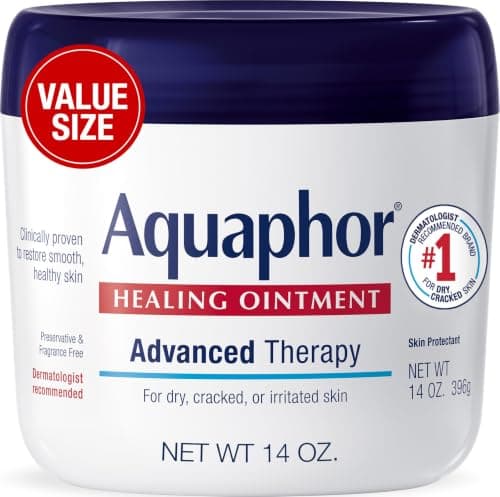 Aquaphor Advanced Therapy Healing OintmentBest for windburn · None — an OTC skin protectant, not sun protection | Repairing a face after a cold, dry, bright day | $16.49 · View on Amazon #ad We earn from qualifying purchases · Price as of November 23, 2026 |
Why a cold day burns worse than a warm one
Three things stack up, and each of them is invisible while it is happening.
- Reflection from below. The Skin Cancer Foundation puts snow and ice at up to 80% reflection of UV. A hat brim and a helmet do nothing about light arriving from underneath, which is why ski burns show up under the chin, under the nose, on the underside of the jaw and inside the nostrils.
- Altitude. The same source gives 4 to 5 percent more UV exposure per 1,000 feet of elevation. A resort base at 8,000 feet with a summit at 11,000 is a meaningfully stronger UV environment top to bottom, and the best snow is usually at the top.
- No heat cue. Sunburn is caused by UV, and UV does not warm you. On a beach the heat on your shoulders reminds you to reapply. On a chairlift in a cold wind there is no cue at all, and people routinely finish a day with a sharp burn and no memory of feeling sun on their face.
Cloud cover does not fix it either. The Skin Cancer Foundation notes that a large share of UV passes through cloud, which is why an overcast spring day with soft light and bright snow is one of the easiest ways to get caught. Do you need sunscreen on a cloudy day? covers what actually gets through.
What we looked for
- A format that works in gloves and cold. A stick goes on through a chairlift ride with one hand. A squeeze bottle in an outside pocket goes cold and stiff and stays in the pocket.
- SPF 50 or higher, which is what the Skin Cancer Foundation recommends for outdoor activity, read off the US actives panel with the broad-spectrum claim beside it.
- 80 minutes of water resistance wherever the format allows it, because a base layer under a shell means sweat, and spring slush means wet.
- Mineral filters, both because that is what this site's reader buys and because zinc sits on the surface rather than needing twenty minutes to work before you load the first lift.
- Something that covers the underside of a face. The chin, jaw and nostrils are the specific areas snow reflection hits, and they are the ones nobody applies to.
- Lips and eyes treated as part of the job, not as accessories. Our methodology.
We do not run a laboratory and we do not field-test on a mountain. Label facts come from each brand's US listing or its published OTC drug label; the reflection and altitude figures are the Skin Cancer Foundation's, named as theirs.
The kit compared
| Item | Protection | Water resistance | Why it is in the bag |
|---|---|---|---|
| Neutrogena Ultra Sheer Face & Body Mineral Stick | 21.6% zinc oxide, SPF 50 | 80 minutes | One-handed application on a lift, no greasy gloves |
| La Roche-Posay Anthelios Mineral SPF 50 | Titanium dioxide with antioxidants | 40 minutes | Morning base layer on skin that cold air has dried out |
| Blue Lizard Sensitive Mineral SPF 50+ | Zinc oxide and titanium dioxide | 80 minutes | A bottle the whole group can use on faces and necks |
| Thinksport Sunscreen Stick SPF 30+ | 24% zinc oxide | 80 minutes | Children's faces, highest zinc load |
| Blue Lizard Sensitive Stick SPF 50+ | 20% zinc oxide | 80 minutes | The spare that lives in a jacket pocket all season |
| Sun Bum Mineral Lip Balm SPF 30 | 8% zinc oxide | 80 minutes | Lips, which burn and crack first at altitude |
| goodr OG Polarized Sunglasses | UV400 lens, no-slip frame | Not applicable | Glare on the walk up, the lift queue and the deck |
| Aquaphor Healing Ointment | Petrolatum skin protectant, no UV filters | Not applicable | Windburn and cracked skin at the end of the day |
Our picks in detail
01 · Best overall
Neutrogena Ultra Sheer Face & Body Mineral Sunscreen Stick SPF 50
Neutrogena
21.6% zinc oxide at SPF 50 with 80 minutes of water resistance, in a 1.5 ounce stick wide enough to cover a face in a few passes and still be sensible on the backs of the hands. Its OTC drug label is published in full, and it is the format that actually gets reapplied on a chairlift.
- Actives:
- 21.6% zinc oxide
- SPF:
- SPF 50
- Water resistance:
- 80 minutes
- Reef status:
- Zinc only — no oxybenzone, octinoxate or octocrylene
- Best for:
- The one thing to carry in an inside pocket all day
What works
- Applied one-handed, with gloves on, in a lift line
- Zinc-only actives published on a public OTC drug label
- 80 minutes of water resistance for spring slush and sweat
The trade-off
- The wide format is clumsy right around the eyes
- Still leaves a cast that needs blending with a fingertip
- Drags on cold skin until you warm it for a second
#ad We earn from qualifying purchases · Price as of November 23, 2026
02 · Best morning base layer
La Roche-Posay Anthelios Mineral SPF 50 Face Sunscreen
La Roche-Posay
Titanium dioxide with antioxidants at SPF 50 and 40 minutes of water resistance, from a brand that formulates for reactive skin as its whole proposition. Cold mountain air is hard on a face, and a cream base layer applied warm indoors does better on dry skin than a stick alone.
- Actives:
- Titanium dioxide with antioxidants
- SPF:
- SPF 50
- Water resistance:
- 40 minutes
- Reef status:
- Mineral filters only
- Best for:
- A face cream applied indoors on skin that cold air has dried out
What works
- Mineral filters at SPF 50 with a water-resistance claim
- Cream texture that suits skin dried out by cold and wind
- Easy to buy in any pharmacy before a trip
The trade-off
- 40 minutes of water resistance rather than 80
- Titanium dioxide leaves a cooler, more visible cast than zinc
- A bottle is the wrong thing to try to reapply from on a mountain
03 · Best for a group
Blue Lizard Sensitive Mineral Sunscreen SPF 50+
Blue Lizard · Read our Blue Lizard review
Zinc and titanium dioxide, fragrance-free, SPF 50+ and the full 80 minutes of water resistance. It is the bottle to apply at the trailhead or in the parking lot before anybody puts a helmet on, and it is mild enough for faces as well as necks.
- Actives:
- Zinc oxide and titanium dioxide
- SPF:
- SPF 50+
- Water resistance:
- 80 minutes
- Reef status:
- Mineral filters only; the Sensitive formula omits oxybenzone and octinoxate
- Best for:
- One bottle in the car for everyone's face and neck
What works
- 80 minutes of water resistance, the maximum a US label may claim
- Fragrance-free, which matters on wind-irritated skin
- Large enough to dose a whole group properly
The trade-off
- Visible cast that needs working in
- Thick in the cold — apply it in a warm car, not on a deck
- Not a format anybody reapplies from mid-morning
#ad We earn from qualifying purchases · Price as of November 23, 2026
04 · Best for kids on the hill
Thinksport Sunscreen Stick SPF 30+
Thinksport · Read our Thinksport review
24% zinc oxide, the heaviest mineral load here, with 80 minutes of water resistance in a tube small enough to live in a child's own jacket pocket. The high concentration is the point: a child's face gets one application in the morning and one at lunch if you are lucky.
- Actives:
- 24% zinc oxide
- SPF:
- SPF 30+
- Water resistance:
- 80 minutes
- Reef status:
- Zinc only — no oxybenzone, octinoxate or octocrylene
- Best for:
- Small faces, high zinc, one reapplication at lunch
What works
- Highest zinc concentration in this kit
- Small enough for a child to carry and use themselves
- 80 minutes of water resistance
The trade-off
- SPF 30+ rather than 50, so it needs more passes
- Obvious white cast, which some children object to
- Too small to be a body answer for an adult
05 · Budget pick
Blue Lizard Sensitive Mineral Sunscreen Stick SPF 50+
Blue Lizard · Read our Blue Lizard review
20% zinc oxide at SPF 50+ with 80 minutes of water resistance, usually the cheapest serious sunscreen we recommend anywhere. Buy two: one for the jacket you actually wear and one for the glove box, because the sunscreen that protects you is the one within reach on the lift.
- Actives:
- 20% zinc oxide
- SPF:
- SPF 50+
- Water resistance:
- 80 minutes
- Reef status:
- Zinc only — no oxybenzone, octinoxate or octocrylene
- Best for:
- The spare that lives in a jacket pocket all season
What works
- The lowest price here by a clear margin
- SPF 50+ and 80 minutes of water resistance
- Cheap enough to own duplicates for every jacket
The trade-off
- Small format, so a full-face application takes a while
- More cast than the clear sticks it shares a shelf with
- Needs four passes per area, which almost nobody does
#ad We earn from qualifying purchases · Price as of November 23, 2026
06 · Best for lips
Sun Bum Mineral SPF 30 Sunscreen Lip Balm
Sun Bum · Read our Sun Bum review
8% zinc oxide at SPF 30 with 80 minutes of water resistance. Lips face upward into reflected snow light, carry very little melanin of their own, and crack in cold wind, which makes this the highest-value few dollars in a ski bag.
- Actives:
- 8% zinc oxide
- SPF:
- SPF 30
- Water resistance:
- 80 minutes
- Reef status:
- Zinc only — no oxybenzone or octinoxate
- Best for:
- The lower lip, which burns and cracks on the same day
What works
- Mineral filter with a real water-resistance claim
- Small enough to keep in an inside pocket where it stays soft
- Cheap enough to have one in every jacket
The trade-off
- SPF 30 rather than 50
- Leaves a faint white tint
- Goes hard if you keep it in an outside pocket
#ad We earn from qualifying purchases · Price as of November 23, 2026
07 · Best for snow glare
goodr OG Polarized Sunglasses
goodr
A polarized polycarbonate lens the brand rates UV400, in a frame designed not to slip when you sweat. Goggles cover the skiing; this is for the hours of a ski day that are not skiing, which on a bright day is a significant share of your UV exposure.
- Actives:
- Polycarbonate lens the brand rates UV400, in a no-slip grip frame
- SPF:
- UV400 lens (UVA and UVB)
- Water resistance:
- Not applicable
- Reef status:
- Not applicable
- Best for:
- The lift queue, the skin up, and lunch on a bright deck
What works
- UV400 rating covers both UVA and UVB
- No-slip frame that stays put when you are warm
- Cheap enough to be relaxed about losing them on a chairlift
The trade-off
- Not a substitute for goggles while you are actually skiing
- Polarization can make icy patches harder to read on snow
- Open frame lets reflected light in from the sides
#ad We earn from qualifying purchases · Price as of November 23, 2026
08 · Best for windburn
Aquaphor Advanced Therapy Healing Ointment
Aquaphor
Petrolatum as the skin-protectant active, dye- and fragrance-free. This is not sun protection and it carries no UV filters, which the label states plainly — it is the thing you put on afterward, on a face that cold air has stripped, and before an exposed day if your skin is already cracked.
- Actives:
- Petrolatum, listed as the skin-protectant active; dye- and fragrance-free
- SPF:
- None — an OTC skin protectant, not sun protection
- Water resistance:
- Not applicable
- Reef status:
- Not applicable — contains no UV filters
- Best for:
- Repairing a face after a cold, dry, bright day
What works
- An OTC skin protectant, not a cosmetic moisturizer
- Fragrance- and dye-free, so it does not sting broken skin
- One jar lasts a whole season and works on lips too
The trade-off
- No SPF at all — it protects nothing from UV
- Heavy and greasy, which is why it is an evening product
- Can aggravate acne-prone skin if used on a whole face nightly
#ad We earn from qualifying purchases · Price as of November 23, 2026
The areas skiers actually burn
Because the light arrives from below as well as above, the burn pattern on a ski day is upside down compared with a beach day. Work through these deliberately in the morning, because none of them is where your hand goes by habit.
- Under the chin and the underside of the jaw. The single most reliably burned area on a snow day, and the one a helmet makes people feel protected about.
- Under the nose and inside the nostrils. Reflected light goes straight up. A stick is the only format that makes this manageable.
- The gap between goggles and helmet. A strip of forehead that gets direct sun all day and is covered by nothing.
- Ears, including the back of them. A helmet covers the top of an ear and not the lobe or the fold behind it.
- The neck, front and back. A neck gaiter solves this better than sunscreen does, and it is why experienced skiers wear one in spring.
- Lips, particularly the lower lip. It faces upward, it has very little melanin of its own, and cold wind cracks it on the same day the sun burns it.
- The back of the hands on any run you take gloves off for, which on a warm spring day is most of them.
A ski-day routine that actually gets followed
- Apply indoors, before you dress. Warm skin and warm product, no gloves, good light. A mineral filter works as soon as it is spread, so there is no waiting period before the first lift.
- Face, ears, neck, then the underside. Chin, jaw and under the nose as a separate deliberate pass, because reflected light is what you are protecting against and it comes from the ground.
- Lip balm before you zip up, and put the tube in an inside pocket where body heat keeps it soft. A lip balm in an outside pocket is a hard stick by the second run.
- Keep the stick inside the jacket, not in a backpack lid. The reason people skip reapplication at altitude is access, not willpower.
- Reapply at lunch and again mid-afternoon on a bright day. The Skin Cancer Foundation's guidance is at least every two hours, and more often after sweating or at high altitude.
- Reapply before the last run, not after. Late afternoon on a west-facing slope is still high UV, and that is the run people finish burned.
How much sunscreen to apply gives the facial dose, and the best sunscreen sticks covers the four-pass technique a stick needs to actually deliver the SPF on its label. A single swipe does not.
Why sticks beat bottles on a mountain
This is the practical heart of the page. A ski day has no sink, no table, and a pair of gloves you do not want greasy. A stick is applied one-handed, with the glove on the other hand still on, and it leaves nothing on your palms to transfer to goggles, a phone, a lift ticket or the inside of a glove liner.
A squeeze bottle has the opposite set of problems. It needs two bare hands, it goes cold and viscous in an outer pocket, it is awkward to decant into a smaller container without losing track of what is in it, and it leaves a film on everything you touch for the next ten minutes. Use a lotion for the morning base layer indoors and carry a stick for everything after that. Stick versus lotion versus spray works through the formats in general.
Goggles, sunglasses and snow glare
Eyes need the same protection your skin does, and on snow they need it more. The Skin Cancer Foundation advises UV-blocking goggles or sunglasses for winter sports specifically. Goggles handle the skiing; sunglasses handle the parts of a ski day that are not skiing — the walk from the car, the lift queue, the deck at lunch and any skinning or hiking you do to reach a line.
Two practical points. A goggle lens tinted for flat light is not automatically a low-UV lens, so check that the lens is rated for UV rather than assuming the darkness is doing the work. And goggles leave that strip of forehead uncovered between the frame and the helmet, which is a sunscreen job rather than an eyewear one. The best sunglasses for UV protection covers what the lens rating means.
Spring skiing is the dangerous part of the season
March and April are where the burns happen. The sun is higher than it was in January, the days are longer, the snow is still fully reflective, and people ski in a shell with the vents open or in a T-shirt on the last day. That combination — high sun angle, maximum reflection, maximum exposed skin, warm enough to sweat — is the worst UV day of a ski season by a distance.
Treat a spring slush day like a beach day with extra reflection. Full dose in the morning, 80 minutes of water resistance rather than 40, a reapplication at lunch you actually do, and a neck gaiter or a sun hoody under the shell instead of relying on sunscreen for your arms. UPF versus SPF explains why the fabric is the more reliable half of that.
Windburn is a different problem, and sunscreen does not fix it
What people call windburn is cold, dry air stripping the skin barrier, and it often arrives on the same day as a sunburn, which is why the two get confused. Sunscreen does not prevent it. An occlusive ointment does, applied at the end of the day on a clean face and on lips, and a heavier one applied before an exposed day if your skin is already cracking.
If you do end up burned, the fix is the same as any other burn. The best after-sun care for a sunburn covers what genuinely helps, including the common numbing ingredient two major health bodies tell you to skip. The best sunscreen for a compromised skin barrier is the one to read if cold has already done the damage.
What about children on the hill?
Same physics, less patience. A child in a helmet and goggles has a small amount of exposed skin and all of it is in the reflection zone — the chin, the lower cheeks and the strip under the nose. A high-zinc stick applied indoors before kit goes on, then one reapplication at lunch, is realistic. A full-face lotion application on a cold deck at ten in the morning is not.
Put a stick in the instructor's pocket or the child's own jacket rather than yours, and use a lip balm they will not object to. Reapplying sunscreen on kids without losing the day covers the negotiation, and the best sunscreen sticks for kids covers the format.
What this kit does not solve
It does not make reflected UV go away, and it does not make up for the fact that a ski day is six or seven hours of continuous exposure with no shade on a chairlift. Fabric is still the most reliable protection you have: a neck gaiter, a helmet, a long sleeve under the shell. Sunscreen covers the face, and on a mountain that is all you should be asking it to do.
If your trip is a ski-touring or multi-day one rather than a resort day, the weight and resupply problems change the answer. The best sunscreen for backpacking is written for that version of the trip, and much of it transfers directly to a hut-to-hut week.
Sources
- The Skin Cancer Foundation Reminds Winter Sports Enthusiasts to Wear Sun Protection — Skin Cancer Foundation
- Sunscreen: How to Help Protect Your Skin from the Sun — U.S. Food and Drug Administration
- Questions and Answers: FDA Requirements for Over-the-Counter Sunscreen Products — U.S. Food and Drug Administration
- How to prevent skin cancer — American Academy of Dermatology
- Learn About the UV Index — U.S. Environmental Protection Agency
- Ultraviolet (UV) protection — American Optometric Association
Frequently asked questions
Do you really need sunscreen for skiing?
Yes, and more than at sea level. The Skin Cancer Foundation puts snow and ice at up to 80% reflection of UV, so the light reaches you from above and below, and gives UV exposure as rising 4 to 5 percent per 1,000 feet of elevation. The absence of heat on a cold day removes the cue that normally reminds people to reapply.
What SPF should you use for skiing?
The Skin Cancer Foundation recommends broad-spectrum SPF 50 or higher for outdoor activity, reapplied at least every two hours and more often after sweating or at high altitude. On snow that is a floor rather than a ceiling.
Why do skiers burn under the chin and nose?
Because reflected UV comes up off the snow. A helmet, a hat brim and goggles all protect against light arriving from above and do nothing about light arriving from below, so the underside of the jaw, the area under the nose and the inside of the nostrils take direct exposure all day.
Is a stick or a lotion better for a ski day?
A lotion indoors in the morning, a stick for everything after that. A stick is applied one-handed with a glove still on the other hand, leaves nothing greasy on your palms to transfer to goggles, and does not go cold and stiff in a pocket.
Do goggles protect your eyes from UV on snow?
Only if the lens is rated for it. Tint and UV protection are separate properties, so a dark lens for flat light is not automatically a UV-blocking lens. Check the rating, and remember that goggles leave the strip of forehead between the frame and the helmet uncovered.
Is spring skiing worse for sun exposure than midwinter?
Generally yes. The sun is higher, the days are longer, the snow is still fully reflective and people wear less. A warm spring slush day combines maximum reflection with maximum exposed skin and enough warmth to sweat sunscreen off.
Read next
Sun Safety
The best sunscreen sticks
The sunscreen sticks worth buying, what their actives panels say, and the number of passes it takes to reach the SPF on the tube.
Sun Safety
The best sunscreen for backpacking
A multi-day sun kit built around weight, no washing and no resupply — sticks, one small lotion, lips and the UPF layers that cut the job.
Sun Protective Gear
The best sunglasses for UV protection
Dark is not protective and polarized is not the same as UV-blocking. The optometrist criteria that matter and the sunglasses that meet them.
Sun Safety
The best SPF lip balms
Why lips burn first, what separates a real lip sunscreen from a balm with a number on it, and the four worth owning.
Sun Safety
What UV index do you need sunscreen?
The EPA's UV Index thresholds, what each band actually asks you to do, the shadow rule for when you have no forecast, and why the number alone is not the whole decision.
Sun Safety
Do you need sunscreen on a cloudy day?
Why cloud is a poor UV filter, how overcast burns happen, what thin and broken cloud actually do to exposure, and the simple rule for deciding on a gray day.