Sun Safety
Do spray sunscreens actually work?
Yes, and almost nobody gets the protection on the label out of one. Those two facts are not in conflict.
Disclosure: Spf & Shore earns commission from qualifying purchases made through links on this page, at no extra cost to you. It does not change which products we recommend. Read the full disclosure.
Short answer: yes, a spray sunscreen works — and the number on the can is far harder to actually achieve than the same number on a bottle of lotion. The filters are identical, the SPF test is identical, and a can that says SPF 50 passed the same laboratory protocol a lotion did. What changes is how much of it ends up on you.
That is the whole answer to this question, and most of the internet gets it wrong in one of two directions: either sprays are useless, which is false, or sprays are fine, which skips the part that actually matters. The honest version is that spray is the format with the widest gap between its tested performance and its real-world performance, and that gap is almost entirely under your control.
Quick picks
Tap any row to read the full write-up below.
| # | Product | Best for | Price |
|---|---|---|---|
| 1 | 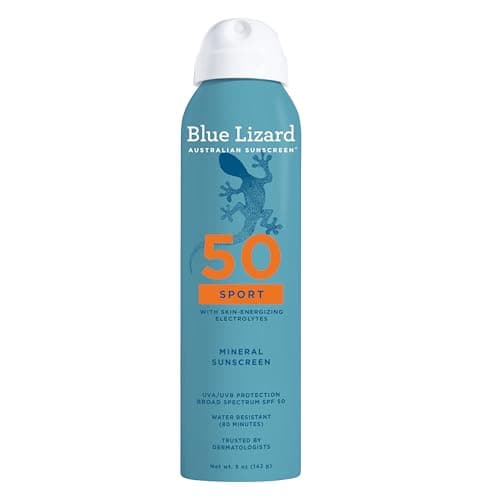 Blue Lizard Sport Mineral Sunscreen Spray SPF 50+Easiest to judge the dose · SPF 50+ | Anyone who wants to see what they have applied | $18.94 · View on Amazon #ad We earn from qualifying purchases · Price as of November 2, 2026 |
| 2 | 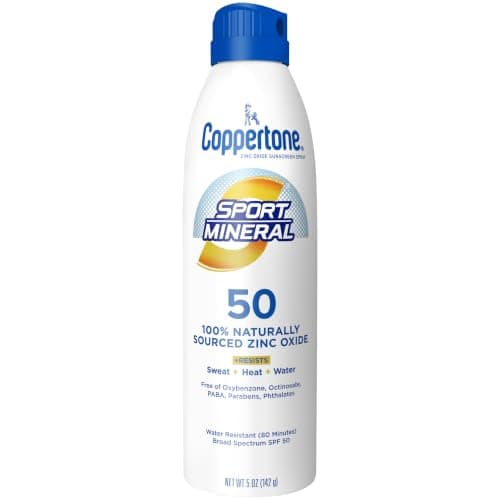 Coppertone Sport Mineral Sunscreen Spray SPF 50Best value mineral can · SPF 50 | Buying several cans for a family without thinking about price | $14.49 · View on Amazon #ad We earn from qualifying purchases · Price as of November 2, 2026 |
| 3 | 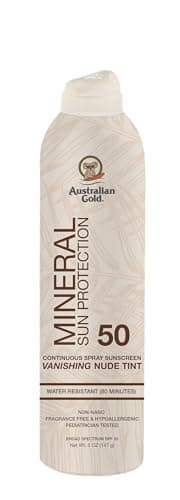 Australian Gold SPF 50 Tinted Mineral Sunscreen SprayBest for seeing missed patches · SPF 50 | Backs, shoulders and anywhere streaks are likely | $21.49 · View on Amazon #ad We earn from qualifying purchases · Price as of November 2, 2026 |
| 4 | 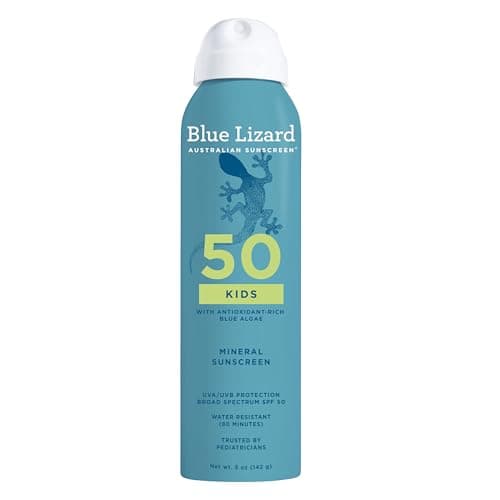 Blue Lizard Kids Mineral Sunscreen Spray SPF 50+Best for children · SPF 50+ | The squirming-child case sprays were invented for | $18.69 · View on Amazon #ad We earn from qualifying purchases · Price as of November 2, 2026 |
What the SPF number on a can actually certifies
The same thing it certifies on a bottle. US SPF testing applies a measured dose to human skin — 2 milligrams per square centimeter — and compares how long it takes that skin to redden against unprotected skin. A sunscreen earns its number by passing that test, and the FDA regulates sunscreen as an over-the-counter drug regardless of whether it comes out of a pump, a tube or an aerosol can. How SPF is tested covers the protocol.
So the filters are not weaker in a can. The labeled water resistance — 40 or 80 minutes, the only two durations US labels may claim — is tested the same way too. Nothing about the aerosol makes the chemistry worse.
So where does the protection go?
Four places, and only the first is specific to sprays.
- The air. A meaningful share of what leaves the nozzle never lands on skin, and the windier it is, the more of it. There is no equivalent loss with a lotion.
- The gap between what looks like enough and what is enough. With lotion you can see a white film and judge the amount. With a spray the feedback is a cool, wet mist that feels like coverage long before it is coverage.
- Missed patches. A spray covers unevenly by nature — a stripe pattern rather than a film — and the streaks only become visible as streaks of sunburn hours later.
- Not rubbing it in. This is the step people skip because the format implies it is unnecessary. It is not optional, and it is what turns a stripey mist into an even layer.
None of those are arguments against buying a spray. They are arguments against using one the way the packaging implies you can.
How to use a spray so it actually works
- Spray until the skin is visibly wet, not until it feels cool. Glossy and wet is the target. If you are finishing a limb in two seconds, it is not enough.
- Then rub it in. Every time. The rubbing is what makes the layer even, and skipping it is the single biggest reason sprays underperform.
- Hold it close — a few inches, not arm's length — and spray in slow passes rather than sweeping arcs.
- Do not spray in wind. If you can feel a breeze, spray into your hands and apply that way, which converts the spray into a (wasteful) lotion but at least gets product onto skin.
- Never spray a face. Spray into your hands first and apply. The FDA has flagged the inhalation question on spray sunscreens, and a face is where a mist is most likely to be inhaled or get into eyes.
- Watch the flammability warning. Aerosol cans carry it for a reason: do not use near an open flame, and let the product dry before going near a grill or a fire pit.
Spray versus lotion, honestly
| Spray | Lotion | |
|---|---|---|
| Dose reliability | Poor — hardest format to apply the tested amount of | Best — you can see what you have put on |
| Even coverage | Poor without rubbing in; good with it | Good |
| Speed on a squirming child | Genuinely the fastest, which is not nothing | Slow, and the reason parents buy sprays |
| Reapplying over sunscreened, sandy skin | Easiest format by a distance | Drags on sandy skin |
| Hairy skin and backs | Reaches where a hand struggles | Awkward |
| Faces | Never — decant into hands first | Fine |
The conclusion that follows is not spray is bad. It is that the format that actually protects you is the one you will use properly and often, and for a lot of families with a lot of children that is a can. A spray applied generously and rubbed in beats a lotion that stayed in the bag, and it is not close. Stick versus lotion versus spray compares all three in more detail.
Does the inhalation concern mean sprays are unsafe?
The honest state of this: the FDA's own sunscreen guidance raises inhalation as an open question for spray formulations rather than a settled finding, which is why the agency's practical advice is about how to use them — not to spray near a face, and to apply to the hands first for faces — rather than to avoid them. Treating it as a reason to never buy a spray overstates what is known; treating it as nothing understates it.
There is a separate issue people sometimes confuse with this one. A major sunscreen manufacturer voluntarily recalled several aerosol sunscreen products after benzene was detected in them. Benzene is not a sunscreen ingredient — it was a contaminant, tied to the aerosol propellant process rather than to sprays being inherently unsafe. The best spray sunscreens covers what that episode means for buying one today.
Mineral in a can
Mineral sprays exist and they work, with one extra consideration: zinc oxide and titanium dioxide are suspended rather than dissolved, so the can genuinely needs shaking, and they leave more visible residue than a chemical spray. That residue is an advantage here — it gives you the visual feedback that sprays otherwise lack, which makes judging the dose easier rather than harder.
If you want the filters this site generally prefers in the format your family will actually use, that combination is the reason mineral sprays are worth the slightly worse cosmetics. Mineral versus chemical sunscreen covers the filter question itself.
Our picks in detail
01 · Easiest to judge the dose
Blue Lizard Sport Mineral Sunscreen Spray SPF 50+
Blue Lizard · Read our Blue Lizard review
A zinc oxide spray that leaves enough of a visible sheen to tell you whether you have actually covered the skin — the exact feedback the format normally denies you, which is why it leads here.
- Actives:
- 24% zinc oxide as the sole active filter
- SPF:
- SPF 50+
- Water resistance:
- 80 minutes
- Reef status:
- Zinc only — no oxybenzone or octinoxate
- Best for:
- Anyone who wants to see what they have applied
What works
- Mineral filter with visible feedback on coverage
- 80 minutes of tested water resistance
- From the brand this site rates most consistently across its range
The trade-off
- Leaves more residue than a chemical spray — that is the trade for the feedback
- Needs genuine shaking before every use or the zinc stays settled
- Costs more per ounce than drugstore chemical sprays
#ad We earn from qualifying purchases · Price as of November 2, 2026
02 · Best value mineral can
Coppertone Sport Mineral Sunscreen Spray SPF 50
Coppertone
Zinc oxide in a widely stocked can at a price that makes applying the full, generous dose psychologically possible — which, for a format whose main failure is under-application, matters more than it sounds.
- Actives:
- 24.08% zinc oxide as the sole active filter
- SPF:
- SPF 50
- Water resistance:
- 80 minutes
- Reef status:
- Zinc only
- Best for:
- Buying several cans for a family without thinking about price
What works
- Mineral filters at drugstore pricing
- Stocked almost everywhere, so replacing it mid-trip is easy
- Free of oxybenzone, octinoxate and parabens per the label
The trade-off
- Residue and cast are more noticeable than the chemical sprays beside it on the shelf
- Spray pattern is wider than ideal, so more goes past the skin
- Sport formulas tend to feel tackier than daily ones
#ad We earn from qualifying purchases · Price as of November 2, 2026
03 · Best for seeing missed patches
Australian Gold SPF 50 Tinted Mineral Sunscreen Spray
Australian Gold
A tinted mineral continuous spray, and the tint is the point: it shows you the stripes while you can still fix them instead of six hours later as stripes of sunburn.
- Actives:
- 4.40% zinc oxide with 4.10% titanium dioxide, tinted
- SPF:
- SPF 50
- Water resistance:
- 80 minutes
- Reef status:
- Mineral filters only
- Best for:
- Backs, shoulders and anywhere streaks are likely
What works
- Nude tint makes uneven coverage visible immediately
- Zinc oxide, fragrance-free per the listing
- Blends out on application, so the tint is a tool rather than a cosmetic commitment
The trade-off
- A single nude tint will not suit every skin tone
- Tint can transfer to light-colored clothing
- Priced above the plain mineral cans here
#ad We earn from qualifying purchases · Price as of November 2, 2026
04 · Best for children
Blue Lizard Kids Mineral Sunscreen Spray SPF 50+
Blue Lizard · Read our Blue Lizard review
The mineral spray aimed at exactly the scenario that makes parents reach for a can in the first place — fast coverage on a child who will not stand still. The rubbing-in step still applies, and still gets skipped.
- Actives:
- 24% zinc oxide as the sole active filter
- SPF:
- SPF 50+
- Water resistance:
- 80 minutes
- Reef status:
- Zinc only — no oxybenzone or octinoxate
- Best for:
- The squirming-child case sprays were invented for
What works
- Fast enough to actually get applied to a moving child
- Mineral filters with 80 minutes of water resistance
- Kids formula from a brand with a real sensitive-skin range
The trade-off
- Never to be sprayed near a child's face — decant into your hands
- Speed is exactly what encourages skipping the rub-in step
- A rash guard removes most of the need for it, and costs less over a season
#ad We earn from qualifying purchases · Price as of November 2, 2026
What to do if you want to stop thinking about this
Shrink the area the spray has to cover. A UPF 50+ sun shirt or kids rash guard takes the torso and arms out of the equation permanently, which turns a whole-body spray job into a face, hands and legs job — and those are small enough to do properly with a lotion or a stick.
That is the most reliable improvement available in this entire category, and it is a one-time purchase rather than a technique you have to remember at the beach. How much sunscreen to apply explains why dose is the thing that keeps going wrong, and the best sunscreen for swimming covers what the water-resistance minutes on a can really buy you.
Sources
- Sunscreen: How to Help Protect Your Skin from the Sun — U.S. Food and Drug Administration
- Questions and Answers: FDA Requirements for Over-the-Counter Sunscreen Products — U.S. Food and Drug Administration
- Johnson & Johnson Consumer Inc. Issues Voluntary Recall of Specific NEUTROGENA and AVEENO Aerosol Sunscreen Products Due to the Presence of Benzene — Johnson & Johnson Consumer Inc.
- Sunscreen FAQs — American Academy of Dermatology
- 21 CFR 201.327 — Over-the-counter sunscreen drug products; required labeling — Legal Information Institute, Cornell Law School
Frequently asked questions
Do spray sunscreens actually work?
Yes. A spray earns its SPF number in the same laboratory test a lotion does, with the same filters. The difference is real-world dose: a large share of the product never lands on skin, and the mist feels like coverage long before it is coverage. Applied until the skin is visibly wet and then rubbed in, a spray works.
Are spray sunscreens as effective as lotion?
On paper, identical. In practice, less effective for most people, because spray is the hardest format to apply the tested amount of. The gap is in application rather than chemistry, and it closes if you spray until the skin looks wet and rub it in.
Do you have to rub in spray sunscreen?
Yes, every time. A spray lands in an uneven stripe pattern rather than a film, and rubbing is what turns it into an even layer. Skipping that step is the single biggest reason sprays underperform.
How long should you spray sunscreen on each area?
Until the skin is visibly wet and glossy, which is roughly twice as long as feels natural. Hold the can a few inches from the skin and use slow passes. If a limb is done in two seconds, it is not done.
Can you spray sunscreen on your face?
No. Spray into your hands and apply it from there. The FDA has flagged inhalation as an open question for spray formulations, and the face is where a mist is most likely to be inhaled or to get into the eyes.
Is spray sunscreen safe?
The filters are the same ones regulated in any other US sunscreen. The open question is inhalation, which is why the practical guidance is about how you use them rather than whether to. The 2021 benzene recalls were about a contaminant linked to the aerosol process, not about spray sunscreen being inherently unsafe.
Is spray sunscreen bad in the wind?
Yes, and it is the one condition where the format fails outright — the windier it is, the more of the can goes past you. If you can feel a breeze, spray into your hands and apply it like a lotion.
Do mineral spray sunscreens work?
They do, with one quirk in their favor. Zinc oxide and titanium dioxide are suspended rather than dissolved, so the can needs real shaking and leaves more visible residue. That residue is useful here, because it gives you the coverage feedback a clear spray does not.
Read next
Sun Safety
The best spray sunscreens
The spray sunscreens worth buying, what their labels actually say, and the technique that decides whether a can protects anything.
Sun Safety
Stick vs lotion vs spray sunscreen
What each format delivers, why sprays under-perform, and the combination that works.

Sun Safety
How much sunscreen to apply
The measures by body area, and why under-application costs more protection than it seems.
Sun Safety
How SPF is tested and set
The FDA's SPF test in plain English: human volunteers, a solar simulator, 2 mg per square centimeter, and the separate tests behind broad spectrum and water resistance.
Kids & Baby
Spray vs stick vs lotion for kids
Which format actually delivers the dose on a child, and why sprays are the weakest of the three.
Sun Safety
What water-resistant sunscreen actually means
What the 40 and 80-minute claims measure, why toweling ends them, and how to plan a pool day around it.