Sun Safety
The best spray sunscreens
Spray is the fastest format and the easiest one to get wrong. These are the cans worth buying, and the technique that makes them count.
Disclosure: Spf & Shore earns commission from qualifying purchases made through links on this page, at no extra cost to you. It does not change which products we recommend. Read the full disclosure.
Our pick is [Blue Lizard Sport Mineral Sunscreen Spray SPF 50+](#blueLizardSportSpray) — 24% zinc oxide as the sole active filter, the maximum 80 minutes of water resistance a US label may claim, and no added fragrance. It is also the spray Treeline Review names as its best mineral pick after testing across a range of skin tones.
One thing to settle first, because it decides whether anything below matters: a spray is a delivery method, not a shortcut. The SPF on the can was measured on skin coated at the full laboratory dose. A spray only reaches that dose if you hold the nozzle close, keep spraying until the skin looks visibly wet, and then rub it in. Skip the rubbing and you are wearing a fraction of the number on the label.
Quick picks
Tap any row to read the full write-up below.
| # | Product | Best for | Price |
|---|---|---|---|
| 1 |  Blue Lizard Sport Mineral Sunscreen Spray SPF 50+Best overall · SPF 50+ | Beaches, pools and sport, on adults and children alike | |
| 2 | 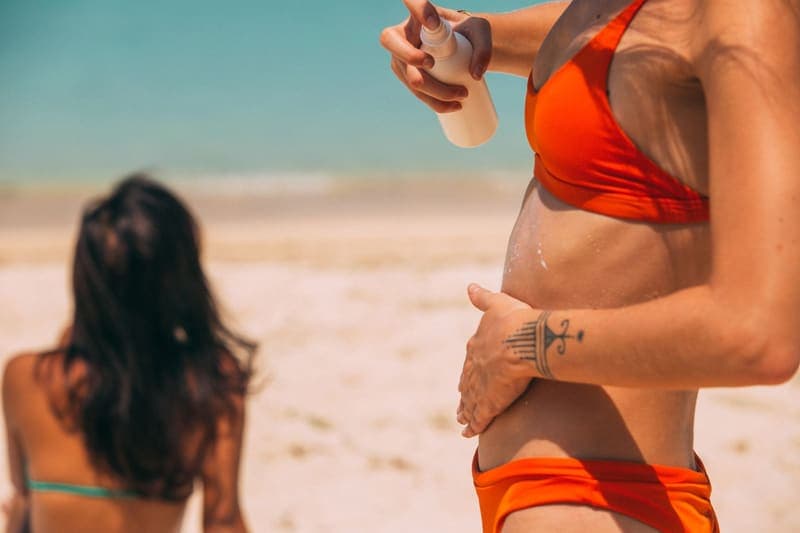 Coppertone Sport Mineral Sunscreen Spray SPF 50Best value · SPF 50 | Covering a whole family without rationing the can | |
| 3 |  Thinksport All Sheer Mineral Sunscreen Spray SPF 50Best sheer mineral · SPF 50 | Anyone who abandoned mineral sprays over the chalky finish | |
| 4 |  Australian Gold SPF 50 Tinted Mineral Sunscreen SprayLeast white cast · SPF 50 | Medium and deeper skin tones that mineral sprays usually fail | |
| 5 | 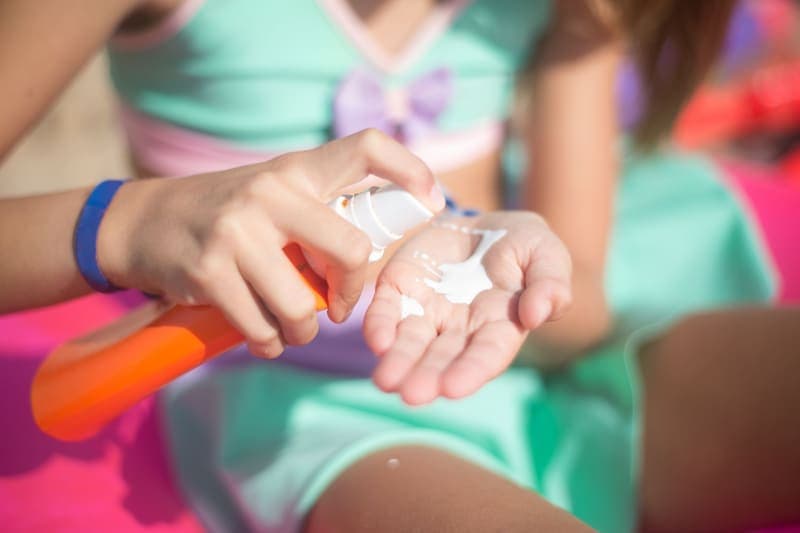 Blue Lizard Kids Mineral Sunscreen Spray SPF 50+Best for kids · SPF 50+ | Getting a whole child covered before they run off |
How we chose these
Broad spectrum and SPF 30 or higher as the floor, in line with the American Academy of Dermatology's guidance — every pick here is SPF 50 or better, because a spray is the format most likely to go on thin and a higher number buys back some of that margin. Then 80 minutes of water resistance rather than 40, since sprays are overwhelmingly bought for beaches, pools and sport.
After that we preferred zinc-based formulas, fragrance-free bases, and cans large enough that using a generous amount does not feel wasteful. We read published label data for every product and confirmed each one was on sale when this page was written. We do not run a lab and we do not wear-test, so there are no scores here. Where an independent organization has tested — Consumer Reports lab-verifies label SPF, Treeline Review field-tests sprays across skin tones — we name them rather than restating their findings as ours. Our methodology.
One thing you will notice: the list is short, and two of the five come from the same brand. That is the category, not an oversight. Very few manufacturers make a fragrance-free, high-zinc aerosol, because zinc is difficult to keep suspended in a propellant and harder still to spray without clogging. Most of what sits on the shelf beside these is a scented chemical-filter spray at SPF 30.
Aerosol, continuous, pump: they are not the same thing
The words on the front are marketing, not a specification, and the differences matter more than the naming suggests.
| Type | How it works | What that means for you |
|---|---|---|
| Aerosol | Product is pushed out by a compressed hydrocarbon propellant | Fastest coverage, finest mist, most product lost to wind, and the can is flammable |
| Continuous spray | Usually an aerosol with a valve that sprays at any angle | Easier on backs and shoulders; same propellant, same wind loss |
| Non-aerosol pump | A mechanical trigger, no propellant in the can | Wetter, coarser spray that lands where you aim it; slower, and you will work harder for full coverage |
If the flammability warning or the mist is what puts you off sprays, a pump bottle removes both concerns while keeping most of the convenience. If speed on a wriggling child is the point, an aerosol is the format that delivers it.
Our picks in detail
01 · Best overall
Blue Lizard Sport Mineral Sunscreen Spray SPF 50+
Blue Lizard · Read our Blue Lizard review
24% zinc oxide as the only active filter, the maximum 80 minutes of water resistance, no fragrance, and a formula stated to be free of airborne titanium dioxide — the most defensible actives panel in any aerosol we found.
- Actives:
- 24% zinc oxide as the sole active filter
- SPF:
- SPF 50+
- Water resistance:
- 80 minutes
- Reef status:
- Zinc only — no oxybenzone or octinoxate
- Best for:
- Beaches, pools and sport, on adults and children alike
What works
- Zinc-only, so unrestricted under every reef law
- Maximum labeled water resistance
- Fragrance-free and free of airborne titanium dioxide
The trade-off
- Visible cast on medium and deep tones until rubbed in
- More expensive per ounce than drugstore sprays
- The nozzle needs wiping or it clogs
02 · Best value
Coppertone Sport Mineral Sunscreen Spray SPF 50
Coppertone
Essentially the same proposition as our top pick — 24.08% zinc oxide, 80 minutes of water resistance — at a drugstore price and on a shelf almost everywhere, which is what decides whether you actually apply enough of it.
- Actives:
- 24.08% zinc oxide as the sole active filter
- SPF:
- SPF 50
- Water resistance:
- 80 minutes
- Reef status:
- Zinc only
- Best for:
- Covering a whole family without rationing the can
What works
- Zinc-only actives at a drugstore price
- Maximum labeled water resistance
- Stocked almost everywhere, so replacing it mid-trip is easy
The trade-off
- Noticeable white cast
- This line had lots recalled for benzene in 2021, covered above
- Scented base, which not everyone wants
03 · Best sheer mineral
Thinksport All Sheer Mineral Sunscreen Spray SPF 50
Thinksport · Read our Thinksport review
A lower zinc load at 15.7% paired with 3.4% titanium dioxide, which is what makes it go on sheerer than the 24% zinc cans while still holding SPF 50 and 80 minutes of water resistance.
- Actives:
- 15.7% zinc oxide with 3.4% titanium dioxide, both non-nano
- SPF:
- SPF 50
- Water resistance:
- 80 minutes
- Reef status:
- Mineral filters only
- Best for:
- Anyone who abandoned mineral sprays over the chalky finish
What works
- Noticeably sheerer finish than high-zinc aerosols
- Non-nano mineral filters only
- 80 minutes of water resistance
The trade-off
- Contains titanium dioxide, so keep it well away from faces
- Premium pricing
- Still casts on deep skin tones, just less
04 · Least white cast
Australian Gold SPF 50 Tinted Mineral Sunscreen Spray
Australian Gold
A tinted mineral spray at 4.40% zinc oxide with 4.10% titanium dioxide — a much lighter mineral load than the sport cans, carried by a nude tint that cancels most of the chalkiness rather than hiding it.
- Actives:
- 4.40% zinc oxide with 4.10% titanium dioxide, tinted
- SPF:
- SPF 50
- Water resistance:
- 80 minutes
- Reef status:
- Mineral filters only
- Best for:
- Medium and deeper skin tones that mineral sprays usually fail
What works
- The tint does real work against white cast
- Fragrance-free
- 80 minutes of water resistance
The trade-off
- Far lower mineral load than the 24% zinc picks
- One tint will not flatter every skin tone
- Contains titanium dioxide, so never near a face
05 · Best for kids
Blue Lizard Kids Mineral Sunscreen Spray SPF 50+
Blue Lizard · Read our Blue Lizard review
The same 24% zinc oxide and 80 minutes of water resistance as the Sport can, fragrance-free, in kid packaging. Buy whichever of the two is cheaper on the day — the actives panels are identical.
- Actives:
- 24% zinc oxide as the sole active filter
- SPF:
- SPF 50+
- Water resistance:
- 80 minutes
- Reef status:
- Zinc only — no oxybenzone or octinoxate
- Best for:
- Getting a whole child covered before they run off
What works
- Zinc-only and fragrance-free
- Maximum labeled water resistance
- Fast enough to finish before a child loses patience
The trade-off
- Never usable on the face, which is where kids burn first
- Same actives as the Sport version at a sometimes higher price
- Visible cast until rubbed in
How to use a spray so it actually works
- Spray outdoors, but out of the wind. A breeze carries a meaningful share of the mist past your skin, and you have no way of knowing how much. Turn your back to the wind or step behind a windbreak.
- Hold the can close — roughly a hand's width from the skin, not at arm's length. Distance is how most of a can ends up on the sand.
- Spray until the skin looks visibly wet, not until it looks damp. One pass is never enough on a limb.
- Rub it in. This is the step that converts a spray into the dose the SPF was tested at, and it is the step almost everyone skips.
- Do the second coat. Go over everything once more, then check the places a spray always misses: the tops of the feet, the backs of the knees, the ears and the hairline parting.
- Reapply every two hours, and immediately after swimming or toweling off, exactly as you would with a lotion. How much sunscreen to apply covers the amounts.
There is a simple test for whether you used enough: a 5 or 6 ounce can should not survive a full beach season for one adult. If yours does, the problem is the amount, not the product.
Never spray a face
This one is not a preference. The FDA's own guidance is unambiguous: spray sunscreens should never be applied directly to your face. Spray into your palms and apply by hand instead, or use a different format for the head entirely.
In practice a stick is the better answer for faces, ears and the tops of shoulders, because it goes exactly where you put it and nothing becomes airborne. Stick versus lotion versus spray compares the three formats on the things that decide real-world protection, and the best sunscreen for your face covers what to wear above the neck.
The benzene recalls, and what they mean now
If you stopped buying spray sunscreen a few years ago, this is probably why. In 2021 an independent laboratory reported benzene — a known human carcinogen — in dozens of aerosol sunscreen samples. Johnson & Johnson recalled five NEUTROGENA and AVEENO aerosol lines in July 2021, stating that benzene is not an ingredient in any of its sunscreens and was found in finished product during internal testing. Coppertone followed in September 2021 with a recall of specific lots of three of its sprays.
Two things follow, and they pull in opposite directions. Benzene was a contamination problem traced to the finished aerosol rather than a deliberate ingredient, the recalled lots are five years gone, and the affected lines were reformulated and retested. But it happened in aerosols specifically, and it is a fair reason to prefer a manufacturer that responded openly, or to choose a pump bottle and sidestep propellants altogether. We have not seen evidence that would justify avoiding the category outright, and we are not going to pretend the episode did not happen either.
Mineral in a can: what changes
A mineral spray behaves differently from a mineral lotion, and the differences are worth knowing before you buy one.
- It can still leave a cast. Zinc is zinc. A 24% zinc aerosol will go on white on medium and deep skin tones, and rubbing it in is what evens it out. Why mineral sunscreen leaves a white cast explains the physics and what reduces it.
- Shake the can, properly. Mineral particles settle. An unshaken can sprays the carrier first and the filters last, which is uneven protection you cannot see.
- Airborne titanium dioxide is the ingredient to check. Inhaled titanium dioxide is the specific concern behind the advice not to spray near faces. Blue Lizard's sprays state that they are formulated without it; a zinc-only actives panel is the simplest way to avoid the question.
- Clogging is normal. Wipe the nozzle after use. A blocked valve on day three of a holiday is the most common way a good mineral spray stops being used.
- It works immediately. Unlike chemical filters, mineral filters protect as soon as they are spread evenly — which puts even more weight on the rubbing-in step.
If you are still deciding between filter types, mineral versus chemical sunscreen sets out the trade-offs, and what reef-safe actually means covers the labeling claims.
What the warnings on the can are telling you
Aerosol sunscreens carry a flammability warning because the propellant is flammable, and the FDA is direct about what to do with it: while applying and wearing a product labeled flammable, do not smoke, and avoid open flames. That means no spraying near a grill, a fire pit, a tiki torch or a lit cigarette, and it means letting the product dry before you go near any of them.
The other line worth reading is the water resistance claim. US labels may say 40 minutes or 80 minutes and nothing else, and the clock counts immersion time — toweling off ends it regardless of how long you were in the water. Every pick on this page claims 80 minutes, which is the maximum. What water-resistant sunscreen actually means covers how that claim is tested.
The move that makes all of this smaller
Every product on this page needs reapplying every two hours, and a spray makes that easier rather than unnecessary. The change that genuinely reduces the job is covering the torso with a UPF 50+ sun shirt, which blocks at least 98% of UV for as long as it is on and needs nothing reapplied. A spray then handles arms, lower legs and the tops of the feet, which is a much smaller target and a much easier habit to keep.
Sources
- Sunscreen: How to Help Protect Your Skin from the Sun — U.S. Food and Drug Administration
- Questions and Answers: FDA Requirements for Over-the-Counter Sunscreen Products — U.S. Food and Drug Administration
- Sunscreen FAQs — American Academy of Dermatology
- Sunscreen ratings and lab testing — Consumer Reports
- Best Spray Sunscreens of 2026 (tested across skin tones) — Treeline Review
- Johnson & Johnson Consumer Inc. Issues Voluntary Recall of Specific NEUTROGENA and AVEENO Aerosol Sunscreen Products Due to the Presence of Benzene — Johnson & Johnson Consumer Inc.
Frequently asked questions
What is the best spray sunscreen?
Blue Lizard Sport Mineral Sunscreen Spray SPF 50+ is our pick: 24% zinc oxide as the only active filter, 80 minutes of water resistance, no added fragrance, and formulated without airborne titanium dioxide. Coppertone Sport Mineral SPF 50 offers a near-identical actives panel at a drugstore price.
Is spray sunscreen as effective as lotion?
Only when it is applied the same way — sprayed until the skin is visibly wet and then rubbed in. Lotion delivers the tested dose far more reliably because you can see how much is on the skin. A spray applied in a quick pass from arm's length delivers a fraction of the SPF on the can.
Can you spray sunscreen on your face?
No. The FDA states that spray sunscreens should never be applied directly to the face. Spray into your hands and apply by hand, or use a stick or lotion above the neck instead.
Is spray sunscreen safe after the benzene recalls?
The 2021 recalls covered specific lots of specific aerosol lines, benzene was a contaminant rather than an ingredient, and those products were reformulated and retested. Current stock is not the recalled stock. If it still bothers you, a non-aerosol pump spray avoids propellants entirely.
How much spray sunscreen should you use?
Enough that the skin looks visibly wet before you rub it in, over two passes rather than one. A practical check: a 5 or 6 ounce can should not last one adult a whole beach season. If it does, you are under-applying.
Why does my mineral spray sunscreen clog?
Mineral particles settle and dry in the valve. Shake the can thoroughly before every use and wipe the nozzle after, which prevents almost all of it.
Read next
Sun Safety
Stick vs lotion vs spray sunscreen
What each format delivers, why sprays under-perform, and the combination that works.

Sun Safety
The best sunscreens
One pick per situation — face, body, kids, water, sensitive skin — chosen on the label, not the packaging.

Sun Safety
How much sunscreen to apply
The measures by body area, and why under-application costs more protection than it seems.
Sun Safety
What water-resistant sunscreen actually means
What the 40 and 80-minute claims measure, why toweling ends them, and how to plan a pool day around it.
Kids & Baby
Spray vs stick vs lotion for kids
Which format actually delivers the dose on a child, and why sprays are the weakest of the three.

Mineral Sunscreen
The best mineral sunscreen for your body
Mineral body formulas chosen for water resistance, spreadability and tube size — the things that decide whether you apply enough.