Sun Safety
Sunscreen versus suntan lotion
One of these is a regulated over-the-counter drug claim. The other is a phrase on the front of a bottle. Here is how to tell which you are holding.
Disclosure: Spf & Shore earns commission from qualifying purchases made through links on this page, at no extra cost to you. It does not change which products we recommend. Read the full disclosure.
The short answer: sunscreen is a regulated over-the-counter drug claim with a Drug Facts panel behind it, and suntan lotion is a phrase on the front of a bottle that means whatever the brand wants it to mean. Some products sold as suntan lotion are full broad-spectrum SPF 50 sunscreens. Others are tanning oils with an SPF of 4, which the federal government requires to carry a skin cancer warning.
You cannot tell which is which from the front of the package, and the words tanning, bronzing, dark and glow tell you nothing about protection. The back does tell you, in about ten seconds. Below is what to read, what the regulation actually requires, and the body sunscreens worth buying instead of an oil.
Quick picks
Tap any row to read the full write-up below.
| # | Product | Best for | Price |
|---|---|---|---|
| 1 | 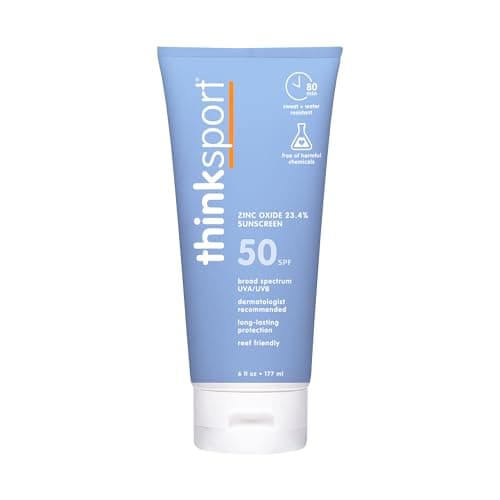 Thinksport Sunscreen SPF 50+Best overall body sunscreen · SPF 50+ | The long exposed day an oil was never going to survive | $19.97 · View on Amazon #ad We earn from qualifying purchases · Price as of October 9, 2026 |
| 2 | 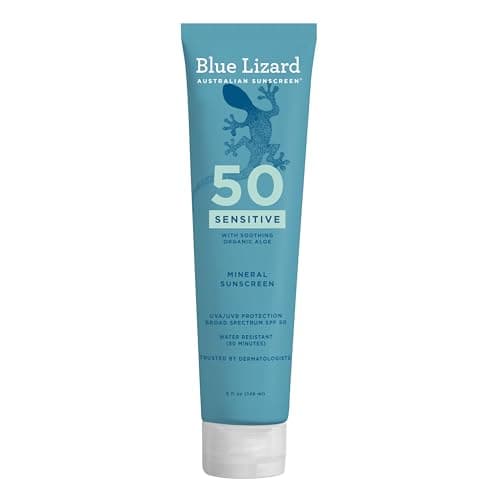 Blue Lizard Sensitive Mineral Sunscreen SPF 50+Best everyday body lotion · SPF 50+ | Daily arms, chest and legs without the beach-day weight | $12.91 · View on Amazon #ad We earn from qualifying purchases · Price as of October 9, 2026 |
| 3 | 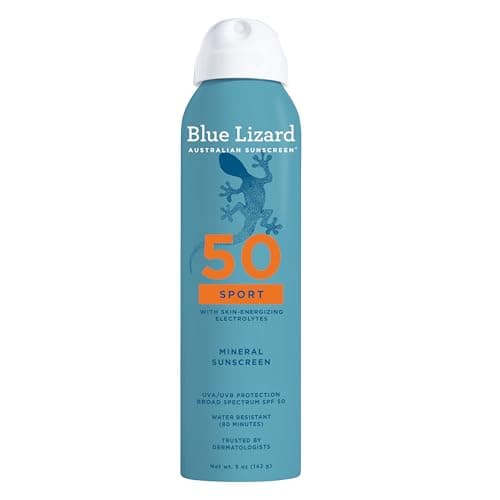 Blue Lizard Sport Mineral Sunscreen Spray SPF 50+Fastest full-body coverage · SPF 50+ | Backs, shoulders and anyone who finds lotion too slow to bother with | $18.19 · View on Amazon #ad We earn from qualifying purchases · Price as of October 9, 2026 |
| 4 | 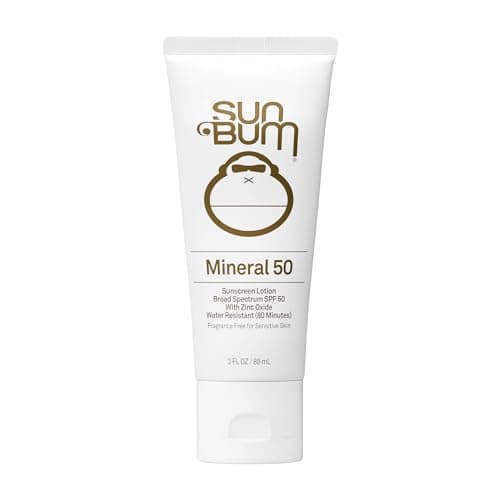 Sun Bum Mineral Sunscreen Lotion SPF 50Best drugstore pick · SPF 50 | Buying a replacement on the way to the beach | $16.99 · View on Amazon #ad We earn from qualifying purchases · Price as of October 9, 2026 |
The only three things that separate them
- Is there a Drug Facts panel at all? A product making a sunscreen claim in the United States is regulated as an over-the-counter drug and must carry one, listing active ingredients and their percentages. A cosmetic tanning product with no SPF claim has an ingredients list instead, and protects you from nothing.
- What is the SPF number, and is it broad spectrum? Those two together decide what the product is legally allowed to claim. Below broad spectrum SPF 15, it may only claim to help prevent sunburn.
- Is there a Skin Cancer/Skin Aging alert? If the carton carries that boxed warning, the product has failed the threshold for the claims that matter, and the regulation makes it say so in plain language.
What the regulation actually requires
Under the FDA's sunscreen labeling rule, only a sunscreen that is broad spectrum with an SPF of 15 or higher may claim to reduce the risk of skin cancer and early skin aging when used as directed with other sun protection measures. Everything below that line — broad spectrum products with an SPF of at least 2 but under 15, and any product that fails the broad spectrum test at any SPF — must carry this, word for word:
Those products may also only state one use: helps prevent sunburn. That is the whole permitted indication. If you are standing in an aisle holding a bottle with that box on it, the federal government has already written your buying advice on the package.
The same rule bans several words you may remember from older bottles. Sunblock, waterproof and sweatproof are not permitted claims, and neither is instant protection or protection for more than two hours without reapplication. Water resistance may only be stated as 40 minutes or 80 minutes. Sunscreen versus sunblock covers why that first word disappeared, and how to read a sunscreen label walks the whole panel.
What tanning oils on sale today actually contain
This is not a historical category. Tanning oils are still manufactured, still carry OTC drug labels, and still sit on shelves next to SPF 50. Two current examples, both read from their published labels:
| Product | SPF | Active filters | UVB reaching skin at the labeled dose |
|---|---|---|---|
| Aloe Up Dark Tanning Oil SPF 4 Continuous Sunscreen | SPF 4 | Octinoxate, oxybenzone | About 1 in 4 photons, roughly 25% |
| Fruit of the Earth Sun Town City Dark Tanning Dry Oil SPF 8 | SPF 8 | Homosalate, octisalate | About 1 in 8 photons, roughly 12.5% |
That last column is arithmetic rather than a claim: SPF is defined so that roughly one part in SPF of the burning UV gets through at the tested dose. SPF 4 lets about 25% through, SPF 8 about 12.5%, SPF 30 about 3%, SPF 50 about 2%. The jump from 4 to 30 is not a modest upgrade; it is an order of magnitude.
The Aloe Up label carries the Skin Cancer/Skin Aging alert exactly as the regulation requires, which is the system working. It is also worth noting what the two actives are: octinoxate and oxybenzone are precisely the filters named in Hawaii's and Key West's sunscreen restrictions, so a tanning oil can be both the least protective thing on the shelf and the one you cannot legally sell in some places. Where reef-safe sunscreen is required has the list.
But I want a tan
We are not going to pretend that is an unreasonable thing to want, and we are not going to tell you a sunscreen delivers it. Here is the part that decides the argument, and it is not a moral one.
A tan is the skin producing extra melanin in response to DNA damage from UV radiation. The color is the repair response, which means the thing people are buying an oil to accelerate is the injury itself, not a separate cosmetic process that happens alongside it. What UV radiation does to skin is the mechanism in full.
- A tanning oil does not cause a tan. UV does. The oil mostly makes skin more transparent and shiny, so exposure feels faster, and the low SPF simply removes the brake.
- You will still tan through SPF 30. No sunscreen blocks everything, applied doses are always below the tested dose, and anyone who spends real time outdoors in a high-SPF sunscreen still changes color across a summer.
- A burn is not a tan in progress. It is a different, worse outcome, and a person's melanoma risk on average doubles after more than five sunburns.
- Self-tanner is the only version with no UV in it. Dihydroxyacetone colors the outer layer of skin and carries no SPF, so you still need sunscreen over it — but the color itself costs your skin nothing.
The terminology, straightened out
| Phrase on the front | What it actually means |
|---|---|
| Sunscreen | A regulated OTC drug claim. There will be a Drug Facts panel with actives, SPF and water-resistance minutes. |
| Suntan lotion | Unregulated. May be a full broad-spectrum SPF 50, may be an SPF 4 oil. Read the panel. |
| Tanning oil | Usually a low-SPF product, commonly SPF 4 to 8, sometimes with no SPF claim at all. |
| Tanning accelerator or tan amplifier | A cosmetic claim about color, not a protection claim. Often carries no SPF. |
| Sun cream, sun lotion | British usage for ordinary sunscreen. On a US shelf it is the Drug Facts panel that settles it, not the noun. |
| Sunblock | No longer a permitted claim on a US sunscreen label. Its presence means an old package or a non-compliant one. |
| After-sun | A moisturizer for use after exposure. No protection, and not a substitute for any of the above. |
Our picks in detail
01 · Best overall body sunscreen
Thinksport Sunscreen SPF 50+
Thinksport · Read our Thinksport review
20% non-nano zinc oxide, the maximum 80 minutes of water resistance a US label may claim, and tubes large enough that applying the full amount feels normal rather than extravagant. If you are replacing an oil with one bottle, replace it with this one.
- Actives:
- 20% non-nano zinc oxide
- SPF:
- SPF 50+
- Water resistance:
- 80 minutes
- Reef status:
- Zinc only — no oxybenzone, octinoxate or octocrylene
- Best for:
- The long exposed day an oil was never going to survive
What works
- 20% non-nano zinc oxide, zinc-only actives
- 80 minutes of water resistance, the US maximum
- Large tubes make a generous dose affordable
The trade-off
- Thick, and leaves a cast that needs working in
- Slower to apply than any oil or spray
- Not a face sunscreen, despite what the tube size tempts you into
#ad We earn from qualifying purchases · Price as of October 9, 2026
02 · Best everyday body lotion
Blue Lizard Sensitive Mineral Sunscreen SPF 50+
Blue Lizard · Read our Blue Lizard review
A zinc-only sensitive formula at SPF 50+ with 80 minutes of water resistance, fragrance-free, and sold at a price that makes using plenty of it painless. The bottle cap changes color in UV, which is a gimmick that quietly teaches you something.
- Actives:
- Zinc oxide and titanium dioxide
- SPF:
- SPF 50+
- Water resistance:
- 80 minutes
- Reef status:
- Mineral filters only; the Sensitive formula omits oxybenzone and octinoxate
- Best for:
- Daily arms, chest and legs without the beach-day weight
What works
- Zinc-only actives, fragrance-free
- 80 minutes of water resistance
- Priced to be used generously rather than rationed
The trade-off
- Visible cast until worked in, as with every high-zinc lotion
- Thicker than the chemical lotions beside it
- The UV-reactive cap is marketing, not a measurement
#ad We earn from qualifying purchases · Price as of October 9, 2026
03 · Fastest full-body coverage
Blue Lizard Sport Mineral Sunscreen Spray SPF 50+
Blue Lizard · Read our Blue Lizard review
24% zinc oxide in a continuous spray with 80 minutes of water resistance — the rare mineral formula that comes out of a can. It is the closest honest substitute for the convenience that sends people to an oil in the first place.
- Actives:
- 24% zinc oxide as the sole active filter
- SPF:
- SPF 50+
- Water resistance:
- 80 minutes
- Reef status:
- Zinc only — no oxybenzone or octinoxate
- Best for:
- Backs, shoulders and anyone who finds lotion too slow to bother with
What works
- 24% zinc oxide, which is unusual in a spray
- 80 minutes of water resistance
- Fast enough that reapplication actually happens
The trade-off
- Sprays are the easiest format to under-apply — spray until the skin glistens, then rub it in
- Wind wastes a meaningful share of every can
- Not for the face: spray into your hands first
#ad We earn from qualifying purchases · Price as of October 9, 2026
04 · Best drugstore pick
Sun Bum Mineral Sunscreen Lotion SPF 50
Sun Bum
Zinc-only actives, SPF 50, 80 minutes of water resistance, and the Active tier of The Skin Cancer Foundation's Seal of Recommendation. Stocked in supermarkets and resort shops, which is exactly where the tanning oil decision usually gets made.
- Actives:
- Zinc oxide and titanium dioxide
- SPF:
- SPF 50
- Water resistance:
- 80 minutes
- Reef status:
- Mineral filters only
- Best for:
- Buying a replacement on the way to the beach
What works
- Carries the Active Seal of Recommendation
- Zinc-only, so unrestricted under every reef law
- Sold nearly everywhere, including at the beach
The trade-off
- Noticeable white cast, the price of the zinc load
- A scented range sits beside it, so check the box you grab
- Costs more per ounce than the chemical sprays next to it
#ad We earn from qualifying purchases · Price as of October 9, 2026
What to buy instead, and why these
The products above were chosen on the same criteria we use for every body sunscreen on this site: broad spectrum, SPF 30 or higher as the floor, 80 minutes of water resistance where the use case involves water, and a preference for zinc oxide actives and fragrance-free bases. We read the actives panel on the brand's own US product page or its published OTC drug label for each one. We do not run a lab and we do not wear-test, so there are no scores here, and where a product carries a third-party seal we say which one and link the directory entry. Dermatologist-recommended sunscreens explains what those seals test. Our methodology.
The one honest concession to the person who came here wanting an oil: if the reason you reach for one is that body sunscreen feels heavy and slow, the format matters more than the formula. A spray covers a back in seconds, and a sunscreen applied in seconds is a sunscreen that gets applied. The best spray sunscreens is the full list for that.
How to check a bottle in ten seconds
- Turn it over. No Drug Facts panel means no sunscreen claim, whatever the front says.
- Find the SPF. Under 15 and the product is legally limited to claiming sunburn prevention only.
- Find the words broad spectrum. Without them you have partial UVB protection and much less UVA protection, whatever the SPF. What broad spectrum means.
- Look for the boxed alert. Skin Cancer/Skin Aging Alert on the carton is the product telling you what it is.
- Check for 40 or 80 minutes of water resistance if there is any swimming or sweating involved. Anything else about water is not a permitted claim.
- Then check the actives panel for what kind of filters you are buying. Mineral versus chemical covers the trade-offs.
The thing that beats both
Neither a sunscreen nor an oil solves the real problem on a long beach day, which is that every liquid on the shelf needs reapplying every two hours and immediately after swimming or toweling off. Fabric does not. A UPF 50+ sun shirt blocks at least 98% of UV for as long as it is on, with nothing to reapply and no dose to get wrong, and it leaves sunscreen a much smaller job: a face, two ears, a neck, the backs of the hands and the tops of the feet.
Which is, in the end, the honest summary of this comparison. Suntan lotion is a phrase. Sunscreen is a specification. And a shirt is the only one of the three that works the same at hour four as it did at hour one.
Sources
- 21 CFR 201.327 — Over-the-counter sunscreen drug products; required labeling — Legal Information Institute, Cornell Law School
- Questions and Answers: FDA Requirements for Over-the-Counter Sunscreen Products — U.S. Food and Drug Administration
- Aloe Up Dark Tanning Oil SPF 4 Continuous Sunscreen (octinoxate, oxybenzone) spray — OTC drug label — DailyMed / U.S. National Library of Medicine
- Fruit of the Earth Sun Town City Dark Tanning Dry Oil SPF 8 Sunscreen (homosalate, octisalate) spray — OTC drug label — DailyMed / U.S. National Library of Medicine
- How Do I Protect Myself from UV Rays? — American Cancer Society
- Skin Cancer Facts & Statistics — The Skin Cancer Foundation
Frequently asked questions
What is the difference between sunscreen and suntan lotion?
Sunscreen is a regulated over-the-counter drug claim in the United States, so the product must carry a Drug Facts panel listing its active filters, SPF and water-resistance minutes. Suntan lotion is not a regulated term. Some products sold under it are full broad-spectrum SPF 50 sunscreens and some are tanning oils at SPF 4. Only the back of the bottle settles it.
Does tanning oil have any SPF?
Some does and some does not. Two currently labeled examples are Aloe Up Dark Tanning Oil at SPF 4 and Fruit of the Earth Sun Town City Dark Tanning Dry Oil at SPF 8. At SPF 4 roughly a quarter of the burning UV still reaches skin at the tested dose, and products below broad spectrum SPF 15 must carry the federal Skin Cancer/Skin Aging alert.
What is the Skin Cancer/Skin Aging alert?
A warning the FDA requires on any sunscreen that is broad spectrum with an SPF of at least 2 but under 15, or that fails the broad spectrum test at any SPF. It reads: Spending time in the sun increases your risk of skin cancer and early skin aging. This product has been shown only to help prevent sunburn, not skin cancer or early skin aging.
Can you still tan while wearing sunscreen?
Yes. No sunscreen blocks all UV, real-world application is always thinner than the laboratory dose used to test SPF, and most people who spend time outdoors in SPF 30 still change color over a season. What you avoid is the burn, which is a different outcome rather than a faster tan.
Is sun lotion the same as sunscreen?
In British usage, sun lotion and sun cream simply mean sunscreen. In a US aisle the noun on the front is not the deciding factor: a Drug Facts panel with an SPF and a broad-spectrum statement is what makes something a sunscreen, regardless of whether the label calls it a lotion, a cream, a milk or a fluid.
What should I buy instead of tanning oil?
A broad-spectrum SPF 30 or higher body sunscreen with 80 minutes of water resistance. If the appeal of an oil was how fast it goes on, a mineral continuous spray is the closest honest substitute, and a self-tanner handles the color with no UV involved at all.
Read next
Sun Safety
Sunscreen vs sunblock
Why sunblock was banned from US labels, what people mean when they say it, and which to buy.
Reef-Safe & Ingredients
How to read a sunscreen label
How to read the drug facts panel line by line, and what every front-of-bottle claim is worth.
Sun Safety
The best spray sunscreens
The spray sunscreens worth buying, what their labels actually say, and the technique that decides whether a can protects anything.
Sun Safety
Sunscreen versus no sunscreen
What the Nambour trial found when it randomized a whole town to daily sunscreen or not: skin aging, squamous cell carcinoma, melanoma, and the endpoints that did not move.
Reef-Safe & Ingredients
Where reef-safe sunscreen is actually required
Destination-by-destination restrictions, what each one covers, and what to pack.

Sun Protective Gear
The best sun shirts
UPF 50+ shirts and hoodies chosen on fabric, fit and heat management — protection that never needs reapplying.