Sun Safety
Sunscreen vs sunblock
One is a regulated product category. The other is a word the FDA banned from labels in 2012.
Disclosure: Spf & Shore earns commission from qualifying purchases made through links on this page, at no extra cost to you. It does not change which products we recommend. Read the full disclosure.
"Sunblock" has been banned from US sunscreen labels since 2012, because the FDA judged it overstated what any product does — nothing blocks 100% of ultraviolet. Colloquially, people use sunblock to mean a mineral sunscreen, since zinc and titanium sit on the surface of the skin and look like they are blocking. Legally and practically, every product in this category is a sunscreen.
| Sunscreen | "Sunblock" | |
|---|---|---|
| Legal status on a US label | The correct term | Banned since 2012 |
| What people usually mean | Any sun-protection product | A mineral, visible, zinc-based product |
| Blocks 100% of UV | No | No — which is why the word was banned |
| Regulated as | An OTC drug | Not a category |
| What to look for instead | Broad spectrum, SPF 30+, water resistance | The same |
Why the FDA banned the word
The 2011 sunscreen labeling rule, which took effect in 2012, removed three terms from US labels: sunblock, waterproof and sweatproof. The reasoning in each case was the same — the word promises something no product delivers, and a consumer who believes the promise takes more risk than they otherwise would.
No sunscreen blocks all ultraviolet. SPF 30 filters about 97% of UVB, SPF 50 about 98%, and the marginal gains beyond that are small. A person who believes they are wearing a "block" is more likely to stay out longer and skip reapplication — which is precisely the behavior that produces burns despite a high SPF. The FDA's summary of the rule.
What people mean when they say it
Almost always a mineral sunscreen — the thick, white, visible kind built on zinc oxide. The association makes intuitive sense: a mineral layer sits on the surface of the skin and you can see it, which looks like blocking in a way that an invisible chemical formula does not.
The intuition is only half right. Mineral filters do scatter some UV, but they also absorb a substantial share of it and convert it to heat, much as chemical filters do. The real distinction is where the filter sits — on the surface versus in the upper skin layers — not whether it blocks or absorbs. Mineral versus chemical sunscreen.
So if someone tells you to buy sunblock
They mean a mineral sunscreen. Buy one whose actives panel lists zinc oxide and/or titanium dioxide, at SPF 30 or higher, broad spectrum, with 80 minutes of water resistance if you will be swimming. Our mineral picks.
You may still see the word on older stock, imported products, or packaging that has not been updated. It does not make the product worse — it just tells you nothing about it.
The other two banned words
Waterproof and sweatproof went the same way, and for the same reason. US labels may now claim water resistant for 40 minutes or water resistant for 80 minutes — those two durations and nothing else, each backed by a specified immersion test. Anything claiming more is either not a US product or not compliant. Water-resistant sunscreen explained.
What to check instead
- Broad spectrum. The regulated claim that means real UVA protection. What it means.
- SPF 30 or higher. The recommended floor.
- Water resistant 40 or 80 minutes, if relevant.
- The actives panel, for filter type and reef-law compliance. How to read a sunscreen label.
- Whether you will apply enough of it, which matters more than all of the above. How much to apply.
Sources
- Questions and Answers: FDA Requirements for Over-the-Counter Sunscreen Products — U.S. Food and Drug Administration
- Sunscreen: How to Help Protect Your Skin from the Sun — U.S. Food and Drug Administration
- Sunscreen FAQs — American Academy of Dermatology
- Sunscreen — Skin Cancer Foundation
Frequently asked questions
What is the difference between sunscreen and sunblock?
Sunblock has been banned from US labels since 2012 because it overstated protection — no product blocks all UV. Colloquially people use it to mean a mineral sunscreen. Legally and practically, everything in the category is a sunscreen.
Is sunblock better than sunscreen?
The question does not have a technical answer, because sunblock is not a product category. If someone means mineral versus chemical, both protect to their labeled SPF and each suits different situations.
Why was the word sunblock banned?
The FDA's 2011 labeling rule removed sunblock, waterproof and sweatproof from US labels because each overstated what products do. A consumer who believes a product blocks all UV is more likely to stay out longer and skip reapplication.
Is zinc oxide a sunblock?
Zinc oxide is a mineral UV filter. It scatters some UV and absorbs a substantial share of it, converting it to heat — so it is not literally blocking, and it is regulated as a sunscreen active like every other filter.
Read next
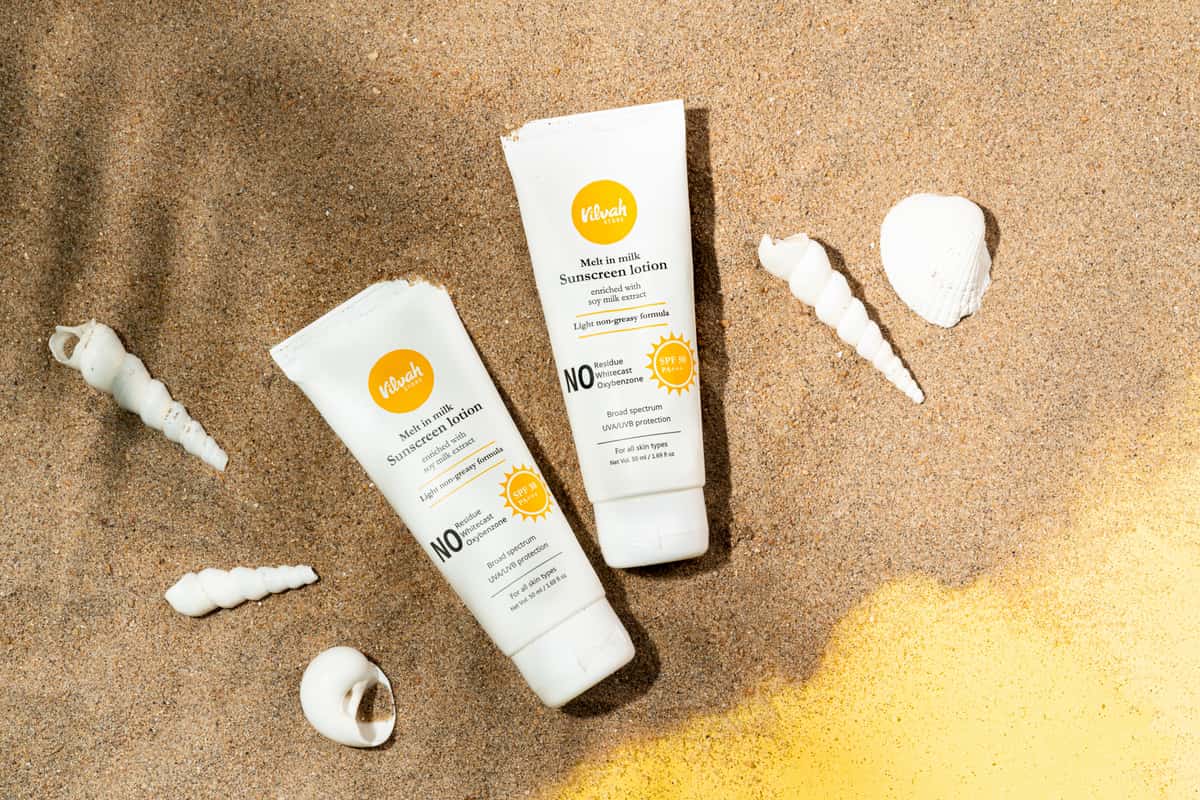
Mineral Sunscreen
Mineral vs chemical sunscreen
How each filter type works, what the absorption research actually found, and which to choose for your situation.
Mineral Sunscreen
What broad spectrum means on a sunscreen label
The regulated FDA claim behind the phrase, why SPF alone is not enough, and what UVA actually does.

Sun Safety
What water-resistant sunscreen actually means
What the 40 and 80-minute claims measure, why toweling ends them, and how to plan a pool day around it.
Reef-Safe & Ingredients
How to read a sunscreen label
How to read the drug facts panel line by line, and what every front-of-bottle claim is worth.

Mineral Sunscreen
The best mineral sunscreens
Zinc-only picks for faces, bodies and kids, chosen on actives and water resistance rather than packaging.

Sun Protective Gear
How UPF clothing works
What makes fabric block UV, why good garments do not wash out, and what actually degrades protection.