Sun Safety
The best SPF lip balms
The one patch of skin nobody reapplies, on the part of the face that burns first.
Disclosure: Spf & Shore earns commission from qualifying purchases made through links on this page, at no extra cost to you. It does not change which products we recommend. Read the full disclosure.
Our pick is the Sun Bum Mineral SPF 30 Lip Balm: zinc oxide 8% as the only active filter, SPF 30, and the full 80 minutes of water resistance, at a price low enough that you can buy three and leave one in every bag. That last part is not a throwaway — the best lip sunscreen is the one that is in your pocket at hour three.
The reason this category needs a page: lips carry almost no melanin and have essentially no oil glands of their own, so they burn earlier than the skin around them — and almost nobody reapplies anything to their lips after lunch. A balm with an SPF number on it is not automatically water resistant, and several of the most recommended ones are not. That single line decides most of what follows.
Quick picks
Tap any row to read the full write-up below.
| # | Product | Best for | Price |
|---|---|---|---|
| 1 | 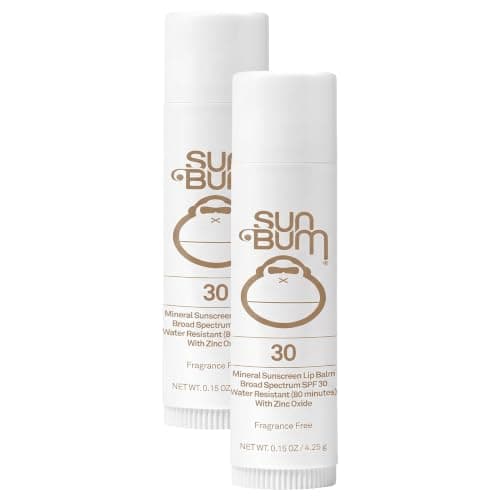 Sun Bum Mineral SPF 30 Sunscreen Lip BalmBest overall · SPF 30 | Buying several and leaving one in every bag | $7.60 · View on Amazon #ad We earn from qualifying purchases · Price as of November 2, 2026 |
| 2 |  Raw Elements Lip Rescue SPF 30Best for water and snow · SPF 30 | Boat days, ski days, and anything reflecting light upward | |
| 3 | 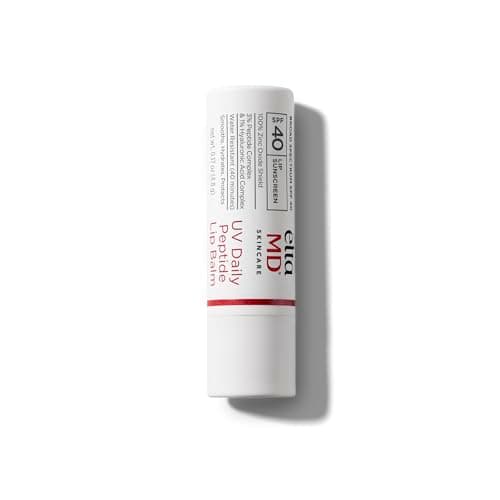 EltaMD UV Daily Peptide Lip Balm SPF 40Best for cracked lips · SPF 40 | Lips that are already dry, chapped or peeling | $25.00 · View on Amazon #ad We earn from qualifying purchases · Price as of November 2, 2026 |
| 4 | 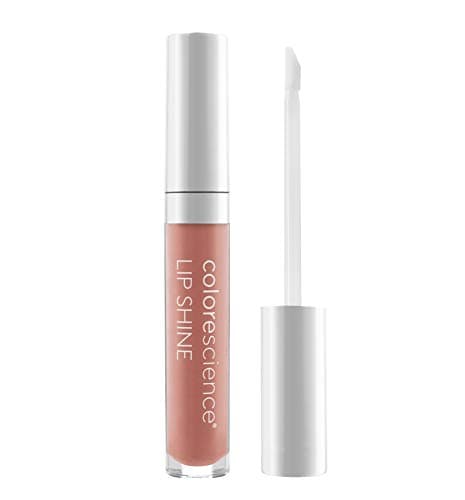 Colorescience Sunforgettable Lip Shine SPF 35Best tinted · SPF 35 | Wearing lip SPF to work without it looking like sunscreen | $42.00 · View on Amazon #ad We earn from qualifying purchases · Price as of November 2, 2026 |
How we chose these
SPF 30 or higher, broad spectrum, and a labeled water-resistance claim were the three gates. The first is not our invention — it is the American Academy of Dermatology's own lip guidance, which tells you to use a non-irritating lip balm at SPF 30 or higher containing zinc oxide or titanium oxide before going outdoors. All four picks below are mineral, which on lips matters more than it does anywhere else.
After that we preferred fragrance-free or lightly flavored formulas over candy-flavored ones, because a balm you lick off has stopped protecting anything. We read the actives panel for every product on the brand's own US product page or its retail drug-facts listing, and we confirmed each one had a working add-to-cart on the day this page was written. We do not run a lab and we do not wear-test, so there are no scores here — where an independent organization has tested a product, we name them rather than restating their work as ours. Our methodology is the long version.
Three balms that routinely appear on lists like this one are not here. Supergoop Play Lip Balm SPF 30 is a chemical-filter formula whose own label tells you to use a water-resistant sunscreen if you will be swimming or sweating — which is a label's way of saying this is not one. EltaMD's older UV Lip Balm is sold as SPF 30, SPF 31 and SPF 36 by different retailers with zinc percentages that disagree between listings, so we use the brand's current mineral lip balm instead. And Vanicream's Lip Protectant SPF 30, the obvious pick for reactive lips, appears to have been discontinued: the pharmacies still listing it show it sold out or down to remaining stock. If you find one, buy it.
Why lips burn before the rest of your face
Three things stack against them. The vermilion — the colored part of the lip — carries far less melanin than facial skin, so it has less built-in defense. Its outer layer is thinner. And it has almost no sebaceous glands, which is why lips dry out and crack while the skin two millimeters away is fine.
The lower lip takes the worst of it, for the plain geometric reason that it faces more open sky than the upper lip does. It is also where actinic cheilitis — the persistently rough, scaly change dermatologists watch for on sun-damaged lips — turns up most often. A patch on your lip that stays scaly for weeks is a dermatologist visit, not a balm problem.
None of this is exotic. It is the same dose-and-response relationship that governs every other patch of skin: how sunscreen works applies to a lip exactly as it applies to a shoulder. What differs is that eating, drinking and talking strip the product faster here than anywhere else on the body, and almost nobody treats that as a reason to reapply.
What is actually in these four
A lip balm that makes an SPF claim is regulated as an over-the-counter drug, so the actives panel is on the tube and the water-resistance claim has to be earned in a test. Most brands do not publish filter percentages for lip products the way they do for lotions, so where a concentration is not published we describe the filter rather than invent a number.
| Lip balm | Active filters | SPF | Water resistance |
|---|---|---|---|
| Sun Bum Mineral Lip Balm | Zinc oxide 8% | SPF 30 | 80 minutes |
| Raw Elements Lip Rescue | Non-nano zinc oxide only | SPF 30 | 80 minutes |
| EltaMD UV Daily Peptide Lip Balm | Zinc oxide, listed at 12.2% | SPF 40 | 40 minutes |
| Colorescience Lip Shine | Zinc oxide | SPF 35 | 40 minutes |
Two things to notice. All four are mineral, which matters on lips in a way it does not on a shoulder: whatever goes on your mouth, you eventually swallow a little of, and zinc oxide is the filter with the longest history of being used that way. And the split on water resistance is the real dividing line on this page — two balms claim 80 minutes, two claim 40. The 40-minute pair are daily-wear products. The 80-minute pair are the ones to take near water.
Our picks in detail
01 · Best overall
Sun Bum Mineral SPF 30 Sunscreen Lip Balm
Sun Bum · Read our Sun Bum review
Zinc oxide 8% at SPF 30 with the full 80 minutes of water resistance, for the price of a coffee. Cheap enough to scatter around the house, the car and the beach bag, which is how lip SPF actually gets worn.
- Actives:
- 8% zinc oxide
- SPF:
- SPF 30
- Water resistance:
- 80 minutes
- Reef status:
- Zinc only — no oxybenzone or octinoxate
- Best for:
- Buying several and leaving one in every bag
What works
- Zinc-only actives at a drugstore price
- 80-minute water resistance
- Light enough that people keep wearing it
The trade-off
- Thin film — it needs a second pass to do its job
- Lightly flavored, which invites licking in a way an unscented balm does not
- Stock on the brand's own store has been unreliable this season
#ad We earn from qualifying purchases · Price as of November 2, 2026
02 · Best for water and snow
Raw Elements Lip Rescue SPF 30
Raw Elements
Non-nano zinc as the only filter in a dense balm built to stay put. The heaviest feel of the four, and the one to take where UV arrives from below as well as above.
- Actives:
- Non-nano zinc oxide, the only active filter
- SPF:
- SPF 30
- Water resistance:
- 80 minutes
- Reef status:
- Zinc only — no oxybenzone, octinoxate or octocrylene
- Best for:
- Boat days, ski days, and anything reflecting light upward
What works
- Zinc-only actives, which matters on a product you partly swallow
- Dense, long-wearing film
- 80-minute water resistance
The trade-off
- Visibly white going on, and it stays slightly visible
- Stiff in cold weather — it wants warming before it spreads
- Most Amazon listings are multipacks rather than a single tube
03 · Best for cracked lips
EltaMD UV Daily Peptide Lip Balm SPF 40
EltaMD · Read our EltaMD review
The highest SPF here and the only all-mineral balm on the page built as a treatment as much as a sunscreen — zinc at 12.2% in a peptide and cocoa butter base. The 40-minute water-resistance claim is what you give up.
- Actives:
- Zinc oxide, which EltaMD lists at 12.2%, as the only active filter
- SPF:
- SPF 40
- Water resistance:
- 40 minutes
- Reef status:
- Zinc only — no oxybenzone, octinoxate or octocrylene
- Best for:
- Lips that are already dry, chapped or peeling
What works
- SPF 40, all-mineral, with no white cast to speak of
- Genuinely moisturizing base for already-damaged lips
- The least draggy texture of the four
The trade-off
- 40 minutes of water resistance, not 80
- Dermatology-counter pricing for a lip balm
- A small tube, so the cost per month is high if you reapply properly
#ad We earn from qualifying purchases · Price as of November 2, 2026
04 · Best tinted
Colorescience Sunforgettable Lip Shine SPF 35
Colorescience · Read our Colorescience review
A sheer tinted zinc balm with a gloss finish — the one most likely to be reapplied by someone who would never reapply a waxy stick. The 40-minute claim is the trade you make for that.
- Actives:
- Zinc oxide
- SPF:
- SPF 35
- Water resistance:
- 40 minutes
- Reef status:
- Zinc only — no oxybenzone, octinoxate or octocrylene
- Best for:
- Wearing lip SPF to work without it looking like sunscreen
What works
- Zinc filter in a finish people will wear daily
- Sheer tint flatters rather than sitting on top of the lip
- Reapplies cleanly over itself without looking layered
The trade-off
- 40 minutes of water resistance, not 80
- Among the most expensive lip SPF you can buy
- Gloss transfers onto cups faster than a matte balm
#ad We earn from qualifying purchases · Price as of November 2, 2026
How much, and how often
Every SPF number comes from laboratory testing at a dose most people never apply, and lips are the worst offenders because the product goes on as a swipe rather than a measured amount. How much sunscreen to apply covers the arithmetic for the rest of the body. For lips, the working version is shorter:
- Two passes, not one, and carry the product right out to the edge of the lip line where the vermilion meets skin. That border is where damage concentrates, and it is where a single quick swipe always stops short.
- Reapply after anything that touches your mouth — a meal, a drink, a napkin, a swim, a towel. That is a far shorter interval than the two hours you would use on an arm.
- Set a worst-case cadence of every two hours anyway, because talking alone wears product off.
- Do the lower lip first. It sees the most sky, and it is the one people under-apply because the upper lip is easier to reach.
- Keep one in a pocket, not in a bag. The whole advantage of the format is that it is still with you at hour three — the same argument that makes a sunscreen stick worth carrying.
The water-resistance trap
In the United States a sunscreen may claim water resistance for 40 or 80 minutes only, and it has to be tested for the claim it makes. A product with no claim at all is not a slightly weaker water-resistant product — it is an untested one, and its own label will quietly tell you to use something else if you are swimming or sweating. What water-resistant actually means walks through the test.
On lips this matters more than anywhere else, because the ways product comes off are constant and mechanical rather than occasional. Our rule is to treat an 80-minute claim as the floor for anything going near water, and to treat every drink as a reapplication cue whatever the tube says.
Flavor, shine, and the licking problem
A sweet or minty balm invites lip-licking, and licking does two things at once: it strips the product you just applied, and the saliva evaporates and leaves the lip drier than it started. The AAD's chapped-lip guidance makes the same point from the other side — if a lip product stings, burns or tingles, that is irritation rather than activity, and the advice is to stop using it.
Shine is a similar trade. A glossy finish is pleasant, and it is the finish most likely to be reapplied, which is the whole game. But high-shine balms transfer onto cups and cutlery faster than waxy matte ones, so a sheer tinted balm is a daily-wear product rather than a beach product. That is why the tinted pick below is framed as the one you will wear to work, not the one to take on a boat.
Mineral or chemical, on lips specifically
The usual filter argument changes shape here for one reason: ingestion. Nobody eats their body lotion; everyone eats a little of their lip balm. That is the case for keeping lips mineral, and it is why all four picks are zinc-led. Zinc oxide sunscreen, explained covers what the filter does and what the absorption evidence shows, and mineral versus chemical sunscreen covers the wider argument.
There is a second argument that has nothing to do with your body. Octinoxate and oxybenzone are restricted in Hawaii and in Key West, and a chemical-filter lip balm goes into the water on your face exactly as a lotion does. If a reef trip is the reason you are reading this, a zinc-only balm removes the question entirely — where reef-safe sunscreen is actually required has the list of places that legislate it.
Snow, altitude and the case for the heaviest option
Fresh snow reflects a large share of the UV that lands on it straight back upward, and UV intensity climbs with altitude. That combination is why lips crack and burn on a ski day in a way they do not on a beach day at the same temperature: the light is arriving from below, which is precisely the angle a hat brim cannot cover.
For that case we would take the zinc-only Raw Elements pick, reapply on every lift ride, and accept the heavier feel. It is the same logic that governs sunscreen for hiking: the product that is easy to reapply with gloves on beats the elegant one that stays in a pocket all day.
What a lip balm does not do
- It does not cover the skin around your mouth. A balm stops at the vermilion border; the perioral area needs your face sunscreen. The best sunscreen for your face is the layer underneath.
- It does not survive a hot car. A wax-based balm that melts and re-sets separates, and the texture never fully returns. Heat also shortens a sunscreen's useful life — does sunscreen expire applies to the tube in your glovebox.
- It does not protect a lip you keep licking. No formula survives that, at any SPF.
- It does not replace shade. A wide brim keeps direct sun off an upper lip; nothing keeps reflected light off the lower one except product.
What we left off, and why
Two whole categories are missing on purpose. The first is the large population of balms whose SPF claim stops at 15. SPF 15 is a legal sunscreen and it sits below the level the AAD recommends for sun exposure, so none of them belong on a page about the part of your face that burns first. The second is anything carrying no water-resistance claim at all, which is where most drugstore tinted balms live.
We also leave off products we cannot confirm you can buy, and we do not type prices into this page. Sun Bum's mineral balm has moved in and out of stock on the brand's own store this season; it stays at the top of the list because it remains widely available elsewhere, and if its buy link reads as unavailable when you get there, that is the reason. Every number beside a pick is read from Amazon and stamped with the date it was read.
Sources
- 7 dermatologists' tips for healing dry, chapped lips — American Academy of Dermatology
- Mineral SPF 30 Sunscreen Lip Balm — product page and drug facts — Sun Bum
- Lip Rescue SPF 30 — product page — Raw Elements USA
- Questions and Answers: FDA Requirements for Over-the-Counter Sunscreen Products — U.S. Food and Drug Administration
- 21 CFR 201.327 — Over-the-counter sunscreen drug products; required labeling — Legal Information Institute, Cornell Law School
- Sunscreen FAQs — American Academy of Dermatology
Frequently asked questions
Does lip balm with SPF actually work?
Yes, with the same caveat as any sunscreen: it works at the dose you apply, for as long as it stays on. Lips lose product to eating, drinking and talking faster than any other area, so the limiting factor is reapplication rather than the formula.
What SPF should a lip balm be?
SPF 30 or higher, broad spectrum. That is the American Academy of Dermatology's guidance for lips, and it also recommends a balm containing zinc oxide or titanium oxide. SPF 15 balms are legal sunscreens, but they sit below that bar.
How often should you reapply SPF lip balm?
Every two hours as a floor, and immediately after eating, drinking, swimming or wiping your mouth. In practice the meal is the cue that matters — more product comes off during lunch than during the two hours around it.
Is it safe to swallow a little zinc oxide lip balm?
Zinc oxide is the sunscreen filter with the longest history of use on lips and on infant skin, which is the main reason we lead with mineral balms here rather than chemical ones. It is still a drug product: follow the label, and keep it away from children young enough to eat a whole tube.
Do flavored lip balms make you lick your lips more?
A sweet or minty balm does invite licking, and licking removes the product and leaves lips drier as the saliva evaporates. If a balm stings, burns or tingles, the AAD's advice is to stop using it — that sensation is irritation, not protection.
Read next
Sun Safety
The best sunscreen sticks
The sunscreen sticks worth buying, what their actives panels say, and the number of passes it takes to reach the SPF on the tube.
Face & Tinted SPF
The best sunscreen for your face
Daily face SPF by skin type and finish, from mineral to hybrid, with the trade-off named on each.
Sun Safety
What water-resistant sunscreen actually means
What the 40 and 80-minute claims measure, why toweling ends them, and how to plan a pool day around it.
Mineral Sunscreen
Zinc oxide sunscreen, explained
What zinc oxide does, what the percentage means, and how to choose a formula you will keep using.
Reviews
EltaMD sunscreen review
Which products in the range are actually mineral, why UV Clear is recommended so often, and what it contains.
Sun Safety
How much sunscreen to apply
The measures by body area, and why under-application costs more protection than it seems.