Mineral Sunscreen
Sunscreens with zinc oxide and titanium dioxide
Two mineral filters in one tube is a formulation decision, not a compromise. Here is which products use both, and what the combination is for.
Disclosure: Spf & Shore earns commission from qualifying purchases made through links on this page, at no extra cost to you. It does not change which products we recommend. Read the full disclosure.
Zinc oxide and titanium dioxide are the only two mineral UV filters sold in the United States, and plenty of good sunscreens use both. Our pick of the dual-filter field is Blue Lizard Sensitive Mineral SPF 50+: both minerals, fragrance-free, and the maximum 80 minutes of water resistance a US label may claim.
If you came here because a panel listed two minerals and you wanted to know whether that was a good sign: it usually is. Combining the filters lets a formulator reach a given SPF with a texture that is easier to wear than zinc alone would give at the same number. What it does not do is add a protection claim — SPF and broad spectrum are tested on the finished formula, not on its parts.
Quick picks
Tap any row to read the full write-up below.
| # | Product | Best for | Price |
|---|---|---|---|
| 1 | 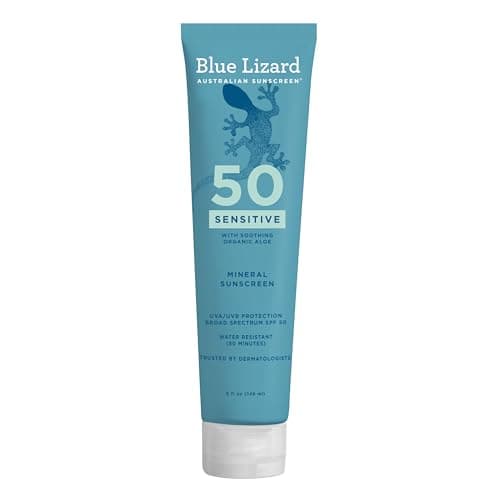 Blue Lizard Sensitive Mineral Sunscreen SPF 50+Best overall · SPF 50+ | A household bottle that suits faces and bodies, including reactive skin | $13.46 · View on Amazon #ad We earn from qualifying purchases · Price as of November 23, 2026 |
| 2 | 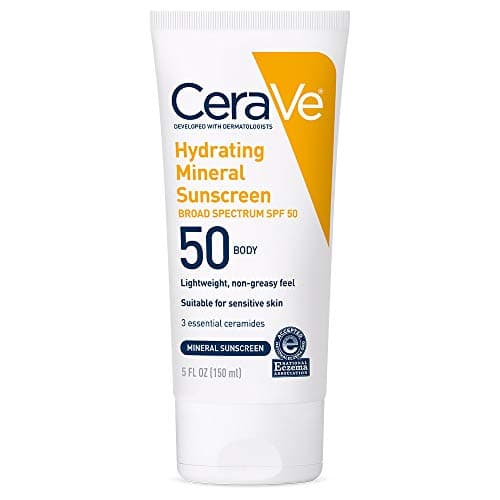 CeraVe Hydrating Mineral Sunscreen SPF 50 BodyBest drugstore blend · SPF 50 | Everyday body cover from a pharmacy shelf | $14.99 · View on Amazon #ad We earn from qualifying purchases · Price as of November 23, 2026 |
| 3 |  Vanicream Mineral Sunscreen SPF 50+ for Sensitive SkinBest for reactive skin · SPF 50+ | Skin that reacts to fragrance, dyes and the usual base ingredients | |
| 4 | 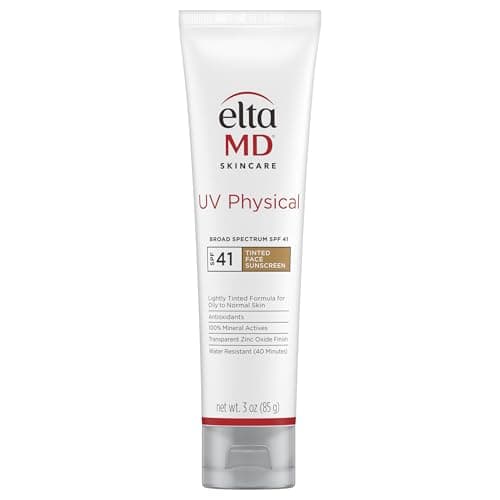 EltaMD UV Physical Tinted Broad-Spectrum SPF 41Best tinted face option · SPF 41 | A face product where the cast is the dealbreaker | $34.40 · View on Amazon #ad We earn from qualifying purchases · Price as of November 23, 2026 |
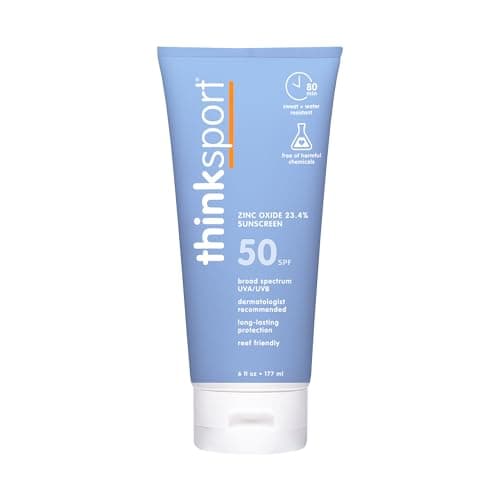
| 5 |  Thinksport All Sheer Mineral Sunscreen Spray SPF 50Most transparent panel · SPF 50 | Anyone who wants the actual numbers before they buy | |
| 6 | 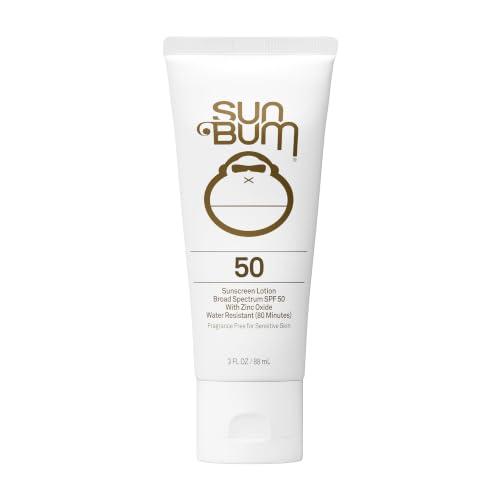 Sun Bum Mineral Sunscreen Lotion SPF 50Best travel size · SPF 50 | A bag, a glovebox or a day pack | $15.97 · View on Amazon #ad We earn from qualifying purchases · Price as of November 23, 2026 |
What each filter brings
In one paragraph: zinc oxide covers the widest range on its own, extending further into long UVA than titanium does, which is why zinc-only products generally pass the broad-spectrum test without help. Titanium dioxide is strong against UVB and short UVA and weak against long UVA, and it tends to produce a drier, more powdery finish. Zinc oxide versus titanium dioxide is the full comparison if you want to settle which is better in isolation.
This page is the other question — not which is better, but which products contain both and what you get when they do.
Why a formulator uses both
- Texture at a given SPF. Titanium contributes UVB efficiency at a lower total mineral load, so the finished product can hit SPF 50 with less material sitting on the skin than a zinc-only formula would need.
- Finish. Titanium's drier, more powdery feel offsets the occlusive heaviness of a zinc-heavy base, which is why so many facial mineral sunscreens are blends.
- Coverage. Zinc supplies the long-UVA end that titanium is weak at, so the pair covers the spectrum with each filter doing what it is good at.
- Cost and supply. Titanium dioxide is generally the cheaper of the two minerals, which matters in a large body bottle more than in a 1.7 ounce face tube.
None of those is a protection argument, and it is worth being clear about that. A dual-filter SPF 50 is not better protected than a zinc-only SPF 50. It is the same tested number arrived at with a formula that is usually easier to wear — and the sunscreen you will put on properly is the one that protects you.
Which products publish both percentages
Most brands list their mineral actives without numbers, which tells you what is in the tube and nothing about how much. A few publish both percentages, and those are the panels worth reading, because the total mineral load is what predicts the cast and the weight on skin far better than which two minerals are named.
| Product | Zinc oxide | Titanium dioxide | SPF | Water resistance |
|---|---|---|---|---|
| Thinksport All Sheer Mineral Spray | 15.7% | 3.4% | SPF 50 | 80 minutes |
| Australian Gold Tinted Mineral Spray | 4.40% | 4.10% | SPF 50 | 80 minutes |
| Blue Lizard Sensitive Mineral SPF 50+ | Listed, not quantified | Listed, not quantified | SPF 50+ | 80 minutes |
| CeraVe Hydrating Mineral Body SPF 50 | Listed, not quantified | Listed, not quantified | SPF 50 | 40 minutes |
| Vanicream Mineral SPF 50+ | Listed, not quantified | Listed, not quantified | SPF 50+ | 80 minutes |
| EltaMD UV Physical Tinted SPF 41 | Listed, not quantified | Listed, not quantified | SPF 41 | 40 minutes |
| Sun Bum Mineral SPF 50 | Listed, not quantified | Listed, not quantified | SPF 50 | 80 minutes |
The two sprays are instructive precisely because they are so far apart. Thinksport carries nearly 19% total mineral and reads heavier on skin; the Australian Gold tinted spray carries about 8.5% and is correspondingly sheerer, with the tint doing some of the visual work. Both are labeled SPF 50, because SPF is measured on the finished formula rather than calculated from the percentages — which is the single most useful thing to understand about a mineral panel.
Our picks in detail
01 · Best overall
Blue Lizard Sensitive Mineral Sunscreen SPF 50+
Blue Lizard · Read our Blue Lizard review
Zinc oxide and titanium dioxide together, fragrance-free, with the maximum 80 minutes of water resistance a US label may claim. It is the clearest demonstration of what the blend is for: broad coverage at a texture that does not feel like putting on a coat.
- Actives:
- Zinc oxide and titanium dioxide
- SPF:
- SPF 50+
- Water resistance:
- 80 minutes
- Reef status:
- Mineral filters only; the Sensitive formula omits oxybenzone and octinoxate
- Best for:
- A household bottle that suits faces and bodies, including reactive skin
What works
- Both mineral filters with the maximum 80-minute water-resistance claim
- Fragrance-free, and the range runs from baby through face on the same system
- Widely stocked, so replacing it is easy
The trade-off
- Percentages are not published, so you cannot check the total mineral load
- Stubborn to rub in when you are reapplying over an existing layer
- Cast is still present and needs working in on medium and deep tones
#ad We earn from qualifying purchases · Price as of November 23, 2026
02 · Best drugstore blend
CeraVe Hydrating Mineral Sunscreen SPF 50 Body
CeraVe · Read our CeraVe review
Zinc oxide and titanium dioxide at SPF 50 in a ceramide base, which is the part that distinguishes it — the base is doing moisturizer work as well as carrying the filters, and it is sold wherever sunscreen is sold.
- Actives:
- Zinc oxide and titanium dioxide, with ceramides
- SPF:
- SPF 50
- Water resistance:
- 40 minutes
- Reef status:
- Mineral filters only
- Best for:
- Everyday body cover from a pharmacy shelf
What works
- Both mineral filters at SPF 50 in a base with ceramides
- Fragrance-free and widely available at drugstore prices
- Dermatology-counter formulation sold at supermarket reach
The trade-off
- 40 minutes of water resistance rather than 80
- Thick enough that a full body application takes real effort
- Percentages not published
#ad We earn from qualifying purchases · Price as of November 23, 2026
03 · Best for reactive skin
Vanicream Mineral Sunscreen SPF 50+ for Sensitive Skin
Vanicream · Read our Vanicream review
Zinc and titanium at SPF 50+ with 80 minutes of water resistance, in the Vanicream base built without fragrance, dyes, lanolin, parabens or formaldehyde releasers. Most sunscreen reactions come from the base rather than the filters, and this is the base designed around that fact.
- Actives:
- Zinc oxide and titanium dioxide
- SPF:
- SPF 50+
- Water resistance:
- 80 minutes
- Reef status:
- Mineral filters only
- Best for:
- Skin that reacts to fragrance, dyes and the usual base ingredients
What works
- Free of fragrance, dyes, lanolin, parabens and formaldehyde releasers
- SPF 50+ with the maximum 80-minute water-resistance claim
- Both mineral filters, so unrestricted under every reef law
The trade-off
- Thick and slow to spread over a body
- Noticeable cast while you work it in
- Percentages not published on the listing
04 · Best tinted face option
EltaMD UV Physical Tinted Broad-Spectrum SPF 41
EltaMD · Read our EltaMD review
Zinc and titanium with iron oxides for tint at SPF 41 — the tinting is what makes a dual-mineral face product wearable on medium and deeper tones, and iron oxides add visible-light coverage that the minerals alone do not provide.
- Actives:
- Zinc oxide and titanium dioxide, tinted with iron oxides
- SPF:
- SPF 41
- Water resistance:
- 40 minutes
- Reef status:
- Mineral filters only
- Best for:
- A face product where the cast is the dealbreaker
What works
- Tinted with iron oxides, so the mineral cast is corrected rather than hidden
- Both mineral filters in a face-weight formula
- Fragrance-free
The trade-off
- 40 minutes of water resistance
- One tint cannot suit every skin tone
- Dermatologist-counter pricing in a small tube
#ad We earn from qualifying purchases · Price as of November 23, 2026
05 · Most transparent panel
Thinksport All Sheer Mineral Sunscreen Spray SPF 50
Thinksport · Read our Thinksport review
15.7% zinc oxide with 3.4% titanium dioxide, both published, at SPF 50 with 80 minutes of water resistance. Nearly 19% total mineral is a heavy load, and the brand tells you so rather than leaving you to guess from the word sheer on the front.
- Actives:
- 15.7% zinc oxide with 3.4% titanium dioxide, both non-nano
- SPF:
- SPF 50
- Water resistance:
- 80 minutes
- Reef status:
- Mineral filters only
- Best for:
- Anyone who wants the actual numbers before they buy
What works
- Both percentages published — rare in this category
- SPF 50 with the maximum 80-minute water-resistance claim
- Spray format covers a body faster than a cream
The trade-off
- A high total mineral load means a more visible layer
- Sprays deliver far less to the skin than people assume — rub it in
- Never spray near a face; decant into your hands instead
06 · Best travel size
Sun Bum Mineral Sunscreen Lotion SPF 50
Sun Bum
Zinc and titanium at SPF 50 with 80 minutes of water resistance in a 3 ounce tube — the dual-filter formula to keep where you will actually reach for it rather than the big bottle at home.
- Actives:
- Zinc oxide and titanium dioxide
- SPF:
- SPF 50
- Water resistance:
- 80 minutes
- Reef status:
- Mineral filters only
- Best for:
- A bag, a glovebox or a day pack
What works
- SPF 50 with the maximum 80-minute water-resistance claim
- 3 ounces, so it clears the carry-on liquid limit
- Mineral actives, unrestricted wherever reef rules apply
The trade-off
- Small tube: about three full-body applications, not a holiday's worth
- Visible cast that needs blending
- Percentages not published
#ad We earn from qualifying purchases · Price as of November 23, 2026
How to tell from the front of the box
You cannot, reliably. Mineral, 100% mineral, physical and natural are marketing words with no agreed definition between them, and a product described as mineral-based may still carry a chemical filter. The only authoritative panel is the Drug Facts box, where the active ingredients are listed by name with their percentages.
- Turn the box over and read Active Ingredients. If it names zinc oxide and titanium dioxide and nothing else, it is a dual-filter mineral sunscreen.
- Check for a third name. Avobenzone, homosalate, octisalate, octocrylene and octinoxate are chemical filters; any of them means the product is not mineral-only, whatever the front says.
- Look for the words broad spectrum, which is a separate tested claim and the one that covers UVA.
- Check the water-resistance minutes. US labels may say 40 or 80 and nothing else — no number at all means it was not tested for it.
- Note the percentages if they are there. Add them up: total mineral load is the best single predictor of how visible and how heavy a formula will be.
How to read a sunscreen label walks through the whole panel, and what natural sunscreen means covers the words that are doing no work at all.
Does the combination affect the white cast?
Titanium dioxide is the whiter of the two minerals per unit, so a naive reading says a blend must look worse. In practice the cast is driven by the combined load and by how well the particles are dispersed in the base, not by which minerals are present. A well-dispersed blend at 12% total can look better than a poorly formulated zinc-only product at 20%.
Where a blend reliably helps is finish: the drier feel suits oily and combination skin and sits better under makeup. Where it reliably does not help is deeper skin tones, because no mineral formula is invisible — why mineral sunscreen leaves a white cast explains why, and tinted formulas like the EltaMD and Australian Gold products here are the honest answer rather than a sheerer white one. Tinted sunscreen for deeper skin tones has those picks in full.
Nano, non-nano and two filters
Brands that advertise non-nano zinc do not always say anything about their titanium dioxide, and the particle size question applies to both minerals. If non-nano matters to you, look for it stated for each filter rather than inferred from the front of the pack. Non-nano versus nano zinc oxide covers what the distinction does and does not mean.
Reef rules treat them the same
Neither mineral is restricted by any current reef-protection law. The named filters in those rules are chemical ones — oxybenzone and octinoxate principally — so a zinc-and-titanium sunscreen is compliant everywhere a ban applies. Where reef-safe sunscreen is required sets out which laws cover which destinations.
When to choose zinc-only instead
- You want the single broadest filter. Zinc alone carries the long-UVA end, and a zinc-only panel is the simplest thing to verify.
- You are buying for a baby or for reactive skin, where zinc's long history on irritated skin makes it the conventional starting point.
- You want the shortest possible ingredient list. One active is easier to check than two.
- You have had a reaction before and are working out what caused it — though fragrance and botanical extracts in the base cause far more sunscreen reactions than either mineral does.
The best zinc oxide sunscreens covers that field, every pick with a published zinc percentage and no titanium at all. If you want the wider mineral category including both, the best mineral sunscreens is the general roundup.
Sources
- Sunscreen: How to Help Protect Your Skin from the Sun — U.S. Food and Drug Administration
- Questions and Answers: FDA Requirements for Over-the-Counter Sunscreen Products — U.S. Food and Drug Administration
- Sunscreen Drug Products for Over-the-Counter Human Use (proposed rule) — Federal Register / FDA
- Sunscreen FAQs — American Academy of Dermatology
- 21 CFR 201.327 — Over-the-counter sunscreen drug products; required labeling — Legal Information Institute, Cornell Law School
Frequently asked questions
Is a sunscreen with both zinc oxide and titanium dioxide better?
Not better protected — SPF and broad spectrum are tested on the finished formula, so a dual-filter SPF 50 and a zinc-only SPF 50 carry the same tested claim. What the combination usually buys is texture: titanium contributes UVB efficiency at a lower total mineral load, so the product can reach a given SPF with less material sitting on the skin.
Which sunscreens contain both zinc oxide and titanium dioxide?
Blue Lizard Sensitive Mineral SPF 50+, CeraVe Hydrating Mineral SPF 50, Vanicream Mineral SPF 50+, EltaMD UV Physical Tinted SPF 41, Sun Bum Mineral SPF 50 and Thinksport All Sheer Mineral Spray SPF 50 all list both filters. Thinksport and Australian Gold's tinted mineral spray are the two here that publish the actual percentages.
Is titanium dioxide safe in sunscreen?
Titanium dioxide is one of only two mineral UV filters permitted in US sunscreens, alongside zinc oxide, and it sits on the surface of the skin rather than being absorbed the way chemical filters are. The caution that comes up concerns inhaling loose powder, which is why spray and powder formats should never be used near a face.
Can you be allergic to zinc oxide or titanium dioxide?
True allergy to either mineral is rare. Most reactions attributed to mineral sunscreen come from fragrance, essential oils or botanical extracts in the base, which is why fragrance-free formulations are the starting point for reactive skin rather than a particular filter.
Are zinc oxide and titanium dioxide reef safe?
Neither is restricted by any current reef-protection law. The filters named in those laws are chemical ones, principally oxybenzone and octinoxate, so a sunscreen using both minerals is compliant in every destination with a ban in force.
What percentage of zinc and titanium should a sunscreen have?
There is no target number to aim for, because SPF is measured on the finished formula rather than calculated from the actives. What the total of the two percentages does predict is how visible and how heavy the layer will be: around 19% total reads as a substantial mineral film, while around 8% reads sheer.
Read next
Mineral Sunscreen
Zinc oxide vs titanium dioxide
Which mineral filter covers which part of the spectrum, how they differ on skin, and why formulas combine them.
Mineral Sunscreen
The best zinc oxide sunscreens
Zinc-only mineral sunscreens, compared on their published zinc percentage, SPF and water resistance.
Mineral Sunscreen
The best mineral sunscreens
Zinc-only picks for faces, bodies and kids, chosen on actives and water resistance rather than packaging.
Mineral Sunscreen
How much zinc oxide should be in a mineral sunscreen?
Zinc percentages run 10% to 25% in US sunscreens. What the number predicts about texture, cast and job fit.
Reef-Safe & Ingredients
How to read a sunscreen label
How to read the drug facts panel line by line, and what every front-of-bottle claim is worth.
Mineral Sunscreen
Non-nano vs nano zinc oxide
What the non-nano claim means, why brands advertise it, and whether the distinction should change what you buy.