Sun Safety
The best sunscreen for working outside
A beach holiday is two weeks a year. An outdoor job is forty hours a week in the same light, which is a completely different protection problem.
Disclosure: Spf & Shore earns commission from qualifying purchases made through links on this page, at no extra cost to you. It does not change which products we recommend. Read the full disclosure.
Our overall pick is Thinksport SPF 50+: 20% non-nano zinc oxide, SPF 50+, 80 minutes of water resistance, and cheap enough per bottle to apply a real dose every single morning. The budget pick is the Blue Lizard Sensitive Mineral Stick SPF 50+ at 20% zinc, cheap enough to keep one in a toolbox, one in a truck and one in a jacket.
Outdoor work is the highest-dose sun exposure most people will ever have, and it almost never gets treated that way. The CDC's own sun-safety guidance singles out outdoor workers, and the arithmetic is simple: eight hours a day across a season is an order of magnitude more ultraviolet than any holiday, delivered through the hours the EPA names as the peak of the UV day.
That changes what a good product looks like. Cosmetic finish stops mattering. Price per ounce starts mattering enormously, because you are applying a full dose daily rather than twice a summer. And the things that cannot be sweated off do most of the work.
Quick picks
Tap any row to read the full write-up below.
| # | Product | Best for | Price |
|---|---|---|---|
| 1 | 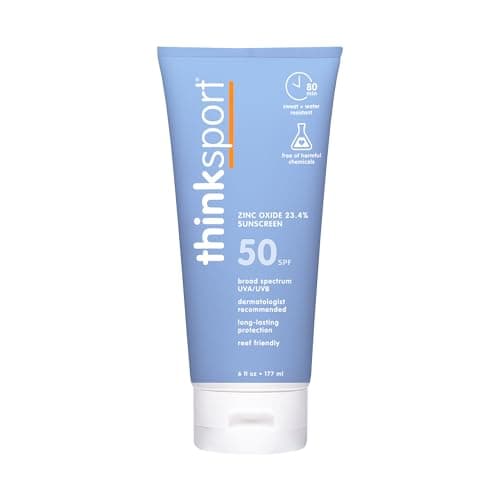 Thinksport Sunscreen SPF 50+Best overall · SPF 50+ | The morning coat on arms, neck and chest, every working day | $14.99 · View on Amazon #ad We earn from qualifying purchases · Price as of November 23, 2026 |
| 2 | 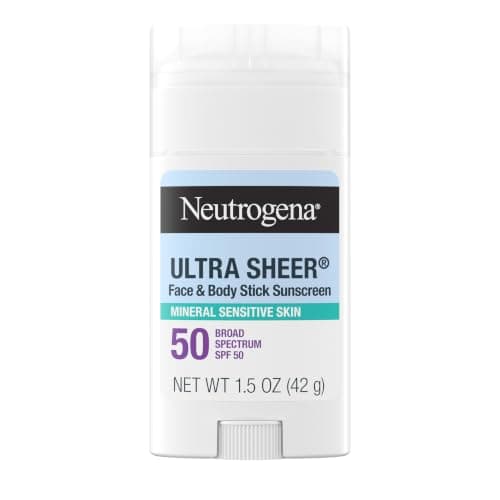 Neutrogena Ultra Sheer Face & Body Mineral Sunscreen Stick SPF 50Best for the lunchtime top-up · SPF 50 | Face, ears and the back of the neck without washing your hands | $15.00 · View on Amazon #ad We earn from qualifying purchases · Price as of November 23, 2026 |
| 3 | 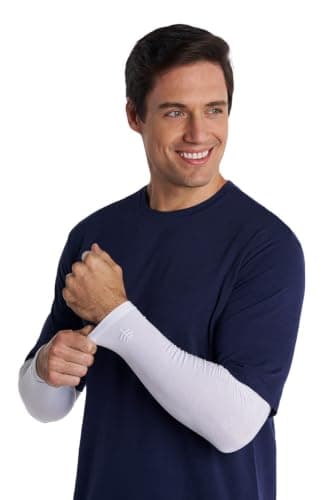 Coolibar Sun Arm Sleeves UPF 50+Best for the driving arm · UPF 50+ | The forearm that takes years of extra sun through a cab window | $32.00 · View on Amazon #ad We earn from qualifying purchases · Price as of November 23, 2026 |
| 4 | 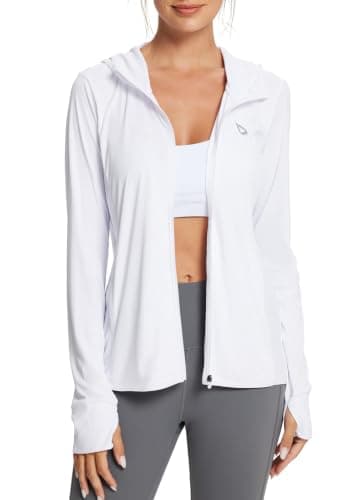 Baleaf UPF 50+ Sun Protection HoodieBest shirt · UPF 50+ | A day with no shade, where you want one decision and no reapplying | $23.99 · View on Amazon #ad We earn from qualifying purchases · Price as of November 23, 2026 |
| 5 | 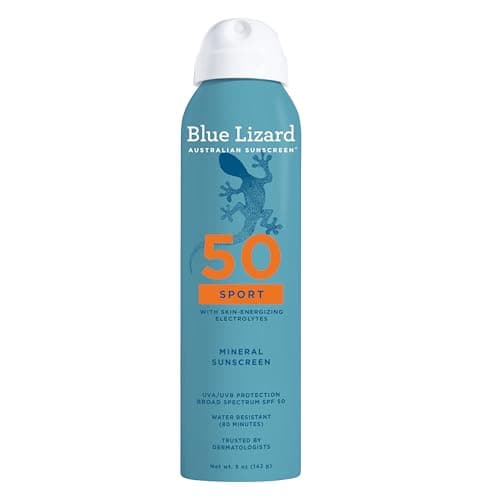 Blue Lizard Sport Mineral Sunscreen Spray SPF 50+Best for the places you cannot reach · SPF 50+ | A back or a pair of legs before the shift starts | $18.94 · View on Amazon #ad We earn from qualifying purchases · Price as of November 23, 2026 |
| 6 | 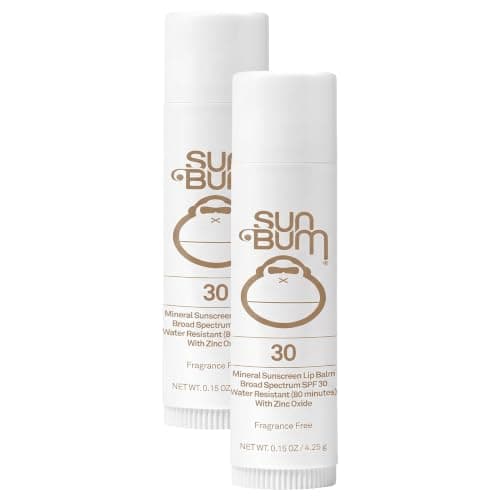 Sun Bum Mineral SPF 30 Sunscreen Lip BalmBest for lips · SPF 30 | A lower lip that is in the sun eight hours a day | $7.98 · View on Amazon #ad We earn from qualifying purchases · Price as of November 23, 2026 |
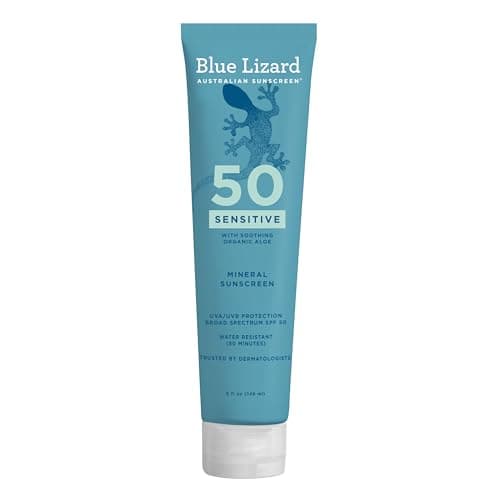
| 7 | 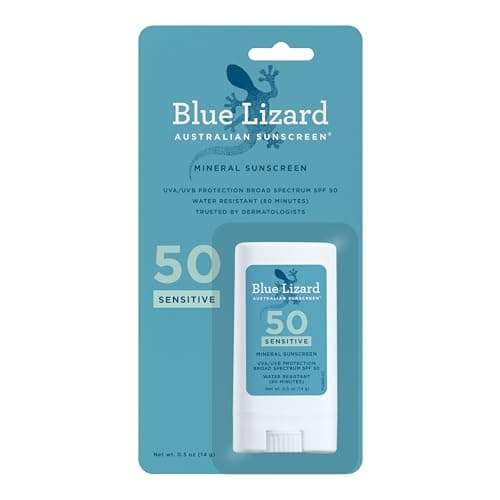 Blue Lizard Sensitive Mineral Sunscreen Stick SPF 50+Budget pick · SPF 50+ | Owning three, so there is always one within reach | $8.77 · View on Amazon #ad We earn from qualifying purchases · Price as of November 23, 2026 |
Why a work week is a different problem from a beach day
On a beach day you apply sunscreen once, generously, because the day is about the sun. At work, nobody is thinking about the sun at all. The exposure is incidental to the job, which means every protection decision has to survive being an afterthought: applied in a truck at 6am, never topped up, and competing with sweat, dust, gloves and a shirt collar for the rest of the day.
The cumulative dose is the thing to take seriously. One bad burn is painful and memorable; a decade of unremarkable daily exposure to the forearms, the back of the neck and the ears is what actually drives the lifetime risk, and it never feels like an event. Sunscreen vs no sunscreen covers what the long-term trial evidence shows, which is the evidence that matters here.
What we looked for
- Low cost per ounce. A full body dose is roughly an ounce. If that feels expensive you will quietly halve it, and halving the dose costs more protection than dropping from SPF 50 to SPF 30.
- 80 minutes of water resistance, the maximum a US label may claim, as the nearest available proxy for sweat resistance.
- A stick that lives in the truck, because a product you have to go home for is a product you will not reapply at lunch.
- Fabric over the forearms and shoulders, which is the only protection that cannot be sweated off between the morning coffee and the end of the shift.
- Mineral filters, because the sunscreen that runs into your eye at hour five decides whether you keep using it. Our methodology.
We run no laboratory and do not field-test. Every figure below is read off the brand's own US listing or its published OTC drug label.
The picks compared
| Product | What it covers | Material or actives | Water resistance |
|---|---|---|---|
| Thinksport SPF 50+ | Arms, neck, chest | 20% non-nano zinc oxide | 80 minutes |
| Neutrogena Ultra Sheer Mineral Stick SPF 50 | Face, ears, neck | 21.6% zinc oxide | 80 minutes |
| Coolibar Sun Arm Sleeves UPF 50+ | Forearms and upper arms | UPF 50+ knit | Quick-dry |
| Baleaf UPF 50+ Sun Protection Hoodie | Torso, shoulders, head | Polyester-spandex knit rated UPF 50+ | Quick-dry, rated dry |
| Blue Lizard Sport Mineral Spray SPF 50+ | Backs and legs | 24% zinc oxide, sole filter | 80 minutes |
| Sun Bum Mineral Lip Balm SPF 30 | Lips | 8% zinc oxide | 80 minutes |
| Blue Lizard Sensitive Mineral Stick SPF 50+ | Face and neck | 20% zinc oxide | 80 minutes |
Our picks in detail
01 · Best overall
Thinksport Sunscreen SPF 50+
Thinksport · Read our Thinksport review
20% non-nano zinc oxide as the sole filter at SPF 50+, with 80 minutes of water resistance, at a price per bottle that makes a daily full dose realistic. That last point is what wins it: a product you ration is a product that is not working, and this is cheap enough to use properly five mornings a week.
- Actives:
- 20% non-nano zinc oxide
- SPF:
- SPF 50+
- Water resistance:
- 80 minutes
- Reef status:
- Zinc only — no oxybenzone, octinoxate or octocrylene
- Best for:
- The morning coat on arms, neck and chest, every working day
What works
- High stated zinc concentration with the maximum water-resistance claim
- Cheap enough to apply a genuine dose daily
- Mineral filters, so it stings far less when sweat moves it
The trade-off
- Visible cast that needs a minute of rubbing in
- Thick in cold weather and slow to spread
- 80 minutes is a fraction of a shift, so it needs topping up
#ad We earn from qualifying purchases · Price as of November 23, 2026
02 · Best for the lunchtime top-up
Neutrogena Ultra Sheer Face & Body Mineral Sunscreen Stick SPF 50
Neutrogena
21.6% zinc oxide at SPF 50 with 80 minutes of water resistance, in a solid you can use with dirty hands and without a mirror. The reason it earns a place is purely practical: a mid-shift reapplication only happens if it takes ten seconds and does not need soap afterwards.
- Actives:
- 21.6% zinc oxide
- SPF:
- SPF 50
- Water resistance:
- 80 minutes
- Reef status:
- Zinc only — no oxybenzone, octinoxate or octocrylene
- Best for:
- Face, ears and the back of the neck without washing your hands
What works
- Applies with dirty hands and leaves palms dry
- High stated zinc concentration and a real water-resistance claim
- Small enough to live in a glove box permanently
The trade-off
- Visible cast, more so on deeper skin
- Deposits less per pass than a lotion
- Too small to cover a pair of arms
#ad We earn from qualifying purchases · Price as of November 23, 2026
03 · Best for the driving arm
Coolibar Sun Arm Sleeves UPF 50+
Coolibar
A UPF 50+ knit sleeve where the protection is the fabric rather than a coating, so it does not wash out. It covers the single most asymmetrically damaged area on anyone who drives for a living, and it requires exactly one decision a day rather than three.
- Actives:
- UPF 50+ knit sleeve — the protection is the fabric, not a coating
- SPF:
- UPF 50+
- Water resistance:
- Quick-dry
- Reef status:
- Not applicable
- Best for:
- The forearm that takes years of extra sun through a cab window
What works
- UPF 50+ protection that cannot sweat or rub off
- Pulls on and off in seconds between jobs
- Often cooler than a bare arm in direct sun
The trade-off
- Protects only what it covers, with an edge at the wrist
- Not abrasion-rated, so it is sun kit rather than work kit
- Can slide down on a thinner arm over a long shift
#ad We earn from qualifying purchases · Price as of November 23, 2026
04 · Best shirt
Baleaf UPF 50+ Sun Protection Hoodie
Baleaf
A polyester-spandex knit rated UPF 50+ with a hood and long sleeves, quick-drying enough to be wearable in heat. It is the only item here that protects for a full shift without being reapplied, which on a bad week is the difference between protection and good intentions.
- Actives:
- Polyester-spandex knit rated UPF 50+
- SPF:
- UPF 50+
- Water resistance:
- Quick-dry; rated dry
- Reef status:
- Not applicable
- Best for:
- A day with no shade, where you want one decision and no reapplying
What works
- UPF 50+ cover for a whole shift from one decision
- Covers the shoulders and upper back properly
- Quick-dry knit, so sweat does not make it unwearable
The trade-off
- Rated dry; a soaked knit can transmit more UV
- Warm in still air at the height of summer
- Does nothing for the face, ears, hands or lips
#ad We earn from qualifying purchases · Price as of November 23, 2026
05 · Best for the places you cannot reach
Blue Lizard Sport Mineral Sunscreen Spray SPF 50+
Blue Lizard · Read our Blue Lizard review
24% zinc oxide as the sole active filter in a continuous spray with 80 minutes of water resistance. On a site there is rarely anybody to do your back for you, and a spray with this much zinc in it is a legitimate first coat rather than only a top-up, provided you rub it in afterwards.
- Actives:
- 24% zinc oxide as the sole active filter
- SPF:
- SPF 50+
- Water resistance:
- 80 minutes
- Reef status:
- Zinc only — no oxybenzone or octinoxate
- Best for:
- A back or a pair of legs before the shift starts
What works
- Zinc as the only filter at a high stated concentration
- Reaches a back and a pair of legs without help
- Fast enough to happen before a 6am start
The trade-off
- Deposits less than the tested dose unless rubbed in
- Wind takes a real share of it in the open
- Wrong format for a face: spray into your hands first
#ad We earn from qualifying purchases · Price as of November 23, 2026
06 · Best for lips
Sun Bum Mineral SPF 30 Sunscreen Lip Balm
Sun Bum · Read our Sun Bum review
8% zinc oxide at SPF 30 with 80 minutes of water resistance. The lower lip is the area outdoor workers protect least and the one with almost no melanin of its own, and a water-resistant mineral balm costs less than a pair of work gloves.
- Actives:
- 8% zinc oxide
- SPF:
- SPF 30
- Water resistance:
- 80 minutes
- Reef status:
- Zinc only — no oxybenzone or octinoxate
- Best for:
- A lower lip that is in the sun eight hours a day
What works
- Mineral filter with a real water-resistance claim
- Cheap enough to keep one in every jacket
- Does not sting if it migrates in sweat
The trade-off
- SPF 30 rather than 50
- Faint white tint on the lip line
- Softens badly if it lives on a dashboard
#ad We earn from qualifying purchases · Price as of November 23, 2026
07 · Budget pick
Blue Lizard Sensitive Mineral Sunscreen Stick SPF 50+
Blue Lizard · Read our Blue Lizard review
20% zinc oxide at SPF 50+ with 80 minutes of water resistance, usually the cheapest serious sunscreen we recommend anywhere. The whole value here is duplication: one in the truck, one in a toolbox and one in a jacket costs less than a single premium face tube and removes every excuse not to top up.
- Actives:
- 20% zinc oxide
- SPF:
- SPF 50+
- Water resistance:
- 80 minutes
- Reef status:
- Zinc only — no oxybenzone, octinoxate or octocrylene
- Best for:
- Owning three, so there is always one within reach
What works
- The lowest price of any sunscreen on this page
- SPF 50+ with the maximum water-resistance claim
- Fragrance-free, which suits weather-chapped skin
The trade-off
- Small format, so a full face takes a while
- More cast than the clear sticks on the same shelf
- Not a body answer for an adult
#ad We earn from qualifying purchases · Price as of November 23, 2026
The three places outdoor work damages first
- The left forearm, if you drive. Anybody who spends hours in a cab with the window down has one arm that has taken years more sun than the other, and the asymmetry is usually visible by forty.
- The back of the neck. Between a collar and a hard hat or cap there is a strip of skin that takes direct sun all day and gets sunscreen roughly never, because you cannot see it.
- The ears and the nose. Both protrude, both catch light from every angle, and both are standard sites for the sun damage that turns up decades later.
All three are solvable with items on this page, and two of the three are better solved with fabric than with a bottle. A sleeve on the driving arm and a brim or a cape on the neck remove the need to remember anything.
Cost per application is the number that matters
A correct adult body application is about an ounce of product. Twice a day, five days a week, is a very different consumption rate from a holiday, and it is the reason we lead with a cheap, high-concentration zinc lotion rather than anything from a dermatology counter. A $45 face tube is a perfectly good product and the wrong economics for someone who needs forty applications a month.
The other half of the arithmetic is the bottle size. The same brand will sell a 3-ounce and an 8-ounce bottle at prices that look similar in a list of search results, and the large one is almost always the cheaper sunscreen per use as well as the one you will dose properly. How much sunscreen to apply has the amounts by body area, and the best sunscreens under $15 is the page to read if cost is the binding constraint.
Sweat, dust and why mineral wins here
Two things end sunscreen habits on a worksite. The first is sting: sweat carries a chemical filter into the eye and it genuinely burns, which on a ladder or behind machinery is a safety issue rather than an annoyance. The second is grit, because a tacky film holds dust and ends the day feeling like sandpaper.
Mineral formulas help with both. Zinc on the surface of an eye is uncomfortable rather than painful, and a mineral film that has set dry is less tacky than the wetter chemical textures. Applying twenty minutes before you start, so it is dry before the first sweat, makes more difference than any product choice.
What we would actually buy
One large bottle of Thinksport in the truck for the morning coat, one mineral stick in the glove box and a second in a toolbox, sleeves for the driving arm, one UPF hoodie for the days with no shade at all, and a lip balm. The sticks are the part most people skip and the part that makes the lunchtime top-up happen, which across a season is worth more than any upgrade to the bottle. The best sunscreen sticks and the best UPF sun sleeves and gloves cover those two categories in depth.
Sources
- Sun Safety — Centers for Disease Control and Prevention
- Learn About the UV Index — U.S. Environmental Protection Agency
- How to prevent skin cancer — American Academy of Dermatology
- Sun-Protective Clothing — Skin Cancer Foundation
- Questions and Answers: FDA Requirements for Over-the-Counter Sunscreen Products — U.S. Food and Drug Administration
Frequently asked questions
What is the best sunscreen for working outside all day?
A cheap, high-concentration zinc lotion for the morning plus a stick you keep in the vehicle for the top-up, and a UPF shirt or sleeves on the areas you cannot keep re-coating. The reason to prioritise price and format over finish is consumption: a correct body dose is about an ounce, and at forty applications a month a premium tube is the wrong economics.
How often should outdoor workers reapply sunscreen?
At least every two hours, and sooner after heavy sweating. The longest water-resistance claim a US label may carry is 80 minutes, measured in still water without abrasion, so on a working day treat that as a ceiling rather than a schedule and plan one deliberate top-up around lunch.
Is a long-sleeve shirt better than sunscreen for work?
For the skin it covers, yes. A UPF 50+ knit transmits about a fiftieth of the ultraviolet that reaches it and keeps doing so for the whole shift without being reapplied. It is not a complete answer, because the face, ears, hands, neck and lips are all outside it.
Why does one arm get more sun damage than the other?
Because of driving. Anybody who spends hours in a cab with the window down presents one forearm to direct and reflected sun for a large share of their working life, and the difference between the two arms is often visible by middle age. A sleeve on that arm is the simplest fix there is.
Does sunscreen stop working when you sweat?
It thins out rather than switching off, and how fast depends on the formula, the dose and how much abrasion is involved. A water-resistant label means the product retained its SPF through a defined immersion test, not that it is permanent. Heavy sweating with a shirt collar rubbing is harsher than the test, so reapply.
Can an employer require sun protection?
Practices vary by employer and jurisdiction, and we are not the right source for an employment question. What is not in doubt is that outdoor work is specifically named in CDC sun-safety guidance as a high-exposure situation, which makes shade, scheduling, long sleeves and a hat reasonable things to ask about.
Read next

Sun Protective Gear
The best sun shirts
UPF 50+ shirts and hoodies chosen on fabric, fit and heat management — protection that never needs reapplying.
Sun Protective Gear
The best UPF sun sleeves and gloves
UPF 50+ arm sleeves, sun gloves and leg sleeves for the forearms, hands and shins a shirt and hat never reach.
Sun Safety
The best sunscreen sticks
The sunscreen sticks worth buying, what their actives panels say, and the number of passes it takes to reach the SPF on the tube.
Sun Safety
The best sunscreens under $15
Nine sunscreens under $15 across body, face, spray, stick and lips, picked on actives and water resistance rather than on being the cheapest thing on the shelf.
Sun Safety
The best sunscreen for men
Sunscreens that suit the way most men actually apply them — fast, dry-finish, sweat-proof — plus the one upgrade that beats all of them.

Sun Safety
How much sunscreen to apply
The measures by body area, and why under-application costs more protection than it seems.