Sun Safety
The best sunscreen for Black skin
The protection question is settled. The real question is which formats go on without leaving an ashy film — and that depends on the body part.
Disclosure: Spf & Shore earns commission from qualifying purchases made through links on this page, at no extra cost to you. It does not change which products we recommend. Read the full disclosure.
Our overall pick is Australian Gold SPF 50 Tinted Mineral Spray: a low total mineral load — 4.40% zinc oxide with 4.10% titanium dioxide — carried in a tint, at SPF 50 with 80 minutes of water resistance. It is the formula that covers a body fast without the gray film a 20% zinc lotion leaves. For a face, Supergoop! Mineral Sheerscreen SPF 30 is the sheerest mineral here.
Two things are true at once. Deeper skin burns less readily, which is real — and skin cancer in Black patients is diagnosed later and has worse outcomes, which is also real, and is the reason daily sun protection is not optional. What has genuinely held people back is cosmetic: most mineral sunscreen was formulated to disappear on light skin and leaves an ashy cast on deep skin. That is a formulation problem with formulation answers.
Quick picks
Tap any row to read the full write-up below.
| # | Product | Best for | Price |
|---|---|---|---|
| 1 |  Australian Gold SPF 50 Tinted Mineral Sunscreen SprayBest overall for a body · SPF 50 | Arms, shoulders and legs with no gray film | |
| 2 |  Supergoop! Mineral Sheerscreen SPF 30Sheerest mineral for a face · SPF 30 | Daily facial wear where a cast is unacceptable | |
| 3 | 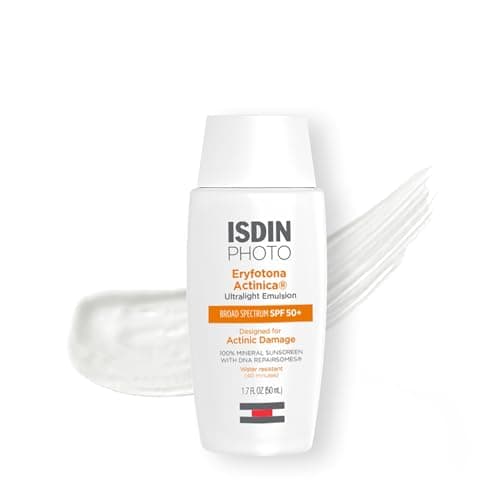 ISDIN Eryfotona Actinica Mineral Sunscreen SPF 50+Best untinted option · SPF 50+ | Anyone who wants zinc only and no pigment at all | $46.00 · View on Amazon #ad We earn from qualifying purchases · Price as of October 11, 2026 |
| 4 | 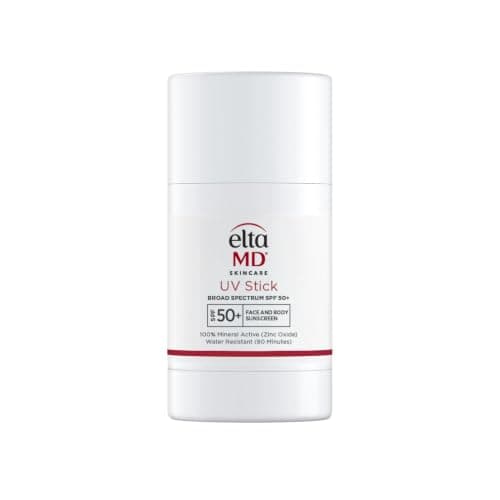 EltaMD UV Stick Broad Spectrum SPF 50+Best for ears, hairline and neck · SPF 50+ | The spots that get missed and never get reapplied | $40.00 · View on Amazon #ad We earn from qualifying purchases · Price as of October 11, 2026 |
| 5 | 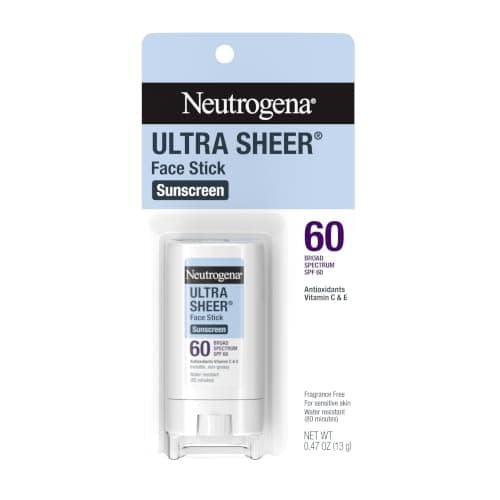 Neutrogena Ultra Sheer Face Sunscreen Stick SPF 60Best if you refuse any cast at all · SPF 60 | Faces where zero white film is the only requirement | $8.08 · View on Amazon #ad We earn from qualifying purchases · Price as of October 11, 2026 |
Why the cast happens, and what fixes it
Zinc oxide and titanium dioxide are white powders. They protect by sitting in a film on the surface of the skin, and that film scatters visible light as well as ultraviolet — which is exactly why it reads gray. The higher the concentration, the more powder, and the more obvious the film. A 24% zinc lotion will always look heavier on deep skin than a 9% one, no matter how it is marketed.
Three things fix it, in rising order of reliability. Smaller particle sizes and better dispersion reduce the scatter. A lower total mineral percentage reduces the amount of powder in the first place. And iron-oxide tints cancel the cast outright by adding pigment in the same film — which is why tinted formulas, not untinted ones, are the dependable answer on deep skin. Why mineral sunscreen leaves a white cast covers the physics.
Iron oxides do something else worth having. They absorb visible light, which contributes to hyperpigmentation and post-inflammatory marks in a way UV filters do not address — and those are among the most common dermatology complaints on deeper skin. Iron oxides and visible light explains the evidence.
What we looked for
- No gray film at a realistic dose — judged on the formula's total mineral load and whether it carries a tint, not on marketing copy.
- Body coverage as well as face, because almost every no-cast page is face-only and bodies still need an answer.
- SPF 30 minimum, SPF 50 preferred, because the goal is cutting cumulative dose and pigmentation rather than just avoiding a burn.
- A tint or a transparent filter system, in that order of preference.
- Fragrance-free where the line offers it. Our methodology.
Our picks in detail
01 · Best overall for a body
Australian Gold SPF 50 Tinted Mineral Sunscreen Spray
Australian Gold
A tint carried over a deliberately low mineral load — 4.40% zinc with 4.10% titanium dioxide — at SPF 50 with 80 minutes of water resistance, which is why it covers a body fast without turning it ashy.
- Actives:
- 4.40% zinc oxide with 4.10% titanium dioxide, tinted
- SPF:
- SPF 50
- Water resistance:
- 80 minutes
- Reef status:
- Mineral filters only
- Best for:
- Arms, shoulders and legs with no gray film
What works
- Tinted, so the cast is canceled rather than hidden
- SPF 50 with 80 minutes of water resistance
- Fast over large areas
The trade-off
- Still has to be rubbed in to deliver the tested dose
- Never spray near a face
02 · Sheerest mineral for a face
Supergoop! Mineral Sheerscreen SPF 30
Supergoop!
Mineral filters under a light universal tint in a sheer base — the mineral face formula most likely to disappear on deep skin rather than sit on top of it.
- Actives:
- Zinc oxide and titanium dioxide, lightly tinted
- SPF:
- SPF 30
- Water resistance:
- 40 minutes
- Reef status:
- Mineral filters only
- Best for:
- Daily facial wear where a cast is unacceptable
What works
- Light tint cancels cast
- Sheer, non-chalky finish
- Mineral filters only
The trade-off
- SPF 30 rather than 50
- 40 minutes of water resistance
03 · Best untinted option
ISDIN Eryfotona Actinica Mineral Sunscreen SPF 50+
ISDIN
Zinc oxide as the sole filter at SPF 50+ in the sheerest untinted base here — the untinted formula with the best chance of not reading gray.
- Actives:
- Zinc oxide as the sole active filter
- SPF:
- SPF 50+
- Water resistance:
- Not labeled water resistant
- Reef status:
- Zinc only
- Best for:
- Anyone who wants zinc only and no pigment at all
What works
- Zinc-only actives
- Unusually sheer for an untinted mineral
- SPF 50+
The trade-off
- Not labeled water resistant
- Dermatology-counter pricing
#ad We earn from qualifying purchases · Price as of October 11, 2026
04 · Best for ears, hairline and neck
EltaMD UV Stick Broad Spectrum SPF 50+
EltaMD · Read our EltaMD review
22% transparent zinc at SPF 50+ with 80 minutes of water resistance — transparent zinc is the one high-percentage formula that does not announce itself on deep skin.
- Actives:
- 22% transparent zinc oxide
- SPF:
- SPF 50+
- Water resistance:
- 80 minutes
- Reef status:
- Zinc only — no oxybenzone, octinoxate or octocrylene
- Best for:
- The spots that get missed and never get reapplied
What works
- Transparent zinc
- SPF 50+ with 80 minutes
- Precise where lotion misses
The trade-off
- Slow over large areas
- Small format
#ad We earn from qualifying purchases · Price as of October 11, 2026
05 · Best if you refuse any cast at all
Neutrogena Ultra Sheer Face Sunscreen Stick SPF 60
Neutrogena
Chemical filters at SPF 60 with 80 minutes of water resistance in a clear stick — no minerals, so no cast, and the highest SPF on this page.
- Actives:
- Avobenzone 3%, homosalate 15%, octisalate 5%, octocrylene 10%
- SPF:
- SPF 60
- Water resistance:
- 80 minutes
- Reef status:
- Contains octocrylene — chemical filters, not a zinc formula
- Best for:
- Faces where zero white film is the only requirement
What works
- Leaves no cast whatsoever
- SPF 60 with 80-minute water resistance
- Stick format
The trade-off
- Contains octocrylene, so it is restricted in some reef jurisdictions
- Chemical filters are more likely to sting eyes
#ad We earn from qualifying purchases · Price as of October 11, 2026
The picks compared
| Product | Actives | SPF | Water resistance | Cast |
|---|---|---|---|---|
| Australian Gold SPF 50 Tinted Mineral Spray | 4.40% zinc oxide with 4.10% titanium dioxide, tinted | SPF 50 | 80 minutes | Tinted, low mineral load |
| Supergoop! Mineral Sheerscreen SPF 30 | Zinc oxide and titanium dioxide, lightly tinted | SPF 30 | 40 minutes | Light tint, sheer |
| ISDIN Eryfotona Actinica SPF 50+ | Zinc oxide as the sole active filter | SPF 50+ | Not labeled water resistant | Untinted but very sheer |
| EltaMD UV Stick SPF 50+ | 22% transparent zinc oxide | SPF 50+ | 80 minutes | Transparent zinc |
| Neutrogena Ultra Sheer Face Stick SPF 60 | Avobenzone, homosalate, octisalate, octocrylene | SPF 60 | 80 minutes | None — chemical filters |
Pick by body part, not by brand
This is the practical insight the category keeps missing. A face is examined in daylight by other people and needs a tint or a genuinely sheer base. A body is mostly covered, and what shows — forearms, shins, shoulders — needs speed and a formula light enough not to turn gray in photographs. Ears, hairlines and the back of the neck need a stick, because nothing else gets reapplied there.
That is three different products for most people, and it is cheaper than it sounds, because the face product is the only one that has to be good. For shade-matched face coverage specifically, the best tinted sunscreen for deeper skin tones compares the tints themselves rather than the formats.
If every mineral formula still reads ashy
- Apply less, more often. A thin layer reapplied is sheerer than one thick coat and protects better than skipping it.
- Warm it between your palms first, then press rather than rub. Pressing disperses the film more evenly.
- Layer over a moisturizer, not onto dry skin — a dry surface grabs the powder in patches.
- Switch to a tinted formula rather than fighting an untinted one. The tint is the fix, not a compromise.
- Consider a chemical facial formula. They leave no cast at all. The trade-off is reef restrictions on some filters and a higher chance of stinging. Mineral versus chemical sunscreen.
Sources
- Sunscreen FAQs — American Academy of Dermatology
- How to prevent skin cancer — American Academy of Dermatology
- Skin Cancer Facts & Statistics — The Skin Cancer Foundation
- How Do I Protect Myself from UV Rays? — American Cancer Society
- Questions and Answers: FDA Requirements for Over-the-Counter Sunscreen Products — U.S. Food and Drug Administration
- Sunscreen — Skin Cancer Foundation
Frequently asked questions
What is the best sunscreen for Black skin?
Australian Gold SPF 50 Tinted Mineral Spray for a body, because the tint and the low total mineral load mean no gray film, and Supergoop! Mineral Sheerscreen SPF 30 for a face. For ears and hairlines, a transparent-zinc stick.
Do Black people need sunscreen?
Yes. Deeper skin burns less readily, but skin cancer in Black patients is diagnosed later and has worse outcomes, and UV still drives hyperpigmentation and photoaging. Daily broad-spectrum protection is the recommendation for every skin tone.
How do I stop sunscreen looking ashy on dark skin?
Choose a tinted formula or one with a low total mineral percentage, apply over moisturizer rather than onto dry skin, warm it between your palms and press it in rather than rubbing. A tint is the reliable fix — iron oxides cancel the cast rather than hiding it.
Is mineral or chemical sunscreen better for deep skin tones?
Chemical filters leave no cast at all, which is a genuine advantage here. Tinted mineral formulas come close and add visible-light protection from the iron oxides, which helps with dark marks. Both protect; pick on finish and on whether reef restrictions apply where you are going.
What SPF should Black skin use?
SPF 30 as a minimum and SPF 50 if you are outdoors for long. The target is cumulative UV dose and pigmentation rather than avoiding a visible burn, so the higher number is still worth having.
Read next

Face & Tinted SPF
The best tinted sunscreen for deeper skin tones
Adaptive and buildable tinted formulas for deep skin, and where the category still falls short.
Mineral Sunscreen
Mineral sunscreens that do not leave a white cast
Sheer and tinted zinc formulas that disappear on skin, including on medium and deep tones.
Face & Tinted SPF
Iron oxides and visible light
Why iron oxides protect as well as tint, and what that means for melasma and hyperpigmentation.
Mineral Sunscreen
Why mineral sunscreen leaves a white cast
The physics behind the cast, the three levers formulators have, and which one actually solves it.
Face & Tinted SPF
The best sunscreen for oily skin
Sunscreens that stay matte on oily skin, chosen on base and finish rather than filter type, with the powder that fixes midday shine.