Sun Safety
The best sunscreen for running
Sweat is the problem, your forehead is the failure point, and the shirt does more than the bottle.
Disclosure: Spf & Shore earns commission from qualifying purchases made through links on this page, at no extra cost to you. It does not change which products we recommend. Read the full disclosure.
Our pick for a runner's face is the EltaMD UV Stick SPF 50+: 22% transparent zinc oxide, SPF 50+, 80 minutes of water resistance, and a solid format you can reapply mid-run with sweaty hands without it running into your eyes. For legs, arms and shoulders, the Blue Lizard Sport Mineral Spray SPF 50+ at 24% zinc is the fastest way to cover a lot of skin before you head out the door.
The thing that makes running different from swimming is not the amount of water — it is where the water comes from. Sweat emerges continuously from underneath the film you applied, which is the one direction a water-resistance test does not simulate. That is why a product rated for 80 minutes in a pool can be visibly gone from a forehead in forty, and why the sting-in-the-eyes problem is the real reason most runners stop wearing sunscreen on their face.
Quick picks
Tap any row to read the full write-up below.
| # | Product | Best for | Price |
|---|---|---|---|
| 1 | 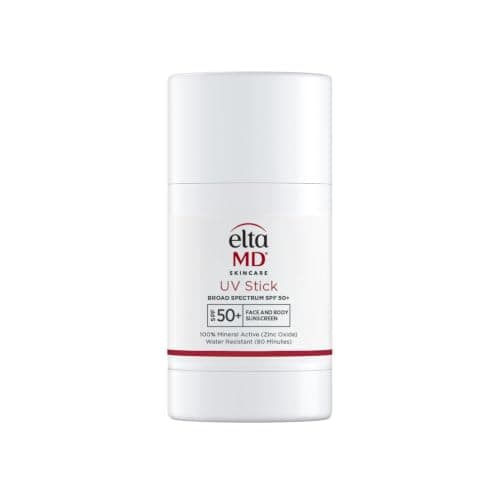 EltaMD UV Stick Broad Spectrum SPF 50+Best for your face · SPF 50+ | Reapplying mid-run with sweaty hands and no mirror | $40.00 · View on Amazon #ad We earn from qualifying purchases · Price as of November 2, 2026 |
| 2 | 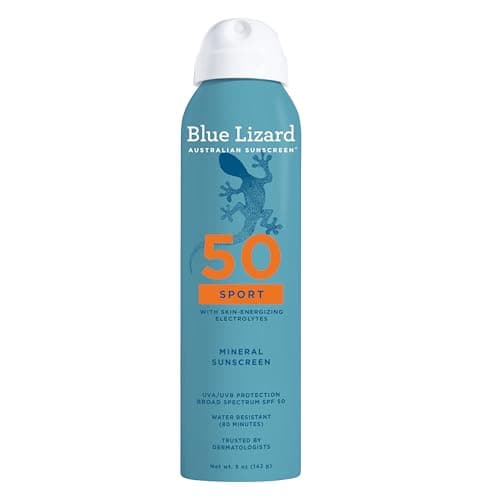 Blue Lizard Sport Mineral Sunscreen Spray SPF 50+Best for legs and arms · SPF 50+ | Covering a lot of skin quickly before you head out | $18.94 · View on Amazon #ad We earn from qualifying purchases · Price as of November 2, 2026 |
| 3 | 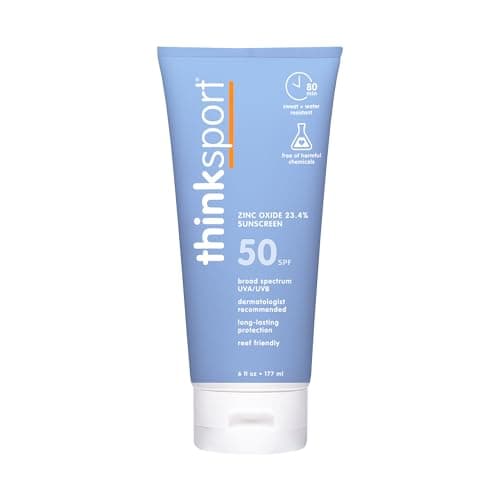 Thinksport Sunscreen SPF 50+Best workhorse bottle · SPF 50+ | The bottle by the door that the whole household uses | $14.99 · View on Amazon #ad We earn from qualifying purchases · Price as of November 2, 2026 |
| 4 | 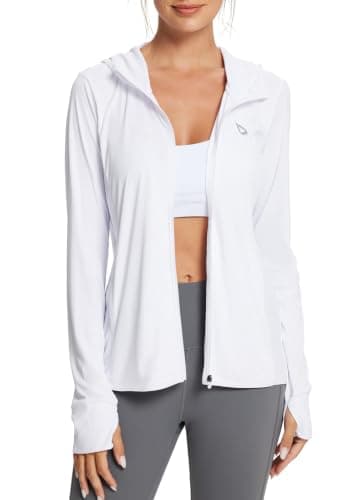 Baleaf UPF 50+ Sun Protection HoodieBest non-sunscreen answer · UPF 50+ | Runs long enough that reapplication is the real problem | $29.99 · View on Amazon #ad We earn from qualifying purchases · Price as of November 2, 2026 |
| 5 | 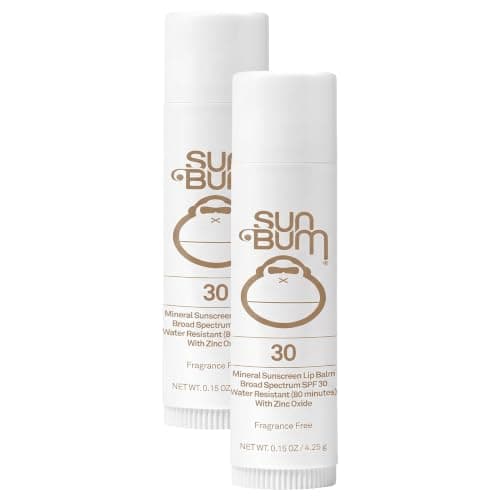 Sun Bum Mineral SPF 30 Sunscreen Lip BalmBest for lips · SPF 30 | The patch of skin no runner ever reapplies to | $7.60 · View on Amazon #ad We earn from qualifying purchases · Price as of November 2, 2026 |
What water resistance does and does not promise
In the United States a sunscreen may claim water resistance for 40 or 80 minutes and nothing else, and it has to earn the claim in a prescribed test: apply the product, wait, then alternate timed immersion in water with timed rest periods out of it, without toweling. What water-resistant sunscreen actually means walks through the procedure.
Notice what the test does not include. There is no sweat in it, no fabric rubbing across a shoulder, no hand wiping a forehead, and no hat band. All four of those are present on a run, and all four remove product. So treat an 80-minute claim as the floor for running rather than as a timer — it tells you the formula was built to stay on wet skin, not that you have eighty minutes of protection.
What we looked for
SPF 50 or higher, 80 minutes of water resistance, mineral filters, and a format that can be reapplied without a mirror. We read the actives panel for every product on the brand's own US product page or its retail drug-facts listing, and confirmed each had a working add-to-cart on the day this page was written. We do not run a lab and we do not wear-test, so there are no scores here. Our methodology is the long version.
We also weighted one thing most roundups ignore: whether the product stings. A sunscreen that migrates into your eyes at mile four gets wiped off your whole forehead, which means the real-world protection goes to zero regardless of what the label earned in a lab. That is why the face pick on this page is a stick and not a lotion.
Why sweat is harder on sunscreen than swimming is
A swim wets the film from above. Sweat wets it from below, pushing up through the same skin the film is sitting on, carrying salt and oil with it. The result is emulsification — the film breaks into droplets, those droplets travel downhill with gravity, and the places they collect are the eyebrows, the eye sockets and the corners of the mouth.
This is also why the failure is uneven. A runner's shoulders and back usually come through a long effort with most of their product intact, because a shirt is holding it in place and there is less sweat volume per square inch. The forehead, the temples and the bridge of the nose lose almost everything. If you have ever finished a summer long run with a burn line that stops exactly where your hat sat, that is the mechanism.
| Area | What removes it | Best format |
|---|---|---|
| Forehead and temples | Sweat, plus wiping with a hand or sleeve | Stick — reapply without a mirror |
| Nose and cheekbones | Sweat and sunglasses movement | Stick or a dense face mineral |
| Shoulders and upper back | Shirt friction, pack straps | A UPF shirt instead of sunscreen |
| Arms | Sweat running down, arm-sleeve edges | Spray for speed, lotion for coverage |
| Legs | Sweat and sock-line rub | Spray — the fastest way to cover a lot of skin |
| Lips and ears | Nothing removes it; nobody applies it | Lip balm and a stick |
Our picks in detail
01 · Best for your face
EltaMD UV Stick Broad Spectrum SPF 50+
EltaMD · Read our EltaMD review
Transparent zinc at 22% in a solid stick, SPF 50+, 80 minutes of water resistance. The format matters more than the formula here: there is almost no mobile liquid to migrate into your eyes.
- Actives:
- 22% transparent zinc oxide
- SPF:
- SPF 50+
- Water resistance:
- 80 minutes
- Reef status:
- Zinc only — no oxybenzone, octinoxate or octocrylene
- Best for:
- Reapplying mid-run with sweaty hands and no mirror
What works
- Nothing to run into your eyes on a hot effort
- Zinc-only actives at the maximum US water-resistance claim
- Pocketable, so reapplication on a long run is realistic
The trade-off
- Thin film — four passes over the same patch, not one
- Dermatology-counter pricing
- Softens out of shape if it lives in a hot car
#ad We earn from qualifying purchases · Price as of November 2, 2026
02 · Best for legs and arms
Blue Lizard Sport Mineral Sunscreen Spray SPF 50+
Blue Lizard · Read our Blue Lizard review
24% zinc oxide as the only active filter, SPF 50+, 80 minutes of water resistance, in a spray that lets you do both legs in under a minute. Still rub it in — a spray that is not spread is a stripe.
- Actives:
- 24% zinc oxide as the sole active filter
- SPF:
- SPF 50+
- Water resistance:
- 80 minutes
- Reef status:
- Zinc only — no oxybenzone or octinoxate
- Best for:
- Covering a lot of skin quickly before you head out
What works
- Zinc-only at a high concentration, in a spray format
- 80-minute water resistance
- Fast enough that you will actually do your legs
The trade-off
- Needs rubbing in or the coverage is uneven
- Wind wastes a meaningful share of what you spray
- Leaves more of a cast than a sheer chemical spray would
#ad We earn from qualifying purchases · Price as of November 2, 2026
03 · Best workhorse bottle
Thinksport Sunscreen SPF 50+
Thinksport · Read our Thinksport review
20% non-nano zinc oxide at SPF 50+ with 80 minutes of water resistance, in tubes big enough that applying a full dose stops feeling extravagant. The least glamorous and most useful bottle here.
- Actives:
- 20% non-nano zinc oxide
- SPF:
- SPF 50+
- Water resistance:
- 80 minutes
- Reef status:
- Zinc only — no oxybenzone, octinoxate or octocrylene
- Best for:
- The bottle by the door that the whole household uses
What works
- High non-nano zinc at the maximum water-resistance claim
- Large sizes make a real dose affordable
- No fragrance, so it is fine on a face as well as a body
The trade-off
- Thick — it takes work to spread on dry skin
- Leaves a visible cast on deeper skin tones
- Too slow to apply if you are already late
#ad We earn from qualifying purchases · Price as of November 2, 2026
04 · Best non-sunscreen answer
Baleaf UPF 50+ Sun Protection Hoodie
Baleaf
A UPF 50+ polyester-spandex hoodie with thumbholes. It protects your arms and shoulders for the whole run, does not wash off in sweat and never needs reapplying — which is more than any bottle on this page can say.
- Actives:
- Polyester-spandex knit rated UPF 50+
- SPF:
- UPF 50+
- Water resistance:
- Quick-dry; rated dry
- Reef status:
- Not applicable
- Best for:
- Runs long enough that reapplication is the real problem
What works
- Rated UPF 50+ knit — no dose question and no reapplication
- Hood and thumbholes cover the neck and the backs of the hands
- Often cooler than bare skin in direct sun and moving air
The trade-off
- Rated dry; a soaked knit transmits more UV than a dry one
- Does nothing for your face, which is where running sun protection fails
- Warm enough to be wrong on a humid day
#ad We earn from qualifying purchases · Price as of November 2, 2026
05 · Best for lips
Sun Bum Mineral SPF 30 Sunscreen Lip Balm
Sun Bum · Read our Sun Bum review
Zinc oxide 8% at SPF 30 with 80 minutes of water resistance, light enough to wear on a run and cheap enough to keep one in every bag.
- Actives:
- 8% zinc oxide
- SPF:
- SPF 30
- Water resistance:
- 80 minutes
- Reef status:
- Zinc only — no oxybenzone or octinoxate
- Best for:
- The patch of skin no runner ever reapplies to
What works
- Zinc-only actives at a drugstore price
- 80-minute water resistance
- Small enough to carry on any run
The trade-off
- Thin film — it needs a second pass
- Lightly flavored, which invites licking it off
- Covers lips and nothing else
#ad We earn from qualifying purchases · Price as of November 2, 2026
The routine that actually survives a long run
- Apply fifteen minutes before you leave, not at the door. The water-resistance test includes a waiting period before immersion for a reason: the film needs to set before it gets wet. Going straight from the bottle into a sweaty effort wastes most of it.
- Do the face with a stick, in four passes, and stop at your hairline. Keep it off the eyelid itself and off the brow line where sweat collects. Sunscreen for eyelids covers the eye area in detail.
- Wear a visor or a cap, and take the forehead problem off the table. A brim does what no formula can: it keeps the sun off the skin that sweats the most.
- Put the shirt on rather than the lotion. A UPF knit does not wash off, does not sting and does not need reapplying. On runs over an hour this is the single highest-value change.
- Carry the stick if the run is over ninety minutes. A stick in a shorts pocket weighs almost nothing and is the only format you can use with wet hands.
- Do the lips. They burn first and no runner reapplies anything to them. The best SPF lip balms has the picks.
Why the shirt is the real answer
The Skin Cancer Foundation's position on sun-protective clothing is the one most runners under-use: a rated UPF fabric blocks a known, labeled fraction of UV and it keeps doing it for the whole run, with no dose question and no reapplication. A UPF 50+ knit is doing more for your shoulders over two hours than any sunscreen you could have applied to them.
The objection is heat, and it is a fair one — but a loose light-colored sun hoodie in moving air is frequently cooler than bare skin in direct sun, because the fabric takes the radiant load instead of your skin. How UPF clothing works explains the rating, and does UPF clothing work when wet answers the question every sweaty runner should ask next.
Sunscreen in your eyes, and how to stop it
The sting is usually not an allergy. It is the emulsifiers and solvents in a lotion moving into the tear film, which is why the same product can be fine on a walk and unbearable on a tempo run. The fixes are mechanical rather than chemical: use a stick so there is less mobile liquid on your face, stop the application below the brow bone, wear a visor to catch what does migrate, and keep a dry patch of sleeve or a wristband to blot with rather than wipe.
If a product stings even at rest, that is a different problem and worth taking seriously — sunscreen allergy and sunscreen rash covers reactions and what to do about them. For the specific case of a child who refuses sunscreen after one bad experience, sunscreen that does not sting your child's eyes is the better page.
Early runs, late runs, and the only free win on this page
UV intensity is not flat across the day. It peaks in the hours around solar noon and falls off sharply at the ends, and the EPA's shadow rule is the simplest field test there is: if your shadow is shorter than you are, you are in the high part of the day. Moving a long run to the early morning removes more UV exposure than any product decision on this page, for free.
On the days you cannot move the run, check the number. What UV index means for sunscreen covers the scale and the thresholds where protection stops being optional. Reflected light matters too — a run along water or on fresh snow delivers UV from below as well as above, which is the angle a visor cannot cover.
What we left off
No chemical-filter sport sunscreens appear here, because this site's product registry is mineral by design and we do not invent entries to fill a slot. That is a real limitation to name: several widely recommended sport sunscreens are avobenzone formulas, and some runners prefer them because they go on invisibly on dark skin. If that is you, mineral versus chemical sunscreen is the honest comparison rather than a sales pitch.
We also left off powder sunscreens, which are excellent for touching up a face in an office and useless on a run — sweat carries loose powder straight off. And we left off anything with a 40-minute water-resistance claim, which is a daily-wear rating rather than a sport one.
Sources
- 21 CFR 201.327 — Over-the-counter sunscreen drug products; required labeling — Legal Information Institute, Cornell Law School
- Questions and Answers: FDA Requirements for Over-the-Counter Sunscreen Products — U.S. Food and Drug Administration
- Sunscreen FAQs — American Academy of Dermatology
- Sun-Protective Clothing — Skin Cancer Foundation
- UV Index Scale — U.S. Environmental Protection Agency
Frequently asked questions
What SPF should you wear for running?
SPF 50 or higher with an 80-minute water-resistance claim. Treat the 80 minutes as a floor rather than a timer: sweat removes product from underneath the film in a way the water-resistance test does not simulate, so a long effort needs reapplication regardless of the number.
Does sweat wash off sunscreen?
Yes, and faster than swimming does on the areas that sweat most. Sweat emerges from under the film, emulsifies it and carries it downhill, which is why foreheads and eye sockets fail first while shoulders under a shirt hold up.
How do you stop sunscreen running into your eyes?
Use a stick rather than a lotion on your face, stop the application below the brow bone, wear a visor or cap to catch what migrates, and blot sweat with a dry patch of sleeve instead of wiping across your forehead.
Is a sun shirt better than sunscreen for running?
For arms, shoulders and back, yes — a rated UPF knit blocks a labeled fraction of UV for the whole run with no dose question and no reapplication. It does nothing for your face, which is where a runner's sun protection actually fails.
Should you reapply sunscreen during a run?
On anything over ninety minutes in real sun, yes. A stick in a shorts pocket is the only format that works with wet hands, and the face is the only area worth stopping for.
Read next
Sun Safety
The best sunscreen for hiking
Sweat-resistant sunscreen plus the shirt and hat that cut the reapplication job on a long exposed day.
Sun Safety
What water-resistant sunscreen actually means
What the 40 and 80-minute claims measure, why toweling ends them, and how to plan a pool day around it.

Sun Protective Gear
The best sun shirts
UPF 50+ shirts and hoodies chosen on fabric, fit and heat management — protection that never needs reapplying.
Sun Safety
What UV index do you need sunscreen?
The EPA's UV Index thresholds, what each band actually asks you to do, the shadow rule for when you have no forecast, and why the number alone is not the whole decision.
Face & Tinted SPF
Sunscreen for eyelids and around your eyes
Why eyelids need sun protection, which formats do not sting, how to apply around the orbital bone, and why sunglasses are the real answer for the lid itself.
Sun Safety
The best sunscreen sticks
The sunscreen sticks worth buying, what their actives panels say, and the number of passes it takes to reach the SPF on the tube.