Sun Safety
The best sunscreen for surfing
Two hours in salt water with no way to reapply is the hardest test in sun care, and it is won by zinc concentration and format rather than by SPF number.
Disclosure: Spf & Shore earns commission from qualifying purchases made through links on this page, at no extra cost to you. It does not change which products we recommend. Read the full disclosure.
Our overall pick is Thinksport SPF 50+: 20% non-nano zinc oxide as the only filter, SPF 50+, and the full 80 minutes of water resistance a US label may claim — applied twenty minutes before you touch the water. The budget pick is the Blue Lizard Sensitive Mineral Stick SPF 50+, usually the cheapest serious zinc on this site, for the face and ears.
Surfing breaks every assumption sunscreen labelling is built on. The FDA's maximum water-resistance claim is 80 minutes, and a session is routinely longer than that — and unlike swimming, you cannot step out, towel off and reapply without losing the set you paddled out for. Add a board rubbing across your chest, salt water running off your face and a wetsuit collar scrubbing at your neck, and you are asking a thin film to survive mechanical abrasion as well as water.
So the honest answer is not one bottle. It is a high-zinc lotion applied before you leave the car, a thick stick on the face and ears where a board and the water hit hardest, and fabric over the shoulders that cannot wash off at all.
Quick picks
Tap any row to read the full write-up below.
| # | Product | Best for | Price |
|---|---|---|---|
| 1 | 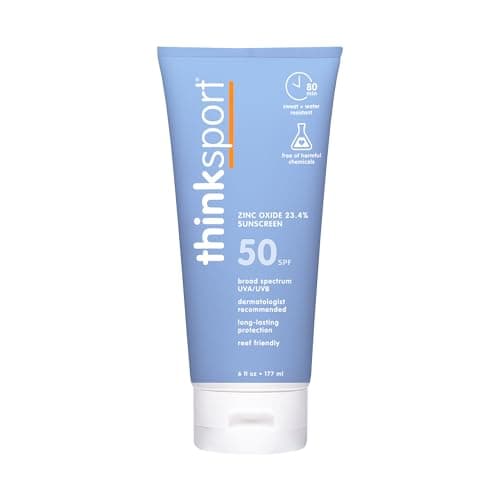 Thinksport Sunscreen SPF 50+Best overall · SPF 50+ | The full-body coat you put on before you leave the car | $14.99 · View on Amazon #ad We earn from qualifying purchases · Price as of November 23, 2026 |
| 2 | 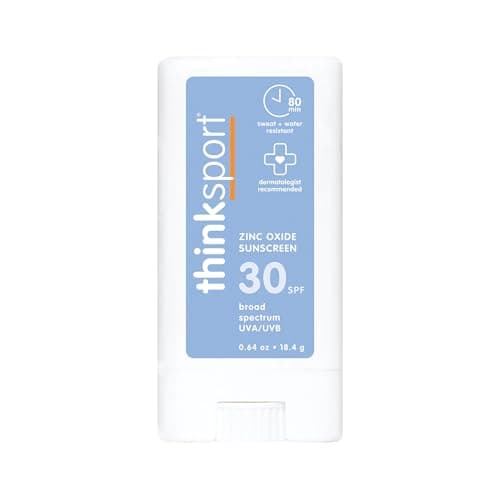 Thinksport Sunscreen Stick SPF 30+Best for the face and ears · SPF 30+ | The nose, ears and cheekbones a board and the water hit hardest | |
| 3 | 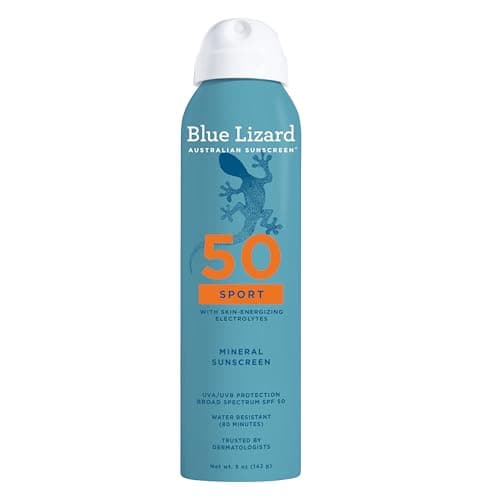 Blue Lizard Sport Mineral Sunscreen Spray SPF 50+Best for backs and shoulders · SPF 50+ | The part of your back you cannot reach before a session | $18.94 · View on Amazon #ad We earn from qualifying purchases · Price as of November 23, 2026 |
| 4 | 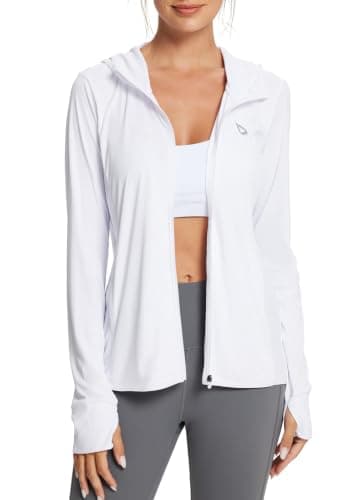 Baleaf UPF 50+ Sun Protection HoodieBest layer that cannot wash off · UPF 50+ | Warm-water sessions where you would otherwise be bare-shouldered | $23.99 · View on Amazon #ad We earn from qualifying purchases · Price as of November 23, 2026 |
| 5 | 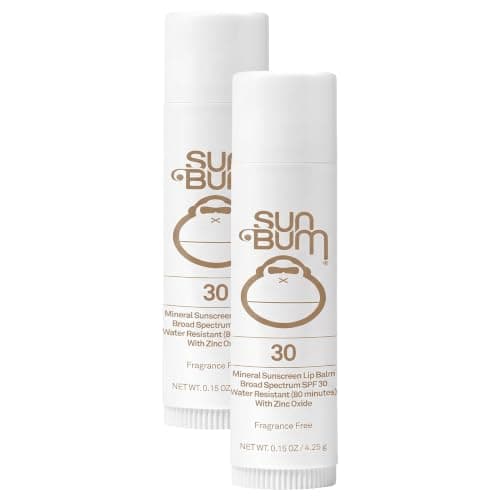 Sun Bum Mineral SPF 30 Sunscreen Lip BalmBest for lips · SPF 30 | The lower lip, which faces straight up at the sky all session | $7.98 · View on Amazon #ad We earn from qualifying purchases · Price as of November 23, 2026 |
| 6 | 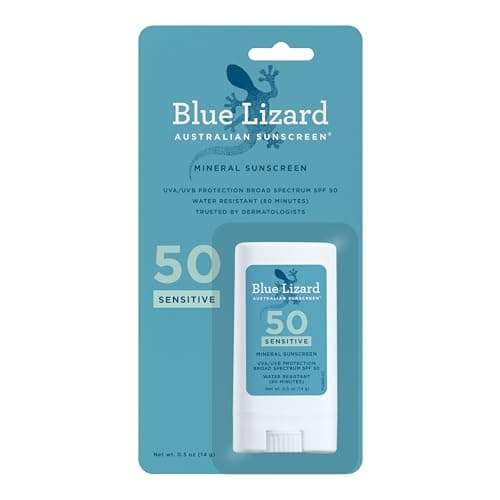 Blue Lizard Sensitive Mineral Sunscreen Stick SPF 50+Budget pick · SPF 50+ | The spare that lives in the car permanently | $8.77 · View on Amazon #ad We earn from qualifying purchases · Price as of November 23, 2026 |
Why surfing is harder on sunscreen than swimming
A pool swimmer is mostly submerged, mostly still, and usually within a few steps of a towel. A surfer is the opposite: you spend most of a session sitting upright on a board with your face, shoulders and the backs of your hands fully exposed at the water's surface, which also reflects UV straight back up at you. The paddling is constant friction against the deck of the board. The duck-dives push water across your face at speed.
That combination of long duration, physical abrasion, reflected light from below and no realistic chance to reapply is why surfers were wearing visible zinc long before the rest of the beach caught up. The thick white stripe is not nostalgia. A heavy mineral film is the one thing on the shelf that stays put through all four problems at once, and what water-resistant sunscreen actually means explains why the 80-minute label is a floor rather than a promise.
What we looked for
- Zinc oxide at a high stated concentration, because the thickness of the film is what survives friction. Every lotion and stick here names its percentage.
- 80 minutes of water resistance, the longest claim a US label is allowed to carry, on everything meant to go in the water.
- A format you can apply with wet, sandy hands, which rules out most pump bottles and favours sticks.
- Reef-relevant filters absent. Zinc-only formulas satisfy every restriction in force in Hawaii, Key West and Palau. What reef-safe actually means sets out the law rather than the marketing.
- Something that is not sunscreen at all. A UPF layer cannot wash off, which is the only genuine answer to a session longer than the label. Our methodology.
We do not run a laboratory and we do not surf-test products. Every figure below is read off the brand's own US listing or its published OTC drug label.
The picks compared
| Product | Format | Actives | Water resistance |
|---|---|---|---|
| Thinksport SPF 50+ | Body lotion | 20% non-nano zinc oxide | 80 minutes |
| Thinksport Sunscreen Stick SPF 30+ | Stick | 24% zinc oxide | 80 minutes |
| Blue Lizard Sport Mineral Spray SPF 50+ | Continuous spray | 24% zinc oxide, sole filter | 80 minutes |
| Baleaf UPF 50+ Sun Protection Hoodie | UPF layer | Polyester-spandex knit rated UPF 50+ | Quick-dry, rated dry |
| Sun Bum Mineral Lip Balm SPF 30 | Lip balm | 8% zinc oxide | 80 minutes |
| Blue Lizard Sensitive Mineral Stick SPF 50+ | Stick | 20% zinc oxide | 80 minutes |
Our picks in detail
01 · Best overall
Thinksport Sunscreen SPF 50+
Thinksport · Read our Thinksport review
20% non-nano zinc oxide as the sole filter at SPF 50+, with the maximum 80 minutes of water resistance a US label may claim. It is thick enough to still be there after a long paddle, and the zinc concentration is the reason. This is the bottle we would put on dry, twenty minutes before the water, and treat as the base layer for everything else.
- Actives:
- 20% non-nano zinc oxide
- SPF:
- SPF 50+
- Water resistance:
- 80 minutes
- Reef status:
- Zinc only — no oxybenzone, octinoxate or octocrylene
- Best for:
- The full-body coat you put on before you leave the car
What works
- High stated zinc concentration, which is what survives friction
- 80 minutes of water resistance, the longest claim allowed
- Zinc only, so it satisfies every reef restriction in force
The trade-off
- Visibly white going on and slow to rub in
- A session longer than 80 minutes outlasts the tested claim
- Not a format you can reapply with wet, sandy hands
#ad We earn from qualifying purchases · Price as of November 23, 2026
02 · Best for the face and ears
Thinksport Sunscreen Stick SPF 30+
Thinksport · Read our Thinksport review
24% zinc oxide is the heaviest mineral load on this page, in a solid you can apply standing up on wet sand. SPF 30+ reads lower than the lotion and matters less than the film: a thick zinc layer on a nose is the single most useful thing in a surfer's bag.
- Actives:
- 24% zinc oxide
- SPF:
- SPF 30+
- Water resistance:
- 80 minutes
- Reef status:
- Zinc only — no oxybenzone, octinoxate or octocrylene
- Best for:
- The nose, ears and cheekbones a board and the water hit hardest
What works
- The highest zinc concentration here at 24%
- 80 minutes of water resistance in a stick format
- Small enough to live in a wetsuit bag permanently
The trade-off
- SPF 30+ rather than 50, so it wants more passes
- Leaves an obvious white stripe, which is the point
- Four passes per area takes longer than anybody does it for
03 · Best for backs and shoulders
Blue Lizard Sport Mineral Sunscreen Spray SPF 50+
Blue Lizard · Read our Blue Lizard review
24% zinc oxide as the sole active filter in a continuous spray with 80 minutes of water resistance, which is an unusually high mineral load for a spray. Use it dry, before the water, over a back or shoulders someone else would otherwise have to do for you, and rub it in rather than trusting the mist.
- Actives:
- 24% zinc oxide as the sole active filter
- SPF:
- SPF 50+
- Water resistance:
- 80 minutes
- Reef status:
- Zinc only — no oxybenzone or octinoxate
- Best for:
- The part of your back you cannot reach before a session
What works
- Zinc as the only filter, uncommon in a spray
- 80 minutes of water resistance
- Reaches a back without a second pair of hands
The trade-off
- Sprays deposit less than the label dose unless rubbed in
- Open-beach wind takes a real share of it
- Useless on skin that is already wet
#ad We earn from qualifying purchases · Price as of November 23, 2026
04 · Best layer that cannot wash off
Baleaf UPF 50+ Sun Protection Hoodie
Baleaf
A polyester-spandex knit rated UPF 50+, quick-drying, with a hood and long sleeves. It is the only item on this page that does not degrade with time in the water, which makes it the honest answer to a session longer than any sunscreen label covers.
- Actives:
- Polyester-spandex knit rated UPF 50+
- SPF:
- UPF 50+
- Water resistance:
- Quick-dry; rated dry
- Reef status:
- Not applicable
- Best for:
- Warm-water sessions where you would otherwise be bare-shouldered
What works
- UPF 50+ protection that cannot be rubbed or rinsed off
- Covers the shoulders and upper back, the worst burn zone
- Quick-dry knit, so it is not heavy coming out of the water
The trade-off
- Rated dry, and wet fabric can transmit more UV than dry
- Warm in a lineup on a hot, windless day
- Does nothing for the face, which is where surfers burn most
#ad We earn from qualifying purchases · Price as of November 23, 2026
05 · Best for lips
Sun Bum Mineral SPF 30 Sunscreen Lip Balm
Sun Bum · Read our Sun Bum review
8% zinc oxide at SPF 30 with 80 minutes of water resistance. Lips have almost no melanin, point upward at both the sun and the reflected light off the water, and get licked clean constantly, which makes this the highest-value few dollars in a surf bag.
- Actives:
- 8% zinc oxide
- SPF:
- SPF 30
- Water resistance:
- 80 minutes
- Reef status:
- Zinc only — no oxybenzone or octinoxate
- Best for:
- The lower lip, which faces straight up at the sky all session
What works
- A mineral filter with a real water-resistance claim
- Cheap enough to keep one in every bag and car door
- Does not sting if it runs into your eyes
The trade-off
- SPF 30 rather than 50
- Leaves a faint white tint on the lip line
- Softens badly if it sits in a hot car
#ad We earn from qualifying purchases · Price as of November 23, 2026
06 · Budget pick
Blue Lizard Sensitive Mineral Sunscreen Stick SPF 50+
Blue Lizard · Read our Blue Lizard review
20% zinc oxide at SPF 50+ with 80 minutes of water resistance, usually the cheapest serious sunscreen we recommend anywhere on this site. It is the one to buy two of: the sunscreen that protects you is the one already in the car when you decide to paddle out.
- Actives:
- 20% zinc oxide
- SPF:
- SPF 50+
- Water resistance:
- 80 minutes
- Reef status:
- Zinc only — no oxybenzone, octinoxate or octocrylene
- Best for:
- The spare that lives in the car permanently
What works
- The lowest price here by a clear margin
- SPF 50+ and 80 minutes of water resistance
- Fragrance-free, which suits wind- and salt-irritated skin
The trade-off
- Small format, so a full face takes a while
- More cast than the clear sticks on the same shelf
- Not a body answer for an adult
#ad We earn from qualifying purchases · Price as of November 23, 2026
The order to put it on in
- At the car, dry, twenty minutes before the water. Lotion over everything the suit will not cover: shoulders, chest, the backs of the arms, the tops of the feet. A mineral film needs to be dry and settled before it meets salt water.
- Then the stick, in four passes. Face, ears, the back of the neck, the bridge of the nose. Sticks go on thin, so one swipe is roughly a quarter of the dose the label was tested at — how much sunscreen to apply gives the real numbers.
- Lips last, because you will forget otherwise. The lower lip faces straight up at the sky and carries almost no melanin of its own.
- Pull the UPF top on over all of it. It protects the areas you have just coated, which means the lotion underneath is a backup rather than the only line.
What a wetsuit does and does not cover
A full suit is excellent sun protection for everything under neoprene and completely irrelevant above the collar. The burn pattern on a surfer in a 4/3 is the face, the ears, the back of the neck and a thin strip at the wrists, which is exactly what a stick is designed for. In a spring suit or boardshorts, add the shoulders, the backs of the knees and the tops of the feet, which are three of the most commonly skipped areas on the whole body.
The collar also matters in the other direction. A neoprene edge scrubbing at a freshly applied neck will remove sunscreen faster than the water does, which is a good reason to apply early, let it dry, and then zip up.
Why we did not simply pick the highest SPF
SPF measures UVB protection under a laboratory dose of 2 milligrams per square centimetre, applied to dry, still skin. None of those three conditions describe a surf session. What decides your actual exposure in the water is how much of the film is still on you an hour in, and that is a function of the zinc concentration, the thickness of the application and the friction it has survived, not the number on the front.
This is why the Thinksport stick at SPF 30+ sits high on this list while carrying a lower number than the lotion. It has the highest zinc load here at 24%, and on a nose that has been through six duck-dives, film survival beats a label number every time. SPF 30 vs SPF 50 works through the arithmetic.
The trade-offs we are not hiding
- All of this is visible. High-zinc formulas leave a cast, and on a face in four passes they leave a real one. That is the mechanism, not a defect, and why mineral sunscreen leaves a white cast explains it.
- Sticks are slow. Covering a face properly with a stick takes a minute you will not want to spend when the set is lining up.
- Spray is a top-up, not a base coat. Wind on an open beach takes a meaningful share of it, and a spray applied over wet skin barely adheres. Do spray sunscreens actually work? is blunt about this.
- A UPF hoodie in a lineup is warm. It is still the only item here that cannot be rubbed off.
What we would actually buy
One bottle of Thinksport for the pre-session coat, one Thinksport stick for the face and ears, one Blue Lizard stick for the glove box so there is always a spare, one lip balm in the car door, and a UPF hoodie for the long summer sessions where the water is warm enough to skip the suit. That kit covers a season rather than a day, and the sticks are cheap enough to own duplicates of. The best sunscreen sticks covers the wider field, and the best sunscreen for swimming is the page to read if your water time is mostly a pool.
Sources
- Sunscreen: How to Help Protect Your Skin from the Sun — U.S. Food and Drug Administration
- Questions and Answers: FDA Requirements for Over-the-Counter Sunscreen Products — U.S. Food and Drug Administration
- How to prevent skin cancer — American Academy of Dermatology
- Sunscreen — Skin Cancer Foundation
- Sunscreen chemicals and coral reefs — NOAA National Ocean Service
Frequently asked questions
What sunscreen do surfers use on their faces?
Visible zinc, in a stick or a thick paste. The reason is mechanical rather than fashionable: a heavy mineral film is the only thing that reliably survives two hours of salt water, board friction and duck-dives without a chance to reapply. We do not publish endorsements, so read the zinc concentration on the actives panel rather than a sponsorship.
How long does sunscreen last while surfing?
The longest water-resistance claim a US label may carry is 80 minutes, and that is measured in still water without abrasion. A surf session involves constant friction from a board and a wetsuit collar, so treat 80 minutes as an optimistic ceiling and assume the film on your face is thinning well before that.
Is a stick or a lotion better for surfing?
Both, for different areas. A lotion gives you the thick, even base layer over a body while you are dry at the car. A stick is the only format you can apply with wet, sandy hands, and it is the right thing for the face, the ears and the back of the neck.
Does a wetsuit mean you do not need sunscreen?
It means you do not need it under the neoprene. A full suit leaves the face, the ears, the back of the neck and a strip at the wrists exposed, and those are exactly the areas that burn on a surfer. In a spring suit, add the shoulders and the backs of the knees.
Why do surfers wear white zinc on their faces?
Because the whiteness and the durability are the same property. Zinc oxide sits on the surface and scatters light, so a film thick enough to last a session is also thick enough to see. A clear formula at the same SPF is a thinner, more cosmetically finished film, and it does not survive abrasion as well.
Will sunscreen make my board slippery?
A freshly applied lotion will transfer onto a deck, which is one more reason to apply twenty minutes before you get in the water and let it dry. If you are reapplying at the beach, use a stick and keep it off your palms.
Read next
Sun Safety
The best sunscreen for swimming
Water-resistant sunscreens that carry the maximum 80-minute claim, with the reapplication rules that actually decide your protection.
Sun Safety
The best sunscreen sticks
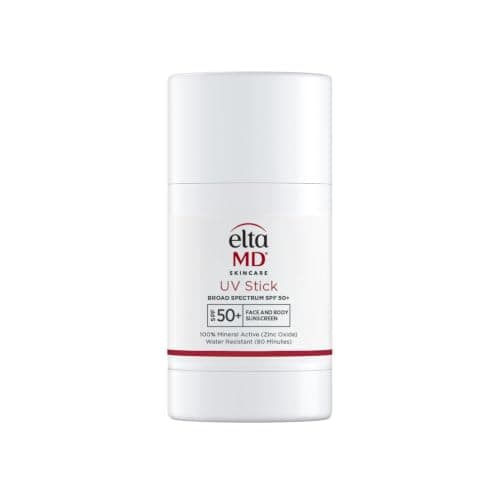
The sunscreen sticks worth buying, what their actives panels say, and the number of passes it takes to reach the SPF on the tube.
Sun Safety
What water-resistant sunscreen actually means
What the 40 and 80-minute claims measure, why toweling ends them, and how to plan a pool day around it.

Sun Protective Gear
The best sun shirts
UPF 50+ shirts and hoodies chosen on fabric, fit and heat management — protection that never needs reapplying.
Reef-Safe & Ingredients
The best reef-safe sunscreens
Mineral-only formulas that satisfy every current reef-protection law, chosen on the actives panel.
Sun Safety
The best SPF lip balms
Why lips burn first, what separates a real lip sunscreen from a balm with a number on it, and the four worth owning.