Face & Tinted SPF
Can you mix sunscreen with moisturizer?
You can. It costs you protection, and the arithmetic is not subtle.
Disclosure: Spf & Shore earns commission from qualifying purchases made through links on this page, at no extra cost to you. It does not change which products we recommend. Read the full disclosure.
You can physically mix them, and you should not. SPF is established at a fixed amount of product per area of skin — 2 milligrams per square centimeter. If you dilute a sunscreen with a moisturizer in your palm and then spread the mixture over the same face, you have laid down less sunscreen per square centimeter than the test used, which means you get less protection than the number on the bottle.
Layer instead of mixing: moisturizer first, let it settle, sunscreen on top as the last skincare step. Thirty to sixty seconds between them is enough. That gets you the hydration you wanted and the full film you paid for, and it takes no longer than mixing did.
The arithmetic, in one paragraph
Imagine the right amount of sunscreen for your face is a third of a teaspoon. You put that much in your palm, add the same amount of moisturizer, mix, and spread the result over your whole face. The film on your skin is now twice as thick but only half of it is sunscreen — so at any given point on your face, the amount of filter present is half what the SPF test measured. The label still says 50; the skin is not getting 50.
This is not a linear relationship either, which is the part that surprises people: halving the dose does not halve the SPF, it typically drops effective protection further than a simple proportion would suggest. How much sunscreen to apply has the dose measurements, and how SPF is tested explains why the per-area amount is the whole basis of the number.
The second problem: the formula was not built for it
A sunscreen is an engineered suspension. The filters are held in place by a specific emulsion system designed to dry down into an even, continuous film — that evenness is what makes the protection uniform rather than patchy. Stirring a different product into it in your palm disrupts that system in ways nobody has tested.
The visible symptoms are familiar to anyone who has tried it: pilling, balling up, streaking, or a mixture that refuses to spread. Those are signs the emulsion has broken. A broken film does not protect evenly even where there is enough product, because the coverage has gaps.
What to do instead
- Moisturizer first, sunscreen last. Sunscreen goes on after every other skincare step and before any makeup. Where sunscreen goes in your routine covers the full order.
- Wait thirty to sixty seconds between layers. You are waiting for the moisturizer to absorb, not to dry completely. Applying sunscreen onto a still-wet layer is where most pilling comes from.
- Apply the sunscreen in two thin passes rather than one thick one. Two passes spread more evenly over a layer that is already there, and the total is easier to get right.
- Pat, do not drag. Dragging sunscreen across a freshly moisturized face moves the moisturizer around and takes the sunscreen with it.
- Or skip the moisturizer entirely. Several mineral face sunscreens are built on hydrating bases, which means one product does both jobs properly rather than two products doing each badly.
That last option is the one most people end up preferring, and it is the reason for the picks below.
Sunscreens that make the moisturizer unnecessary
If the reason you wanted to mix was that your sunscreen felt drying, the real fix is a sunscreen with the hydration built in. All three below are mineral face formulas with substantive bases rather than bare filter suspensions.
Our picks in detail
01 · Best moisturizer replacement
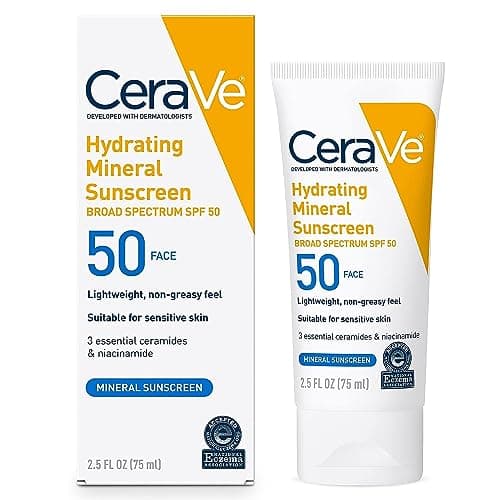
CeraVe Hydrating Mineral Sunscreen SPF 50 Face
CeraVe · Read our CeraVe review
Zinc oxide and titanium dioxide at SPF 50 with ceramides and hyaluronic acid. The ceramides are the point — this is a sunscreen that genuinely does not need a moisturizer under it on most skin.
- Actives:
- Zinc oxide and titanium dioxide, with ceramides and hyaluronic acid
- SPF:
- SPF 50
- Water resistance:
- 40 minutes
- Reef status:
- Mineral filters only
- Best for:
- Anyone who was mixing because their sunscreen felt drying
What works
- Hydrating base means one product rather than two
- Mineral filters with zinc oxide in the panel
- Drugstore pricing and wide availability
The trade-off
- 40 minutes of water resistance, not 80
- Thick enough to leave cast on deeper skin tones
- Face-size tube only
#ad We earn from qualifying purchases · Price as of November 2, 2026
02 · Best for layering
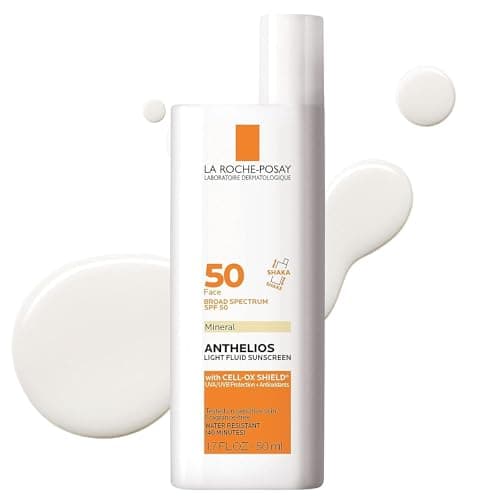
La Roche-Posay Anthelios Mineral SPF 50 Face Sunscreen
La Roche-Posay
Titanium dioxide at SPF 50 with antioxidants, in the lighter of the pharmacy-shelf minerals. It layers over a moisturizer without pilling, which is exactly what people are trying to achieve when they mix.
- Actives:
- Titanium dioxide with antioxidants
- SPF:
- SPF 50
- Water resistance:
- 40 minutes
- Reef status:
- Mineral filters only
- Best for:
- A routine where a moisturizer stays in the picture
What works
- Light enough to go over a moisturizer without pilling
- Antioxidants in the formula
- Available on most US pharmacy shelves
The trade-off
- Titanium-led rather than zinc-led
- 40 minutes of water resistance, not 80
- Needs a moment to set before makeup
#ad We earn from qualifying purchases · Price as of November 2, 2026
03 · Lightest single layer
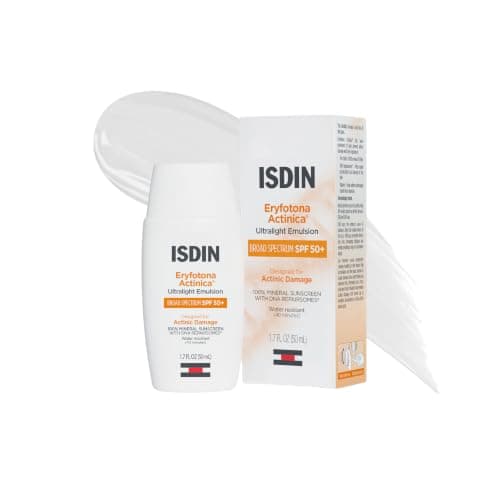
ISDIN Eryfotona Actinica Mineral Sunscreen SPF 50+
ISDIN
Zinc oxide as the sole active filter at SPF 50+, light enough that most people stop wanting to dilute it. The expensive answer to the texture objection.
- Actives:
- Zinc oxide as the sole active filter
- SPF:
- SPF 50+
- Water resistance:
- Not labeled water resistant
- Reef status:
- Zinc only
- Best for:
- Skin that finds every mineral sunscreen heavy
What works
- Zinc oxide as the only active filter
- Very light finish for a high-SPF mineral
- Short, fragrance-free panel
The trade-off
- No water-resistance claim at all
- Expensive per ounce
- Little hydration of its own on very dry skin
#ad We earn from qualifying purchases · Price as of November 2, 2026
The one exception worth naming
There is a defensible version of mixing, and it is the opposite of what people usually do: adding a small amount of a non-SPF product into a sunscreen, rather than diluting a dose of sunscreen into a larger amount of something else. A drop of a liquid foundation or a tinting drop stirred into a full dose of sunscreen leaves the sunscreen dose intact and changes the color.
That is still not tested, and it can still break the emulsion — so it is a tolerable compromise rather than a recommendation. If you want tint, a sunscreen formulated with tint in it is strictly better, because the iron oxides are in there deliberately and they do real work against visible light. Tinted versus untinted sunscreen covers the difference, and the best tinted sunscreens has the picks.
What about moisturizers that already contain SPF?
A moisturizer with SPF in it is a completely different proposition from a palm mixture, because the manufacturer tested the finished product at the tested dose and the SPF number on it is real. The practical catch is the one that applies to every face SPF: people apply moisturizer in a thinner layer than they apply sunscreen, so the dose on the skin is often below what the number assumes.
Use one if it is the difference between wearing SPF daily and not — that trade is usually worth making. Just apply it like sunscreen rather than like moisturizer, which means more product than feels natural. Can sunscreen replace moisturizer is the same question approached from the other direction.
And mixing sunscreen with other things
- With foundation: same dilution problem, same answer. Sunscreen underneath, makeup on top, and a powder for touch-ups.
- With body lotion: worse, because the surface area is large and the dilution is usually heavier. Buy a body sunscreen in a size that makes a real dose affordable.
- With insect repellent: apply sunscreen first, let it set, then repellent over the top. Mixing them is not recommended, and a combined product means you cannot reapply the sunscreen on its own schedule.
- With a serum or an acid: layer, and give each one a moment. Sunscreen last, always.
The common thread is that sunscreen is the layer whose amount is measured and matters. Every other product in a routine is flexible; this one is a dose.
Sources
- 21 CFR 201.327 — Over-the-counter sunscreen drug products; required labeling — Legal Information Institute, Cornell Law School
- Questions and Answers: FDA Requirements for Over-the-Counter Sunscreen Products — U.S. Food and Drug Administration
- Sunscreen FAQs — American Academy of Dermatology
- Sunscreen — Skin Cancer Foundation
- Sunscreen: How to Help Protect Your Skin from the Sun — U.S. Food and Drug Administration
Frequently asked questions
Can you mix sunscreen with moisturizer?
You can, but it lowers your protection. SPF is tested at a fixed amount of product per area of skin, so diluting a dose of sunscreen into a moisturizer and spreading the mixture over the same face leaves less filter per square centimeter than the test used.
Does mixing sunscreen with moisturizer reduce SPF?
Yes, and not proportionally — reducing the amount of sunscreen per area of skin typically drops effective protection further than a simple fraction would suggest. It can also break the emulsion that lets the film dry down evenly.
Should moisturizer or sunscreen go on first?
Moisturizer first, then sunscreen as the last skincare step before makeup. Wait thirty to sixty seconds in between so the moisturizer has absorbed, which prevents most pilling.
Is a moisturizer with SPF as good as separate sunscreen?
The number on it is real, because the finished product was tested. The practical catch is that people apply moisturizer thinly, so the dose on the skin is often below what the SPF assumes. Apply it like sunscreen rather than like moisturizer.
Can you mix sunscreen with foundation?
The same dilution problem applies. Sunscreen underneath, foundation on top, and a mineral powder for touch-ups through the day. Adding a drop of tint into a full dose of sunscreen is a lesser compromise, but a sunscreen formulated with tint is better.
Read next
Face & Tinted SPF
Can sunscreen replace moisturizer?
When a facial sunscreen is enough on its own, when you still need a separate moisturizer, and the formulas that genuinely do both jobs.
Face & Tinted SPF
Where sunscreen goes in your routine
The correct order, why pilling happens, and how to reapply over a finished face.

Sun Safety
How much sunscreen to apply
The measures by body area, and why under-application costs more protection than it seems.
Sun Safety
How SPF is tested and set
The FDA's SPF test in plain English: human volunteers, a solar simulator, 2 mg per square centimeter, and the separate tests behind broad spectrum and water resistance.
Face & Tinted SPF
Tinted vs untinted sunscreen
What tint adds beyond cosmetics, where untinted still wins, and how to choose between them.
Face & Tinted SPF
How to reapply sunscreen over makeup
The powder, stick and mist options for topping up SPF over makeup, what each one actually delivers, and when the honest answer is to wash your face.