Face & Tinted SPF
Can sunscreen replace moisturizer?
For a lot of people, yes — and cutting a step is the most reliable way to make a daily SPF habit stick.
Disclosure: Spf & Shore earns commission from qualifying purchases made through links on this page, at no extra cost to you. It does not change which products we recommend. Read the full disclosure.
Often, yes. A facial sunscreen is a cream or lotion with UV filters in it, and many of them contain the same humectants and emollients a moisturizer does — so if your skin feels comfortable with sunscreen alone, you do not need a separate step. Where it does not work: very dry or barrier-compromised skin, and sunscreens formulated to be matte and weightless, which deliberately leave out the oils that would hydrate.
This is worth getting right because the biggest predictor of whether someone wears sunscreen daily is how many steps it takes. A two-product routine that gets skipped protects less than a one-product routine that does not.
What a moisturizer actually does
Three things, usually in combination. Humectants such as glycerin and hyaluronic acid draw water into the outer layer. Emollients — fatty alcohols, plant oils, squalane — fill the gaps between skin cells so the surface feels smooth. And occlusives such as dimethicone or petrolatum slow water evaporating out. A moisturizer is a delivery system for some mix of those three.
Facial sunscreens contain the same categories, because filters have to be carried in something and that something is a cream base. CeraVe's mineral face formula lists ceramides and hyaluronic acid; EltaMD's UV Elements is sold as a tinted moisturizer with SPF. Those are not sunscreens pretending to moisturize — they are moisturizers with filters in them.
When one product is enough
- Normal to oily skin in warm weather. A sheer sunscreen on clean skin is frequently all the hydration needed, and skipping the extra layer reduces shine.
- Any sunscreen described as hydrating, a tinted moisturizer, or a BB cream with SPF. These are built to do both.
- When the alternative is skipping sunscreen. One step you do beats two steps you do not.
- Under makeup, where fewer layers means less pilling and better wear.
When you still need both
- Dry, flaking or tight skin, where the sunscreen base is not carrying enough emollient to do the job.
- Eczema-prone or barrier-compromised skin, where the moisturizer is treatment and the sunscreen is protection. The best sunscreen for sensitive skin.
- With matte or oil-free facial sunscreens, which deliberately omit the oils that hydrate.
- In cold, dry air or at altitude, where even normal skin loses water faster than a sheer formula compensates for.
- On an active retinoid or acid routine, where dryness is a side effect you are managing rather than a skin type.
Our picks in detail
01 · Best one-step option
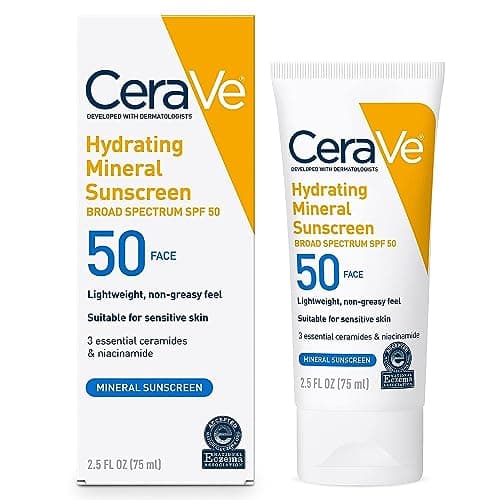
CeraVe Hydrating Mineral Sunscreen SPF 50 Face
CeraVe · Read our CeraVe review
Mineral filters at SPF 50 in a base with ceramides and hyaluronic acid — genuinely a moisturizer with filters in it, which is exactly what a one-step routine needs.
- Actives:
- Zinc oxide and titanium dioxide, with ceramides and hyaluronic acid
- SPF:
- SPF 50
- Water resistance:
- 40 minutes
- Reef status:
- Mineral filters only
- Best for:
- Normal to dry skin that wants a single morning product
What works
- Ceramides and hyaluronic acid in the base
- Mineral filters only, fragrance-free
- Drugstore price
The trade-off
- 40 minutes of water resistance
- Soft cast on deeper skin tones
#ad We earn from qualifying purchases · Price as of October 11, 2026
02 · Best tinted moisturizer alternative
EltaMD UV Elements Tinted Moisturizer SPF 44
EltaMD · Read our EltaMD review
Mineral filters under an iron-oxide tint in a moisturizing base at SPF 44 — sold as a tinted moisturizer because that is what it is, and it collapses three steps into one.
- Actives:
- Zinc oxide and titanium dioxide, tinted with iron oxides
- SPF:
- SPF 44
- Water resistance:
- 40 minutes
- Reef status:
- Mineral filters only
- Best for:
- Replacing moisturizer, SPF and light base coverage at once
What works
- Hydrating base
- Iron-oxide tint adds visible-light protection
- SPF 44
The trade-off
- One universal shade
- Dermatology-counter pricing
03 · The one that does not replace moisturizer
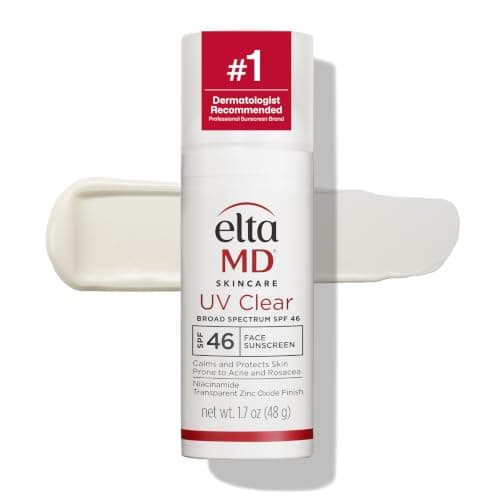
EltaMD UV Clear Broad-Spectrum SPF 46
EltaMD · Read our EltaMD review
Deliberately weightless, with 9% zinc oxide and niacinamide and very little emollient — perfect on oily skin, and the formula dry skin should pair with a moisturizer rather than rely on.
- Actives:
- Zinc oxide with octinoxate; EltaMD lists 9% zinc oxide and 5% niacinamide
- SPF:
- SPF 46
- Water resistance:
- Not labeled water resistant
- Reef status:
- Contains octinoxate, which Hawaii and Key West restrict
- Best for:
- Oily skin, where that is the point
What works
- Weightless, matte-leaning
- Niacinamide in the base
- No cast
The trade-off
- Not hydrating enough for dry skin alone
- Contains octinoxate
#ad We earn from qualifying purchases · Price as of October 11, 2026
The thing that must not change
The dose. The amount of sunscreen needed on a face does not shrink because the product is also moisturizing — it is roughly a nickel-sized blob, or about a quarter-teaspoon, every single time. Using a tinted moisturizer with SPF as your only sun protection is fine; using a pea-sized amount of it as your only sun protection is not, because SPF is measured at a dose almost nobody applies. How much sunscreen to apply has the numbers.
The reverse combination is the one to avoid: applying a moisturizer *over* sunscreen thins and disturbs the film you just laid down. If you use both, moisturizer goes first and gets a minute to absorb. Where sunscreen goes in your routine sets out the order.
What about moisturizer with SPF in it?
- If it carries a broad-spectrum claim and SPF 30 or higher, it is a sunscreen and it is regulated as one. Use it as such.
- If it is SPF 15, treat it as a floor rather than a plan — enough for a commute, not enough for a day outside.
- Check for the broad-spectrum wording. An SPF number alone covers UVB only. What broad spectrum means.
- Apply it like sunscreen, not like moisturizer — a measured dose on face, ears and neck rather than a thin smoothing-in.
- Reapply it. This is where combined products fail in practice, which is why a powder or stick for the two-hour top-up matters.
Sources
- Questions and Answers: FDA Requirements for Over-the-Counter Sunscreen Products — U.S. Food and Drug Administration
- Sunscreen: How to Help Protect Your Skin from the Sun — U.S. Food and Drug Administration
- Sunscreen FAQs — American Academy of Dermatology
- Sunscreen — Skin Cancer Foundation
Frequently asked questions
Can sunscreen replace moisturizer?
Frequently, yes. A facial sunscreen is a cream base with UV filters in it, and many include the same humectants and emollients a moisturizer does. If your skin feels comfortable with sunscreen alone, the separate step is optional.
Should I use moisturizer before or after sunscreen?
Before. Moisturizer goes on first and gets a minute to absorb; applying it over sunscreen thins and disturbs the protective film you just laid down.
Is moisturizer with SPF enough sun protection?
If it says broad spectrum and SPF 30 or higher, and you apply a full facial dose, yes. The common failure is dose — people apply moisturizer in a thin smoothing-in, which delivers far less than the SPF was tested at.
Who should not skip moisturizer?
Anyone with dry, flaking or barrier-compromised skin, anyone on an active retinoid or acid routine, and anyone using a matte or oil-free facial sunscreen — those deliberately leave out the emollients that hydrate.
Does using one product mean less protection?
Not if the dose is right. A nickel-sized amount of a hydrating SPF 50 protects exactly as well as the same amount applied over a moisturizer.
Read next
Face & Tinted SPF
Where sunscreen goes in your routine
The correct order, why pilling happens, and how to reapply over a finished face.
Face & Tinted SPF
The best sunscreen for your face
Daily face SPF by skin type and finish, from mineral to hybrid, with the trade-off named on each.

Sun Safety
How much sunscreen to apply
The measures by body area, and why under-application costs more protection than it seems.
Face & Tinted SPF
The best sunscreen for oily skin
Sunscreens that stay matte on oily skin, chosen on base and finish rather than filter type, with the powder that fixes midday shine.
Mineral Sunscreen
What broad spectrum means on a sunscreen label
The regulated FDA claim behind the phrase, why SPF alone is not enough, and what UVA actually does.