Sun Protective Gear
The best beach shade and umbrellas
Portable shade changes a day out more than any other single purchase — including a better sunscreen.
Disclosure: Spf & Shore earns commission from qualifying purchases made through links on this page, at no extra cost to you. It does not change which products we recommend. Read the full disclosure.
Our pick is the [Neso Grande Beach Tent](#nesoTent) — a UPF 50+ canopy with sand-anchor corners that holds in wind without poles to snap, and packs down small enough to carry along with everything else a beach day already requires.
Shade is the first line of sun protection in every major guideline, ahead of both clothing and sunscreen — and it is the one most often skipped because it requires carrying something. It also matters most for the people who need it most: infants under six months, for whom shade is the primary recommendation.
Quick picks
Tap any row to read the full write-up below.
| # | Product | Best for | Price |
|---|---|---|---|
| 1 | 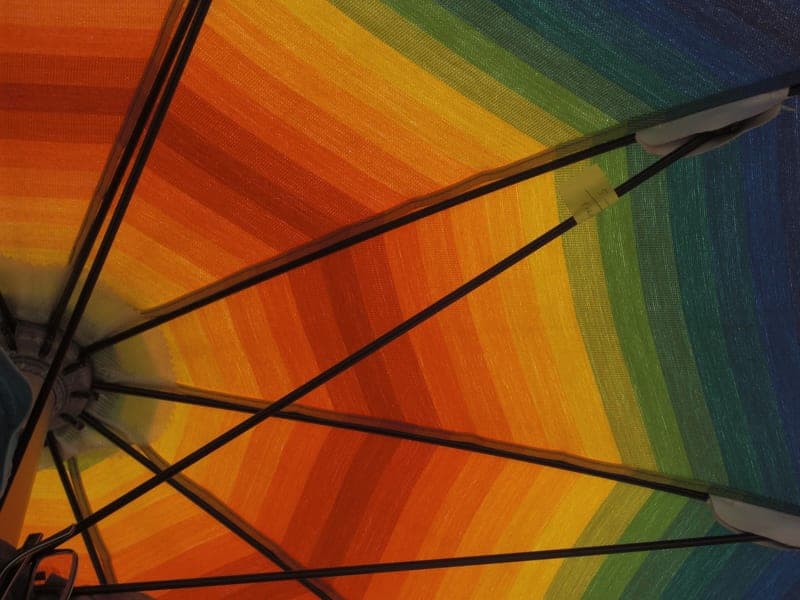 Neso Grande Beach Tent UPF 50+Best overall · UPF 50+ | Family beach days on windy coasts | |
| 2 | 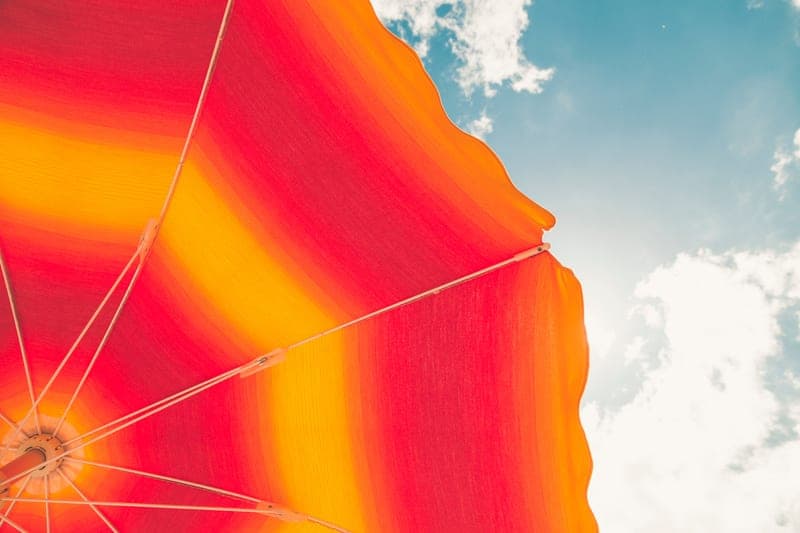 Shibumi Shade Wind-Powered Beach ShadeBest on a windy beach · UPF 50+ canopy | Exposed coastlines with consistent onshore wind | |
| 3 | 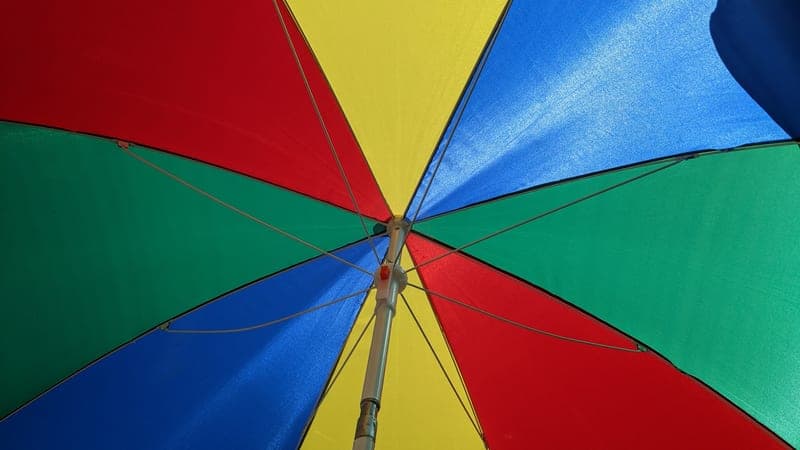 Sport-Brella Versa-Brella UPF 50+ Clamp UmbrellaBest for sidelines and chairs · UPF 50+ | Sports fields, strollers, picnic tables and camp chairs | |
| 4 | 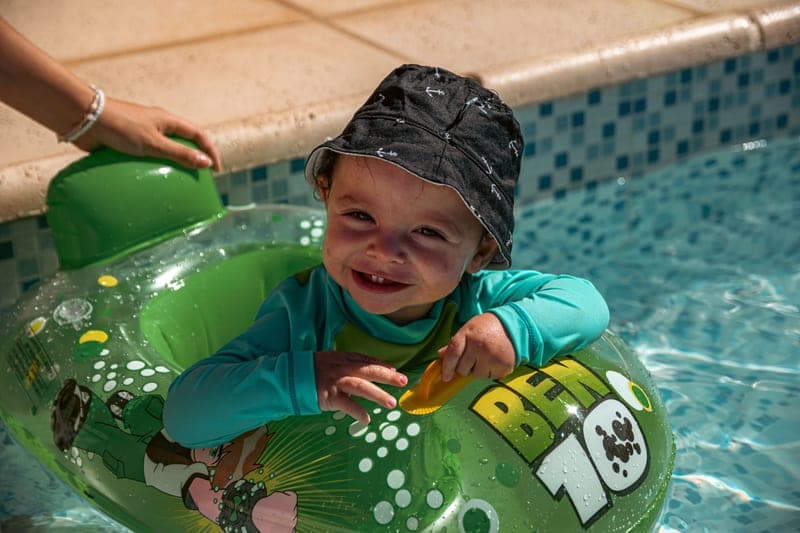 Coolibar Kids Bucket Hat UPF 50+For under the canopy · UPF 50+ | The reflected light shade does not stop |
What each type is actually good at
| Type | Best for | Weakness |
|---|---|---|
| Sand-anchor canopy | Windy beaches, families, a base for a whole day | Bulkier to carry; needs sand to anchor into |
| Wind-powered shade | Very windy coasts; almost no weight | Needs consistent wind to stand up at all |
| Clamp umbrella | Sports sidelines, chairs, strollers, picnic tables | Small shade footprint; needs something to clamp to |
| Traditional beach umbrella | Calm days; simple setup | Becomes dangerous in wind if not deeply anchored |
| Pop-up cabana | Naps, changing, babies | Poor airflow; can be very hot inside |
Our picks in detail
01 · Best overall
Neso Grande Beach Tent UPF 50+
Neso
A UPF 50+ canopy whose corners fill with sand instead of relying on stakes, which is why it stays up where pole tents fail — and it packs down small enough to actually get carried.
- Actives:
- UPF 50+ lycra canopy with sand-anchor corners
- SPF:
- UPF 50+
- Water resistance:
- Water-resistant canopy
- Reef status:
- Not applicable
- Best for:
- Family beach days on windy coasts
What works
- Sand anchors hold in real wind
- UPF 50+ rated canopy
- Packs small relative to the shade it provides
The trade-off
- Needs sand, so it is poor on grass or gravel
- Takes two people to pitch quickly
02 · Best on a windy beach
Shibumi Shade Wind-Powered Beach Shade
Shibumi
A canopy that uses the wind to hold itself up rather than fighting it, on a single arch pole — almost no weight to carry, and the more wind there is the better it works.
- Actives:
- Wind-filled canopy on a single arch pole
- SPF:
- UPF 50+ canopy
- Water resistance:
- Not applicable
- Reef status:
- Not applicable
- Best for:
- Exposed coastlines with consistent onshore wind
What works
- Turns wind from a problem into the mechanism
- Very light and compact
- Large shade footprint for the weight
The trade-off
- Does not stand up at all without wind
- Only works on a beach with onshore flow
03 · Best for sidelines and chairs
Sport-Brella Versa-Brella UPF 50+ Clamp Umbrella
Sport-Brella
A UPF 50+ canopy on a swiveling clamp that attaches to a chair, stroller or table and angles as the sun moves — the answer when there is no sand to anchor into.
- Actives:
- UPF 50+ canopy on a swiveling clamp
- SPF:
- UPF 50+
- Water resistance:
- Water-resistant canopy
- Reef status:
- Not applicable
- Best for:
- Sports fields, strollers, picnic tables and camp chairs
What works
- Works anywhere there is something to clamp to
- Swivels to follow the sun
- Sets up in seconds, alone
The trade-off
- Small shade footprint — one or two people
- Needs a clamping surface
04 · For under the canopy
Coolibar Kids Bucket Hat UPF 50+
Coolibar
Shade blocks direct sun; sand and water still reflect UV upward. A wide-brim hat under the canopy handles what the canopy cannot.
- Actives:
- UPF 50+ crown with a chin strap
- SPF:
- UPF 50+
- Water resistance:
- Rated wet or dry
- Reef status:
- Not applicable
- Best for:
- The reflected light shade does not stop
What works
- Covers ears and neck
- Chin strap keeps it on
- Rated wet or dry
The trade-off
- Outgrown quickly
- Does not cover the body
The thing shade does not do
Shade blocks direct sunlight. It does not block reflected UV, and sand, water and concrete all reflect a meaningful amount upward. Sitting under an umbrella on a bright beach is not equivalent to being indoors — people burn under umbrellas regularly, usually on the underside of the chin, the nose and the tops of the feet.
So shade reduces the dose rather than eliminating it. Wear sunscreen and a hat under the canopy too. How much sunscreen to apply.
Setting it up so it stays up
- Fill the sand anchors properly. Half-filled pockets are the reason canopies leave the ground. Fill them completely, every corner.
- Angle into the wind, not across it. A canopy presenting a flat face to a gust is a sail.
- Reposition as the sun moves. The shade at 11am is somewhere else at 2pm, and most people do not notice until someone has burned.
- Never leave an umbrella unattended. A wind-caught beach umbrella is genuinely dangerous, and injuries from them are well documented.
- Pack down before the wind builds, not during it.
Shade for babies specifically
For infants under six months, the American Academy of Pediatrics advises keeping them out of direct sun and using shade and clothing rather than sunscreen. A canopy is what makes that practical on an actual beach.
Two cautions. A stroller hood alone does not block reflected UV from sand and water — a full canopy is better. And never drape a blanket over a stroller to create shade: it restricts airflow and can raise the temperature inside dangerously. Heat is a separate risk from UV and needs its own answer.
Timing beats equipment
UV is strongest roughly between 10am and 4pm. A beach day that runs from 8am to 11am, or from 4pm onward, needs far less of everything on this page — less shade, less sunscreen, less negotiation. It is free, it is the single most effective change available, and it is the one nobody sells you a product for.
Sources
- Sun Safety: Information for Parents About Sunburn and Sunscreen — American Academy of Pediatrics (HealthyChildren.org)
- Sun-Protective Clothing — Skin Cancer Foundation
- How to prevent skin cancer — American Academy of Dermatology
- How Do I Protect Myself from UV Rays? — American Cancer Society
Frequently asked questions
Do beach umbrellas protect from UV?
They block direct sunlight, but not UV reflected up off sand and water, which is why people burn under umbrellas. Look for a stated UPF 50+ canopy, and still wear sunscreen and a hat underneath.
What is the best beach shade for wind?
A sand-anchor canopy such as the Neso, whose corners fill with sand rather than relying on stakes. On consistently windy coasts a wind-powered shade uses the wind to stand up rather than fighting it.
Is shade enough sun protection for a baby?
Shade is the primary recommendation for infants under six months, alongside clothing and a hat. It is not complete on its own, because sand and water reflect UV upward — and never drape a blanket over a stroller to make shade, because it restricts airflow and traps heat.
What time of day is UV strongest?
Roughly 10am to 4pm. Shifting a beach day outside that window reduces how much sun protection you need of every kind, and it costs nothing.
Read next
Sun Protective Gear
The best sun hats
Wide-brim UPF 50+ hats for adults and children, and why a baseball cap is not enough.
Kids & Baby
Sunscreen for babies under six months
What the AAP actually advises for infants, and how to apply it on a real day out.
Sun Protective Gear
How UPF clothing works
What makes fabric block UV, why good garments do not wash out, and what actually degrades protection.
Sun Protective Gear
The best sun shirts
UPF 50+ shirts and hoodies chosen on fabric, fit and heat management — protection that never needs reapplying.
Sun Safety
Sun poisoning vs sunburn
How to tell severe sunburn from ordinary, the warning signs, and when to call a clinician.
Sun Protective Gear
The best kids rash guards and sun shirts
UPF 50+ swim shirts for children, how to size them, and why they beat any sunscreen upgrade.