Sun Safety
Does sunscreen block vitamin D?
In theory yes, in practice far less than people assume — and there is a reason dermatology bodies tell you not to use UV as your source anyway.
Disclosure: Spf & Shore earns commission from qualifying purchases made through links on this page, at no extra cost to you. It does not change which products we recommend. Read the full disclosure.
Sunscreen filters the UVB that skin uses to make vitamin D, so in principle it reduces synthesis — but real-world sunscreen use has not been shown to cause vitamin D deficiency, because nobody applies enough, often enough, to everything. The American Academy of Dermatology's position is that you should get vitamin D from diet and supplements rather than from UV exposure at all, because there is no level of UV exposure that maximises vitamin D without also raising skin cancer risk.
That is the whole answer, and the rest of this page is why it holds up — plus what to do if a blood test has actually come back low.
Why the theory and the practice diverge
Vitamin D synthesis starts when UVB reaches the skin, and sunscreen is designed to stop UVB reaching the skin. So the mechanism is real. What breaks the chain is how sunscreen is actually used: at a quarter to a half of the tested dose, missed in patches, rarely reapplied on schedule, and almost never on every exposed surface. The UVB that gets through is the same UVB that explains why most people still tan through sunscreen — and it is enough for synthesis to continue.
There is also far less skin exposure needed than most people picture. Vitamin D synthesis is efficient and saturates quickly; it does not scale with hours in the sun, which is why long deliberate sun exposure buys damage rather than more vitamin D.
What the dermatology and nutrition bodies say
- The American Academy of Dermatology does not recommend getting vitamin D from sun exposure or indoor tanning, and states there is not a safe level of UV exposure that allows for maximum vitamin D synthesis.
- Its recommended sources are foods naturally rich in vitamin D, fortified foods and beverages, and supplements.
- The NIH Office of Dietary Supplements publishes the intake amounts and food sources, which is the place to look up actual numbers rather than taking them from a sunscreen article.
- Sun protection guidance is unchanged by this. Broad spectrum, SPF 30 or higher, reapplied every two hours, alongside shade and clothing.
Who is genuinely at higher risk of low vitamin D
Sunscreen is well down this list. The groups commonly identified as more likely to be low include people with little outdoor exposure, people who keep most skin covered, people with deeper skin tones — melanin reduces UVB-driven synthesis — older adults, people with conditions affecting fat absorption, and people living at higher latitudes through winter, when the sun is too low for meaningful synthesis for months regardless of what is on your skin.
If you are in one of those groups, the useful action is a blood test and a conversation with a clinician about supplementation — not less sunscreen. Trading a known carcinogen exposure for an uncertain nutritional gain is a poor deal when a supplement settles it outright.
What to do if your level is actually low
- Get the number, rather than guessing from symptoms. Fatigue and aches have many causes.
- Treat it nutritionally. Supplements and fortified foods raise vitamin D predictably, at a dose someone can actually prescribe.
- Keep the sun protection. Reducing sunscreen is an unreliable way to raise vitamin D and a reliable way to raise UV dose.
- Re-test rather than assume. Supplementation is easy to get wrong in both directions.
- Take any dosing advice from a clinician, not from a sun-care site. Nothing here is medical advice.
Our picks in detail
01 · Best household bottle
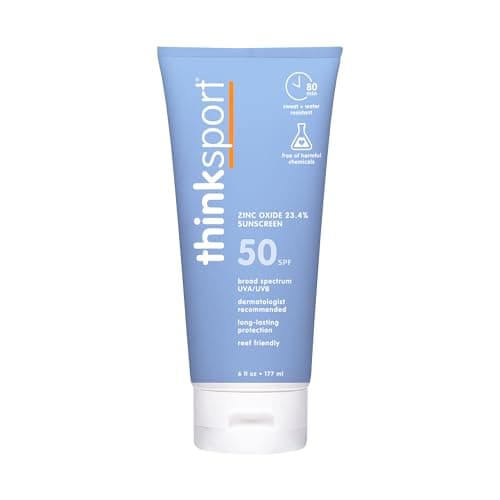
Thinksport Sunscreen SPF 50+
Thinksport · Read our Thinksport review
20% non-nano zinc at SPF 50+ with 80 minutes of water resistance — the bottle to keep using while you sort vitamin D out at the kitchen table instead of in the sun.
- Actives:
- 20% non-nano zinc oxide
- SPF:
- SPF 50+
- Water resistance:
- 80 minutes
- Reef status:
- Zinc only — no oxybenzone, octinoxate or octocrylene
- Best for:
- Daily family use with no compromise on cover
What works
- SPF 50+ and 80-minute water resistance
- Zinc-only
- Large tubes
The trade-off
- Visible white cast
- Heavy on a face
#ad We earn from qualifying purchases · Price as of October 10, 2026
02 · Best daily face option
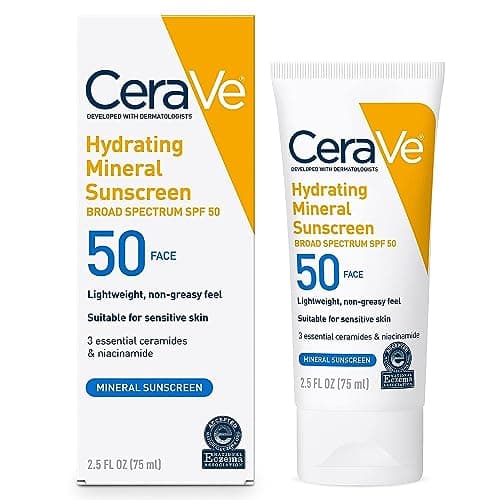
CeraVe Hydrating Mineral Sunscreen SPF 50 Face
CeraVe · Read our CeraVe review
Fragrance-free mineral filters in a ceramide base at a price that makes wearing it every day realistic — which matters because UV reaches you on overcast days too.
- Actives:
- Zinc oxide and titanium dioxide, with ceramides and hyaluronic acid
- SPF:
- SPF 50
- Water resistance:
- 40 minutes
- Reef status:
- Mineral filters only
- Best for:
- Year-round facial SPF, including winter
What works
- Fragrance-free
- Ceramides in the base
- Inexpensive
The trade-off
- Cast on medium and deep tones
- 40 minutes of water resistance
#ad We earn from qualifying purchases · Price as of October 10, 2026
03 · Best cover-up

Coolibar Morada Everyday Long Sleeve T-Shirt UPF 50+
Coolibar
A UPF 50+ knit that blocks at least 98% of UV while worn — more complete than sunscreen in practice, which is one more reason to source vitamin D from food.
- Actives:
- UPF 50+ knit — the protection is the fabric, not a coating
- SPF:
- UPF 50+
- Water resistance:
- Rated wet or dry
- Reef status:
- Not applicable
- Best for:
- Long exposure without constant reapplication
What works
- Blocks at least 98% of UV
- Rated wet or dry
- Nothing to reapply
The trade-off
- Covers only what it covers
- Premium pricing
Does the type of sunscreen change anything?
Not meaningfully. Mineral and chemical filters both reduce UVB transmission, which is the point of both, and the differences between them are far smaller than the difference between applying a full dose and the usual thin one. If someone has told you mineral sunscreen protects vitamin D levels while chemical sunscreen does not, that is not a published distinction.
What does change the picture is clothing. Fabric blocks UVB much more completely than sunscreen as used in practice — which is an argument for getting vitamin D from food rather than an argument against the shirt. UPF versus SPF explains the two ratings.
Sources
- Vitamin D — American Academy of Dermatology
- Vitamin D — Consumer Fact Sheet — NIH Office of Dietary Supplements
- Sunscreen FAQs — American Academy of Dermatology
- Sunscreen — Skin Cancer Foundation
- How Do I Protect Myself from UV Rays? — American Cancer Society
Frequently asked questions
Does sunscreen block vitamin D?
It filters the UVB that drives vitamin D synthesis, so in principle it reduces it. In practice, normal sunscreen use has not been shown to cause vitamin D deficiency, because people apply far less than the tested dose and miss areas.
Should I skip sunscreen to get vitamin D?
The American Academy of Dermatology says no — it does not recommend getting vitamin D from sun exposure or indoor tanning, and states there is no safe level of UV exposure that maximises vitamin D synthesis. Diet and supplements are the recommended sources.
How much sun do you need for vitamin D?
Synthesis is efficient and saturates quickly, so prolonged exposure adds damage rather than more vitamin D. Because the amount depends on latitude, season, time of day and skin tone, a supplement is a far more predictable source than a sunbathing schedule.
Is mineral sunscreen better for vitamin D than chemical?
No meaningful difference. Both reduce UVB transmission, which is their purpose, and the gap between them is much smaller than the gap between a full application and the thin one most people manage.
Who is most likely to be low in vitamin D?
People with little outdoor exposure, those who keep most skin covered, people with deeper skin tones, older adults, people with fat-absorption conditions, and anyone living at a high latitude through winter. Sunscreen use is well down the list.
Read next
Sun Safety
How sunscreen works
The mechanism behind UV filters, the UVA and UVB difference, and why the amount applied matters so much.
Reef-Safe & Ingredients
Is sunscreen toxic?
What the FDA absorption studies found, what they did not, and how to weigh it without fear-selling.
Sun Safety
Sunscreen versus no sunscreen
What the Nambour trial found when it randomized a whole town to daily sunscreen or not: skin aging, squamous cell carcinoma, melanoma, and the endpoints that did not move.
Sun Safety
Does sunscreen prevent tanning?
Why sunscreen slows tanning without stopping it, what a tan actually is, and what does prevent one.

Sun Protective Gear
UPF vs SPF
What each scale measures, why they do not convert, and what UPF 50 is actually worth.