Sun Safety
The best sunscreen creams
Thicker, richer and more forgiving than a lotion — and genuinely better on dry skin, cold weather and small children.
Disclosure: Spf & Shore earns commission from qualifying purchases made through links on this page, at no extra cost to you. It does not change which products we recommend. Read the full disclosure.
Our overall pick is Badger Kids Sunscreen Cream SPF 40: non-nano zinc oxide, which Badger lists at 22.5%, in a base of a handful of recognisable ingredients. It is the cream to buy when you want the shortest possible ingredient list and do not mind working it in — and despite the name it suits adults with dry or reactive skin just as well.
Cream, lotion and fluid are texture descriptions rather than regulated categories, but the difference is real. A cream carries more emollient and less water, so it sits richer, feels more protective on wind-chapped skin, and takes longer to spread. On dry skin, in cold weather, and on children who are about to get cold and wet, that is a feature.
Quick picks
Tap any row to read the full write-up below.
| # | Product | Best for | Price |
|---|---|---|---|
| 1 | 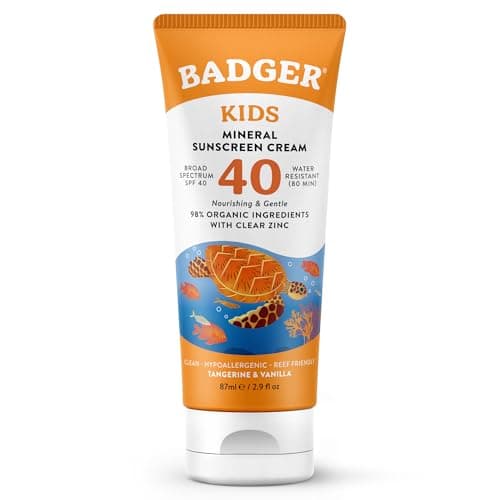 Badger Kids Sunscreen Cream SPF 40Best overall · SPF 40 | The shortest ingredient list in a cream texture | $17.99 · View on Amazon #ad We earn from qualifying purchases · Price as of October 10, 2026 |
| 2 | 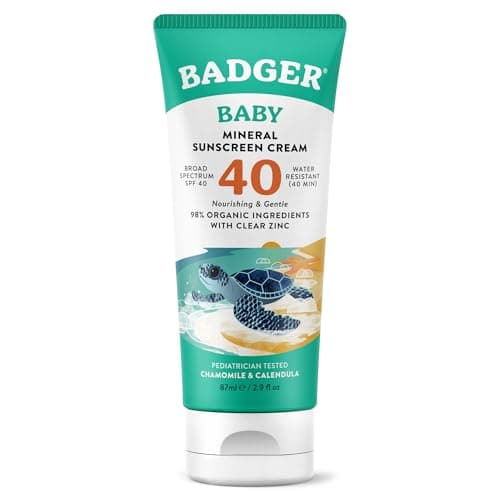 Badger Baby Sunscreen Cream SPF 40Best for babies and toddlers · SPF 40 | Unscented cover for small children over six months | $17.99 · View on Amazon #ad We earn from qualifying purchases · Price as of October 10, 2026 |
| 3 | 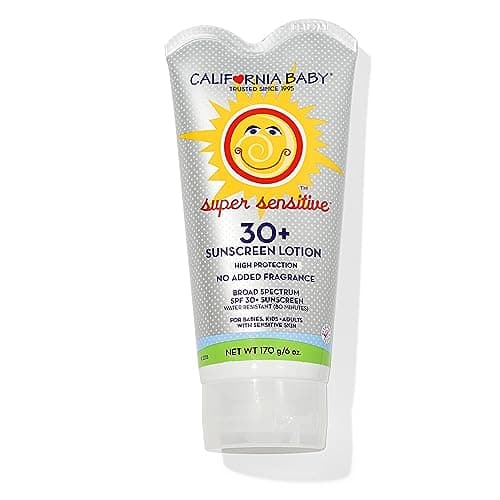 California Baby Super Sensitive Broad Spectrum SPF 30+Best for very reactive skin · SPF 30+ | Skin that has reacted to other mineral creams | $47.99 · View on Amazon #ad We earn from qualifying purchases · Price as of October 10, 2026 |
| 4 | 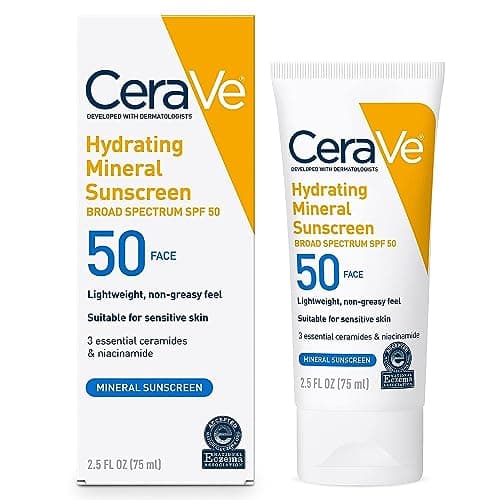 CeraVe Hydrating Mineral Sunscreen SPF 50 FaceBest face cream · SPF 50 | Dry faces, especially in winter | $13.97 · View on Amazon #ad We earn from qualifying purchases · Price as of October 10, 2026 |
| 5 |  Vanicream Mineral Sunscreen SPF 50+ for Sensitive SkinBest fragrance-free cream · SPF 50+ | Skin that reacts to almost everything |
Cream, lotion or fluid — what the words mean
| Texture | Feels like | Best for | Trade-off |
|---|---|---|---|
| Cream | Rich, slow to absorb, leaves a cushion | Dry skin, cold and wind, small children, faces in winter | Hardest to spread; most visible cast in a mineral formula |
| Lotion | Pourable, spreads easily, absorbs fairly fast | General body use, the household bottle | Can feel thin on chapped skin |
| Fluid or gel | Watery, disappears, no residue | Daily face SPF, oily skin, under makeup | Least cushioning; usually little or no water resistance |
None of this affects protection. SPF and water resistance are measured the same way whatever the texture, so a cream at SPF 40 and a fluid at SPF 40 protect the same when both are applied at the test dose. The texture decides whether you will actually apply that dose.
What we looked for
- A genuinely cream texture — thick, emollient, and sold as a cream rather than a lotion.
- Broad spectrum at SPF 30 or above, matching the AAD's floor.
- Fragrance-free wherever possible, since creams are often bought for compromised skin.
- Mineral actives, which is what nearly every cream-textured sunscreen uses.
- An honest note on spreadability, because that is this format's real weakness. Our methodology.
Our picks in detail
01 · Best overall
Badger Kids Sunscreen Cream SPF 40
Badger · Read our Badger review
Non-nano zinc oxide, listed by Badger at 22.5%, in a base of a handful of recognisable ingredients — the cream to choose when the whole label matters, not just the actives panel.
- Actives:
- Non-nano zinc oxide, which Badger lists at 22.5%
- SPF:
- SPF 40
- Water resistance:
- 40 minutes
- Reef status:
- Zinc only — reef-relevant chemical filters absent
- Best for:
- The shortest ingredient list in a cream texture
What works
- Very short ingredient list
- Non-nano zinc only
- Thick enough to stay where it is put
The trade-off
- Hard work to spread
- 40 minutes of water resistance
#ad We earn from qualifying purchases · Price as of October 10, 2026
02 · Best for babies and toddlers
Badger Baby Sunscreen Cream SPF 40
Badger · Read our Badger review
The same non-nano zinc cream, unscented, in a baby formulation — rich enough to double as a barrier against wind and water on small faces.
- Actives:
- Non-nano zinc oxide, which Badger lists at 22.5%
- SPF:
- SPF 40
- Water resistance:
- 40 minutes
- Reef status:
- Zinc only — reef-relevant chemical filters absent
- Best for:
- Unscented cover for small children over six months
What works
- Unscented
- Non-nano zinc only
- Doubles as a wind barrier
The trade-off
- Thick and slow on a wriggling child
- 40 minutes of water resistance
#ad We earn from qualifying purchases · Price as of October 10, 2026
03 · Best for very reactive skin
California Baby Super Sensitive Broad Spectrum SPF 30+
California Baby
Non-nano titanium dioxide with 80 minutes of water resistance in a gentle cream base — the alternative when zinc itself has not suited, with the maximum water-resistance claim as a bonus.
- Actives:
- Non-nano titanium dioxide
- SPF:
- SPF 30+
- Water resistance:
- 80 minutes
- Reef status:
- Mineral filters only
- Best for:
- Skin that has reacted to other mineral creams
What works
- 80-minute water resistance
- Gentle, simple base
- An option when zinc formulas have not worked
The trade-off
- Titanium dioxide alone is weaker at the long UVA end
- Expensive per ounce
#ad We earn from qualifying purchases · Price as of October 10, 2026
04 · Best face cream
CeraVe Hydrating Mineral Sunscreen SPF 50 Face
CeraVe · Read our CeraVe review
Mineral filters in a ceramide and hyaluronic acid base at SPF 50 — the cream that does genuine barrier work on a face while it protects, at a drugstore price.
- Actives:
- Zinc oxide and titanium dioxide, with ceramides and hyaluronic acid
- SPF:
- SPF 50
- Water resistance:
- 40 minutes
- Reef status:
- Mineral filters only
- Best for:
- Dry faces, especially in winter
What works
- Ceramides in the base
- Fragrance-free
- Cheap enough to use generously
The trade-off
- Cast on medium and deep tones
- 40 minutes of water resistance
#ad We earn from qualifying purchases · Price as of October 10, 2026
05 · Best fragrance-free cream
Vanicream Mineral Sunscreen SPF 50+ for Sensitive Skin
Vanicream · Read our Vanicream review
No fragrance, no dyes and no botanical extracts, mineral actives and 80 minutes of water resistance — the richest option here with the fewest candidate irritants.
- Actives:
- Zinc oxide and titanium dioxide
- SPF:
- SPF 50+
- Water resistance:
- 80 minutes
- Reef status:
- Mineral filters only
- Best for:
- Skin that reacts to almost everything
What works
- No fragrance, dyes or botanicals
- 80-minute water resistance
- Rich enough for very dry skin
The trade-off
- Thick and slow to spread
- Visible cast
Who a cream actually suits
Four situations, and in each one a cream beats a lighter texture for a practical reason rather than a preference.
- Dry or eczema-prone skin. The emollient base does moisturising work alongside the filtering, so one product replaces two steps — which on a child getting dressed for school matters.
- Cold and wind. A richer film resists wind-chapping in a way a watery fluid does not, which is why ski and winter-hiking sunscreens skew thick.
- Small children. A cream stays where it is put while you deal with the other arm, and does not run into eyes as a thin lotion can.
- Faces in winter. The same formula that feels heavy in August can be exactly right in January.
The spreading problem, and how to beat it
A thick mineral cream applied the usual way — a blob, then rubbing — produces a streaky film and a lot of complaints. Three changes fix most of it. Warm the product between your palms first, which drops the viscosity noticeably. Dot it across the area in small amounts and then join the dots, rather than pushing one blob around. And work in two thin passes instead of one thick one; mineral filters sit on the surface, so a second light layer evens out the gaps a first pass leaves.
On a child, do it before they are wet and before they are bored. A cream applied to damp skin will not adhere, and a cream applied to a moving target is applied at perhaps half the dose. Reapplying sunscreen on kids covers the logistics.
When not to buy a cream
If your skin is oily or breaks out, if you wear sunscreen under makeup, or if the main obstacle is that you find sunscreen unpleasant, a cream is the wrong starting point — the richness that helps dry skin is exactly what you do not want. The best sunscreen for acne-prone skin covers the light end, and the easiest sunscreens to apply covers formats chosen purely for low friction.
Sources
- Sunscreen FAQs — American Academy of Dermatology
- Sunscreen: How to Help Protect Your Skin from the Sun — U.S. Food and Drug Administration
- Questions and Answers: FDA Requirements for Over-the-Counter Sunscreen Products — U.S. Food and Drug Administration
- Sunscreen — Skin Cancer Foundation
- About the NEA Seal of Acceptance — National Eczema Association
Frequently asked questions
What is the best sunscreen cream?
Badger Kids Sunscreen Cream SPF 40 — non-nano zinc oxide, listed at 22.5%, in a very short ingredient list. For a face, CeraVe Hydrating Mineral SPF 50 is the better cream because the ceramide base does barrier work too.
What is the difference between sunscreen cream and lotion?
Texture, not protection. A cream carries more emollient and less water, so it feels richer and spreads more slowly; a lotion pours and absorbs faster. SPF and water resistance are tested the same way for both.
Is cream sunscreen better than spray?
For reliably delivering the tested dose, yes — you can see where a cream has gone. A spray is faster for reapplication but much easier to under-apply, and should never be aimed at a face.
Who should use a cream sunscreen?
Dry or eczema-prone skin, anyone out in cold or wind, small children, and faces in winter. If your skin is oily or you wear sunscreen under makeup, a lighter fluid suits better.
How do I spread a thick mineral cream?
Warm it between your palms first, dot it across the area rather than pushing one blob around, and work in two thin passes instead of one thick one. Apply to dry skin, never damp.
Read next
Sun Safety
Stick vs lotion vs spray sunscreen
What each format delivers, why sprays under-perform, and the combination that works.
Sun Safety
The easiest sunscreens to apply
Lowest-friction sunscreens by format, with the dose trade-off each one carries named outright.

Kids & Baby
The best sunscreen for kids with eczema and sensitive skin
Fragrance-free mineral formulas with short ingredient lists, plus what actually triggers reactions.
Mineral Sunscreen
The best mineral sunscreen for your body
Mineral body formulas chosen for water resistance, spreadability and tube size — the things that decide whether you apply enough.
Reef-Safe & Ingredients
The best sunscreen for sensitive skin
Fragrance-free mineral formulas for reactive skin, chosen on the inactive ingredients.